Doctor Who Series 9: 22 Easter Eggs You Need To See
12. Captain Jack
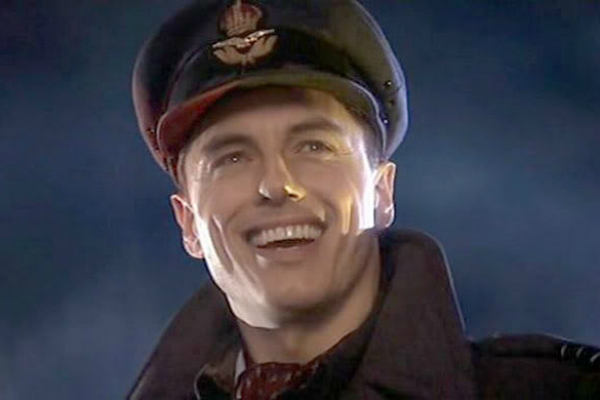
Ah, Captain Jack Harkness. The loveable rogue of the Doctor Who universe. Not seen on screens since the end of Torchwood: Miracle Day, and not seen in Who since the end of David Tennant's reign, the Captain is long overdue a reappearance. Indeed, there will be some viewers who've never actually watched him in action, which is a travesty. We don't appear to be any closer to a return, but there was at least a glimmer of hope in The Woman Who Lived, with him being mentioned by the Doctor in a conversation with Ashildr, and the line: "He'll get to you eventually." Hopefully he'll get to us first.
11. Murray Gold
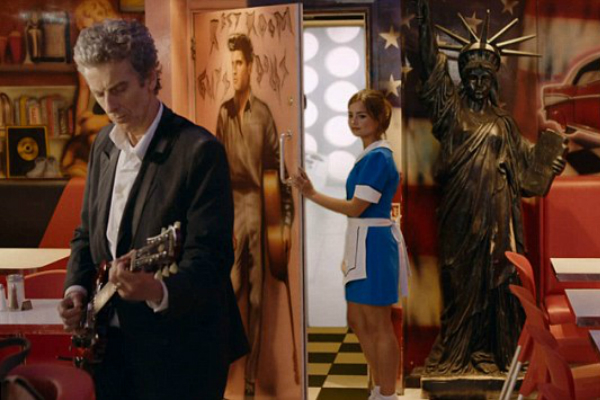
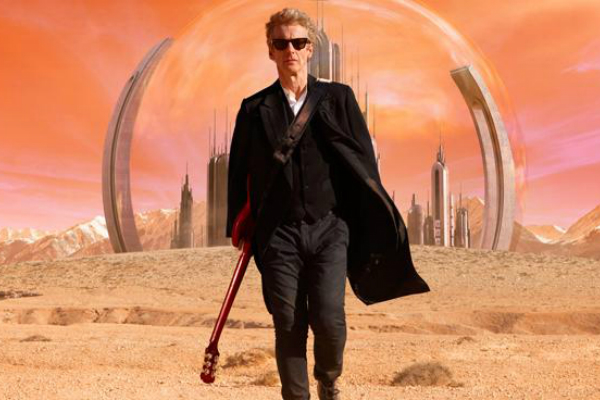
Murray Gold has been a key figure in Doctor Who ever since its revival back in 2005, serving as the composer for all music on the show since then. It's nice, then, that this episode pays a bit of a tribute to him. When the Doctor is playing his guitar in the series finale, the tune is Clara's theme, first used in Asylum of the Daleks. Music plays a big part throughout this series, not just in the work of Murray Gold, with other notable songs including Mr Sandman (The Chordettes), and Yakety Sax by Boots Randolph, better known as the Benny Hill theme tune.
10. Magpie Electricals
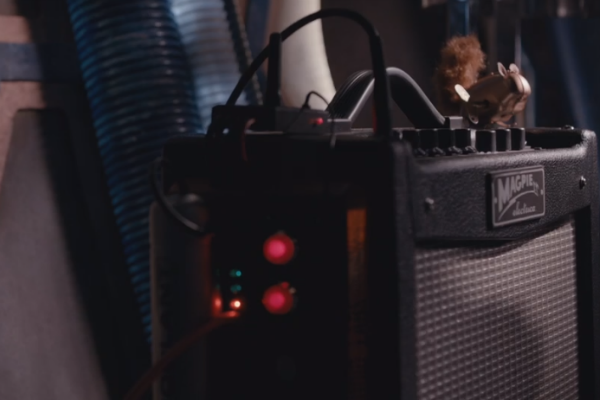
While much of the focus was on the Doctor's guitar, it was his amp that really provided the subtle nod to the past few years of the show. The make is Magpie Electricals, which has appeared numerous times since the show's revival. It's the name of an electrical shop in The Idiot's Lantern, the make of a television, the company who make parts of the TARDIS during Matt Smith's time, and another electrical store (only this time in the 33rd century) aboard Starship UK. Also, notice the squirrel atop the amp? The Doctor says that he took apart the radio in the TARDIS in order to make a clockwork squirrel, and here's the proof of that actually happening.
9. Aberdeen
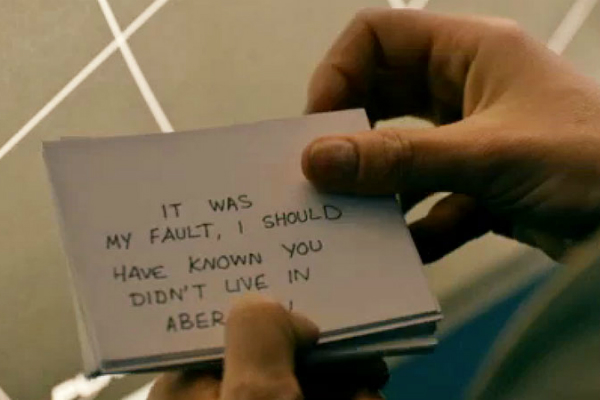
Most of the cue cards that Clara leaves for the Doctor in Under The Lake make some sort of sense, such as "I didn't mean to imply that I don't care," and "I completely understand why it was difficult not to get captured." Another one, however, might need a little bit more explaining. As seen in the image above, it reads: "It was my fault, I should have known you didn't live in Aberdeen." This refers to the Fourth Doctor dropping companion Sarah Jane off somewhere that wasn't her home town, later confirmed in episode School Reunion to have been Aberdeen.
8. Colin McFarlane
Moran, aka one of the creepy ghost dudes from the underwater base in Under The Lake and Before The Flood, was played by Colin McFarlane, which wasn't the first time he has appeared in the Who universe. He voiced a character in the 2007 Christmas Special Voyage of the Damned, while he also appeared as General Pierce in the spectacular Torchwood: Children of Earth series. Unlike with another actor to have appeared in Who and Children of Earth before playing yet another character on Doctor Who, there probably isn't any link between all of McFarlane's characters. Unless there is. Let the theorising commence.
7. The Zygon Invasion
The UNIT Dating Controversy is a continuity issue in Who (one of many, but this one has its own name and even a documentary about it) that dates back to the 70s and 80s. Although fairly layered, the crux of it is that Mawdryn Undead says the Brigadier retired from UNIT in 1976. However, the events of The Invasion, the first story in which UNIT properly appears, approximately occurred in 1979. Thus fans have been left baffled as to how he could've retired from something that didn't exist. In The Zygon Invasion, Kate Stewart says that the last time the Zygons invaded was in the "70s or 80s." Given that Kate is the daughter of the Brigadier, it's likely this was very much a knowing reference to the Dating Controversy. It wouldn't be the first time this has happened on screen, with David Tennant's Doctor making a remark about it in Series 4's The Sontaran Stratagem, stating he worked with UNIT in the 70s or "was it the 80s?"
6. The Maldovarium
Way back in episode one of Series 9, The Magician's Apprentice, there is a brief visit to the The Maldovarium, the Doctor Who equivalent of the Mos Eisley Cantina. Glimpsed in this most wretched hive is an Ood, a Hath, a Sycorax, a Kahler, and a couple of others from spin-off shows and the like. It was first seen back in Series 5's The Pandorica Opens, with River Song paying a visit in order to obtain a vortex manipulator from the bar's owner, Dorium Maldovar. It later appeared in A Good Man Goes To War and The Time Of The Doctor, before it's reappearance at the beginning of this series.
5. Star Trek
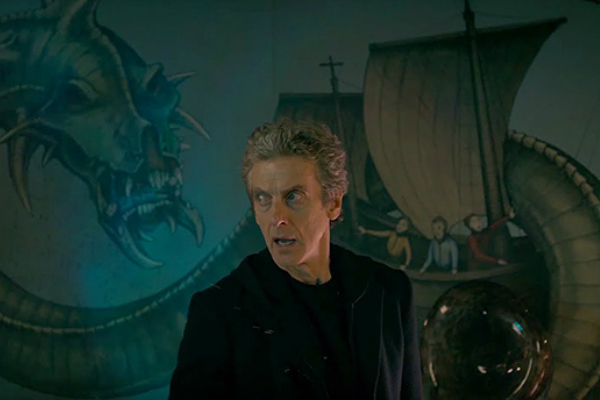
Not content with referencing Star Wars, this series of Who also snuck in a couple of references to that other big, space-set saga, Star Trek. In Under The Lake, there is a big mural on a wall of a ship and its crew under attack from some sort of sea monster. The colours they're wearing are gold, blue, and red, a very clear nod to the three colours of Star Fleet officers. Just incase that wasn't enough, there is also the appearance of '1701B' on a chamber door. If you add NCC in front of that, you've got the Enterprise.
4. Davros And The Daleks
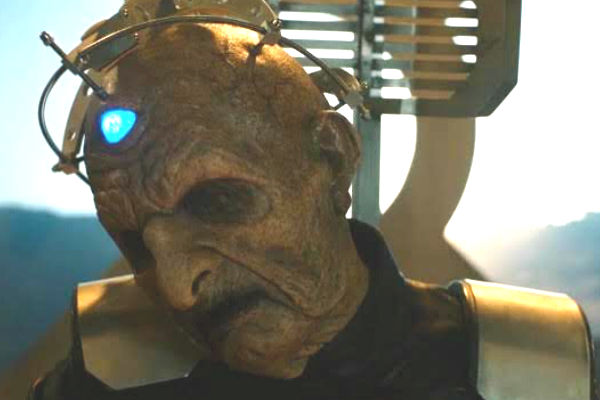
If bringing back Davros wasn't enough of a callback to the Doctor's past, the show made sure to make some explicit references by including clips from past episodes during a scene between the pair of old enemies. There's the Fifth Doctor in Resurrection Of The Daleks, the Sixth Doctor from Revelation Of The Daleks, the Seventh in Remembrance Of The Daleks, and the Tenth in Journeys End and, for some reason. Most notably, though, are a couple of clips of Tom Baker's Fourth Doctor and Genesis Of The Daleks, which the opening two-parter of Series 9 paid serious homage to. Then there were the Daleks themselves. The return to Skaro brought with it all manner of the oversized pepper shakers, including the bronze ones from the revived series, ones from the 70s and 80s, a special weapons version, and even the Supreme Dalek. Any lingering annoyance at the multi-coloured ones introduced a few years ago may have just dissipated with this episode.
3. Back To Gallifrey
The Doctor has finally returned home. Gallifrey has frequently been mentioned as being where he comes from, although actual on screen appearances have been few and far between. The reason for that is it was believed to have been destroyed in the Time War, a battle between the Time Lords and the Daleks which supposedly wiped out both races, save for the Doctor and one solitary Dalek. Obviously since then the Daleks have came back in big numbers, and more Time Lords have appeared as well. It was then revealed in The Day of the Doctor that the planet wasn't actually destroyed, but hidden in a pocket dimension. Finding it in this episode - at the end of the universe - is the culmination of that plot thread, which was picked up last series when Missy gave the Doctor coordinates that supposedly led to the planet, only for him to get there and find nothing. The design of Gallifrey is in keeping with its first appearance in the revived series, back in The Sound of the Drums from Series 3, after it was previously described as such in the episode Gridlock. Returning to the planet were Clare Higgins as Ohila, of the Sisterhood of Karn (also seen in The Magician's Apprentice), and Ken Bones as the General (who later regenerated into a woman, an allusion from Moffat to the growing clamour for a female Doctor). Not back, however, was Timothy Dalton, whose role as Rassilon was taken by Donald Sumpter, who has also appeared in, you guessed it, Game of Thrones.
NCTJ-qualified journalist. Most definitely not a racing driver. Drink too much tea; eat too much peanut butter; watch too much TV. Sadly only the latter paying off so far.
A mix of wise-old man in a young man's body with a child-like wonder about him and a great otherworldly sensibility.