Game Of Thrones: 8 Changes To The Books That Were Completely Justified
The books are better... except on these occasions.
"The books are better."
It's a common refrain from fans of any novel (particularly in the fantasy genre) that gets a screen adaptation, from Lord of the Rings to Harry Potter, and it's certainly something we've heard a lot of through seven seasons of Game of Thrones.
As the show has neared its endgame, while George R.R. Martin still shows no signs of actually finishing The Winds of Winter, let alone starting A Dream of Spring, talk has turned to how David Benioff and D.B. Weiss are bad storytellers without Martin's work to guide them. There are kernels of truth in that, especially in Season 7, but even while the show was following the books it still made plenty of changes.
Some, admittedly, ended up disastrously, most notably in their massacre of the Dorne storyline, but also things like their handling of characters like Jaime and Stannis. On other occasions, though, their diversions from the source material actually paid dividends. GRRM has been known to write himself into narrative dead-ends or take unnecessary detours, and Weiss and Benioff - along with their great cast - have found ways of improving some aspects, either through cutting things out, mixing them up, or pure invention.
8. Robert And Cersei's Marriage And Child
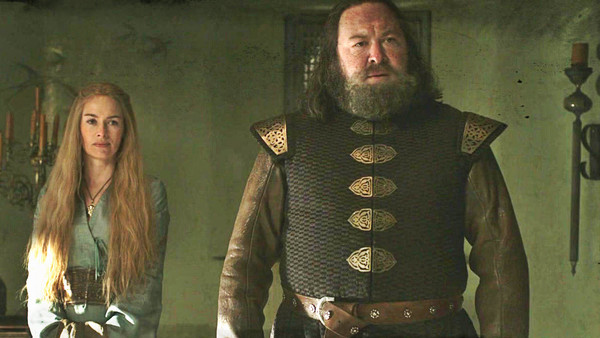
King Robert Baratheon is one of the few characters better on the screen than the page, thanks in no small part to Mark Addy's perfect performance. However, the writing also played its role here, with the writers deepening his love for Lyanna and adding a few more shades to his relationship with Cersei.
In both books and show their marriage is one of resentment - for her not being Lyanna, for him not being the King she expected - but the show goes to greater lengths to showcase that Cersei, at least, did once love Robert and hoped to make their marriage work. The scene the pair share, where they're away from the crowds and it just comes down to the two of them in a room (as so many of Thrones' best scenes do) is a low-key standout from Season 1, as Cersei tells Robert of her expectations and dreams and how they soured, and there's a real sense of sadness among the bitterness.
This is expanded upon further by the fact that Cersei had a trueborn son with Robert, who died shortly after she gave birth to him. Cersei's redeeming feature is the love she has for her children, and that's no different when it's Robert's child rather than Jaime's.
"I lost my first boy; a little black-haired beauty... The boy looked just like [Robert]. Such a little thing; a bird without feathers. They came to take his body away, and Robert held me. I screamed and I battled, but he held me. That little bundle; they took him away and I never saw him again. "
We learn that Cersei did fall pregnant to Robert in the books too, but there she didn't want to have his child and bid Jaime to find a woman to cleanse her. Here we get another layer to their marriage, one where there's actual compassion; it makes their relationship stronger, the destruction of it harsher, her eventual betrayal even more earned.
7. Making More Of Margaery

When it comes to the Tyrells, the show has giveth and taken away. While Show Loras may be nothing compared to the novel's Knight of Flowers, his sister Margaery became one of the most fascinating characters in the series and a great player of the game of thrones.
Although regarded as clever, the format of Martin's books means we never really get a closer look at her and there's less chance for depth to be added. Instead, she's someone who tends to be a part of other people's games, with her mostly seen through the jealous and vindictive eyes of Cersei.
Brought to life by Natalie Dormer on the show - some of Thrones' finest casting work, even in a very crowded field - Margaery is transformed into a much bigger player. Her conflict with Cersei is more head-on, as she hatches her own schemes with grandmother Olenna Tyrell and trades sly barbs with her mother-in-law.
She's intelligent, shrewd, cunning, and hilarious too, making for a winning combination that allowed her to become not just a fan-favourite but a character of real strength, something the books never fully allowed for. It's true she deserved better than her death in the Sept of Baelor, but everything leading up to that point was expertly done by the writers and Dormer.
6. Catelyn's Relationship With Jon

Catelyn Stark is a strong character in both show and books, written as someone who'll do whatever it takes to protect her family, but the TV series does more to make her a likeable, sympathetic figure.
Not only do they have her ask Ned to stay in Winterfell, rather than push him to go to King's Landing as she does in the books, but even better they change her loathing of Jon. Removing the line about her wishing he had fell from the tower makes her less vengeful, and the best comes in her conversation with Talisa:
"When my husband brought that baby home from the war, I couldn't bear to look at him. Didn't want to see those brown stranger's eyes staring at me. So I prayed to the gods "Take him away, make him die." He got the pox and I knew I was the worst woman who ever lived. A murderer. I'd condemned this poor, innocent child to a horrible death all because I was jealous of his mother, a woman he didn't even know!
"So I prayed to all Seven Gods, "Let the boy live. Let him live and I'll love him. I'll be a mother to him. I'll beg my husband to give him a true name, to call him Stark and be done with it, to make him one of us... And he lived. And I couldn't keep my promise. And everything that's happened since then, all this horror that's come to my family, it's all because I couldn't love a motherless child."
It's arguable whether Talisa was a change wholly for the good - it changes Robb's character negatively, making him less like Ned - but this helps swallow her inclusion over Jeyne Westerling, giving Cat a moment of grief and sorrow that endears her to the audience and makes her eventual death all the more painful. Whether or not she should've returned is another matter.
5. Tywin And Arya

A fairly simple change, this, yet an incredibly effective one. In the books, Arya goes to Harrenhal and serves as a cupbearer, but it's to the man who'd later be killing her brother and sending Jaime Lannister's regards, Roose Bolton.
In the show, Arya instead worked for the man right at the very top of the food chain, Tywin Lannister. It was, quite simply, a stroke of genius that did wonders for both characters and Season 2 as a whole.
Charles Dance and Maisie Williams made for a shockingly good pairing as they engaged in a high-stakes game of cat-and-mouse, her spying on him, he almost but never quite learning her true identity.
There was distrust on both sides, and a hatred at least on Arya's part, that made every moment they shared incredibly tense, and yet they were perfectly balanced by the surprisingly mutual admiration on display: Arya learned a lot from Tywin, and he showed more humanity too, and they remain one of the show's strongest character pairings to date.
4. Brienne Vs The Hound
The Hound's path goes much the same way as it does in the books, insofar as his journey ends with Arya leaving him to die (although his return should be confirmed if/when The Winds of Winter is released). In A Storm of Swords, Sandor Clegane is wounded during a fight with Polliver, eventually succumbing to his wounds. Brienne, meanwhile, is still focused on her search for Sansa at this stage.
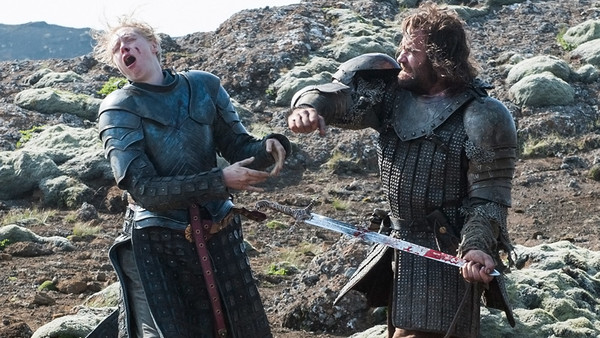
In the show's epic Season 4 finale, she finds the other Stark girl, coming across Arya and the Hound after the pair are turned away from the Eyrie. A bloody and brutal custody battle breaks out, each believing they're the one to look after Arya and neither trusting the other, which stands as one of the most violent and visceral Thrones has delivered.
The balletic swordplay is left behind, there's no big CGI, just two equally matched warriors slugging it out in a storm of swords and stones, with Brienne winning the duel. It's a major boost for her character, who'd largely just been wandering around - as she does in the books too - and a major shock for fans of the Hound, leaving a massive cliffhanger that wouldn't be resolved until Season 6. It remains perhaps the greatest example of one-on-one combat in the series (though Oberyn and Gregor might disagree), and received a wonderful callback in the Season 7 finale.
3. No Aegon

We're introduced to Young Griff in A Dance With Dragons and, in a late-in-the-day twist, it's revealed he's actually Aegon Targaryen, son of Rhaegar, and the would-be heir to the Iron Throne if not for the fact everyone thinks he died during the Sack of King's Landing.
To boot, his 'father' Griff is Jon Connington, former Hand of the King and one of Rhaegar's closest companions, with the pair conspiring to go to Westeros and take the Iron Throne. It's a big shocker, but coming in the fifth book with all the other characters moving towards the end game, he feels more like a distraction than a genuine contender.
Benioff and Weiss at least sensed this, and were perhaps even told as much by Martin himself, because they cut the storyline completely. Jorah gets greyscale instead of Connington, Jon Snow's real name is Aegon, the Golden Company is hired by Cersei, and Tyrion meets Daenerys and they set off to Westeros together.
Of course, it remains to be seen whether he's the real deal or, as expected, a pretender, but it would've been an unnecessary addition to the show and, since there wasn't much attention paid to Rhaegar's children, a twist that might not have carried as much impact. We've spent years getting to know the other characters, and it's better to spend the final seasons with them rather than this diversion.
2. Keeping Bronn Around

Not so much one instance of change as a series, Bronn is made infinitely better in the show than the books thanks to just how great Jerome Flynn is and how much the showrunners must've loved having him around.
The path of the character starts off the same, with him bonding with Tyrion over their shared sense of humour and volunteering as champion for the Imp during his first trial by combat, and distinguishing himself later during the Battle of the Blackwater. When it comes to Tyrion's next trial, though, Bronn refuses - as he does in the show - and that's where things really differ.
Cersei gives him a chance to marry into House Stokeworth, meaning Bronn does actually get his castle and, despite occasional mentions of him, largely disappears from the plot. The show finds a way of keeping him around, sending him on an ill-fated mission to Dorne with Jaime. Not that that particular bit of invention was justified, but it at least kept Bronn around and means he's stuck through as a reasonably big part of the show, leading up to his spectacular sequence in The Spoils of War.
Sure, we suffered through the "bad pu**y" line, but we got to see Bronn take on a dragon too and become a more fleshed-out character in the process, with innumerable C-bombs along the way, and that's totally worth it.
1. Hardhome

Hardhome, an abandoned village beyond the Wall, isn't seen in the books. It's heard of through Jon, but the Lord Commander himself doesn't actually go there, as he sends Cotter Pyke to see what's actually happening and save the wildlings if possible. The situation is direr than he feared, with the wildlings eating their dead and wights lurking in the shadows, but it's never explored nor explained beyond a letter Pyke sends to Jon back at Castle Black.
On the show, however, Jon does lead the expedition to rescue the wildlings, and all hell breaks loose. The wights attack and so too do the White Walkers, coming out of nowhere in a quite literally chilling sequence that results in one of the most epic and harrowing battles ever put on the small screen, magnificently captured by Miguel Sapochnik.
Hardhome is but a footnote in the books, and yet Benioff and Weiss, along with Sapochnik, turned it into one of the show's greatest hours.
What other changes to the books were justified? Let us know down in the comments.