Jessica Jones: 10 Reasons Why Marvel's Films Simply Can't Compete

What is it about Netflix that makes Marvel so much better?

When Iron Man first hit cinema screens in 2008, no one at the time would've even had the slightest inkling that Marvel Studios would grow to be the cinematic titan it is today. Having spawned dozens of sequels, spin-offs and more, the Marvel Cinematic Universe has arguably become the most significant and bankable film franchise in recent memory. This doesn't come without its pitfalls however, and you don't have to look far to see Marvel's detractors make their thoughts known. Among the most common of criticisms levelled at the franchise has been its uniform approach to story telling, with many viewers begrudgingly making their way to new releases often at the expense of forced humour, undeveloped antagonists, and iffy CGI. These critiques haven't gone away either, and have actually increased with each successful Marvel outing (even if there are exceptions - Winter Soldier to name but one). Quite the anomaly then, is the franchise's Netflix presence. Kicking off earlier in the year with the universally acclaimed Daredevil, shows on the streaming service have pushed the boundaries of the universe's normal constraints, tackling mature themes and depicting unconstrained brutality in a way the films simply couldn't dare venture - lest they sacrifice the much-coveted PG13 rating. The same is true of Netflix's latest addition to the MCU, Jessica Jones, which is also dealing with themes left unapproached by not just Marvel's wider slate of media, but by comic book adaptations as a whole as well. It isn't just the gritty approach to story-telling that differentiates the shows from the films however, but the strength of writing overall. Yes, the darker avenue grants show-runners a huge creative licence to adapt Marvel's characters more faithfully, but when line delivery doesn't just hinge on how many laughs it will get from the audience, better character development and emotive climaxes are a distinct and very much intended consequence. Indeed, as Marvelites world-over make their way to their couch of choice to binge-watch yet another costume-clad series, Jessica Jones is already demonstrating that Marvel's blockbusters simply can't compete.


10. They Just Aren't As Mature

Yes, even with Winter Soldier's strong political edge, Marvel's films tend to struggle with mastering that balance between focussing on mature themes and capturing the sensationalism of their comic book source material. It's a harmony most comic book adaptations never seem to be able to capture either, but often with Marvel the whacky outweighs the mature. This isn't really a problem with Netflix's offerings, though I'd be lying if I said that they weren't taking inspiration from darker storylines. In the case of Jessica Jones the series was largely based on the Alias comic, a revolutionary storyline crafted by prominent scribe Brian Michael Bendis (who also wrote what many consider to be one of the few runs on Daredevil equal to or even better than Frank Miller's acclaimed stint on the comic decades earlier). Alias was significant for its careful handling of adult psychological themes not prominently traversed in the medium, and that transition has been relatively painless as the material has made its way to the small screen. The MCU has rarely delved into the darker elements of their characters, and when they have its taken a backseat to the quips and explosions that the franchise has made its name on. We never got to see Tony Stark struggle with his alcoholism (see Demon in a Bottle) or dwell on the aftereffects of his war-mongering, nor did we see enough exploration of the character's struggles with PTSD in the aftermath of the battle of New York. Iron Man 3 thusly suffered (though we daren't mention Trevor Slattery), and it's made evermore frustrating by the fact that actors like Downey Jr. are more than capable of delving deeper into the inner workings of the characters we need to see more of. Again, Winter Soldier is the exception to the rule in this instance. Chris Evans' portrayal of a man out of time is wonderfully nuanced, and it led to a truly heart-breaking scene in which Peggy's dementia begins to sever his only link to the past. Obviously this is heavy material to work with, and Marvel's films do need light to balance out the dark, but the lack of emotionally impactful moments in the series is an issue that needs to be highlighted.

9. Villains Actually Get Developed

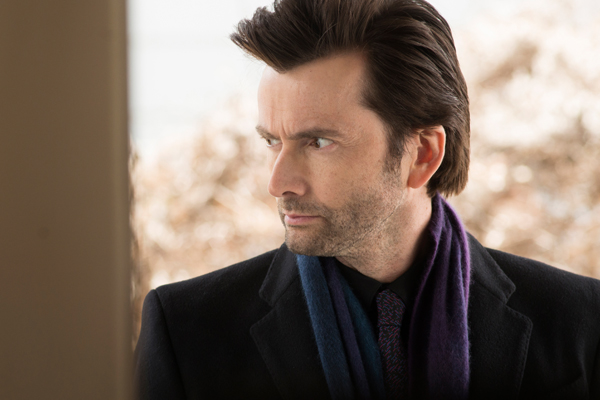
Here's a challenge: apart from Loki, try and name one truly memorable onscreen MCU villain (excluding what's been portrayed on Netflix obviously). It's okay to admit if you're struggling, since the film series still hasn't managed to find an antagonist that possesses both charisma and threat. Apart from Vincent D'onofrio's suitably unnerving performance as the Kingpin of Crime and David Tennant's sinister portrayal of the Purple Man, the MCU is yet to find a villain developed enough to really assert its complete dominance over the comic book film genre. Malekieth lacked development in The Dark World, as did Ultron in the Avengers sequel that shared his namesake. Ronan the Accuser played second-fiddle to the wonderfully zany Guardians of the Galaxy, and Ant-Man's Darren Cross was given less exploration than the CGI'd insects that perished in its finale. This is an issue that hasn't improved in Marvel's films, and sadly it looks as though there's no sign of it stopping. Bluntly speaking it sucks. The MCU has drawn so much talent towards it across the world over, yet that talent is completely wasted when antagonists are forced to take a backseat to the proceedings. Here's hoping that Dr. Strange is an exception when Chiwetel Ejiofor takes to the screens as Baron Mordo.

8. There's A Clear Human Element

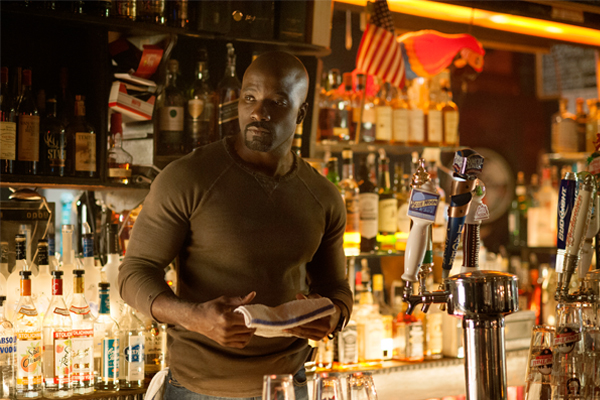
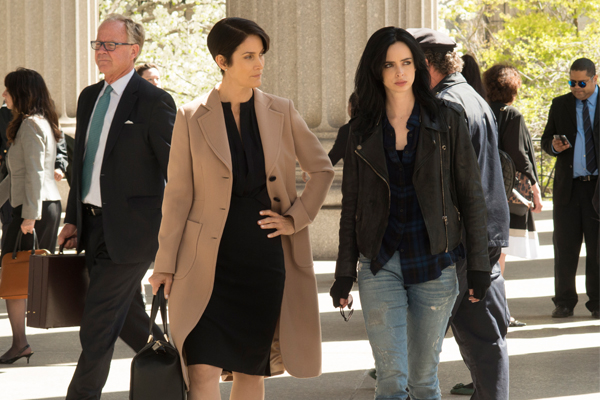
This is just a matter of fact statement - Jessica Jones' writing is on a whole other level from the films'. Complimented by the exemplary performances of Krysten Ritter, Mike Colter and David Tennant to name but some, the ability of these shows to dissect their source material so well, so thoroughly, is just wonderful to see - a fortunate consequence of which is its ability to convey a story grounded in human experience. Daredevil already displayed multiple emotional crescendos (Nelson vs. Murdock a notable highlight), but Jessica Jones took this one step further, really weighing in on themes the MCU's films have deemed mostly to be unworthy of attention. Everyday human relationships, experiences and mental struggles all come to dominate the show's narrative in new and inventive ways, with due sensitivity being given when approaching potentially uncomfortable plot-lines. At the end of the day the MCU needs to be a lot of things for a lot of people, and it would be both unfair and unviable to ostracise such a large portion of potential viewers in the name of solely tackling adult themes, but this doesn't mean it can't tackle at least some of these issues without losing its audience.

7. The Writing Is Much Stronger

You know what might be the best thing about Netflix's Marvel shows? The fact it doesn't really on forced humour to create likeable protagonists. Okay, maybe not the best thing, but it's a testament to writers like Drew Goddard and Melissa Rosenberg's ability to portray complex, nuanced characters with ease and with no reliance on quick one-liners to cement favourable opinions from the audience. The writing for these TV shows depicts flawed characters superbly, which is fantastic considering Marvel Comics originally made its name on countering the expectation that every hero that donned a mask had to be a role-model. It's not just the strong characterisations that make Netflix's Marvel better than the films, but the overarching storylines as well. Whether it be a court room drama with a superhero twist or a psychological thriller with Sci-Fi undertones, the level of intrigue, complexity and morality on display in these shows just blows their blockbuster counterparts right out of the water.

6. Vulnerability Is Key

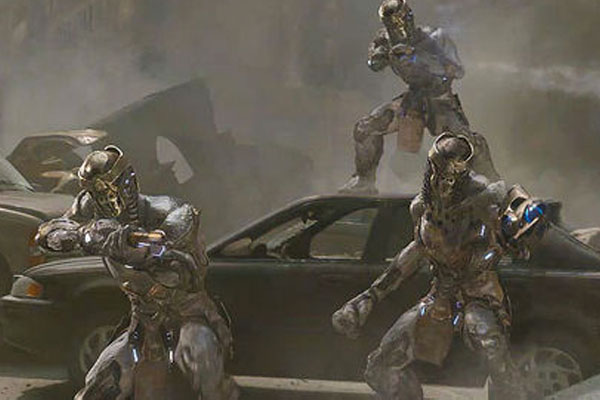
Dealing with lesser-powered characters is always going to bring with it a greater sense of threat, but sometimes that aura of vulnerability is lost when The Avengers are ploughing their way through Chitauri and Robots as if they were paper. It makes sense that this would be the case when you're focussing on Earth's Mightiest Heroes, but I'd be lying if I said it doesn't get fatiguing after multiple sequels, spin-offs and variations come to pass with little change to the formula. Daredevil and Jessica Jones both get to show their casts' most vulnerable moments - both emotional and physical - without the need to rely on character deaths when they do. Age of Ultron had a huge missed opportunity in Scarlet Witches's mind-altering abilities. We were offered brief glimpses into the Avengers' most guarded secrets, worries and fears, but without thorough treatment or the promise of further exploration these dream-like sequences, though fantastically put together, had an anticlimactic result. Imagine just how fantastic a Black Widow prequel could be, where she would be given ample time to explore her chequered past we're only given brief allusions to. It's such a huge part of her character yet the audience is expected to form most of that backstory themselves. Mystery is a great technique to deploy, but taking the place of character development it should never do, especially if it's at the expense of severing the audience's personal connection to the heroes they're watching,

5. The Format Works Better For Adapting Source Material
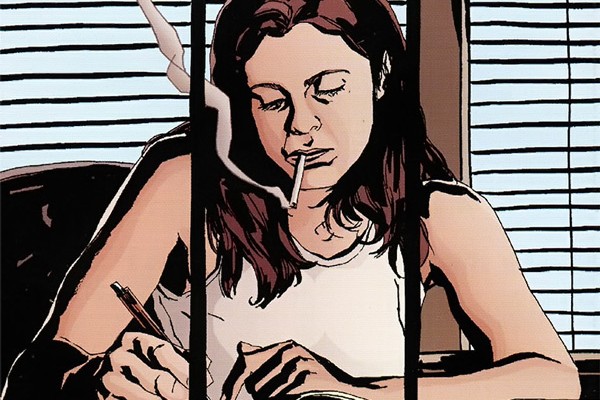
Adapting a six-issue mini series may be doable on film, but anything longer and stuff will have to be sacrificed to fit into that two hour running time. Logic then dictates that TV shows are the best place for comics to be, even if it does come at the expense of a blockbuster budget and all the considerable press that's commonplace for summer cinema releases. Take this year's Daredevil for example - the series managed to include influences from multiple comics storylines that spanned hundreds of issues, decades and creative teams. Consolidating all this into a film would manage to catch some of the magic that made these stories great, but having it all take place in a TV show would (and does) include so much more of what makes the medium so special. TV is such a fantastic format for Comic Books to get adapted to because not only are the hours longer, there's less studio interference too. Nowhere in Jessica Jones will you see a forced cameo from The Falcon or a director parting ways over 'creative differences' as a result of studio interference, and that's just the way it should be.

4. Practical Effects Prevail

CGI has been a mainstay of cinema for a little over two decades now, but despite the fact the technique has come forward leaps and bounds since its first appearance, its presence in Marvel's films is starting to become a distraction. Ignoring Guardians of the Galaxy's usage of the technique (it's kind of essential, considering it's a Sci-Fi space opera), overuse and overreliance on the effect has become a major immersion-breaker for those seeking an escape into the realms of the Marvel Universe. A disposition towards filming exterior set pieces through the use of green and blue screen also leads to a shoddy product, especially when there are decent locations to shoot film on. I'm not knocking the effort that goes into the MCU's creation, especially since there have been some absolutely incredible scenes involving the use of both practical and computer-generated effects. However, do any of them hold a candle towards the hallway fight scene from Daredevil? Or the raw confrontations in Jessica Jones?

3. There Aren't Any Awkward Tonal Shifts

Marvel's films are certainly witty, but do you not feel as though they fail to strike the right tonal balance? The shows on Netflix are aptly dark, but this doesn't mean they're devoid of humour or light-hearted moments. What differentiates these moments from the ones more obtusely inserted in the films is that they're built up through character development and natural situations, rather than through awkward pauses and an incessant compulsion for heroes to make light of dire straits. No one wants a tonally bleak show that lacks those human moments of humour and self-awareness because that would detract from the show's ability to convey relatable scenarios, but there is a point where too much humour can feel out of place and become unwelcome to the plot's proceedings.

2. They Aren't Restrained By The MCU

One of the best things about Netflix's Marvel shows is that they're their own thing, not burdened by quotas on how many references they need to namedrop, or how their plotlines need to intersect into the next big event. They stand tall on their own two feet because they occupy a certain space in the MCU, away from all the cataclysmic events that define the series outside of Netflix's confines. So far we've seen a few nods to the wider universe, but they've been anything but overbearing. The Battle of New York is only referred to as 'the incident' and nods to the Hulk and Captain America aside, these references appear natural and help cement the shows' presence in the ever expanding MCU. All of these shows are going to eventually culminate in a manner similar to The Avengers when The Defenders drops a few years from now. It's as of yet unclear how all these heroes (Daredevil, Jessica Jones, Luke Cage, Iron Fist et al.) will collide and what threat they'll endeavour to stop, but there's plenty of time for seeds to be planted as Netflix continues its march towards total domination of the TV superhero genre.

1. The Cinematic Techniques On Display
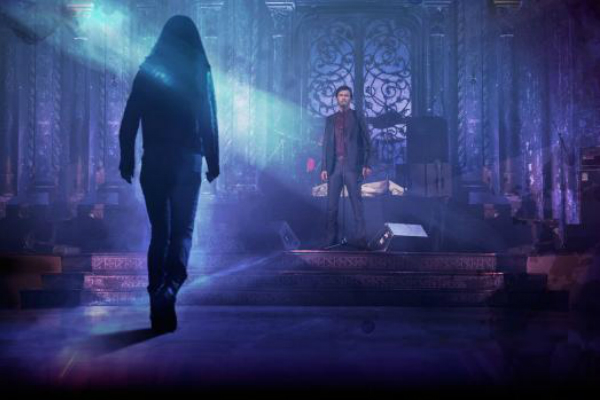
Jessica Jones has been another stellar knockout for Netflix's Marvel offerings, both in terms of its commercial and critical reception. Its writing, acting and cinematography have all contributed to a tale suitably dark and unsettling, aided by an atmosphere unparalleled in its genre. Mind control may not seem like a sinister power on the surface - its an ability that's been used in the most cartoonish of costumed misadventures - but The Purple Man (a character only introduced 15 years ago) has taken this ability and exposed it for all its inherent darkness and depravity. The power to persuade, to manipulate, is one far from childish, and David Tennant's portrayal of Killgrave shows its horrific nature at its worst. The show's semi-linear structure introduces us to a Jessica who's been disturbed and abused by this power, and the encroaching fear and anxiety of Killgrave's return is hinted at through subtle tricks of the camera and brief flashback. It's utterly terrifying to note the increase of purple tones as Killgrave moves closer and closer towards Jessica and her friends, and these subtle changes in the environment manage to instil the same sense of dread in the viewer that dominates the narrative through to its end. With this sort of creative talent at the helm, I sincerely hope that Marvel will continue to be a mainstay on Netflix and more importantly, remain a key force in pushing genre boundaries forward whilst it does. Do you think Netflix blows Marvel's films out of the water? Or are you happy with the current quality of the company's cinematic output? Be sure to share your thoughts in the comments below!

Content Producer/Presenter

WhatCulture's very own resident movie guy, Ewan has been working in the content creation biz for over 10 years now, having started as a freelance contributor to WhatCulture Gaming all the way back in 2015. After graduating with a First-Class Honours in History from Northumbria University in 2017 (where he won a prize for a totally killer dissertation on the Watergate years), Ewan took on the role of Comics Editor at WhatCulture and quickly developed WhatCulture Comics into one of the biggest superhero-focused channels on YouTube. He followed this with a brief hiatus at Screen Rant in 2021, where he worked across the Gaming and Film sections as a writer and editor, before returning to WhatCulture as a Senior Content Producer / Presenter in 2023. He started his own podcast, We Love Dad Movies, in 2022, and has contributed several written pieces to the Eisner-nominated comics website Shelfdust as well. In his current role, Ewan incorporates his love of cinema, comic books, and history into written pieces and video essays for WhatCulture's Film & TV channel, as well as WhatCulture Gaming and WhatCulture Horror, with a particular focus on nineties-era Dad Movies, old school Westerns, and Golden Age Hollywood Noir. John Carpenter is his fave, and he thinks Batman Beyond should never have been cancelled. If that's your vibe, you'll probably like his stuff.