5 Ways Steven Moffat's Doctor Who Is BETTER Than Russell T Davies' (And 3 It's Worse)
Yep, we're going there.
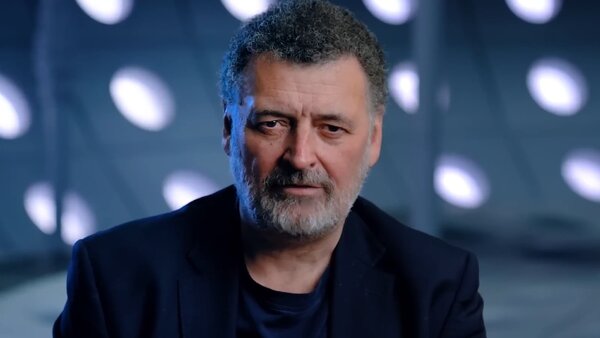
Everyone has their favourite Doctor – those debates have been going on for as long as Patrick Troughton has been tooting on his flute. But the modern era, with its greater spotlight on the people behind the show, has introduced an entirely different, and in some ways far more fervently fought civil war: the battle of the showrunners.
Perhaps this discussion always feels a little more catty as we're comparing actual people and not characters, but it's something we do as a fanbase regardless.
In one corner, Russell T Davies, the man responsible for bringing Doctor Who back to screens in 2005 and making it a cultural juggernaut. In the other corner, Steven Moffat, the breakout writer of the revived series and the helmsman of the show after RTD's first departure. I would love to tell you that Chris Chibnall is in contention here, but while I think we may look on his era more favourably now than at the time, it would be disingenuous to act like this is seen as a three-horse race by most fans.
The RTD and Moffat eras excelled in very different ways. For the purposes of this article, I'll be going to bat for the Moff, and arguing why his era is better, but I'll also be playing devil's advocate by acknowledging the various ways RTD has him beat.
8. Better: Season Arcs Actually Felt Like Stories

The RTD mystery box is perhaps his most notorious trope as showrunner. In Series 1, the recurring 'Bad Wolf' motif worked to great effect, and he really took that and ran with it. Again, and again... and again.
We got 'Torchwood', 'Vote Saxon' and 'The bees are disappearing', one after another. They were effective hooks, but structurally they were often quite shallow and were used in place of any legitimate build-up to a reveal.
This went into overdrive in RTD2 with its harbingers, anagrams that weren't anagrams, and the very odd choice to have 'spooky old lady' as a mystery box twice in a row. It may have "generated content", but it all felt rather weak.

Contrast that with Moffat’s. For all their occasional convolution, his story arcs actually evolved throughout the series. They had turns, reveals, and progression. Take Series 6 – you've got the Doctor's death at Lake Silencio, Amy's pregnancy, River's identity, and the origin and intent of the Silence.
There's scarcely an episode that doesn't move one of these threads forward in a meaningful way. We don't just say 'Silence will fall' and call it a day, we cut to a scene at the end of the episode that drives us towards the climax. The difference in structure is night and day.
Moffat’s arcs were also character-driven rather than plot-driven, the TARDIS team were impacted and steered by dramatic developments, and most importantly of all, there was variety. No longer was the big question of each series 'who's coming back in the finale?' – each presented an entirely different type of mystery, with the big question focused on totally different things each time.