Star Trek: Everything We NOW Know About The Burn
It blazed bright across the sky because a child had a tantrum, but what does it mean for Star Trek?
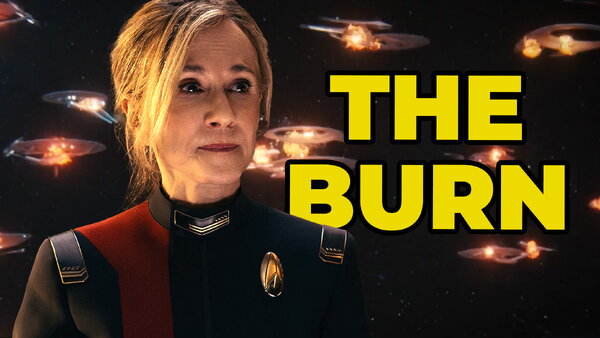
The Burn, as it was called, was more than a ripple through space. It was a watershed moment for the Star Trek universe, obliterating alliances, crippling empires, and tearing families apart at the seams. Dilithium, that magical fuel that kept ships moving faster than the speed of light, suddenly became as friendly as an oncoming mushroom cloud, with little to no chance of escape.
The cause of the Burn has been identified, with the chances of a second Burn now seemingly nil. However, as Starfleet Academy is showing us, the after effects of the great explosion are still being felt over 120 years later. Betazed may have finally rejoined the Federation, but how many Klingons are left alive to find honour in this reunification?
Though elements of the future would make a certain Vulcan Ambassador proud, the hope for a better tomorrow took a sideways lean. With slipstream out of the question and roving gangs of pirates ready to pounce on unsuspecting ships, things looked extremely grim for Starfleet and its allies. Belts were tightened, borders were closed (where we have heard that before?), and a general air of mistrust hung over the once and bountiful conglomeration of planets and species.
The Burn changed everything that we once knew about Starfleet, the Alpha and Beta Quadrants, and the future envisaged by Gene Roddenberry. With some of the dust finally settling, just how much did Su'Kal affect the universe he was born into, screaming for companionship?
Sincere thanks to Drs Erin MacDonald and Mohamed Noor for their explanation of the Burn and how it came to be.
10. When Did The Burn Happen?
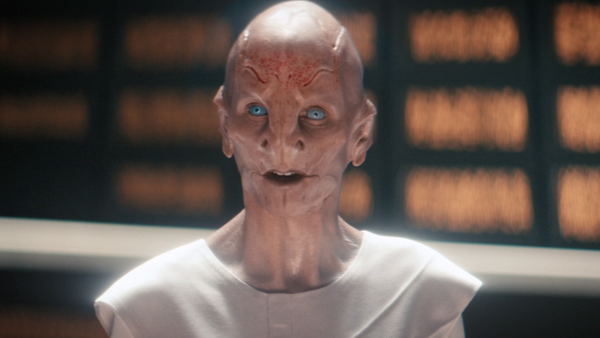
The event known as the Burn took place in 3069, reducing vast regions of the Milky Way Galaxy to isolated pockets in an instant. Theta Zeta was eventually discovered as the origin spot, having been the focal point and focusing lens for a scared young Kelpian.
As much as the Burn had always been a tragedy, with countless lives lost in the explosions, it was an unintentional, devastating result of a child's trauma. In 3064, the KSF Khi'eth was engaged in the search for new sources of dilithium. The ship suffered a catastrophe, eventually crashing on the planet in the Verubian Nebula.
Doctor Issa, one of the Kelpian scientists aboard, was pregnant at the time of the crash. Her child, who would be named Su'Kal, absorbed the planet's radiation in-utero, resulting in a symbiotic relationship with the dilithium-rich world. Roughly five years later, Su'Kal, having spent that time in a holographic simulation programmed by his mother, deactivated said program and saw his mother die from radiation poisoning.
The child, understandably, was devastated, crying out into the void. Unfortunately for dilithium users everywhere, this cry led to a subspace shockwave. It rendered all active dilithium in the galaxy inert, which had cataclysmic results. As most warp drives relied on dilithium to regulate the matter-antimatter reactions in the core, thousands of core breaches tore through space, killing millions.
Dilithium reactors on planet surfaces also exploded, rendering several worlds uninhabitable, such as Qo'Nos.
It is still unknown exactly how many people died as a result of the Burn.