10 Easy Ways Of Injecting Realism Into WWE
That gorilla position must be fairly crowded.

When WWE Hall of Famer Stone Cold Steve Austin dispenses booking advice, it would be incumbent on WWE Creative to remove the wool from their thick f*cking ears and say:
"What?"
Austin did change the course of the industry with an improvised promo, after all. Ranting on Taz's podcast back in 2015, Austin bemoaned the 'orators' in today's WWE, saying that they should, in order for fans to believe in them, believe themselves in what they're saying with 'conviction in their heart and soul'.
WWE has long since lost interest in preserving realism, in promos and elsewhere. As far back as 1989, Vince McMahon infuriated the wrestling community by blowing the lid off its worst kept secret. In an attempt to deregulate the industry, he officially declared that it was predetermined. It took a long time for that decision to affect the product, which was once framed as somewhat plausible in the context of an athletic competition - but the rot has set in. We aren't petitioning for WWE to reinvent itself as the UWF-i - even in this era of the ******1/4 match, the E is more important than the second W in WWE - but is it too much to ask that RAW General Manager Kurt Angle has something pencilled in for the 15:00-30:00 minute slot?
What would happen if a heel dipsh*t didn't book himself into a match during the opening segment?
10. Clear The Gorilla Position

The main offender in WWE's anti-pro wrestling, pro-sports entertainment crusade is the opening clusterf*ck segment seen on almost every episode of RAW and SmackDown. Take this week's opening segment for example, in which Finn Bálor interrupted Braun Strowman's introductory promo. It's just as well he was donned in his wrestling gear because, despite not appearing on a nonexistent call sheet, Kurt Angle booked him into a match with the Monster Among Men...
"...right now!"
He must have just been swanning around nearby, ready to cue up the sound guy because, in a fortuitous coincidence, his music blared up as well. That, or his DNA triggered a sensor near gorilla after he parted the curtain. That is a facetious assessment, obviously, but WWE's hysterically contrived match-making process - so easily resolved by simply announcing cards in advance under the pretence of an actual plan - invites apathy and suspicion.
There are several deflating aspects to this trope. So many unanswerable questions. Why don't authority figures have a schedule planned out for their incredibly expensive television production? What would Angle have done, had Bálor not decided to essentially book himself into a match?
Why must every single opening segment ruin suspension of disbelief, setting a dire tone for the remainder of the broadcast?
9. Tear Up The Script

This is something the likes of Steve Austin and Kevin Nash have been crying out for, and they're hard men to argue with. Well, Austin is at least. Nash, oblivious to tape-trading, thought Dave Meltzer watched Japanese wrestling via periscope in the 1990s.
WWE's stranglehold on promos is as much to blame as 50/50 booking for the current, homogenised landscape: everybody, with few exceptions, sounds exactly the same. Transcribing a Seth Rollins and AJ Styles promo would show the same verbatim results: an overlong, repetitive spiel with a few schoolyard-standard 'zingers' thrown in. This doesn't just inhibit the performers - it unravels the whole enterprise as fictitious. The talent is so clearly being told what to say that virtually every promo bleeds into the next. It's little wonder that the integrity of performers haemorrhages on a weekly basis.
This stranglehold, however, might not be quite as tight as some would have you believe. CM Punk stated in his Best In The World special that he considered them to be a 'guideline', and would always put his own spin on the content. Far from being reprimanded, his exceptional promos caught the attention of top brass almost immediately (once he served his time in OVW, naturally).
The New Day, too, are clearly injecting their own personality into their promos. Then again, you can understand the hesitation on the part of some talents - Zack Ryder try to get over on his own accord, and look what happened to him. He was driven off the stage on a bloody wheelchair, injured and insulted.
The product is sorely lacking in vitality, despite, for example, The Club being so much more entertaining IRL than they are on the terrible telly - but compliance is vital to safeguarding your career in WWE.
8. Bring Back Gene Okerlund
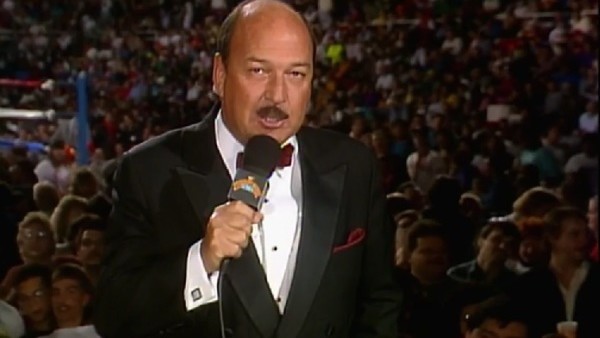
Not literally - Renee Young is an effective and engaging presence on WWE television, which is more than you can say for Dasha Caruso.
The problem is that almost every interview she conducts is interrupted by the wrestler with whom the interviewee is feuding - often ending in a physical assault. A face, likelier to get attacked, is hardly going to look around warily, knowing full well how these things end. That would make too much sense.
That would make them look paranoid - but the answer isn't to make them look foolish. This trope paints the heel as a cartoon villain, too. It's ridiculous how they always know where their rival is at all times. Do they just follow them around, on their tiptoes, holding their forefinger to their mouth so as to request that passersby don't foil their clever scheme? This trope is an ACME explosion of stupidity.
Instead, it would be far more productive to mine wrestling's rich history and resurrect the famous pre-match interviews Mean Gene once conducted in front of that iconic sky blue background. Economic and logical, the star would spin a specific promo from a question posed by Okerlund in an environment not too dissimilar to that seen in real sports.
These iconic segments were rarely interrupted in a laughably contrived attempt to develop a feud.
7. End The Rematch Mandate

When AJ Styles and Shinsuke Nakamura fought for the second time at Greatest Royal Rumble, it was fated to end as muddied as the Saudi Arabian money that made it possible in the first place; because we know WWE's post-Network Rule Of Three/Four remains firmly in place, it was impossible to fully immerse yourself in the action, which used to be the point. This was less a wrestling match than it was a contrived - there's that word again, the only constant in a WWE product so thoroughly lacking in continuity - exercise in plotting.
Styles won the first match cleanly, which should have put paid to the programme. But, since the rematch clause is now in effect even when there is no in-built narrative cause, they wrestled again - much too closely to the next pay-per-view to warrant a conclusive outcome. Stretched well beyond plausibility, this unrealistic approach is as to blame for the mitigated quality of the programme as Nakamura's physical deterioration.
The screwy finish in the first (or in this case, second) match is such a blindingly obvious machination with which to set up a sequel that it's difficult to suspend one's disbelief. The first match of a major WWE feud is not going to end cleanly, that much is now painfully clear. The only point left to debate is the nature of the contrivance: punch to the balls, a lame count-out, or Jon Stewart?
Other companies manage to present new and unique matches month on month - why is the biggest one in the world incapable of this? If WWE thrives with its own balls against the wall, why not implement a policy in which WWE creative challenges itself to harken back to 1997, in which a fresh raft of challengers was lined up for the Undertaker?
lol.
6. Build Credible Title Challengers

What did Bobby Roode do to deserve his place in this year's Men's Money In The Bank Ladder Match? He won a qualifying match over Baron Corbin and No Way Jose, obviously, but he has since stared at the lights on virtually every episode of RAW, losing most recently to Kevin Owens after weeks of jobbing to Elias - a man deemed not good enough in the storylines to compete for the briefcase.
So that's Roode not winning, then.
Zero attempt has been made to elevate Roode as a possible contender. Had WWE tried, we may actually anticipate a finish when he ascends the rungs. Instead, we will wait, bored, for the poor b*stard to fall from a stupid height. Cheers for taking an horrific bump and all that, Bobby, but we already knew you were a loser.
Fellow participant Owens finds himself firmly in 50/50 territory, too, having tasted defeat last week only to pour yet more soil over Bobby on Monday. There are just four RAW stars set to scale the ladder on June 17. How difficult is it to book each of them favourably - interaction is still possible, with guest commentary stints and the like - in a prolonged game of oneupmanship at the expense of goons we're expected to receive as jobbers, of which there are an alarming number on the red brand?
It's simple, really: earmark the performers who require protection - a stab in the dark, but perhaps those set to wrestle in a number one contender's match - and actually protect them by not jobbing them out.
5. Consistent Pushes

The case of Finn Bálor is a curious one.
The man captured the Universal Championship in the same timeframe in which Hulk Hogan won his first WWF Title. That is a sobering thought when one considers the extent to which his star has fallen in the two years since; now another victim of WWE's corrosive 50/50 booking, Bálor's role isn't just poorly-defined and dispiriting. It makes zero sense. This inability to reconcile the champion and loser aspects of the character ruins both emotional investment and any notion of realism.
Bálor's haphazard win/loss record depicts him as a prop. He cleanly defeated Seth Rollins for the Universal Championship at SummerSlam '16 before falling prey to a catastrophically mistimed shoulder injury and not immediately challenging Brock Lesnar for the belt the Beast won in the interim. This almost understandable plot hole cast him as weak, a perception WWE actually managed to reinforce in a goofy and pointless feud with Bray Wyatt in 2017. A major win over AJ Styles at TLC was retconned 24 hours later as WWE sought to build Kane as a filler challenger for Brock Lesnar. Ultimately, it was here that several fans gave up on Bálor as a top-tier performer.
Instead, he is simply a moving part in and endlessly incoherent machine that demands its parts fit wherever the next week takes it. Bálor is a sputtering cog, completely directionless, an effective character one week, ineffective the next, in an overarching universe that makes no sense whatsoever. Is...is Finn Bálor, looking at WWE as a fictional universe, a player?
It is impossible to determine, and thus impossible to buy.
4. Desaturate Gimmick Match Overload

Gimmick matches were once utilised on a sparing basis, for various reasons.
The novelty, the special aura, had to be preserved to ensure they would continue to draw in future. There had to be sufficient storyline reasoning to justify them - the steel cage for example would only make an appearance in the event of excessive interference or cowardice on the part of the heel, thus guaranteeing to the paying public a decisive outcome worth the investment. Moreover, a wrestling promoter is meant to be running a legitimate sporting enterprise. Forcing its employees to maim each other on the regular would be illogical. There'd be nobody left for them to make money from.
Obviously, it's been decades since the then-WWF professed to be anything of the sort, but think of the typical calendar year for upper card to main event WWE talent. The multi-man ladder match seems to be a WrestleMania Weekend tradition once more. Money In The Bank sees yet another incredibly violent match of that type. SummerSlam is rarely without one gimmick bout. Hell In A Cell features more than namesake match every year. TLC then sees us out with another set of ladder matches - as many as three in recent years.
It's impossible to believe even one wrestler, let alone the majority, would escape from all brutality that unscathed, which is a(nother) indictment of how unrealistic the current product is.
3. Increase Holiday Entitlement

It's far too unrealistic to expect WWE to implement an off-season, even though it is abundantly clear that everybody needs one. The writers, through exhaustion, are forced to book the same matches every week. Fans, too, have expectations of long-form storytelling that simply cannot be fulfilled due to the formulaic framework within which WWE operates. The wrestlers, through constant in-ring activity and travel, are getting injured with more frequency than ever in this post-Wellness age.
For the latter group, WWE could at least solve that problem through some sort of rotational system - for the purposes of realism, as much as their wellbeing. It's difficult to take something like the Money In The Bank ladder match too seriously when its combatants are trotted out on RAW the next night, only halfheartedly selling the extreme punishment they were meant to have suffered less than 24 hours prior. They likely are in a great deal of pain, ironically enough. That they are then forced to wrestle what typically amounts to a meaningless TV match weakens stipulations, outcomes, physical condition, realism - everything, essentially. Their absence would only have fans clamouring for their return, too (Bobby Roode excepted). Part of WWE's problem, as mentioned in the previous entry, is gimmick match overload.
The overexposure of the roster is equally unrealistic.
2. Rethink The Rumble

The Royal Rumble is an absolute institution, so popular and enduring that it refuses to go the way of its contemporary, the 5 on 5 Survivor Series elimination match.
The 2018 incarnation was a refreshing change from the woefully unrealistic trend that had become endemic in recent years: the surprise entrant. Watching Michael Cole in there in 2012 was a particularly irksome example of it. This isn't the Gimmick Battle Royal at WrestleMania X-Seven. This is a match held to determine the contender for the company's biggest prize on its biggest night. 2018 saw the return of the Hurricane, in what was one of few weak spots of an awesome match. Once an affectionate trope, this has devolved into a sort of empty Family Guy-style reference. The mere sight of a performer from yesteryear is supposed to generate a pop. Increasingly, this relic of a spot is as tired and irrelevant as the antiquated animated show itself.
The likes of Michael Cole, El Torito, The Godfather et al. should be nowhere near it. Not that WWE cares, but it's incredibly difficult to parse just how these comedy entrants end up there in kayfabe. Does everybody connected with WWE, past and present, wrestler and non-wrestler alike, receive an invitation to stick their hands in the golden tumbler, on a first come first served basis? If so, isn't it a coincidence that, year after year, there is an equal mix of 28 full-time roster members and two wacky characters from WWE's colourful history?
Hurricane's Brian Christoper Special of a reaction hopefully killed this goofy b*llocks for good.
1. Sell, Sell, Sell!

Selling is a dying art form - and it's one of the main reasons why so few are emotionally engaged with WWE.
Wrestling is meant to look like it hurts. On a recent revisit of Bret Hart Vs. Undertaker at the WWF's UK-exclusive One Night Only pay per view from 1997, your writer was struck by how exquisite the Dead Man's sell job was. His right leg had been ostensibly decimated by a heel Bret Hart throughout the match in order to set up the Sharpshooter. By its conclusion, 'Taker was hobbling around so convincingly that he'd won over a large portion of Bret's famously ardent European fans.
That's the aim. It should be, at least.
Effective selling generates sympathy for the face. And, when an audience connects with a wrestler on this emotional level, they are far more likely to want to see them succeed. It seems simple, yet, in the rush to grab and sustain an audience's attention, too many performers in WWE choose to overstuff their matches with content without allowing enough time for that content resonate. It's fast food wrestling that dissipates with a sugar rush.
On any given episode of RAW, and especially on pay per view, the drama once sustained through selling is now supplanted by finisher kick-outs, adversely affecting believability in the process.
We remember that One Night Only match 20 years later. Try to remember the middle portion of any RAW match held more than a fortnight ago. Like most everything else in WWE, it is impossible.