10 Observations From WWE's New Scott Hall DVD
Even 'Bad Guys' are brutally honest...
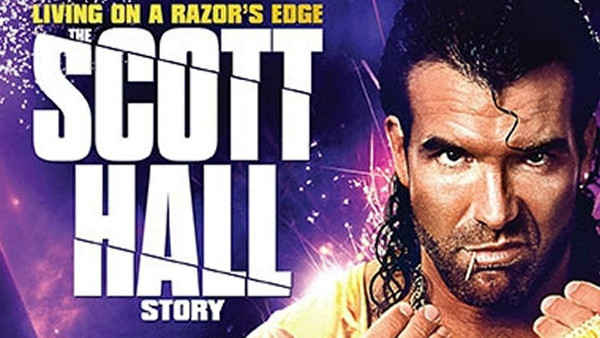
Once on top of the mountain and flying high as the WWF's Razor Ramon, Scott Hall's personal life was as low as it could be. Eerily, this contrast between professional success and personal strife often happened at the exact same time, sending Hall into a spiralling mess of drugs and alcohol that nearly ended his life.
Hall's story is one of redemption, but also of honesty and showing that having people around who really care can save everything. There's little doubt, had WWE not been so patient, Diamond Dallas Page not been so perseverant, and Hall himself not been willing to instigate change, this DVD set would not have been released.
For years, the man was a surefire candidate to be reported dead. His life a mess and his career seemingly tarnished, Hall has fought back. That tale is told with sparkling form by the consistently awesome WWE production team in Living On A Razor's Edge: The Scott Hall Story.
As good as the main documentary and bevy of extras prove to be, it's not all sunshine and hazy nostalgia. Let's analyse the set in-depth...
10. Starts On A Truly Somber Note
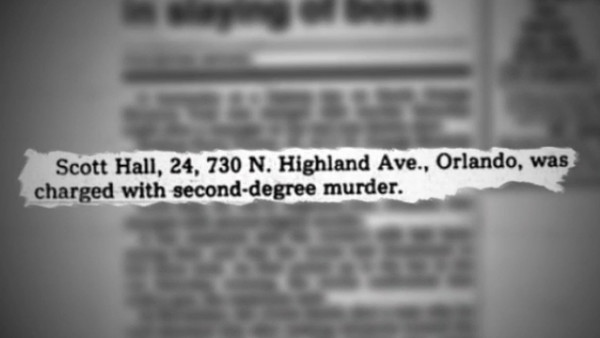
Living On A Razor's Edge opens with Scott Hall standing in the parking lot of a nightclub that haunts his thoughts to this day. In 1983, Hall was charged with second-degree murder upon shooting an aggressor who had been dating the same girl as him. After having a gun pulled on him, Scott fought back, but it was never his intention to kill.
This is quite the surprising way to open such a documentary. Given the more positive aspects of Hall's life over the past 3-5 years, it's poignant that WWE chose to open with the man's most negative moment. There's a reason for it though, that was the root of most of Hall's personal problems.
Tortured by what had happened, Scott still breaks down near the end of the DVD when visiting the scene of the crime. It's a shock tactic that undoubtedly works, but it's not misplaced. It's clear that this had a huge impact on Scott Hall, and therefore deserves a place in his life story.
9. Fantastic Array Of Matches In The Extras

One of the less-discussed negatives of the WWE Network for the company is that DVD sets cannot be sold on the premise of archived matches people struggle to find elsewhere. For example, many of the bouts featured in Scott Hall's set are actually on the Network, but that doesn't mean they shouldn't have been included.
This is supposed to be an exhaustive look back at the man's career, punctuated with moments that defined his life. Those who enjoy looking back the early years will see wrestling from the AWA, Mid-Atlantic and Hall's first run as The Diamond Studd in WCW.
Of course, most of the bouts are from his time as Razor Ramon in the WWF, and later himself during a second tenure in WCW. Most interesting are the historical pieces, such as a WWF Superstars debut match against Paul Van Dale and a match against Michael Hayes in the AWA during 1985.
An under-rated classic, Hall's clash (as Razor Ramon) against Bret Hart from the 1993 Royal Rumble is also well-worth checking out.
8. Doesn't Really Focus On Specific Feuds At All

Remember when Razor Ramon feuded with the controversial Goldust in late-1995/early-1996? Or how about when he had issues with Ted DiBiase and - later - his partner in crime IRS? If you do, don't expect to see any in-depth scoops on these rivalries in Living On A Razor's Edge, the documentary does not detail many feuds in great detail.
Some of the only ones given some minutes are the truly shocking job Hall did for The 1-2-3 Kid in 1993, as well as his infamous Ladder Match against Shawn Michaels at WrestleMania X. The lead up to the latter is explained well, but WWE make no reference to many feuds Hall had.
In a sense, that's a shame, but it's not an overwhelming negative. Such detail would have soaked up a lot of time available, lessening the minutes dedicated to Scott's life away from the ring and how he changed as a person over the years.
Still, it may have been nice to hear him talk about how he felt when being thrust into the top line scene in time for Survivor Series 1992, or how it was headlining WCW events when the WWF had rarely given him that opportunity.
7. Respect For Dusty Rhodes Is Abundantly Clear
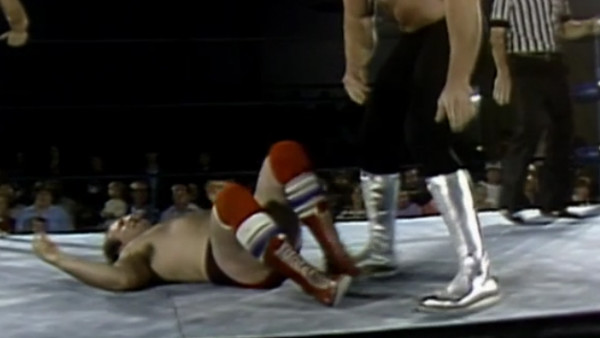
One of the most prevalent threads throughout Living On A Razor's Edge is Scott Hall's clear level of respect for the 'American Dream' Dusty Rhodes. From the age of 8, Hall longed to be a professional wrestler, simply because he watched men like Rhodes on television and realised that they were getting to live out their dreams.
As a fan, Hall admired Dusty, but would grow to respect him even more as a man once getting to know the legend. Upon breaking into the wrestling business, Scott couldn't afford a good pair of wrestling boots, so Rhodes coughed up the $200-$250 necessary to get them.
These silver, almost knee-length boots were favoured by Hall, but he was determined to pay Dusty back. There's a nice moment in the main documentary when Hall talks about finally getting to give that cash back to Rhodes many years later.
Similarly, Hall shows a lot of respect for Curt Hennig, another he says taught him very well during his early years in wrestling. In particular though, it's the Rhodes story that stands out.
6. Cool Story About Al Pacino Paying Him The Ultimate Compliment
Even though WCW was a large organisation, it had nothing on Vince McMahon's World Wrestling Federation in the early-1990's. It's surprising to hear Scott Hall say he was tiring of pro wrestling before joining up with McMahon's company in 1992. He'd been trying for a year to get in, flooding WWF offices with phone calls.
Once he reached that level, Hall became a star beyond his wildest dreams. Firmly in the public eye, he was now a WWF Superstar, enjoying all of the fame that came with that notoriety. One day, he was told that the actor Al Pacino had paid him a flattering compliment.
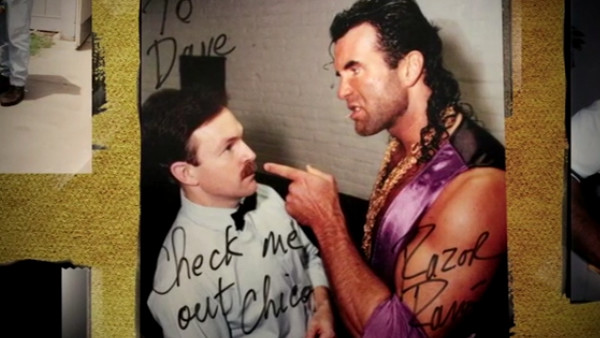
Meeting with someone who helped run the Montreal Film Festival, Hall sent a signed picture that would be displayed on the walls of the ceremony. Pacino knew who it was, telling the man that Razor Ramon played Tony Montana (from Scarface, the movie Pacino is arguably best known for and the basis of Hall's Ramon character) better than he had ever done.
This got back to Hall, and he was incredibly humbled to hear such words from a tremendous actor.
5. Rare Story About Handing A Sick Kid The WWF Intercontinental Title Shines
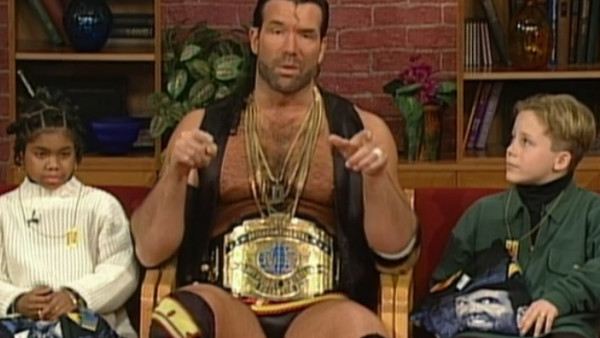
The Montreal Film Festival tale isn't the only exciting or memorable one from the documentary, there's also another that shows a different side of Scott Hall. Then the reigning WWF Intercontinental Champion, Hall - as Razor Ramon - was set to appear on an episode of The Jerry Springer Show.
That particular program focused on young children suffering from AIDS, the small boy of the piece coveting Razor as his favourite wrestler. The appearance was a surprise for the child, but it wouldn't be the only one. After giving an inspiring speech, Hall decided to actually hand the Intercontinental Title to the kid.
In an age before replica belts were even a thing, this was risky. Calling Vince McMahon, Scott told of what he had done. Without missing a breath, McMahon told him he had done the right thing and that there would be a replacement Intercontinental Title waiting for him at a show in Los Angeles.
The whole story is inspiring, because even though the child was terminally ill, Hall wanted to make him his champion.
4. Amazing Insight Into The Kliq's Personal Relationships
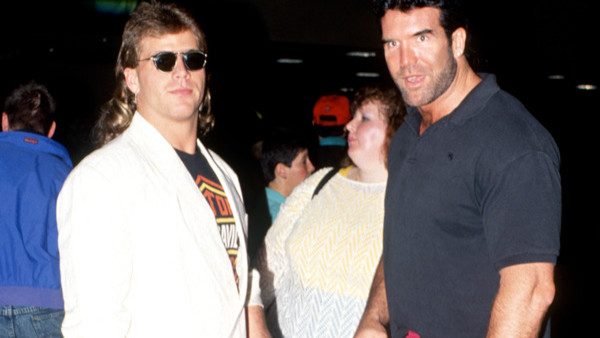
The tale usually spun by everyone involved is that The Kliq were like a brotherhood. Whilst there are likely elements of truth to that, Shawn Michaels lifts the lid on that idea during Living On A Razor's Edge. In the process, he also reveals that sometimes the members didn't really pay attention to the people behind their characters.
At first, Kevin Nash, Scott Hall, Michaels and Sean Waltman were the ones who made up the core group. Later, Triple H joined the crew, chiefly as a driver (because he didn't drink). It must be true that everybody got along, but Michaels admits here that even their relationships only went so far.
Some were aware of Hall's personal demons, but could only tell him that he shouldn't blame himself for the shooting in 1983. Encouraging their friend to move on, they then went back to living their lives on the road. Nobody ever took the time to sit down and get to the root of the issue.
It's fascinating to learn this, clearly conveying the idea that The Kliq were all wrapped up in their own characters at the time.
3. Bizarre Chronology With The Kliq
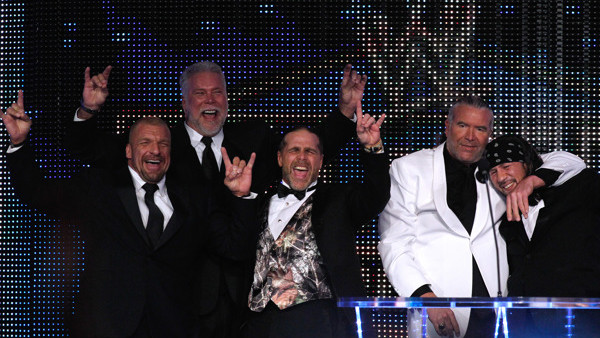
WWE's production team really know how to spin a yarn. Documentaries such as this come easy for the men and women working on each project, the formula is familiar but never dull. The early years, how a person broke into wrestling, their highs and lows, their redemption, it's all usually there.
Unfortunately, there's one part of Living On A Razor's Edge that falls short, and it deals with The Kliq. All of a sudden, the timeline gets all screwed up. Things are moving along logically, until Hall's babyface turn in the Summer of 1993 is broached. Within a minute or so, the doc is talking about Triple H's involvement in The Kliq.
That's just confusing, because Triple H didn't join the WWF for almost two years following Hall's babyface switch. By watching this documentary without the prior knowledge, you'd be forgiven for believing that Triple H was in the company at that time, and instantly became a major player.
Simply put, that's not accurate at all, and it really should have been presented more clearly.
2. WWE Use Footage From Infamous Independent Appearance
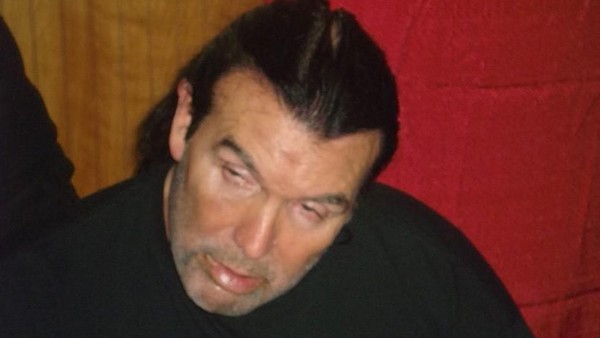
Before Diamond Dallas Page (and others, WWE included) reached over and pulled Scott Hall from the edge, he was on a surefire collision course with disaster. It was only a matter of time, and the DVD does an expert job of putting that across. In April, 2011 footage surfaced of Hall appearing on an independent wrestling show, one that's become infamous.
Booked by Top Rope Promotions, Hall showed up in no condition to really appear in front of a live crowd. Completely out of it on some kind of substance, he could barely walk to the ring unaided. It's again surprising that WWE decided to show this in their documentary, but it was a vital piece of the healing process.
Hall's brother assesses that Scott was hugely embarrassed when watching the footage back, and it made him realise that he needed others to help him out.
There was a time when this kind of thing might not be shown on WWE documentaries, but there's a refreshing lack of spin during this one.
1. More Refreshing Honesty Than Attempted Deflection

That's actually the most notable positive, Scott Hall comes across as completely honest and open about his flaws. That cannot have been an easy thing to do, so it deserves credit. He's on good terms with WWE now, and healthy, so it would likely have been simple to put some cushion on the negatives.
Hall chooses not to do that in Living In A Razor's Edge, and he's not the only one. Fresh off his honest appraisal of himself in his own DVD, Eric Bischoff again takes accountability for his actions on Scott Hall's. He truly seems apologetic when talking about booking Hall to appear as a drunk in WCW during the late-1990's.
Throughout that time, Hall was genuinely going through major problems with drugs and alcohol. Tasteless and crass, management prodding him to portray a drunk on television was a poor idea, but it's one Bischoff admirably takes responsibility for.
Scott Hall doesn't deflect his bad points in this WWE-produced DVD, and it's a much better set because of that.
What else did you take from Living On A Razor's Edge: The Scott Hall Story? Let us know your thoughts down in the comments section below!