10 Times A Wrestler Did A Move Better Than The Innovator
Slaughtering sacred cows - starring Kenny Omega, PAC, and Hardcore Holly?!

The evolution of pro wrestling discourse is amongst the most tiresome.
It all is, actually. Remember Chelsea Greene Art Theft-Gate? This is the worst patter ever, but all involved truly needed to "touch grass". Remember when Hangman Page was going to sign with WWE, because AEW were going to relegate him in favour of CM Punk, before, actually, CM Punk's run was too midcard? Remember when night one of WrestleMania 37 was quintessential WWE magic, everybody said it, and yet the media was still "biased"?
The whole online experience has reached a deadening nadir this year - just relentless bad faith negativity - and the debate surrounding how "fake" wrestling looks now is the main event.
The relentless barrage of punches of yore is faker than any spammed high spot, no matter how awesome Jerry Lawler was at blowing people away with his right hand. That thing was even busier in the '70s than it was whenever Sable was onscreen in 1998, and he never once gave anybody a black eye.
It's impossible to watch Kenta Kobashi fight through a taped-up hamstring without noticing that some of the old magic is missing, but wrestling - mostly - does evolve for the better.
Cases in point:
10. The Liger Bomb

To set the stall out briefly: it isn't sacrilegious or anything daft to suggest that a wrestling move can be improved upon after it was innovated.
It's a good thing. You ideally want the thing you like to get better. It would be pointless, even depressing, if this didn't happen. If Eddie Van Halen hadn't played the guitar better technically than his predecessors, music would be unrecognisable today. Wrestling nostalgia is particularly affecting - many have faded into irrelevance by refusing to let go of how it used to be - so it's understandable that some might balk at the idea that a wrestler as respected and influential as Jushin 'Thunder' Liger pioneered a move that was subsequently bettered.
But he did. Just look at PAC's Liger Bomb.
The original was superb for its day, but PAC's is something else. The unreal quality of his version is informed by his supernatural body control. He looks like he's staving some poor f*cker's head in with a gruesome snap loaded with velocity, and is such a crisp, incredible super-athlete that he can trap the arms with a successful pin attempt in one graceful, seamless motion.
9. The Suicide Dive

The origin of the suicide dive is muddled, lost to time - but if it can't be precisely determined which luchador invented it, it's all too easy to gather who does it now: every f*cker.
All but a select few should retire it from their repertoire because, all too often, it looks like a piss-weak, almost friendly flying high five. The momentum generated is wasted completely, as is the risk. It's just a shove aimed from a dangerous midair position.
There are honourable mentions.
Ember Moon's lopé variation has a sh*t-load of velocity behind it. Hangman Page, while still doing the shove motion, at least puts an awesome combination of speed and power into it. It's like a flying version of how Mike Tyson put Steve Austin down. Fénix often clears the barricade, he generates so much speed, but it's the only move in the world the man is second best at.
Darby Allin's version is as mind-blowing as it is purposeful. He puts the "suicide" element, the risk, all the way over. He's a bullet of a performer which, combined with a total disregard for his own safety, informs the genius behind the move. It never feels more like an attack when he executes it, and given his character's origin story, it never makes more sense.
8. The Orihara Moonsault

Invented by Masao Orihara, the moonsault to the outside of the ring remains in vogue.
It's a neat transition to the commercial break because it's a move that needs to be sold, and is so enduringly spectacular that it promises something even more exciting in a bid to keep viewers. It's also the perfect signature, in that it rarely leads to a near-fall given the area into which it is launched. It builds the excitement of the match without eating precious kick-outs or making the wrestler who performs it look like they have an ineffective arsenal.
The original move remains incredible, but Hangman Page has perfected it.
His barrel-chested frame lends an awesome incongruity to it. It also makes it look it really, really hurts. The rainbow arc is beautiful, flawless, but the genius is in the all-important impact. Page, when you think about, is one of the most accomplished aerial performers in the world.
He's not as spectacular as a Fénix or an El Hijo del Vikingo, but he's amongst if not the very best at both imperccatching an inbound attack and simply flattening his opponents with such power and precision that they barely even have to lift their own arms.
7. The Ankle Lock

Ken Shamrock's ankle lock was a great finish.
It tapped into something few wrestling moves actually do. It's easy to infer that being dumped directly on your head isn't a pleasant experience, so it's not as if the Ganso Bomb doesn't register because it's not something you're likely to have experienced, but everybody has twisted their ankle at some point or other, and it is a horrendous feeling. It really hurts, and it f*cks up the rest of your week because it's hard to even put your shoes on.
Incidentally, more wrestlers should kick people in the shin. Everybody knows how much that sucks, and it would evoke a massive, visceral reaction.
Kurt Angle's Ankle Lock was better because he was slightly more of an intense maniac. Both versions were informed by the legitimate hard-man credentials of the practitioners, but...how to phrase this sensitively...Ken Shamrock's gurn was just a bit silly. He looked comical at times.
Angle meanwhile looked like a deranged killer, and he better grasped the torque aspect. His submission looked painful enough to begin with, but as a true master he knew how to twist the ligament with a disgusting, graduating intensity.
6. The Ace Crusher
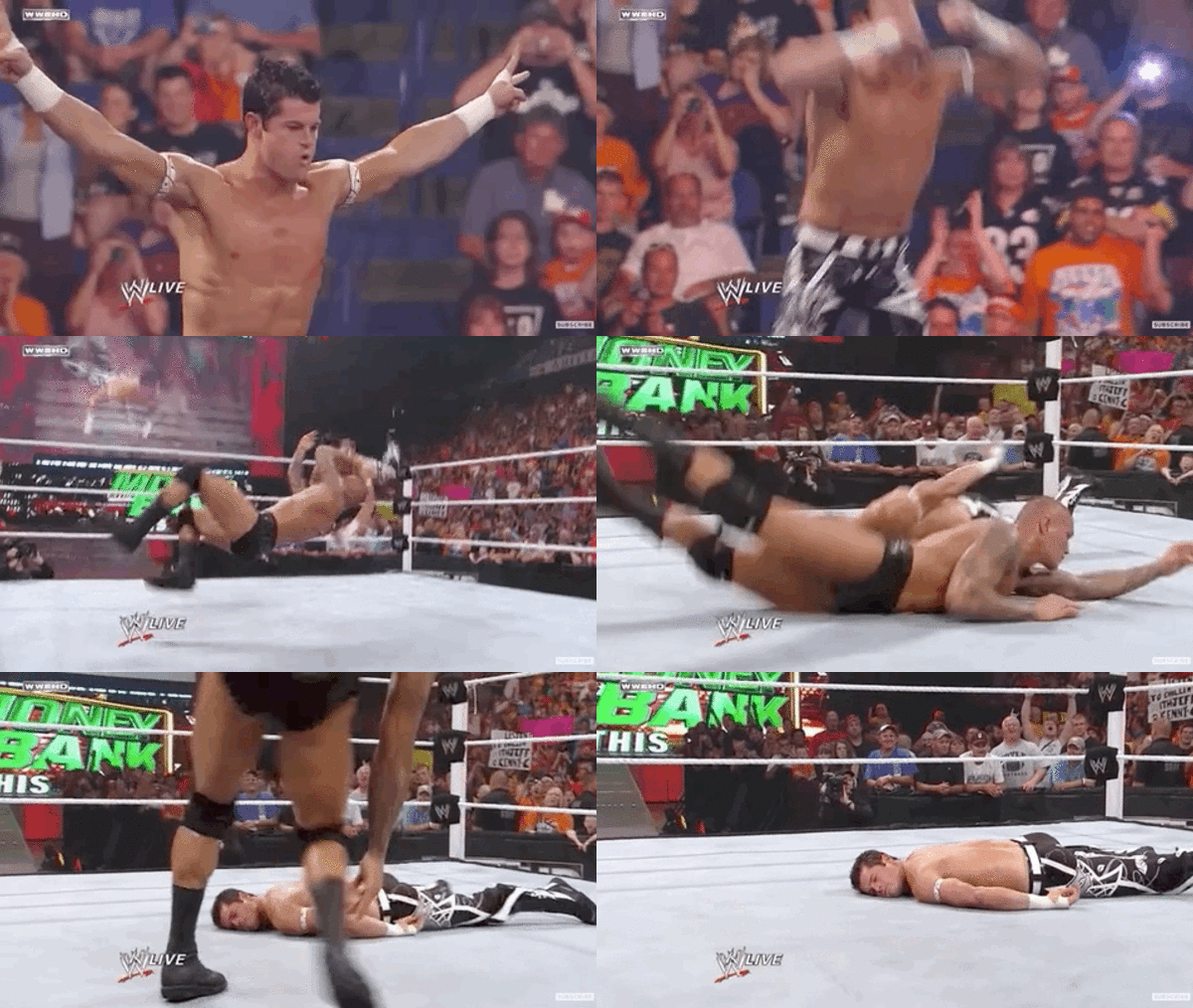
Exemplifying the old broken clock maxim, John Laurinaitis, the man who signed the wrong one-legged wrestler and effectively destroyed WWE's future - twice! - innovated one of the greatest wrestling moves ever: the cutter.
His Ace Crusher was excellent and distinct from later variations because he added a driver element. He wrapped his right arm around the throat and back of the neck of his opponent and used his left to drive their heads to the canvas. He executed the move so effectively that it was at once difficult to escape from and painful to absorb.
Diamond Dallas Page took it on and, for a blinding run in 1997, manoeuvred into it from several unique defensive positions. His version wasn't quite as hermetic as Big Johnny's, but he compensated with creativity.
Randy Orton perfected the finish with the gorgeous, flawless mechanics with which he can work a gentleman's three in his sleep. He added a star and a quarter to that whenever he unleashed his awesome catch variation, which required phenomenal timing to execute.
Orton's outstanding grace wins a very tight race, just, but don't discount Johnny's blinding '90s AJPW run just because he, you know, is an idiot.
5. The Chokeslam
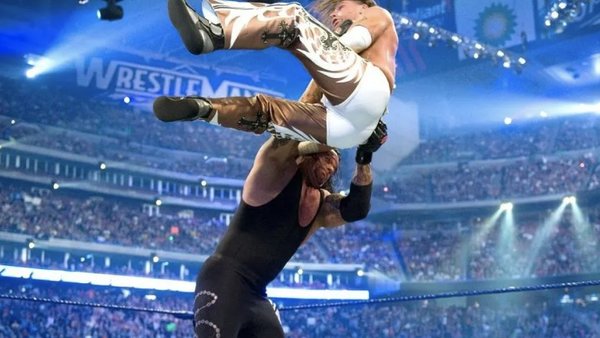
The evolution of the chokeslam is as difficult as it is fascinating to chart.
Two wildly diverging theories have developed: the inventor of the Americanised move was either 911, a limited gimmick attraction of ECW's heyday, or former President of the United States of America Abraham Lincoln. These men are so profoundly different to one another that it's a wonder WWE never booked them to win the tag titles at the expense of an experienced unit with matching gear. They share one similarity: neither man's was as good as the spine-rattling power of the Undertaker's version.
Akira Taue performed two different (and awesome) versions of the move, it should also be noted.
'Taker evolved his own glorified takedown after 911 got over - so much of WWE's inked history was written by Paul Heyman's pencil - and he perfected it, too.
His terrifying face deepened the anticipation as his hand suddenly jutted forwards and seized his opponent's throat. He grabbed the back of their trunks, used their jump and his own power to propel them high into the air, and drove them to the canvas with a pleasing "get f*cked" crunch. The crowd interaction-friendly dread was even more powerful than a stack of broken tables.
Kane's wasn't half-bad, and Big Show's while uglier worked as a result of his height, but nobody ever matched the broken elevator descent of Taker's version.
4. The 450 Splash
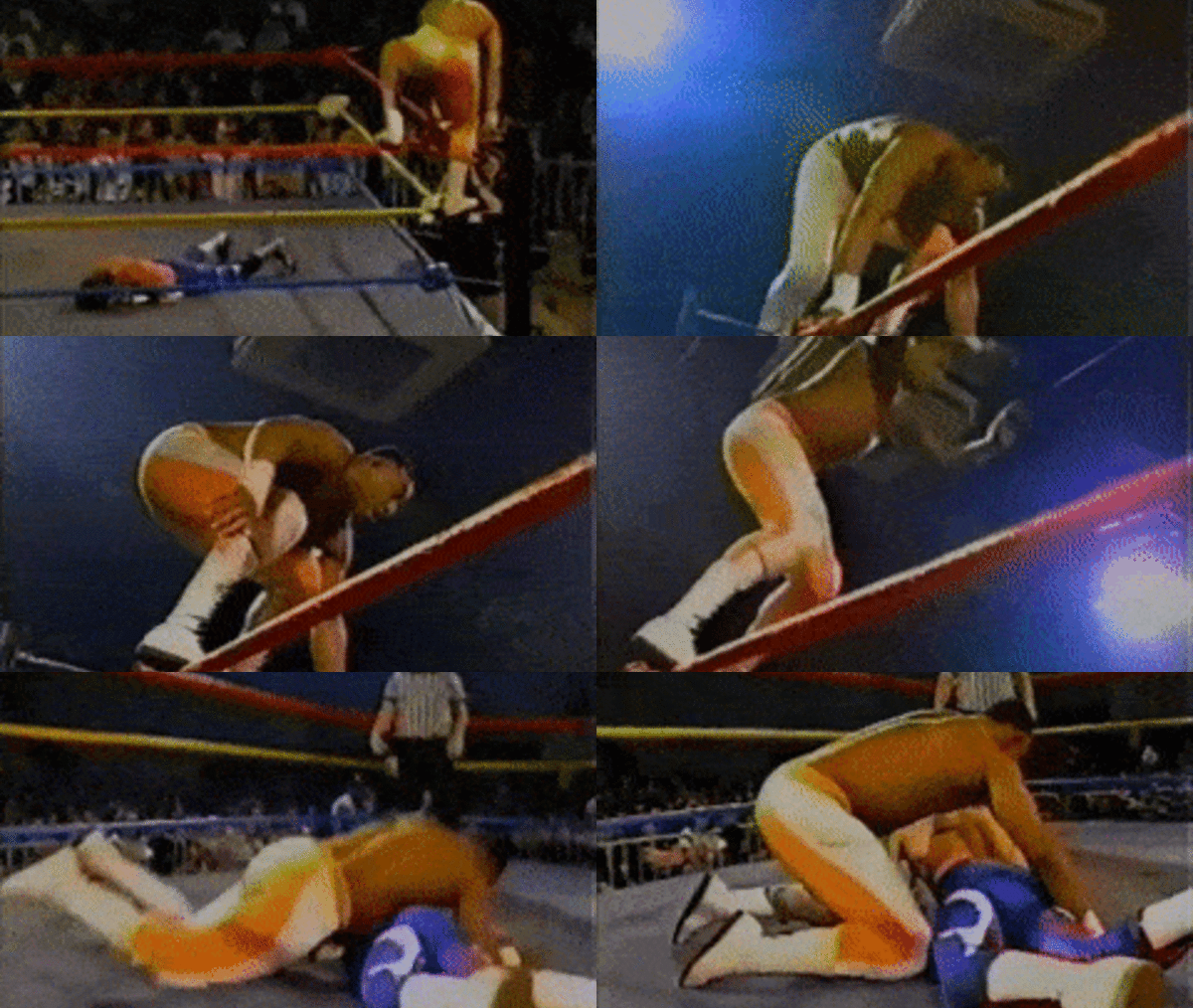
The Frankensteiner remains untouchable to this day - Scott Steiner's vertical leap and tree trunk thighs helped strip the incredible spot of any co-operative element - but the 450 splash was beyond even his futuristic athleticism.
As a greenhorn in 1987, Steiner attempted the move to little success. Even in a small ring, he landed too far away and effectively bumped himself before his momentum saw him sort of stumble onto his opponent. The move is executed far better today, and has retained its mind-blowing wonder - but unlike other entries on this list, two 1990s variations leave the modern era in the dust.
The legendary Hayabusa's version was an incredible spectacle with a brutal, impactful landing. 2 Cold Scorpio's was possibly more impressive. He was a more hefty performer, which made it all the more impressive and painful-looking. His sense of showmanship was also magnificent. How no North American promotion made millions and millions of dollars with Scorpio is a genuine disgrace.
The tucks, the precision, the sheer f*ckin' wallop: Scorpio rules, and that's present tense. AEW needed to reward his outrageous GCW twilight run with a TNT Title open challenge yesterday.
3. The Dragon Suplex
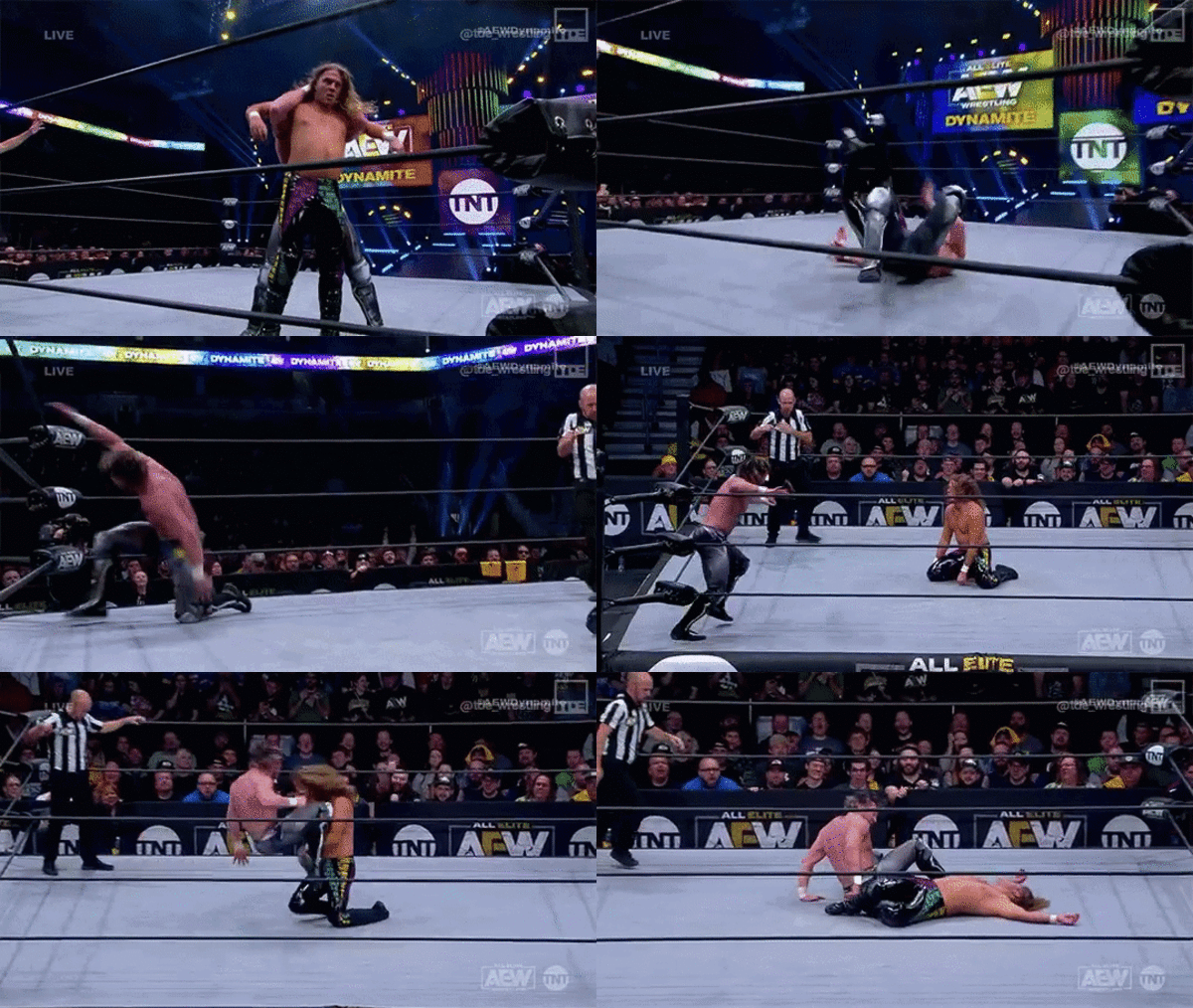
Tatsumi Fujinami pioneered the dragon suplex, and his version was superb.
Tightly applied, frighteningly executed, and complete with a just gorgeous bridge designed to prevent a counter - not that one was often forthcoming, since Fujinami dumped his opponents right on their necks - it was a super-convincing and well thought-out update on the suplex.
Kenny Omega's tweak ignored the bridge and emphasised the velocity of the drive to awesomely brutal effect.
The snap element invariably elicits a ghoulish pop because the spike looks so sudden, jarring and dangerous. Omega located the fastest route to head trauma this side of his own concussive V-Trigger. Designed to stun rather than finish, it works as phase one of his chain of head-focused attacks. The descent is so sudden and the impact so stiff that his opponent is left hopelessly stunned and vulnerable to eat his incredible bicycle knee kick.
If wrestling had to evolve into a more content-heavy form, and it did, Omega had the nous to thread his offensive flurry together in a scorching video game-inspired sequence that put him over as the most exciting athlete in a scene swarming with them.
2. The Dropkick

This is something of a cheat.
Abe Coleman is credited as the first man to throw a dropkick, and he did so, per wrestling historian Allan Blackstock, after observing kangaroos on a 1930 trip to Australia. The general athletic evolution of human beings, and wrestling as a more theatrical form, obviously mean that his version has been surpassed in the almost century that has elapsed since.
But in an article designed to inspire a bit of debate, few moves split opinion quite as much.
Owen Hart's regular and missile versions were both incredible. Mr. Perfect's standing dropkick was a beautiful, in-character flex of a manoeuvre. The limited Hardcore Holly possessed a belter - but did it look so great because he otherwise wasn't a dazzling athlete?
Randy Orton's dropkick was far better, and, much like his RKO, was so fantastic because he was so prodigiously gifted mechanically. Kazuchika Okada's is the best version in both technical execution and placement. The man looks like he's levitating, and he strikes it deep in the heart of a match to get over as that bit more insurmountable.
Just when he appears to be down, he pops back up, at an unfathomable height, to reappear as the final boss in his final form.
1. The Superkick

Chris Adams invented the superkick, laying claim as a veritable wrestling architect in the process, but the move was popularised by - and for a time synonymous with - Shawn Michaels.
Michaels innovated the version that one in every two pro wrestlers continues to use in 2021, and his was fantastic. It was a masterpiece of suspense and execution; he registered the pop before he generated it, sold the effects of the epic he had just worked to make it feel both like a fight and a performance, and struck it perfectly, every time, flush on the chin of his opponent. The arc looked beautiful, and the snap was so perfectly performed that it convincingly put away many of the much larger opponents he defeated en route to the main event. The subjective opinion that the Young Bucks did it better is in no way a suggestion that Shawn's was bad.
While Shawn Michaels created a library of critically acclaimed classics with his superkick in a down period, the Bucks built a brand and revolutionised the business with their version - which was, yes, spammed in matches that were just as dramatic.
By mischievous design: the Bucks discovered a meta strain of heat to get over as a renegade act, using the kick far more than was necessary because it pissed off the right people and enchanted the right people respectively. "I'm sorry, I love you" was a moment in time.
The Superkick Party changed the timeline.