7 Wrestlers Who Made Vince McMahon Their BITCH!
Shawn Michaels wasn’t the only WWE Hall of Famer who had Vince’s number.
The former Sasha Banks, now Mercedes Mone in AEW, left WWE in part because she could no longer sanction Vince McMahon’s aggressive and intimidating demeanour.
While the abrupt nature of her exit was a shocking news story, it wasn’t too surprising, if you recall an appearance she once made on the Not Sam wrestling podcast. She said she preferred to liaise with ‘Papa Hunter’ Triple H because she was “quite honestly, very scared” of Vince.
Vince was harder to approach during the dire monopoly years. He was the most powerful man in the industry by orders of magnitude. The wrestlers underneath him, bereft of other options and with one childhood dream, did not have the experience of dealing with any major players, much less somebody who wielded such influence and was possessed by demonic moods. This created a grotesque power dynamic. It was already bad enough; Bubba Ray Dudley, hardly a meek sort of fellow, once spoke on Busted Open Radio about being “paralysed by fear” when a Raw segment with Right To Censor went five minutes too long. Even those who were prepared to back their own ideas, and weren’t afraid to pitch them, often struggled to hold their own.
Chris Jericho has often spoken about Vince’s “Jedi mind trick” - his ability to convince talents to take orders that they were not enthusiastic about nor comfortable with. CM Punk, another name who is not exactly shy nor lacking in his convictions, discussed on the infamous 2014 Art of Wrestling podcast Vince’s knack for persuasion. Punk wanted more time off after WrestleMania 29 - the site of his third consecutive PPV job to a part-time superstar - but was convinced to return to WWE despite carrying a knee injury because Vince needed another big match for the Chicago Payback event. What Vince wanted, Vince got.
Mostly…
7. The Ultimate Warrior

The Ultimate Warrior wasn’t a mark, and as bad as he was mechanically, he grasped the most important aspect of the wrestling business: he was over, and crucially, he knew how over he was.
He didn’t care about pro wrestling. It wasn’t his big goal in life. He didn’t grow up dreaming of being a wrestler, enchanted by his heroes on the TV; he got in because he was a bodybuilder when that exact physique was prized by the WWF. Moreover, he didn’t enjoy the lifestyle. This is how even the most savvy of operators fall. They love the life. They might have had Vince’s respect, and they might have known their worth, but they could not no-sell the romance of the road nor the ego trip that the spotlight affords. Bret Hart, for example, knew what Vince McMahon was, and he knew when he was lying to and using him, but he was a wrestler at heart. He put up with it. Warrior could and indeed did spend years at a time out of the limelight.
Warrior tolerated the lifestyle, as a necessary means of making money, but actively resented it. He almost left the WWF alongside Owen Hart in mid-1989, when the ‘Killer Kalendar’ WWF touring schedule was at its most arduous, before Owen had to gently tell him that he was too rubbish to get over in Japan. Warrior was there to do a job. He wanted to make money and made sure to get what he was owed. He was, thus, a formidable political opponent of Vince McMahon.
Warrior knew that he could walk back into the WWF when he threatened to no-show SummerSlam 1991 because he was adamant that he was owed in excess of half a million dollars from his WrestleMania 6 main event. He cared even less in 1996, when his ill-fated return fell apart. He didn’t think the WWF flogged his comic books hard enough and thought the promotion was using his own IP on his merchandise. It was rumoured that he simply didn’t turn up to house shows in protest.
Vince McMahon loved the Ultimate Warrior character. The Ultimate Warrior was adamant that the WWF was out to f*ck him financially, so he treated the promotion with contempt, mostly. Vince couldn’t handle one of his glorified action figures showing some agency, ultimately leading to the extremely petulant ‘Self-Destruction of the Ultimate Warrior’ DVD.
6. Roman Reigns
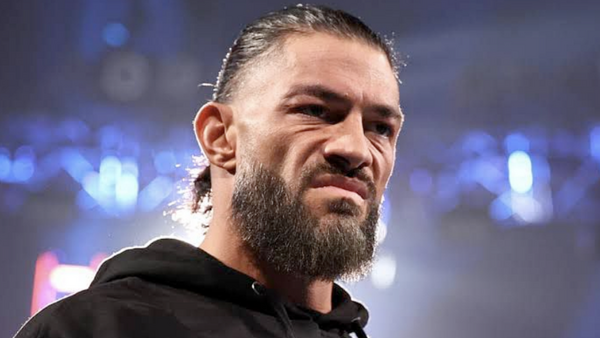
For a while, the relationship between Vince McMahon and Roman Reigns was very one-sided but relatively healthy. It wasn’t as if Roman had to play backstage politics to keep his spot. It was simply his, whether you liked it or not.
Vince’s love of competition was legendary, even if his ability to thrive on it was very overstated. Does this explain why he no-sold the deafening refrain to turn Roman heel, which echoed across almost every major arena for years on end? Did Vince persist with this nightmare of an era because he did not want to lose to the fans? Turning Roman heel - which worked for the Rock’s babyface prospects - meant accepting defeat. Vince never could take that, and pre-AEW, he did not have to. He could afford to do whatever he, and he alone, wanted. Things however changed as the 2020s drew near.
The formation and early success of AEW didn’t even chip away at WWE’s seemingly endless corporate-driven revenue streams, but the promotion was wary of its perception issues. Eric Bischoff and Paul Heyman were brought in with less-than-credible Executive Director job titles so that WWE could at least pretend that they were acting in the best interests of fans and shareholders. Then, the COVID-19 pandemic happened. The immunocompromised Roman Reigns sensibly and rightly refused to participate at the bleak WrestleMania 36 taping at the empty WWE Performance Center, and did not return to WWE until SummerSlam. In addition to looking after himself and his family, Roman at long last sensed that he held real power over an increasingly rattled Vince.
As well-versed as he became in the art of spin - “If they make noise, I’m doing my job” etc. - Roman knew he had to turn, and used his leverage to pitch a new persona and association with Paul Heyman. Roman’s newfound influence was so vast that, in addition to reigning with a World title for 1,316 days - a reign only bettered by Bruno Sammartino, Bob Backlund and Hulk Hogan, none of whom had weekly episodic primetime TV to contend with - Heyman, longtime enemy of the state, essentially became Roman’s personal booker.
Roman evolved into such a huge star that he was reportedly able to intervene and change the finish to the WrestleMania 39 main event.
5. Brock Lesnar
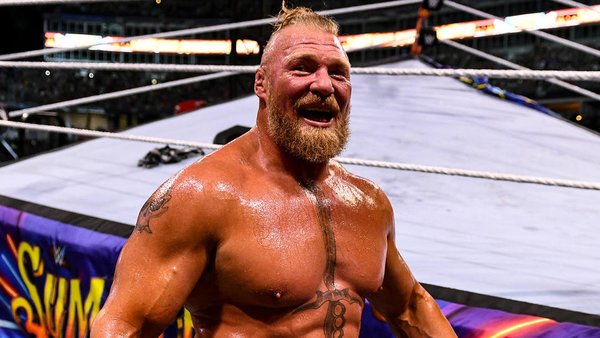
Vince McMahon was instantly besotted with Brock Lesnar. Vince was always going to push a guy who looked like that - the most beastly looking dude in the history of the industry - all the way to the top as quickly as possible.
Brock defined the post-Attitude Era landscape. He won King Of The Ring. He went over the Rock, Hulk Hogan, and the Undertaker cleanly in his first full year; were it not for his refusal, Stone Cold Steve Austin was almost added to that list. The problem was that Lesnar hated the schedule and the travelling lifestyle, so much so that he quit on the eve of WrestleMania 20. Lesnar’s attempts to play in the NFL and phone it in for NJPW were ill-fated and undermined by legal action. He fell off the radar until the two parties reached a confidential settlement in 2006. Then, two years later, Lesnar embarked on a new career path. His brief but very successful stint in the UFC, where he reigned with the Heavyweight title, effectively turned him into the single most coveted Vince McMahon guy of all time. He already occupied that title, but now, he was something close to a mainstream celebrity. If you could build Vince McMahon’s daddy from the ground up, he’d look like Brock Lesnar.
When Lesnar finally returned to WWE in 2012, this unprecedented level of credibility was very weirdly under-sold - Lesnar lost his return match to John Cena and dropped a match to Triple H in their pay-per-view trilogy - but after he was reheated through breaking the Undertaker’s streak at WrestleMania 30, that was it. Lesnar enjoyed leverage the likes of which no other wrestler ever held over Vince McMahon. Lesnar turned up whenever he wanted, which wasn’t very often, and held the Universal title in spite of this. Vince didn’t care; he’d rather have Lesnar occasionally, at the cost of a small fortune, than a functioning WWE Raw show with stakes and purpose.
The infatuation was so intense that everybody else on the roster was depicted as a hapless murder victim, whether they were Ricochet or even Randy Orton, who sacrificed his brain to get Lesnar even more over as an unstoppable mercenary who didn’t even watch Raw, much less wrestle on it.
4. Hulk Hogan

Vince McMahon and Hulk Hogan enjoyed an incredibly successful collaborative relationship throughout the 1980s. They were perfectly in sync. Vince could not expand without Hogan; Hogan could not make anywhere near the money he did under a different promoter. The relationship was even and mutually beneficial. These were the good times.
Hogan misjudged his crossover appeal in the early 1990s. Vince was understanding initially, even awarding Hulk a warm televised send-off, until Hogan signed for WCW in 1994. Vince, spurned, lashed out. He depicted Hogan as a money-obsessed geezer too old to keep up with his New Generation of talent in 1996 (before rehiring him, six years older, in 2002). When Hogan did eventually return to the fold, he played nice for a while. He jobbed for fun, losing matches to the Rock, Kurt Angle, and Brock Lesnar - but Hogan was clever. He knew that Vince was struggling to create new stars as the 2000s dragged on, and positioned himself to get his precious wins knowing that he could get away with his shameless politicking.
The Hogan Vs. Shawn Michaels feud was originally envisioned as a series. Since Hogan wasn’t interested in losing, he went over the guy who was sticking around after SummerSlam 2005 before this became normalised. Hogan set that trend in motion. He also went over Randy Orton at the same show in 2006.
He returned at great expense to do what he wanted, and while his timing was smart, he did deprive himself of the ultimate payday: Steve Austin was watching, with much suspicion, and refused to engage seriously in Hogan’s constant petitions for a WrestleMania dream match.
3. Shawn Michaels
Vince McMahon adored Shawn Michaels, the extent to which was so intense that Bret Hart reckons they were in love.
Vince had to go with guys he would class as undersized in the mid-1990s. The steroid scandal almost put him away for several years. Shawn, despite holding very little in the way of a business case, was always Vince’s preferred option. Vince pushed Bret Hart as the face of the New Generation initially, impressed by his crowd connection and popularity beyond the United States, but there was always a “needs must” aspect to it. Vince respected Bret immensely, but if you track his title history, you’ll see how often and how relatively quickly he wanted somebody else in his spot as the man. Vince still tried to market his beloved size, but neither Diesel (tall) nor Mabel (wide) had the stuff.
Shawn, to Vince, had it all: charisma, bell-to-bell ability, heartthrob good looks, a body that would arouse everything but suspicion. Shawn wasn’t a draw, but Vince figured there was a ceiling on the WWF after its body guy era, so pushed him very hard regardless. Shawn probably surmised by the ear-splitting volume with which Vince would scream his name that he could get away with anything he liked - and he liked to get away with never dropping a title the traditional way, undermine any wrestlers with a remote chance of competing for his spot, and hound Bret Hart out of the World Wrestling Federation for good.
Shawn had Vince tucked in his pocket so tightly that he in effect changed the entire tone of the product around his idea to be edgy and cool. Shawn drove wholesale change in 1997 as much as John Cena did a decade later - without any supporting numbers bar an impressive Madison Square Garden house in early 1996.
2. Triple H

Even if you’re of the opinion that Triple H was everything that he and WWE as an entity said he was - an incredible heel, a big match specialist, the third biggest star of the Attitude Era, one of the most intelligent masters of wrestling psychology - you’d have to admit that he was absolutely bobbins between 1995 and 1997. He didn’t do anything worth a damn in the ring without the huge advantage of Mick Foley or a ladder before 1999: the year he got his big push. And even that didn’t take until Foley stepped in yet again. So why did Vince let him run roughshod over the promotion well before the Attitude Era began in earnest?
To be absolutely fair to Vince as a promoter, contrary to his reputation as a volatile hack who didn’t see much in Steve Austin and only hired Foley to get Jim Ross to be quiet, he could in fact spot talent. Perhaps Vince knew what he had with Triple H, and was prepared to show much in the way of patience. That’s one explanation. Another, and this is corroborated by several of his old peers, is that Triple H was very good at schmoozing Vince and kissing his ass. He either spoke Vince’s language, or was so bright that he learned it in order to get ahead. Also: Triple H was good mates with Shawn Michaels. Perhaps that is why Triple H, well before his belated Madison Square Garden breakthrough of September 22, 1997, was able to undermine Bret Hart. That campaign started earlier that year, when Triple H was about to bore everybody senseless in a dreadful series with Goldust.
It’s just wild how a wrestler who specialised in silencing crowds across overlong and tedious matches had Vince’s ear before he even got vaguely over, isn’t it?
Once he got over, he did so on merit. You cannot deny Triple H’s 2000. It didn’t matter who he was dating. At one point in 2001, a babyface Triple H versus a heel Steve Austin felt like a viable WrestleMania 18 main event.
But after that, Christ. Triple H had become a McMahon, and it didn’t matter how dull he was, how overbearing he was, how many wrestlers made look inept in a very curious and longstanding pattern. He was always going to be winning or challenging for the World title for years and years on end. In graduating to management, he outdid any of his political foes.
Perhaps there's another reason why Triple H belongs on this list, too...
1. Jessie Ventura
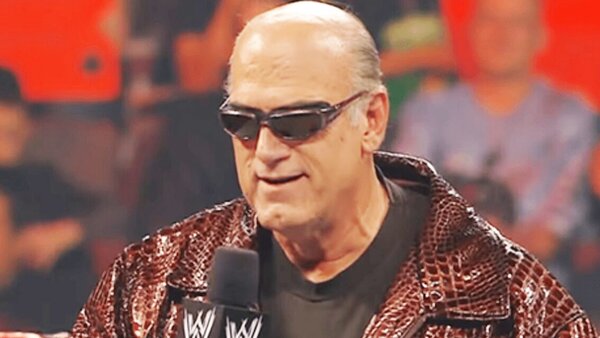
Jesse ‘The Body’ Ventura, a WWE Hall of Famer* and genuine American icon who used his freedom with more zeal than most, also holds a more meaningful victory over Vince McMahon than most.
(*You could argue this doesn't mean much, but in this case...)
Ventura was an indelible part of the Golden Era fabric. Hilarious and charismatic, his commentary alongside Gorilla Monsoon was superb. Even if he was bad at his job - and he wasn’t, he was one of the most quick-witted heel commentators of all-time - he deserved to be fairly compensated for it.
Ventura mistakenly thought that only featured wrestlers were due royalty payments from WWF Home Video releases, and waived his rights accordingly in 1987. When he was corrected in 1991, he promptly took Titan Sports to court, bringing forward an action for fraud, misappropriation of publicity rights, and quantum meruit. Titan moved the case to federal court, at which Ventura was awarded just under half of the $2 million sought ($801,333). Very few people have successfully defeated WWE in the legal arena - so few that Vince, albeit under the guise of his Mr. McMahon character, often bragged about a so-called undefeated streak (he said this unchallenged to Kevin Owens in 2017). (The ruling judge also awarded Ventura $8,625 in backpay, after which Ventura received royalties going forward.)
As you can imagine, Vince was a sore loser, and vowed that Jesse Ventura would never again appear on WWE programming. While Vince did edit Ventura out of many home video revisions years later, out of spite, he still lost both the court battle and the subsequent real-life feud: Ventura made several sporadic appearances for WWE in 1999 and into the 2000s
And the pleasure was all McMahon’s.