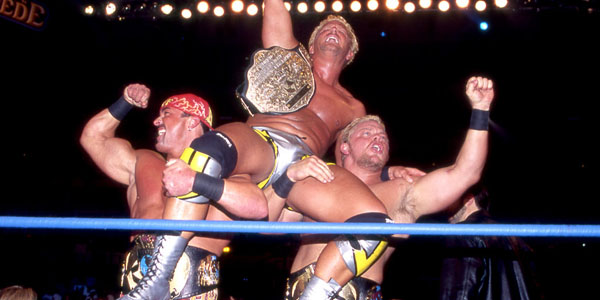
This one is a bit tricky. In WWE, Jeff Jarrett was utilized as a midcard act. A solid wrestler with definite charisma, nothing about him screamed main event star. He was a utility player, a guy that the company could count on to deliver great wrestling matches, generate a reaction from the audience and make other stars look good when the time called for it. He was a valuable part of the roster during his numerous stints with the company but it was obvious he thought he was better. He believed he was heavyweight championship material and he was going to float between the top two companies in the business until he proved it. In 1999, Jarrett returned to WCW and immediately became the pet project of head writer Vince Russo. Longtime friends, Russo knew how good Jarrett was between the ropes and he was determined to push him as the top heel in the industry. Jarrett almost immediately ascended the ladder and by April of 2000, was WCW Champion. He drew great heat but attendance and ratings were another issue. That the company was dying a quick death only helped highlight the fact that Jarrett was not the guy to book Nitro, Thunder and pay-per-views around. Still, he was a main event talent, something he never was able to achieve in WWE. And that is where the tricky part comes in. Looking strictly at his success in the companies, Jarrett accomplished everything possible in WCW. He finally won the heavyweight title, he was a key player in the company and had some pretty good matches against Booker T. At the same time, that run with the Turner-owned company exposed the fact that Jarrett was not the main event draw that he and Russo believed him to be. In WWE, he worked for a boss who understood who his stars were and who his utility players were. It was a fine line but Vince McMahon walked it every night. Jarrett would recover from WCW going out of business in March 2001 just fine. In June 2002, he started up NWA: TNA, a new wrestling promotion based out of his hometown of Nashville. Like any booker with his financial livelihood at stake, Jarrett put himself in the top spot, apparently learning nothing from his WCW days. He would main event for the company for nearly seven years before stepping away amid a controversy involving Kurt Angle and his wife Karen.
Erik Beaston is a freelance pro wrestling writer who likes long walks in the park, dandelions and has not quite figured out that this introduction is not for Match.com. He resides in Parts Unknown, where he hosts weekly cookouts with Kane, The Ultimate Warrior, Papa Shango and The Boogeyman. Be jealous.