12 WWE Flashpoints That Led To The Montreal Screwjob

To work out why the Montreal Screwjob happened, you have to go back to how...
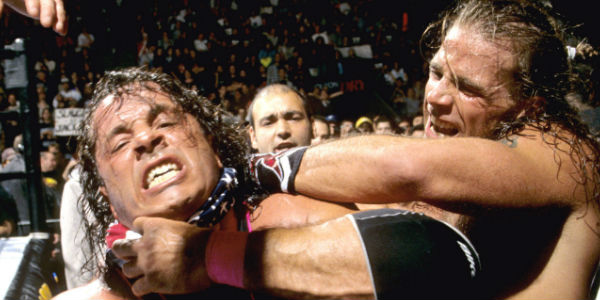
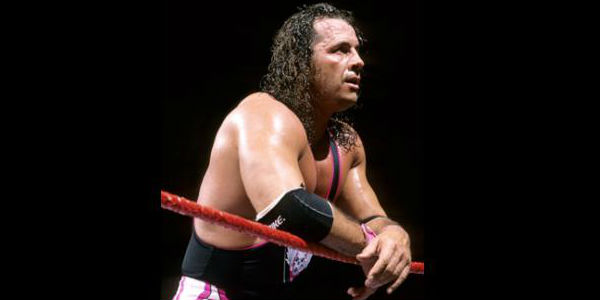
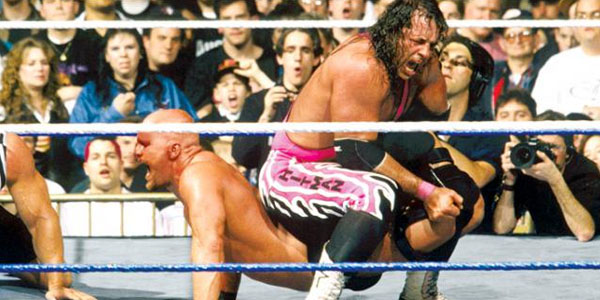
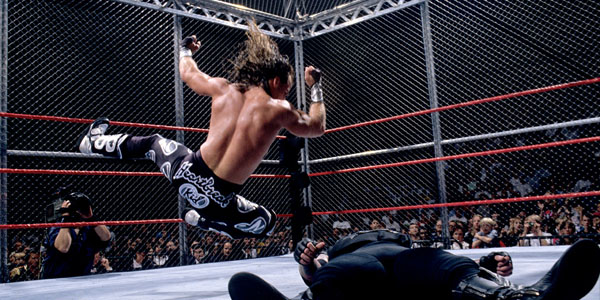
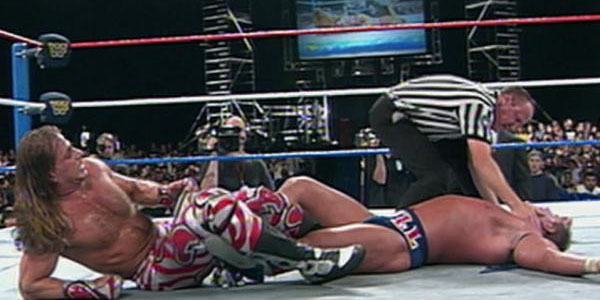
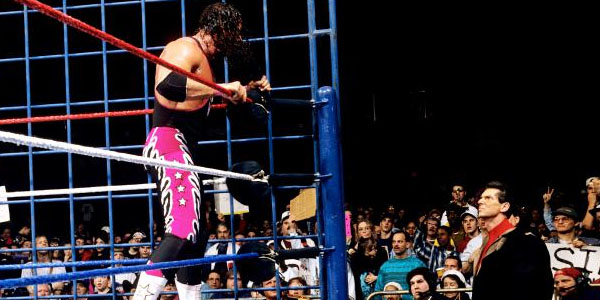
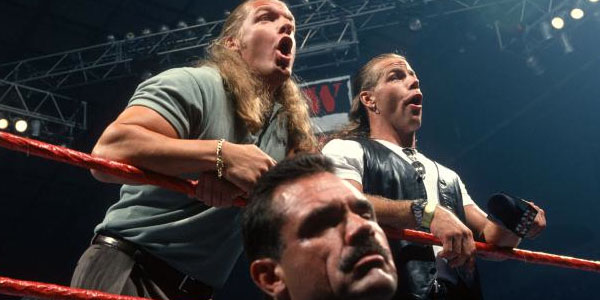
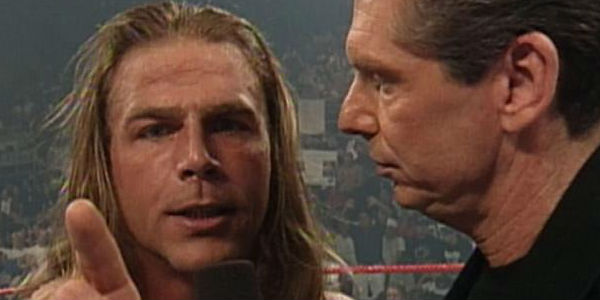
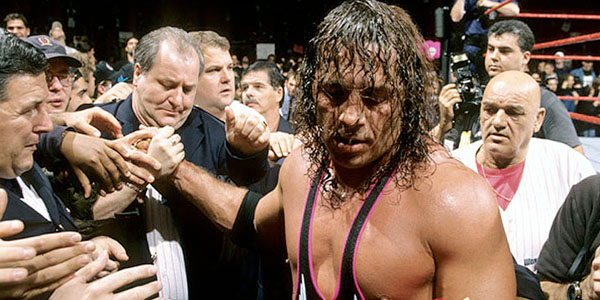
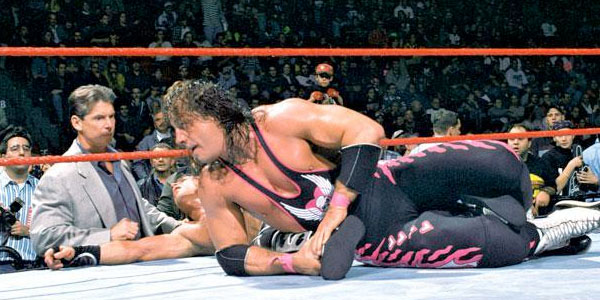
November 9, 1997. It was a night that will forever live in infamy in the professional wrestling industry. World Wrestling Entertainment produced its Survivor Series pay-per-view event and for three-quarters of the show, things had gone as planned. Kane pummeled Mankind, Ken Shamrock made The Rock tap out, Steve Austin regained the Intercontinental Championship from Owen Hart and the Disciples of Apocalypse and the Truth Commission had another crappy match. Then Bret Hart and Shawn Michaels took to the ring for the night's main event, a much-anticipated WWE Championship bout. Prior to the contest, it was common knowledge that Hart was on his way out the door after signing a monster deal with Eric Bischoff and World Championship Wrestling. It was also known that Hart and Michaels had a great deal of animosity between them. Refusing to drop the title to Michaels in his own home country of Canada, Hart took to the ring with an uneasy feeling that something may go down to forcibly remove the title from him. It was against that backdrop that the most infamous match in wrestling history occurred. As interesting for the backstage drama surrounding it as anything that went on between the ropes that night the contest, dubbed the "Montreal Screwjob," has gone on to spawn books, documentaries and numerous DVD productions. Conspiracy theorists have picked apart every element of the story. Some take it at face value while others believe Hart benefited in that he became a hero for all eternity and thus, it was really just an angle. Whatever the case may be, fans remain interested, intrigued and engrossed in all things Montreal some 17 years after it occurred. Now, thanks to Dave Meltzer of F4WOnline.com and his comprehensive timeline of events, as well as various other resources such as Michaels and Hart's own autobiographies, here are 12 key pieces in that formed the puzzle that is the Montreal Screwjob.

12. A Clash Of Egos

At the heart of the hatred between Bret Hart and Shawn Michaels that developed in 1997 is a clash of egos that dates back years earlier. In 1992, Hart captured the WWE Championship, defying odds and proving that a smaller, talented in-ring technician could succeed in the land of giants that was Vince McMahon's promotion. Hart's success inspired Michaels to work hard and soon, it was his objective to steal any and all shows he was on. He was determined to impress the boss enough that he, too, could succeed at the level Hart did. Michaels so badly wanted to be champion that he would walk over anyone and do anything, including intentionally showing up best friend Diesel during their match at WrestleMania XI, if it meant taking that next step up the ladder. When Michaels defeated Hart for the WWE Championship at WrestleMania XII, in the iconic Iron Man match, it was the start of a new era in WWE. Michaels was edgier than Hart and did not always show the respect that the Hitman did, drawing his ire. When Hart returned from a hiatus in the fall of 1996, he began hurling insults at Michaels, bringing up his history of posing for Playgirl Magazine and carrying himself as anything but a champion. It was all designed to lead to a return match with Michaels but the problem was that the champion had become quite paranoid and volatile behind the scenes and took the comments personally, despite the fact that they were all designed to set up a heated rematch. From there, the relationship between Hart and Michaels spiraled downward, leading to all of the backstage drama fans are very familiar with today. Hart and Michaels' determination to prove that they were the best, coupled with the shiny prize that was the WWE Championship, not to mention McMahon's affection, led to a scenario in which both men's egos got the best of them and they wound up butting heads numerous times because of it.

11. A Lifetime Contract

During the hiatus that Hart took post-WrestleMania XII in the spring and summer of 1996, he was approached by WCW's Eric Bischoff, who wanted to offer him a huge contract to jump ship to the Ted Turner-owned promotion. After all, Hart's obligations to McMahon's WWE were coming to an end. With Michaels holding down the top spot there, perhaps it was time to head over to the competition, make a lot of money and be able to spend more time with his family by working less dates. Bischoff's deal was incredibly flattering from a financial standpoint but loyalty was a major element in Hart's decision. Cameras followed Hart around for the entire year prior to Montreal for the documentary titled "Wrestling With Shadows" and captured very telling footage of Hart wrestling with the idea of leaving the company that made him a star and saying goodbye to McMahon, who he considered a second father. It was extremely taxing for the former three-time heavyweight champion. It took its toll on him emotionally but ultimately, Hart agreed to resign with WWE. The contract that McMahon offered was a 20-year deal that would have made Hart a WWE Superstar for life. It would have paid less than Bischoff's deal but Hart would have remained a part of the WWE family as an ambassador for the company well after his days in the ring were over. On the October 20, 1996 episode of Monday Night Raw, Hart went to the ring to reveal his decision to a worldwide audience, and very anxious boss, who had no idea what way he would lean. The look on McMahon's face when Hart revealed that he was staying was one of the relief. Unfortunately, the smile he flashed when his most beloved babyface announced his decision would not stick around.

10. WrestleMania XIII

The plan for the WrestleMania XIII main event was a rematch of the Hart-Michaels classic from the previous year, the idea being that Hart would get his win back against Michaels, setting up a huge rubber match between the two. Unfortunately, that scenario never played out. In February 1997, Michaels announced that he had a severe knee injury that may very well threaten his in-ring career. He cried, handed over the WWE title to Vince McMahon during a memorable episode of Raw and proceeded to announce that he had "lost his smile" and needed to go find it. Some believed they had seen the end of Shawn Michaels for the time being but in reality, what they had witnessed was one man handing over his title without ever losing it. It was not the first time Michaels had done such a thing. Instead of wrestling Michaels at 'Mania, Hart was booked against Steve Austin in a Submission match. The two of them had been embroiled in a heated feud for months at their battle in Chicago was the next chapter in their intense program. Hart won the match via referee's decision, then sat back in the locker room and watched Michaels make his way to the ring to guest commentate during the main event. There was no noticeable limp or any sign of a knee injury. In fact, Michaels danced around the ring and performed his trademark pose for the fans, most of whom cheered him despite what was effectively an F-you to anyone who bout into his act weeks earlier. Michaels' display was something that Hart kept stored away in his memory and is something he would regularly pull out in an attempt to portray Michaels as a lying, manipulative backstage politician.

9. Sunny Days And The Fight in Hartford
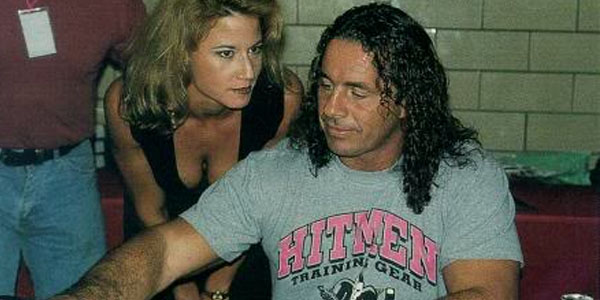
Throughout the spring and summer of 1997, Hart and Michaels took pot shots at one another in promos on a weekly basis. Hart would mention Michaels' penchant for dancing like a stripped while HBK would imply that Hart was too old. It was fairly harmless stuff that, to that point, was still meant to fuel a big-money rematch between the two. In June, the rivals were preparing for a huge match at the King of the Ring pay-per-view when the promos began becoming more and more personal. Hart would berate Michaels, who would shoot back with something that implied that Stu Hart, patriarch of the family, was dead. It was becoming both entertaining and uncomfortable to watch, a car wreck that you simply could not turn away from. Then Michaels dropped a bomb on Hart that infuriated him and forever changed the dynamic of their relationship. Michaels referred to "sunny days" while cutting a promo on Hart, implying that the Hitman was having an affair with blonde bombshell Sunny behind the scenes. https://www.youtube.com/watch?v=eUdzPE0PbhA In Hart's mind, it was a step too far. No longer were the comments meant to hype a match. Now, they were personal attacks that threatened to harm Hart's relationship with his family. It was a step too far and soon after, the two Superstars engaged in a backstage tussle in Hartford, Connecticut that became the talk of the wrestling world. Unable to trust the two to be professional, McMahon called off the scheduled match between them for King of the Ring and, instead, booked Michaels against Steve Austin.

8. Stealing Bret's Heat

In April 1997, Bret Hart turned heel for the first time in nearly a decade. Disenfranchised by the shift in attitude of the fans and WWE's edgier product, Hart voiced his displeasure, talking up his home country of Canada and beginning an international rivalry between the United States and its neighbor to the north. It was an interesting time for the grizzled vet, who remained a hero to millions across the globe but a heel to those in the states. His reformation of the Hart Foundation weeks after his turn led to some of the best television WWE has ever produced, even if the company was still getting beat in the ratings by WCW Nitro and the New World Order, which had revolutionized professional wrestling. Hart was riding high as the top villain in the sport until a decision to turn Michaels beginning at SummerSlam 1997 was made. Hart openly questioned the decision, as seen in "Wrestling With Shadows." He understood that turning Michaels and placing him in a high-profile feud with Undertaker was sure to siphon a great deal of the heat he and the Hart Foundation had built in the months prior. He was right. Not only did Michaels steal Hart's heat, he became the centerpiece of the main event scene while Hart, the WWE champion, was shuffled into the midcard via a feud with The Patriot. It was the first hint that McMahon valued Michaels over Hart, something that would become even clearer in the weeks and months to come.

7. One Night Only

In September 1997, World Wrestling Entertainment presented a UK-only pay-per-view event title One Night Only. It featured a fairly impressive card, headlined by a match for the European Championship between Michaels and "British Bulldog" Davey Boy Smith. Smith was champion, the hometown hero who was coming home to vanquish the loud-mouth, obnoxious Michaels, whose on-screen partnership with Triple H and Chyna had stolen headlines and would eventually be dubbed D-Generation X. Despite Michaels' rivalry with Undertaker and his spot atop the WWE mountain, Smith was originally booked to retain his title in front of his fellow countrymen. As history tells us, things didn't exactly go that way. Michaels beat and embarrassed Smith at the show, winning the European Championship and inciting near-riotous conditions. It was another power move by Michaels, one that served as a reminder to Hart and anyone else in his way that he would always get what he wanted. More importantly, it was yet another indicator that the San Antonio native was so close to Vince McMahon that he could manipulate any situation to best fit his own best interests, something that would become an even bigger issue over time.

6. Reneging On The Contract

On November 1, 1997, McMahon confronted Hart about reneging on the 20-year contract he had offered him a year earlier. WWE was in dire financial straights and could no longer afford to pay Hart the negotiated sum. He wanted very much to deter payment to later, hoping that his company would turn things around and become financially stable. Having put his body through hell for a decade for McMahon, Hart was, understandably, unwilling to risk a scenario in which he was never fully compensated for the bumps he was taking on a nightly basis. This left McMahon with no other alternative. He granted Hart permission to negotiate a deal with Bischoff and WCW, going as far as to help Hart in the process. Hart and Bischoff negotiated a three-year, $9 million deal that made the Hitman one of the highest paid wrestlers on the planet. By agreeing to that contract, Hart brought an end to one of the greatest careers in WWE history. It was a sad end to a relationship between he and McMahon that had spawned so much time and saw Hart lead the company through the dark days of the mid-90s.

5. Michaels' Refusal To Job

https://www.youtube.com/watch?v=4p2s7YEIEMQ When Hart approached Michaels backstage in the fall of 1997 and told him that despite all of the personal issues between them, he had no problem doing a job for the Heartbreak Kid, he was being a professional. The industry was in his blood; his family was one of the most respected in the business and regardless of how tense things had gotten between he and Michaels, Hart understood there was a time to do business and he was reaffirming that with his rival. Unfortunately, Michaels' lack of respect for Hart as both a co-worker and a man only intensified the disdain Hart had for him. Michaels' responded to Hart's attempt to reach out and smooth things over was, "just so you know, I'm not willing to do the same," something that enraged Hart. It was a slap in the face to him both personally and professionally. After years of doing everything he could for the betterment of WWE, here was this guy blatantly disrespecting him. It was the final straw in Hart's mind and one that would heavily influence the events leading into Survivor Series and Montreal.

4. An Edgier Product

Throughout his run atop the WWE, Hart had championed a very family-friendly product. He was a hero to millions worldwide and prided himself on the effect he had on children. They looked up to him, idolized him and wanted to be like him when they grew up. He was a virtuous performer, one who did what was right, even when thinks were at their darkest. Even as a pro-Canadian heel in the states, he never really changed who he was. He just became more vocal about his displeasure with an ever-changing society. As 1997 wore on, he noticed a distinct change in the tone of the WWE product. It became more violent, more vulgar and the sexual nature of it increased tenfold. It was a development Hart was not thrilled with and he spoke out about it. Appearing on Off the Record with Michael Landsberg, he was very critical of the attitude injection WWE had undergone. He revealed that he does not allow his children to watch and did not believe the edgy content had a place in the wrestling business. It was quite shocking to see a star of his stature be so openly critical of the product. Had he stuck around WWE, it surely would have drawn the ire of McMahon but seeing as how he was on his way out the door, it was met with little resistance.

3. Michaels' Influence On McMahon

The 1990s saw Michaels' influence on his boss and the overall direction of the company increase tremendously. First, it came as part of the Kliq, a backstage group of friends whose objective was to get management to make decisions that were in the best interest of the business. After all, if business was good, they all benefited from larger paychecks. In their minds, however, what was best for business was the Kliq on top. It led to a great deal of disdain from the other wrestlers on the roster. At the same time, Michaels gained the confidence and trust of McMahon. That trust would lead to a seemingly unbreakable bond between boss and employee. one that led McMahon to give in to his top star far more often then he should have, regardless of whether Michaels' ideas or solutions were valid or not. It was that influence that Michaels had that allowed McMahon to feel comfortable sitting down in a room with him and Triple H days out from Survivor Series and discuss what to do in the event that Hart did not change his mind about dropping the title to HBK at Survivor Series. It was in that room that the plan to screw Hart over in front of an international viewing audience was formulated, a plan that would ultimately vilify Michaels more than he could have ever imagined and change the face of professional wrestling forever.

2. Hart's Refusal To Job

Giving back to the industry that made you by doing a time-honored tradition such as dropping the WWE Championship on your way out the door is a concept Bret Hart was incredibly familiar with given his upbringing in the professional wrestling business. Why, then, was he so against doing the job for Michaels? Because of Michaels' refusal to do the same for him, which we discussed earlier. It was the spark that ignited a fire and caused Hart to volunteer to drop the title to anyone from Ken Shamrock to the Brooklyn Brawler, as long as it was not Michaels. He flat refused and would not walk out the door leaving the title he carried with such pride and respect around the waist of someone as selfish and disrespectful as HBK. While many see his side in the argument, that does not mean Hart was in the right. Regardless of his personal feelings about Michaels, his upbringing in the industry should have led him to do business. Sure, he offered to drop it to others but McMahon, the man who gave him the opportunity to be the star that he became, asked him to do the favor for Michaels. As history indicates, karma was going to kick ol' HBK in the ass eventually anyway so doing the job and going out with his head held high would have been a much better and more fitting conclusion to the career of one of wrestling's least selfish performers. Instead, he left disgraced and bitter.

1. McMahon's Failure To Mediate

There are many that look at Montreal as the culmination of the feud between Bret Hart and Shawn Michaels but the fact of the matter is that it was Vince McMahon's failure to mediate the growing tensions between them that did more to lead to that fateful night in November 1997 than anything else. Rather than being a hands-on boss that confronted the problem, demanded his employees settle their differences like men and move on, he sat back and watched the hatred and animosity boil to such a point that the two could hardly stand being in the same room as the other, let alone decide on a mutual finish to a match. McMahon failed those two men and failed his company as a whole. He allowed hostility to infiltrate his company, leading to November 9, 1997, when he played favorites and picked one over the other. The success of the Attitude Era and his role as evil billionaire owner during that period, not to mention the entertainment he brought to fans across the globe, has masked his failure to act. So much is made of the many successes McMahon has enjoyed in his time as the top wrestling promoter in the land but his failure to take control of his company, his willingness to allow the inmates to run the asylum in the year prior to the most controversial night in wrestling history, sticks out like a sore thumb. History treats Montreal as if it were about Hart and Michaels and their personal and professional rivalry. In reality, it was about McMahon and his failure as a leader, something he cannot be accused of often.

Contributor
Contributor

Erik Beaston is a freelance pro wrestling writer who likes long walks in the park, dandelions and has not quite figured out that this introduction is not for Match.com. He resides in Parts Unknown, where he hosts weekly cookouts with Kane, The Ultimate Warrior, Papa Shango and The Boogeyman. Be jealous.