50 Fascinating Facts About WWE in The 1980s
10. Tony Atlas Was Paid $2,000 Not To Work WrestleMania

Tony Atlas might be one of the only people in history to earn a payday not to work WrestleMania. The guys who were supposed to work an eight man tag at 'Mania X in 1994 (IRS, The Headshrinkers, Rick Martel and Jeff Jarrett vs. 1–2–3 Kid, Sparky Plugg, Tatanka and The Smoking Gunns) joined him just shy of a full decade later - their match was cancelled due to time constraints. In short, a ladder match between Shawn Michaels and Razor Ramon went long.
That wasn't what happened to Atlas. He once told CBS he was backstage getting pumped up and ready to stare at the lights for King Kong Bundy when Arnold Skaaland pulled Tony aside and told him the news. Vince had decided to replace Atlas with journeyman SD Jones and spare Tony the job. Skaaland assured Tony that McMahon would still honour their agreement and pay him for the show.
The WWF came through on that, and Atlas bagged $2,000 for doing literally nothing. He didn't even stick around for the full night. Tony left the building two grand richer without lifting a finger, and he was presumably back at his hotel relaxing by the time the main event hit the ring. It's something else that Tony didn't bother checking out the first 'Mania, but that goes to show how this was just another booking for most wrestlers.
Atlas, like everyone else back then, didn't know that WrestleMania was going to blow up and become wrestling's biggest annual attraction. He was content with his payoff for the night, but it'd be fun to find out what he thought about losing to Bundy in the planned nine seconds.
9. Survivor Series & Vince McMahon’s Ultimatum
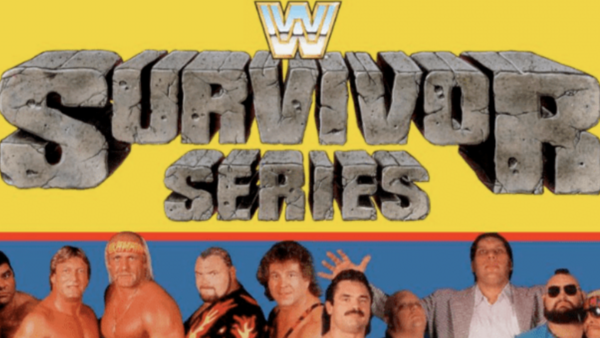
No beating around the bush needed to kick this entry off: The first ever Survivor Series in 1987 was the WWF's bid to screw with NWA event Starrcade. McMahon launched his own end of year/Thanksgiving special, and warned cable pay-per-view providers they'd be barred from airing the following WrestleMania if they dared show Starrcade on their platforms.
That was a brutal, cut throat tactic, albeit one that was highly effective. A fair number of PPV providers dropped the NWA product because they didn't want to miss out on proven box office winner 'Mania. It didn't even matter that WrestleMania IV wound up being centred around a crummy tournament. Quality? Pah! Quantity was the most important thing to these groups. They were after McMahon's money, not his creative ideas.
Later, Vince did the same thing again (sort of) by airing a free TV version of the first Royal Rumble opposite the NWA's Bunkhouse Stampede pay-per-view. His product, whilst nowhere near as solid between the ropes as latter day NWA or early WCW overall, was glitzier and had a certain magic to it. The NWA found it difficult to compete there, not least when McMahon was going in two footed on PPV companies who wanted to maximise profits by airing both sides.
Using 'Mania IV as a bartering tool and effectively holding PPV providers hostage was a hostile but genius move from the WWF's higher ups. They knew they had one hell of a bargaining chip there. WrestleMania had quickly surpassed Starrcade as the must have pay-per-view in the marketplace, and there was nothing anybody could do about it.
8. ‘Mania II’s Cage Match Was Unique For 35 Years

Beating SD Jones in (whisper it) 24 seconds was an important part of King Kong Bundy's path towards a feud opposite federation cash cow Hulk Hogan. By the time 'Mania II rolled around, Bundy was well placed to headline vs. Hulk and believably threaten his WWF Title reign. Looking to up the ante further, the promotion booked the match inside a steel cage.
That'd be the first and last traditional non-Hell In A Cell cage bout in the series until 'Mania 37's Shane McMahon vs. Braun Strowman affair. Four HIAC matches have taken place at WrestleMania: The Undertaker vs. Big Boss Man (XV), Triple H vs. The Undertaker (XXVIII), Shane McMahon vs. 'Taker (32) and Edge vs. Finn Bálor (39).
That means Hogan vs. Bundy and Shane vs. Braun are the only traditional cage clashes.
Even more astonishingly, there was a huge 35 year gap between the pair. 'Mania II took place in 1986, whereas 'Mania 37 happened in 2021. It's kinda surprising that the WWF didn't book at least one more in the 80s or 90s before the Cell gimmick captured everyone's collective imaginations and became the go-to cage match to blow off heated big feuds once it debuted in 1997.
Hogan vs. Bundy was a slow plodder, but it was way more interesting than the duff McMahon vs. Strowman business. The live crowd response alone makes 'Mania II's effort superior. If only WWE had picked a better combo to work in the standard cage after 35 long years.
Oh well, maybe next time.
7. Vince Thought The Royal Rumble Sucked At First

Pat Patterson was the one who came up with the Royal Rumble concept. When he pitched it to Vince McMahon, the boss paused for a minute before wondering aloud if it'd be something their audience would be interested in. After all, Battle Royals were an old-school wrasslin' nuisance to his world of "Sports Entertainment". Never mind the fact McMahon continued to book "old-school wrasslin" stuff whilst simultaneously hating on it.
Later, Vince told Pat to tell NBC head Dick Ebersol "that stupid idea" he had for a new match type. Patterson must've been happy that Ebersol loved it. His excitement passed over to McMahon, and the rest is history. However, the WWF decided not to air the show on pay-per-view like WrestleMania or the new-fangled Survivor Series. They planned it to be a TV special on NBC.
There were two distinctly different reasons for this. One, the WWF wanted to keep Ebersol and NBC onside as key partners, because they knew the network played to a vast audience. Two, running the first Rumble on TV instead of PPV would directly impact the NWA's Bunkhouse Stampede show, and messing with that was too good an opportunity to miss.
Don't forget that Vince had already threatened PPV companies with missing out on the next 'Mania if they went with Starrcade. Now, he was airing a pay-per-view quality show opposite Stampede. This was a nightmare for the NWA, but they were powerless to do anything about it.
For reference, the 'free Rumble' was a 20-man match that didn't quite hold the same thrills and spills as future 30-strong versions.
6. 10 Of The First Rumble’s Entrants Never Worked Another
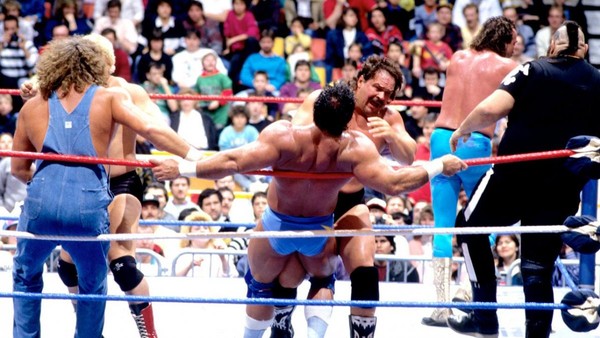
Jim Duggan was handpicked as the right man to win the first televised Rumble. He eliminated One Man Gang to score the victory, and the live crowd in Canada popped big despite the fact there was nothing really on the line for the fresh new match up. It was a win for the sake of it; it'd be years before the WWF dangled a WrestleMania headline spot in front of the winner. That didn't start until 1993.
Something else was notable about the '88 version. Exactly half of the 20 wrestlers involved in the match would never work another Royal Rumble again. That's right, a full 10 of the 20 went one and done in the Rumble. The full list is: Hillbilly Jim, Danny Davis, Sam Houston, Harley Race, Boris Zhukov, both Killer Bees, Junkyard Dog, Butch Reed and Don Muraco. This was their only Rumble in front of the cameras.
That's perhaps most shocking when it comes to Race, Zhukov, The Killer Bees and Muraco. Those guys hung around the WWF for a few years after this debut, and it's hardly like McMahon turned his nose up at the thought of padding things out with tag teamers. Where's the justice for big Boris?! Poor lad.
This is a quirky stat, because you'd think the WWF would lean on those who had experience in the match come the first proper pay-per-view version in 1989. Nope. That 30-man match had some bigger stars in it, so there was no room for Davis, Houston, The Killer Bees and the like.
At least they carved a unique place in WWE history.
5. Harley Race Invaded A WWF Locker Room

Vince McMahon annoyed a lot of different wrestling promoters when he started squashing all manner of established unwritten rules of conduct in the business. The WWF hoovered up whatever talent they could, and McMahon wasn't adverse to running shows in someone else's backyard. In 1984, he brought his "Superstars" to Kansas City, but there was just one problem.
Harley Race was pushing his own card across town at the same time. Steaming mad, the notoriously tough Race drove over to the WWF's venue and confronted Hulk Hogan in the locker room. Hogan claims Harley pulled a gun on him, but Race said during a 2000 shoot interview that he merely slapped Hulk in the ribs and just wanted to scare him a little bit.
More Hulk being Hulk there? Probably.
Nonetheless, the guys doing that 2000 shoot didn't ask Race why he went after Hogan instead of McMahon. After all, Hulk was simply doing as he was told - Vince was the one in charge, and he was the boss who decided it didn't matter if Harley was promoting his own card in the city. The WWF would beat that hands down and sell more tickets, guaranteed.
Either Race was keeping his options open for a gig with the federation (which he'd get), or he wasn't actually that serious or angry. It might well be 100% true that he only fancied seeing Hulk quake in his boots for a minute or two. Harley surely knew a lot of the workers in the WWF locker room anyway.
4. WWE Had A Stand-In For Andre The Giant

The real 'Colossal Tussle' was getting Andre The Giant to commit to WrestleMania III. The big man was in a lot of pain by 1987, and he'd all but officially retired from the ring. Seeing dollar signs in a mega-match with Hulk Hogan, McMahon arranged a meeting with his pal and asked for one more favour: 'Turn heel and put Hogan over'.
At first, Andre was hesitant. This is a guy who could barely walk around without being in agony, and here was Vince asking him to take a few bumps on the biggest wrestling show of all time. Eventually, The Giant said yes, but the WWF knew they had to install a contingency plan if Andre's physical condition worsened before 29 March. In a clever move, McMahon had someone else waiting in the wings on reserve.
Paul Orndorff was that man. He'd already worked extensively with Hogan, and 'Mr. Wonderful' was over enough as a top heel to slot in if Andre couldn't make it. That wouldn't be ideal, of course, but it'd be a real needs must situation. It's fair to say that Hulk vs. Orndorff wouldn't be talked about in the same breath as Hulk vs. Andre though.
The former friends had a clunky, strained match, but Hogan slamming the big guy would go down in company history as the first true "WrestleMania Moment". Unfortunately for 'Mr. Wonderful', he was strictly a substitute - Orndorff didn't get to work a different match on the card once it became clear Andre was going to appear as planned.
3. Why Andre Changed From Trunks To That Singlet

Andre debuted his iconic single strap black singlet at WrestleMania III. This wasn't some inspired aesthetic change carefully designed to add a new wrinkle to the Giant's game. No, he did that because he needed to wear a back brace, and his old trunks wouldn’t have covered that part of his body. The singlet’s material hid the brace on his lower spine from fans.
That's really, really sad.
Andre's health had degenerated to the point he needed the extra support or he just wouldn't have been able to show up at all. He was having real problems even getting from A to B, so the special ring carts the WWF introduced for 'Mania III were essential too. Without them, The Giant might not have been able to walk the lengthy aisle way to the ring, step over the ropes and start his business with Hulk.
Vince McMahon and his WWF troops took as many precautions as they possibly could to get the match in the ring. That's something McMahon later spoke about to Netflix - he knew it was important to get Andre and Hulk nose to nose at least. Then, if all The Giant could do was take an awkward slam and leg drop, so be it.
His back had to be screaming throughout the 12 minute match. Re-watch the thing now and you'll see several moments where Andre literally needed the ropes to haul his massive frame back up. He was a shell of his former self, and looked every bit the faded warrior who had little left to offer physically.
2. Ric Flair Almost Jumped For SummerSlam 1988

Those who kept a close eye on the pro wrestling industry at large in 1988 could see how separate the WWF's product was from the NWA. That'd also be true once Ted Turner took control and turned it into WCW. In Atlanta, hot in-ring action and excellent traditional wrestling angles were the most important thing to fans. In the WWF, star power and storylines reigned. That's why it's so incredible to think of the NWA's top star jumping ship.
Ric Flair nearly did it.
Sure, he'd make the leap in 1991 for a two year spell on Vince McMahon's side, but things were different in '88. Flair was renowned as the wrestler of the 80s, and he was undoubtedly the most important worker to the NWA. Not only did the 'Nature Boy' have top matches against all comers, but he was one of the greatest promo men in the business. Losing him would've been disastrous.
The WWF planned to take Flair from the Alliance ahead of the first SummerSlam. Reportedly, he would’ve wrestled Randy Savage whilst still NWA Champion, which is some thought. Changing his mind/getting cold feet (take your pick), Ric decided to stay put and help the NWA finalise a deal with Turner instead.
Savage teamed with Mega-Powers partner Hogan against Ted DiBiase and a fading Andre The Giant on that card. Being honest, that Mega-Powers union makes the Flair thing a bit dubious. There's no way a top promoted bout like Mega-Powers vs. Mega-Bucks was off the table just for Ric. He likely would've tangled with somebody else at SummerSlam, which would've been some conversation to sit in on.
1. Jim Ross Overheard A Plot To Murder Vince McMahon
Speaking of staggering conversations!
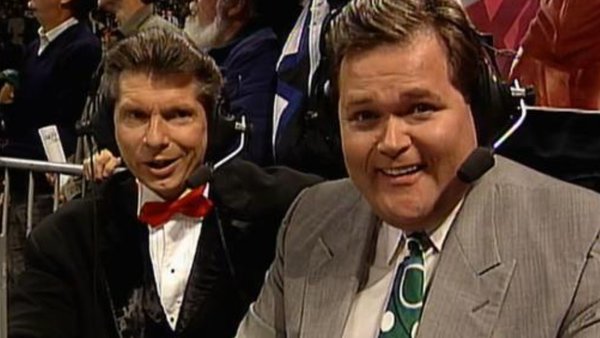
Jim Ross tells the story of being in a nondescript bathroom stall in the mid-1980s when several NWA promoters walked in and started openly discussing having Vince McMahon killed. Knowing he had to stay quiet as a mouse, JR pulled his legs up so nobody could see his feet underneath the door. He didn't want to explain what he'd heard, or for anybody to even know he was there in the first place.
One of the unnamed promoters said he could 'get it done' for $700. Ross stayed put until everybody had left, and he wondered to himself if he should ever tell a living soul about what he'd just listened to. Nothing came of the conversation, clearly. This was surely just a bunch of disgruntled promoters angry that McMahon had muscled in on their territory and was presenting a glossier product to fans, but...wow. JR had to be sweating it out in that cubicle for a while.
He eventually told Vince all about the incident when he went to work for the WWF in the early-90s. McMahon had caused a lot of hurt and anger by stepping on toes without remorse. He systematically tore down established wrestling norms his father had followed, and he sought to monopolise the industry.
The sinister murder plot Jim overheard was presumably called off after one or two chats. A 1980s hitman could've received just $700 to change the face of the industry forever by taking out the WWF's leading man. That's scary. Imagine how JR felt?!
What other fascinating facts and stories do you know about WWE in the 1980s? For more wrestling, check out 10 WWE Jobbers Who Became World Champion and 10 Most ANNOYING Wrestlers Ever!