8 Biggest Talent Raids In Wrestling History

A warning to wrestling promotions: treat your top stars well, or they may well head elsewhere.
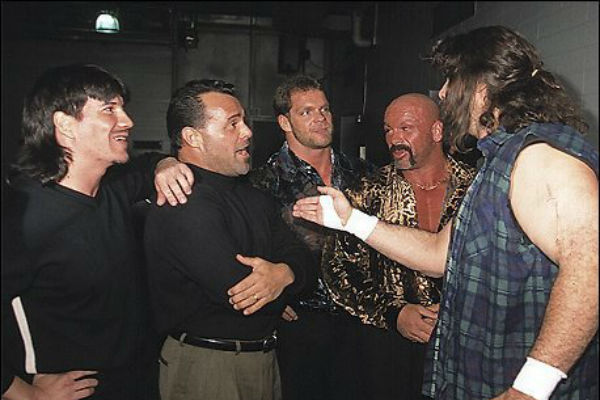
Being a fan of professional wrestling is often very similar to being a sports fan. With both, you get shocking results, glorious highs, depressing falls from grace, and a fair share of scandals to boot. Although it may not seem the most immediate similarity, pro wrestling can also has its own version of the drama that comes with athletes switching teams, through the medium of the talent raid. If executed at the right moment, talent raids can often change the entire landscape of the business. Several times over the past few decades, the shift of pro wrestlers has signified (or even prompted) a mass shift in fan opinion, whether between two mainstream promotions, or from one smaller independent company to a larger one. Here's a look at the biggest talent raids in wrestling history. Som spread out over the course of a few years, others executed immediately but the end result was the same.

8. WWE Take Bullet Club (And Nakamura)
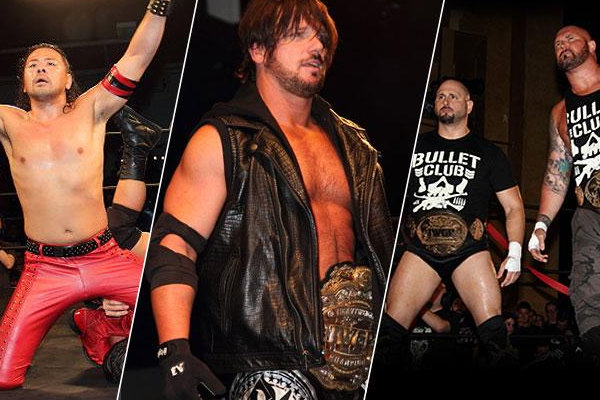
We first look at the raid that inspired this list. Earlier this year, in the immediate aftermath of NJPW's annual 'Wrestle Kingdom' mega-PPV, news broke that four New Japan workers had signed contracts with WWE. Not just any old midcarders, either: Bullet Club members Ken Anderson and Doc Gallows, then-IWGP Intercontinental Champion Shinsuke Nakamura, and AJ freakin' Styles. So far, only Styles has made his debut, striding out to rapturous reception in this year's Royal Rumble match. Gallows and Anderson haven't been seen since, and although Nakamura has been pencilled-in for a match at NXT TakeOver: Dallas, some fans are getting understandably edgy with regards to WWE's use of their new acquisitions. There's a genuine worry that the four newcomers will find themselves diluted beyond recognition in WWE's PG environment but, although some changes will be necessary, with the right handling, Styles and co. could usher in a new era of exciting, martial arts-inspired wrestling.

7. TNA Give A Home To Various Ex-WWE Superstars
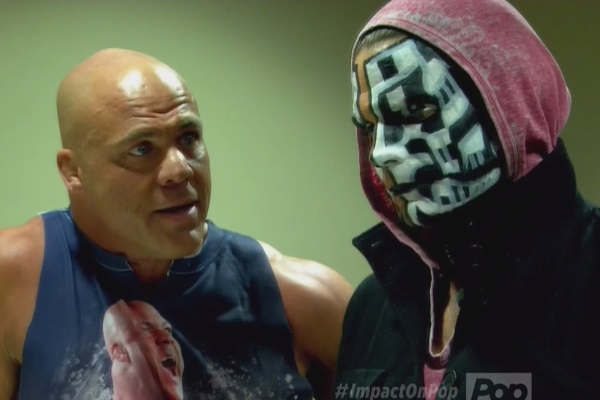
It's no secret that TNA have never been shy of scooping up former WWE superstars, often with damaging regularity with regards to their homegrown talent. Of the 18 men ever to hold the TNA World Heavyweight Championship, 8 made their names in WWE (or 7, if you're reluctant to include Rob Van Dam). The list includes such prominent names as Kurt Angle, Mick Foley, and both Hardy brothers. Unlike most talent raids on this list, however, this trend hasn't always yielded positive results. TNA's long-term reliance on familiar WWE faces may have generated an initial burst of interest from old fans, but has often hindered their development of new stars of their own. Despite being a leading figure for the promotion since his 2002 debut, it took AJ Styles seven years to finally become a world champion, at which point he was almost immediately turned heel and coupled with Ric Flair. In the early days of TNA, this problem was often even worse. Although the promotion gained a following due to the vast talent on display, from names such as Styles, Christopher Daniels, Petey Williams, and the Motor City Machine Guns, they were shoved down the card to make room for tired has-beens such as X-Pac, Billy Gunn, and the ever-present Jeff Jarrett.

6. WWE's Sustained Raid Of ROH Talent
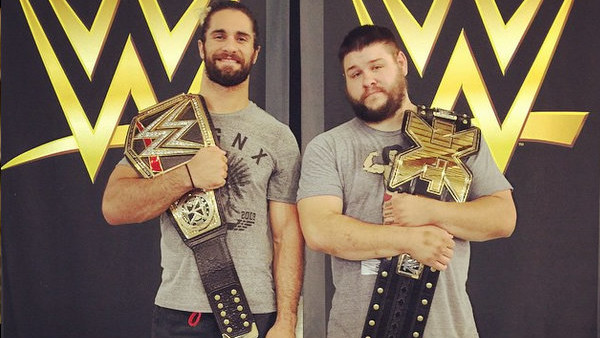
Even ten years ago, when the tail end of the Ruthless Aggression era seemed a far cry from any of the hard-hitting action going on in Ring Of Honor, WWE still weren't shy of poaching a top name (or two) from the esteemed indie promotion. CM Punk and Daniel Bryan are both considered ROH legends, and look to have set a benchmark that is being pursued by a host of their old running buddies. Seth Rollins and Kevin Owens, two of the most groundbreaking new-age heels in WWE, have ROH Championship reigns under their belts, while older NXT superstars such as Samoa Joe and Austin Ares followed a very similar career path too (by way of TNA, of course). Now, with Triple H demonstrating a surprising appreciation for smaller, technically-proficient indie wrestlers, this trend only looks to continue.

5. WWE Take A Little Attitude From ECW

Although the term 'Attitude Era' is most commonly associated with WWF, the company owed a lot to Paul Heyman and ECW. The Philadelphia-based promotion were the first to really popularise a hardcore style of wrestling (borrowed from Japanese promotions like FMW), a style WWF were heavily influenced by during their most successful period. As well as aping ECW's style and tone, Vince McMahon and co. also took some of their workers directly. The most high-profile moves came at (or just before) the turn of the 21st century, as first the Dudley Boyz and then Tazz jumped ship as ECW was on the verge of collapse. WWF and ECW actually struck a surprising deal, allowing Tazz to return to his former promotion for one match, defeating Mike Awesome - who had himself jumped ship to WCW - for the ECW Championship. He held the title for ten days, and even wore the belt to several WWF shows, including a televised episode of SmackDown.

4. WCW Strip Out ECW

Just as WWF owed a lot of their late 90s success to ECW, their rivals sure as hell did too. Whereas WWF aimed for their top talent, WCW took a different approach. They signed many from ECW's undercard, technical and cruiserweight wrestlers such as Chris Benoit, Eddie Guerrero, and Rey Mysterio. After WCW knicked Guerrero, Benoit and Dean Malenko, Heyman sought to replace them with lucha libre sensation Mysteiro, Juventud Guerrera, Psicosis and Konan. Bischoff signed them up, too. Unfortunately, unlike WWF, who at least utilised the Dudley Boyz to their full potential WCW ensured that their signees were criminally underutilized. The fact that so many talented stars were wasted by their new promotion, when they could have arguably transformed the company's fortunes, surely makes this the least successful talent raid on the list. In fact, so many workers were so disappointingly wasted that it actually led to a subsequent exodus - the next on this list...

3. WWF Turn WCW's Unwanted Midcarders Into Stars

Amidst all the reasons WCW died, one of the most overlooked is the fact that WWF were able to transform some of their most neglected talents into bonafide superstars. Chris Jericho was the first to make such an impression, and was treated as a big deal from the get-go - just look at his iconic debut promo battle with The Rock for proof. The Radicalz shortly followed: Chris Benoit, Eddie Guerrero, Dean Malenko, and Perry Saturn - and while all four men didn't become main eventers (and Saturn participated in some of the most notoriously silly comedy angles of the Attitude Era), Guerrero and Benoit did eventually rise to the top. It's startling to see just how extensive an array of talent WCW had on their hands and were unable (or unwilling) to properly take advantage of. Ultimately, their decision to continue granting influence to ageing stars such as Hogan, Nash and Hall really nullified any chance of progression.

2. 'You Want A War? You're Gonna Get One.'

Speaking of the nWo, Hall and Nash's dramatic arrival in WCW has gone down in history as one of professional wrestling's most shocking, iconic moments - and the first time the battle lines between WCW and WWF were properly drawn. The pair jumped ship in 1996, and instantly changed the face of the company. Before long the nWo were formed (alongside 'the third man', Hulk Hogan, who pulled off perhaps the most unthinkable heel turn in wrestling history). It could be argued that ultimately, this talent raid cost WCW in the long-term, as their own talent found themselves more and more neglected by the nWo's influence and - sadly - egomania. On the other hand, a case could also be made to suggest that WCW would never have scaled the heights it did without the radical burst of shock and energy brought about by Nash and Hall's defection.

1. Vince McMahon Raids The Territories
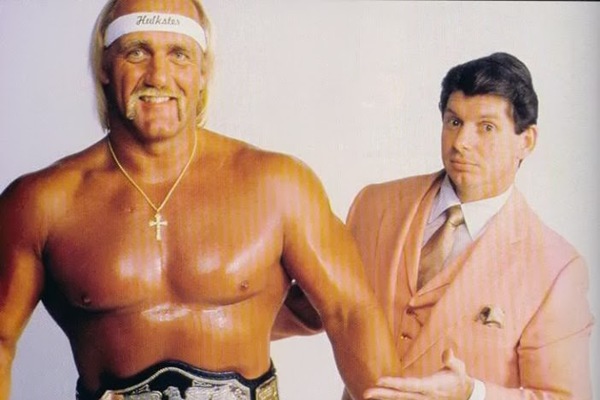
In the history of pro wrestling, no talent raid has been more influential or important than Vince McMahon's sustained poaching of territorial talent in the 1980s. It transformed his father's company from a regional promotion into a national powerhouse, and made the business more of a monopoly than it had ever been before. In an interview with Sports Illustrated, McMahon outlined his business strategy back in those days, stating:
'In the old days, there were wrestling fiefdoms all over the country, each with its own little lord in charge. Each little lord respected the rights of his neighboring little lord. No takeovers or raids were allowed. There were maybe 30 of these tiny kingdoms in the U.S. and if I hadn't bought out my dad, there would still be 30 of them, fragmented and struggling. I, of course, had no allegiance to those little lords.'
The most influential of his early signings were Georgia Championship Wrestling's Roddy Piper and The Iron Sheikh, American Wrestling Association's Jesse Ventura, and - of course - Hulk Hogan. Again poached from AWA, Hogan had already gained mainstream popularity due to his appearance in Rocky III (as overblown wrestling cliche 'Thunderlips'). These acquisitions allowed McMahon to gain a national TV deal, and the rest - as they say - is history.

Content Producer
Content Producer

Highly overrated 23 year old from the North East of England. Hanging off of your gangster car.