How Good Was John Cena Actually?
Promos
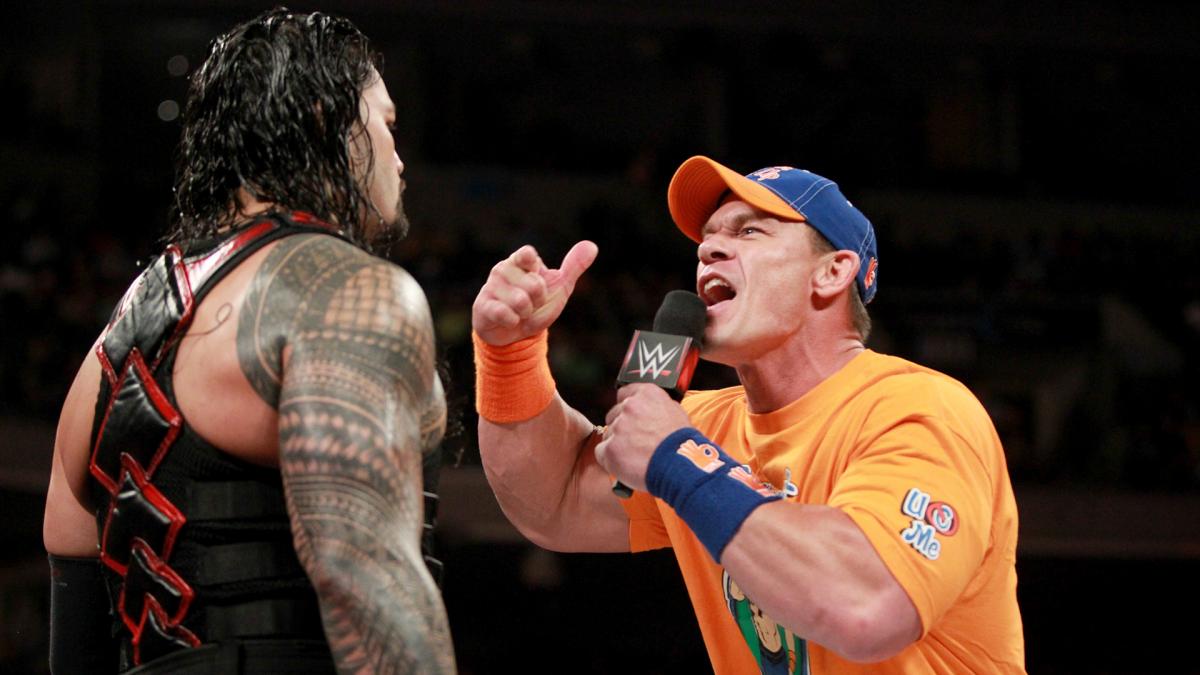
In terms of pure delivery, John Cena was world class at promos - one of the best talkers in the history of the game. The rhythm, the freewheeling improvisation, his ability to manipulate a crowd, even those who were adamant that they didn’t care a few moments before he opened his mouth: Cena was an unflappable master. Every wrestler does the bit where they raise their voice towards the end of a promo, when they reach the important part you’re meant to remember. Few, if any, were better at Cena at emphasis.
The content of Cena’s promos ranged from cringeworthy and putrid, to questionable, to effective. Cena was so good at the art of talking that the actual words, and even the essence of his character, was almost irrelevant.
Prime John Cena was ostensibly a hero to children who urged them to never give up and embody decent values to live by. How often, though, did he express those sentiments in a rousing, effective way?
Cena at his worst was an unquestioning soldier who accepted his commands of regurgitating the dreck that a WWE creative writer would come up with in a bid to make Vince McMahon feel like he was reaching the kids. There was that time Cena compared his feud with John Laurinaitis to the plot of Star Wars, complete with skin-crawling impressions of Yoda. Infamously, Cena referenced a popular viral video on YouTube, saying “Baloney, fudge and mustard! I haven’t flipped out this bad since my mom cancelled my subscription to Warcraft!”
Cena wasn’t just a wrestler for the kids, which wasn’t necessarily the worst thing in the world. Randy Savage was kid-friendly as a babyface, very unlikely to say anything that would get the WWF into trouble. Cena actually talked like and resembled a small child, which was the key distinction to the do-gooding heroes of the 1980s. Watching the aforementioned promos in particular was akin to suffering through a school talent show. And the other thing about Cena is that, for a supposed role model, the guy was phenomenally mean-spirited.
Cena’s material wasn’t just acutely embarrassing, to the older fans watching with a roommate, partner, or family member in close range: it was actively counterproductive. The Cena stand-up routine was relentless, a stunningly poor fit for so many of his rivals. Cena wasn’t primarily responsible for the downfall of cult leader Bray Wyatt. Under Vince McMahon, Wyatt would have failed if he was programmed with Cena or not. Cena however trivialised Wyatt to a shocking, aura-draining extent. This was his playbook. He should have made an exception for a character possessed of otherworldly power, but no: Cena did the usual, awful Photoshop gags on the TitanTron. His more acclaimed stuff was still questionable.
John Cena was, to be blunt, a dick. An intensely unlikeable dick - one of the weirdest babyface acts ever and even imaginable.
Towards the end of his run as a full-timer, Cena barely performed as a fictional character concerned with title wins and grudge programmes. He was WWE’s proud mascot and workhorse, and would frequently, aggressively, assert that nobody else could represent his beloved WWE like he could. With unchecked arrogance and entitlement, this Cena character was oblivious to the fact that he was booked to win.
He savagely buried Roman Reigns, in 2017, throughout a short programme premised on the idea that Reigns could not get over as a babyface, nor become Cena’s successor as the top star of the company. Roman won their match at No Mercy, but victory in a staged contest did nothing to refute Cena’s claims. Wasn’t Roman winning matches, but not forging a connection with the crowd, Cena's exact issue?
This meta business was overthought and ineffective - a bizarre thing for a hero concerned with hard work and respect to engage with. What were the kids meant to make of it all? And if this was aimed at the older fans, it did nothing but cast Cena, a better public speaker who didn’t win quite as much as he used to, as the lesser of two evils. The programme was designed to get Roman over. It didn’t; Roman only got over as a babyface years after finally turning heel in 2020.
John Cena has cut several excellent, traditional promos, and when he wasn’t just…saying stuff, his diss track promo-style was compelling television. His 2012 feud with the Rock was an unmissable exchange of very real, potentially volatile tension. On the subject of the Rock, though, Cena’s definitive, most memorable promo work was a more snarky and less entertaining take on that insult-happy approach.
Worst of all, Cena was absolutely hopeless at selling defeats. It was impossible to tell that he’d even lost when he appeared on TV 24 hours later. Some role model; the guy lacked any humility and accountability whatsoever. So much of WWE was meaningless with Cena on top; so much of that was Cena’s fault.
Here’s the start of a theme: not much of this mattered.
7/10