How Good Were The Dudley Boyz Actually?
The Dudleyz are former WWE, ECW and TNA champions - but you can prove anything with statistics.

For those unfamiliar with this series - in which the much-debated legacies of key WWE wrestlers is explored in depth - here’s a refresher of the criteria.
In his book ‘Hitman’, Bret Hart establishes a system by which to rate the professional wrestler. He totals the value of three categories, the highest rating of which is 10: in-ring ability, promo skills, and look.
Bret said that Hulk Hogan, based on high numbers in the second and third categories, would achieve a score in the low 20s overall. Dynamite Kid, meanwhile, would score around a 10. You can probably gather that this score is not distributed equally across all three categories. In fact, if you’ve ever heard Tom Billington talk, he’d be lucky to escape with an overall minus number. The near-perfect wrestler - Bret helpfully cites a handy example here in Bret ‘Hitman’ Hart - would score close to 30. Kidding aside, if anybody not named Steve Austin is closest to the perfect rating, it’s Bret Hart in 1997.
This series expands upon Bret’s approach, incorporating additional criterion in order to build the case for and against various wrestlers who frequently crop up in the overrated/underrated debate.
WWE Hall of Famers the Dudley Boyz are one such act. The team regularly tops lists of the best tag teams ever, and it’s easy to grasp why. They won everything there is to be won. They worked themselves into various, very decent spots across a span of decades, plural. They boast (and indeed innovated) one of the best and most imitated tandem finishes ever.
But did they really spend all of that time putting in excellent, consistent work? They wrestled in some of the best matches in wrestling history - but how often did they reach those peaks?
How good were the Dudley Boyz, actually…?
Presence/Look/Presentation

This is where the Dudley Boyz were very good.
A wrestler is lucky if they conceive of one look that is instantly identifiable as “theirs”. The Dudleyz boast an iconic home and away kit, and while they did not create either of their signature attires, they are almost synonymous with both.
Superstar Billy Graham wore tie dye gear, but in a bleak sign of how wrestling ages, he’s primarily known, through WWE revisionism, as that guy from the 1970s who influenced Hulk Hogan. He is probably not the first wrestler you think about when you think about that design - even though he’s a former WWE Champion, and the man whom everybody stole their promo game from, even if they have no idea. Wrestling wasn’t invented in 1984, but for how it is curated and discussed, it might as well have been.
Nor did the Dudley Boyz first wear camouflage - wrestling’s wildly uneven history with military-themed characters predates their debut - but the black and white variant was a unique spin on it. The thick nerd glasses, a hangover from their early days as wacky hillbillies, was hardly some difference-maker of a choice - but it was memorable, toyetic, something they could throw on their faces on the convention circuit forever.
Both Bubba and D-Von were equipped with great physiques for their specific characters. Bubba was a nasty asshole who looked like he was out of shape, but wasn’t. In ECW especially, he was a gross, detestable slob who could kick your ass and laugh about it. To the extent that it was truly effective, his promo game wouldn’t have worked if he was in excellent cosmetic shape. It worked because the fans were meant to receive him as a hypocrite. Who did he think he was, calling the women ugly?
D-Von was more solid and muscular, which complemented the act beautifully. For the style they worked - which didn’t resemble a deliberate style at all - the Dudleys looked the business. They were big enough to scan as a hoss-sized threat, but dynamic enough to perform very well in complex, pacy stunt matches.
7.5/10
In-Ring Ability

Well.
The Dudley Boyz are considered within some circles to be among the greatest tag teams of all-time. This is as lofty as praise gets. It literally gets no higher than that. Working one truly great or memorable match - with nowhere to hide from the shortcuts afforded by a stipulation - is not even the absolute bare minimum. You should be losing count, really, when listing the best matches to argue for a wrestler’s G.O.A.T. case.
What’s the best Dudley Boyz match?
The Triangle Ladder and TLC matches are nothing short of the very best gimmick matches ever. Futuristic to an impossible degree, three teams could do a spot-for-spot retread in 2025, and it would still be a white-knuckle, demented, frenzy of bloodlust. As a matter of fact, several times per year, many tag teams more or less do. The Dudleyz were instrumental in pioneering something that is both futuristic and timeless. Very few acts in the entire history of the medium can say that. The Dudleyz were great in those matches, too, even if they were never speared out of the sky. At WrestleMania 17, Bubba played the violent spoiler and drew an all-timer of a pop when he crashed through a stack of four tables at the perfect, late moment. The Tables match against the Hardy Boyz at Royal Rumble 2000 was an exceptional sprint boasting an outstanding number of beautifully-timed near-misses. Beyond that…
Is there a single straight tag that you could convincingly argue is a classic of the genre? A single one? In their library, is there a single straight tag that you could convincingly argue is great?
The absolute upper limit is “very good”, and they didn’t reach it very often. They didn’t achieve it much on the big stages, either. It’s actually difficult to recall these very good matches, and when you research it, you only find a few deep cut hidden gems. They worked Rey Mysterio and Rob Van Dam, two hardly shabby opponents, on the May 5, 2004 SmackDown. For whatever it’s worth, the Cagematch inmates awarded this match 8.11 based on 17 votes. It is the highest-ranked non-gimmick match on their matchguide. Do you even remember it?
You could counter that, and insist that Cagematch is just some smark database - but which match would you opt for instead? Right now, off the top of your head?
The Dudleyz are meant to be one of the best teams ever. They should be topping lists in this criteria - but the sheer number of teams with better match catalogues is damning.
FTR; the Hart Foundation; the Rock N’ Roll Express; the Midnight Express; the Young Bucks; the Brainbusters; the Briscoes; Akira Taue and Toshiaki Kawada; the Rockers; the New Day; the Steiner Brothers; the Motor City Machine Guns; the Lucha Bros.; the Hollywood Blonds; Stan Hansen and Bruiser Brody; Mitsuharu Misawa and Kenta Kobashi; DIY; Beer Money; the Can-Am Express: all of these times, and several more, have wrestled multiple great pure tags.
The big counterargument here is: what about the Road Warriors?
They weren’t renowned for exciting, lengthy, back-and-forth matches, which are probably emphasised too often when arguing for a wrestler’s value. The Road Warriors, at their peak, were never boring. Their lean, gruesome matches were reckless, hypnotic spectacles. They were far more innovative, too, popularising the squash in the early cable era of pro wrestling.
The Dudley Boyz were often very boring at every stage of their career. They wrestled so many deeply basic, uncreative plunder slogs in ECW that dragged and dragged; where Hawk and Animal left you screaming and pounding your chest with their approach to violence, the Dudleyz frequently made you wonder if they were ever going to get to the finish.
Without factoring in the competition, the Dudleyz ranged from very fun to punishingly dull. The amount of bad matches is staggering.
In terms of pure nuts and bolts, the Dudleyz were good. They had that “tag team synchronicity”, as Jim Ross would have it. Bubba could cause whiplash with the snap of his powerbomb. D-Von could really fly. Ultimately, however, they very rarely structured their offence and built something progressively dramatic and compelling. In their defence, they didn’t have to; the WWF fans were going to scream “Wassup!”, which the Dudleyz of course didn’t come up with, regardless.
Bubba Ray would be the very first person to tell you that not everything is about matches, so moving on…
6/10
Promos

This is the most contentious entry.
Some people think that the Dudley Boyz, Bubba in particular, were great at talking. To an extent, they are correct. Bubba’s voice was perfect for the smaller, sweatier dins that played host to ECW. That profoundly abrasive Queens, New York tongue was the perfect delivery system for his over-the-top, vile material. Pissed-off, aggressive New Yorkers cut great promos even when they aren’t wrestlers. It was a natural gift that he used to almost to its maximum potential, though Taz was better at being aggrieved.
D-Von wasn’t as good as Bubba, in that he was often there to add the exclamation point, but he was more intimidating, adding a genuine edge to what otherwise might have been pure schtick.
Bubba’s delivery was excellent. He knew the rhythm of trash-talk - when to raise his voice, when to add emphasis. He had a unique way of doing that, often inserting a pause between every syllable, as if this cheapest and most direct route to drawing heat needed to be spelled out for the dumb marks to understand it.
As a general rule of thumb, a good and memorable promo in wrestling is both fun and relatively easy for the fans to mimic. Every wrestling fan has done a Ric Flair impression, a Dusty Rhodes. Millions, and millions, have tried to pop their friends doing the Rock. Everybody can do a half-decent Macho Man, yeah. Bubba Ray Dudley, while obviously not in that tier, is a fun one to do - not that you’d want to repeat roughly anything he ever said in 2025.
But what did Bubba deliver, exactly?
What marks the Dudleyz (and Bubba specifically) down here is that his stuff was so artless. You could argue that was the point. The Bubba act doesn’t work if he gets too fancy with his wordplay.
While he eventually, briefly became a standout singles star in TNA, in ECW, Bubba was rarely tasked with building top-level programmes with major stakes. His job was to rile the fans up and secure his beloved heat. He did, but to an extent that is overblown. Nobody was so upset that they actually rioted. People threw acid at Freddie Blassie. More than one fan stabbed a wrestler. Bubba never convinced anybody to hop over the guardrail.
He was spat upon, at Heat Wave ‘99, so that’s something - but this apparently legendary promo was pure edgelord stuff that was overlong, and didn’t do an effective job of promoting anything. He didn’t even generate heat for the match that immediately followed; The Dudleyz Vs. Balls Mahoney and Spike Dudley was a slow, basic exchange of overfamiliar weapon spots. The fans didn’t chant “F*ck you, Buh Buh”; they chanted “Flaming tables!”, since they were bored stiff and wanted him to get to the one bit of the match they wanted to see.
People can do a Ric Flair impression, but they can’t actually write one of his promos - promos that made you actually want to see the match. The key difference with Bubba is that any wrestler could do what he did. It isn’t reductive to state that Bubba just droned on and on in a loop repeating the exact same thing. Vile insult, vile insult, vile insult. He didn’t even craft set-ups and punchlines. He just screamed awful things at people constantly. He was a compelling, loathsome presence with a microphone in his hand, but - and this is ironic, given what he talks about constantly on his radio show - he didn’t tell a story. His sentences were great. They never added up to much. Was Bubba even the best foul-mouthed guy in his own act?
Joel Gertner was funnier, and his individual lines more quotable.
7/10
Time’s Test

Most wrestling fans can still watch a prime Dudley Boyz match in 2025, and get a lot out of it.
That is primarily because wrestling fans, of WWE and AEW in particular, are obsessed with tables. They are in love with tables. The table, in fact, is the one thing that unites the two tribes.
The Dudleyz, however, did not invent the table spot.
They weren’t the first ECW act to incorporate and popularise the table spot: that was Sabu. Hell, they weren’t the first ECW tag team to spam table spots to compensate for their lack of natural talent: that was the Public Enemy.
It counts more in WWE. That’s a fact, whether you’d care to admit it or not, and in company lore, the Dudleyz are synonymous with tables - and, to their credit, they used them well. They were big, imposing dudes, Bubba Ray and D-Von. They used their bulk and power to create a hugely sounding crunch and spread the sawdust debris flying; also, when it was their turn to take the bump, at which they were very good at building anticipation, those huge frames meant they took it better than most. If they couldn’t work a strong match without a table - and really, they couldn’t - they did shortcuts and self-indulgence better than most.
So what about their matches that didn’t involve tables? They are collector’s items, true, but they did happen.
It’s not so much that those matches haven’t stood the test of time; they weren’t all that great to begin with. They weren’t terrible. Mediocre and flat, but not outright terrible.
6/10
Cultural Significance

The Dudley Boyz lack entirely in cultural significance; unless that person watched the WWF between 1999-2001, you won’t find a soul on this planet with a clue who they are.
This criteria was introduced in the first entry of this series, and it’s not unfair; if you want to determine who really was great, to a transcendent extent, you must wonder if their bumps echoed beyond the wrestling arena and across the wider world. If you were so memorably entertaining in an industry that people laughed at, you had to be a red supergiant.
This is true of most tag teams, to be absolutely fair. In the United States at least, the public only gravitates towards the marquee singles stars. To make this somewhat more generous, then, let’s instead assess the significance of the Dudley Boyz within wrestling.
Is there a single tag act that would not exist today without their influence? That is debatable. Sabu was such an electrifying sensation that you’d see a table spot on every major show even if the Dudleyz were never around.
The Dudleyz are the only tag team in wrestling history to have captured the WWE, ECW, WCW, TNA, NWA and IWGP World Heavyweight Tag Team titles. This cannot be described as anything other than very impressive - but to what extent, really?
Getting over to the degree they did in ECW and WWE was inarguably remarkable. They forged a connection with the most discerning fans and the most amount of fans alike. The WCW title stint is a nice bit of trivia, and nothing more; those titles were promoted by the WWF at the time. Moreover, during that time, too many wrestlers were awarded with a belt. Bookers were obsessed with title changes, which were practically meaningless.
The NWA tag title reign counts even less. Unlike the Mid-Atlantic lineage, the belts never meant a great deal, and were fought over during the brand’s wilderness years before the inception of TNA. Team 3D held the titles for a month before the NWA-TNA relationship was severed.
The TNA reigns were short and forgettable, and few hardcore fans of that promotion would call Team 3D the best it had to offer. The Motor City Machine Guns, America’s Most Wanted, LAX, and Beer Money occupy that Mount Rushmore. If not them, then Bad Influence, or even Triple X.
The Dudleyz did more stat-padding than embark on a proper belt collector run. The IWGP title reigns are less impressive when you consider that both happened before NJPW entered its creative and commercial renaissance.
You could argue that the Dudleyz did it all, and you’d not be incorrect - but the achievement is quite superficial when you look back upon it.
6/10
Rivalries

The three-way feud with the Hardy Boyz and Edge and Christian was almost the sole highlight of legitimate tag team wrestling in the Attitude Era, which until that point was fixated on strange bedfellows tag teams after the New Age Outlawz lost momentum. (While it’s X-Pac who became shorthand for failing to stay over, Road Dogg and Billy Gunn deserve the ‘Heat’ suffix just as much, if not more, since they were never actually great to begin with).
Otherwise, this isn’t a major feat in their careers. The Dudley Boyz, outside of the TLC programmes, aren’t known for their classic rivalries.
In ECW, the Dudleyz got a lot out of working with Spike Dudley. The diminutive, rail-thin Spike was a great, fearless opponent for the violent, reckless-feeling meatheads. The Dudleyz were also good opposite the Gangstas, sometimes, and not many were. The Steel Cage match at Heat Wave ‘97 was a bit long, but crazed and heated enough to elevate it well above the repetitive turn-taking plunder brawls that came to define the post-peak ECW style post-1996. The Dudleyz, famous for the TLC wars, were infamous for a decidedly less good gimmick attraction: the Electrified Steel Cage, by which they had to pretend to be electrocuted, at TNA Lockdown 2007. Their feud with LAX was crappy before that. The match was as sh*tty as the medium gets.
Bubba and D-Von are mostly known for their feud with all of the women throughout the WWE Attitude Era. This misogynistic campaign did get the team over, which is a grim reflection of the fanbase of the day than anything else.
It’s not exactly Dusty Vs. Flair, is it?
6/10
Moments

The Dudley Boyz were an entertaining and memorable fixture of the endlessly replayed WWE Attitude Era.
The Triangle and Ladder and TLC matches will be remembered forever. Beyond that, without eliciting true emotion, the Dudleyz very much understood the assignment of the time.
In one of the most shocking moments in WWE history, the Dudley Boyz violently attacked octogenarian supporting cast member Mae Young. Placed in a wheelchair, the Dudleyz rolled her onto the stage. D-Von threatened to wheel her off it and through a table before Bubba stopped him. They then gestured to the crowd as if to say “Come on guys, we’re horrible, but we’d never do anything like that!”
They then did something worse: Bubba hoisted her up and blasted her several feet below with a table-assisted powerbomb. This was quite possibly the best black comedy moment in wrestling history. It felt like the most dangerous invitation to fate possible, something deeply wrong even in a time when morality was a heel, and Bubba didn’t merely brag about it: he entered what looked like an orgasmic trance. D-Von was just as funny here; he performed his “Testify!” taunt very slowly, and with a sinister expression on his face, like he was eulogising Mae and not remotely unhappy that she was ostensibly dead.
The first time the Dudleyz hit the 3D is a genuine piece of ECW Arena lore. While it didn’t actually generate much of a pop, and the execution was so wonky that they almost broke Spike Dudley’s neck, it was momentous nonetheless. An assisted double-team cutter, the move was so awesome that it literally elevated their legend in and of itself. Contrary to the ‘Time’s Test’ entry, this actually was transformative; FTR’s Shatter Machine finish isn’t possible, if the Dudleyz don’t pioneer the set-up.
While they didn’t steal the show - Mike Awesome Vs. Masato Tanaka was by some distance match of the night - the Dudleyz were worthy headliners of what many consider to be one of the best wrestling shows ever. The WWE-produced ECW One Night Stand 2005 was a sensationally authentic, all-killer night. It being so unexpected as to be surreal was just as important as the content of the show itself, but the Dudleyz Vs. Sandman and Tommy Dreamer main event was massively fun, highlighted by the awesome flaming tables spot that had become their awe-inspiring signature spot years prior.
‘The Heat Wave ‘99 promo’, accurately or otherwise, is a widely-cited example of heat. It’s hard to argue against it as a moment. It’s a better moment than interview, really.
In another clip that often does the rounds on social media, in a televised tag match, Kane substituted for Bubba when setting up D-Von’s flying headbutt to the balls spot. When Kane did the “Wassup?!” gesture, the Undertaker looked disgusted with him. A memorable, irreverent, crowd-pleasing moment typical of the time.
7/10
Range

This is where the G.O.A.T. case flounders, and badly: if the Dudleyz didn’t “get the table”, they were mostly dismal.
Bubba Ray and D-Von didn’t excel using the table so much as they were reliant entirely on it. In-ring, they exhibited the least range of any wrestling act ever. In terms of character work, they mostly played two roles, depending on whether they were babyfaces or heels.
As heels, they were nasty, sexist, foul-mouthed heels.
As babyfaces, they stole a catchphrase from a Budweiser commercial and bellowed it to the crowd before asking them to echo their demand for a table.
This sounds rubbish, like it’s meant to diminish them, but it was actually clever. Simplifying your act, projecting it to a large, casual audience, and playing the hits is the sign of a great worker. The Dudleyz, after a certain point, were able to generate monstrous reactions by doing the same, basic things night after night.
But as savvy as it was, the Dudley Boz are meant to be an all-time great tag team. Did they ever once provoke a true, earnest response?
There was no depth to their work. The Rock n’ Roll Express conducted an agonising sympathy of emotion in the building; the Midnights were fantastic at ripping the baton from Ricky Morton’s hand. The Young Bucks, like them or not, are so effective at what they do in the heel role that they are able to make teams who aren’t all that great feel like world-beaters. The Golden Lovers and FTR are also fantastic at making a crowd feel full-blown emotional turmoil.
Other great teams didn’t trade in textured emotion - Demolition, the Road Warriors - but you could argue that the genre has evolved into something better in the years after the Dudleyz were active full-time, weakening their "best ever" case significantly.
2/10
Drawing Power

The Dudley Boyz didn’t get to where they are because nobody was interested in watching them perform. They were a very over act during one of the hottest periods in WWE history.
As much as they redefined tag team wrestling, they weren’t draws, but this isn’t necessarily an indictment. They were not tasked with drawing the crowd - that was the job of Steve Austin, the Rock, and to a lesser extent Triple H - but rather entertaining them before the wrestlers they paid to see entered the stage.
Clearly, the Dudleyz were a popular attraction. You could hear that every single night during their prime.
Consider the fact that Vince McMahon decided to split them up in 2002: he doesn’t do that unless he thinks they can each embark on a singles run. The respective (failed) pushes were very half-assed, but the point still stands.
The Dudleyz headlined the Great American Bash 2004, infamously one of the worst WWE pay-per-views of all-time, in a ‘Concrete Crypt Handicap Tag’ match against the Undertaker. The Dudleyz could have been anybody; the actual TV feud was between ‘Taker and Paul Heyman, and the hook for the pay-per-view was Paul Bearer’s potential, grisly onscreen death. This is known as one of the most baffling PPV main events ever - not merely for the stip, but the fact that WWE expected the Dudleys to draw in the spot.
The show drew 238,000, a dismal number that was actually consistent with business elsewhere.
Does this even count?
The Dudleyz were heavily pushed in ECW in 1999 - Buh Buh Ray even headlined Hardcore Heaven, drawing 75,000 buys - as the increasingly idealess company experienced an unexpectedly good year on pay-per-view. Without inciting any riots, perhaps that well-delivered trash talk actually did accomplish something, after all.
4/10
Conclusion
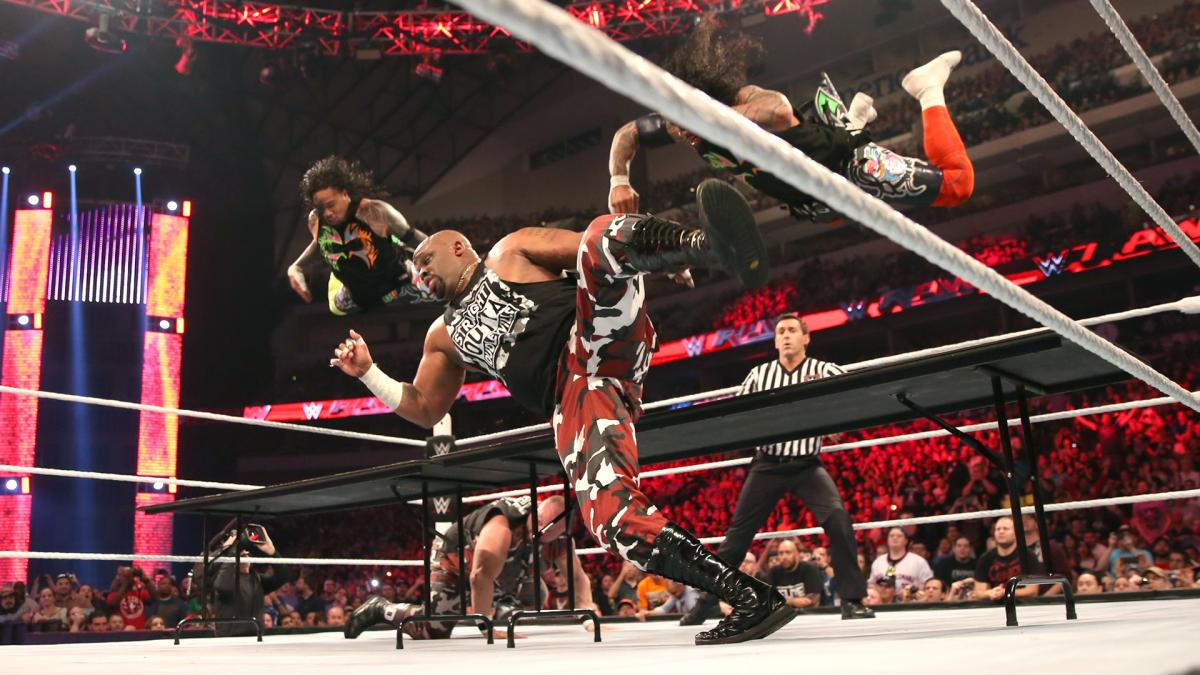
The Dudleyz hold something over many teams, if not the majority: longevity. This is undoubtedly an impressive achievement. Or is it?
The Dudleyz only rose to mainstream recognition in late 1999, around 18 months before WWE monopolised the business, which of course coincided with Vince McMahon losing interest in tag team wrestling entirely. The Dudleyz weren’t replaced by a generation of amazing teams until the next wave in the early-to-mid 2010s. They didn’t exactly steal a living in the 2000s - something like the Fish Market Street Fight is fondly remembered as a wonderful slice of pro wrestling bullsh*t - but they didn’t find work hard to come by, either, in a mostly terrible era defined by a lack of competition. With WWE creatively barren, and TNA weirdly fixated with it, a wrestler being over a few years ago was far more preferable to a wrestler who had the potential to get over.
Bubba is a great self-promoter, which helps. What also helps is the very long period of time in which WWE self-aggrandised its own Attitude Era.
Really, it’s only now, with Triple H leading a creative and business resurgence, that this relentless messaging is no longer beamed into all of our brains. It’s almost easy now to forget how prevalent it was. The various part-time returns, the DVD market, the Network retrospectives, Sting’s WWE run, the Raw Reunion events in which the Attitude Era guys humiliated the full-time roster, the dot com photo galleries displaying current ‘Superstars’ modelling the retro belts: you could never escape the idea that the Attitude Era was superior to everything - WCW, even the current product - and of course, the TLC matches featured heavily in this epic campaign.
The message that the Dudley Boyz were great, and involved in great moments, must have had some conditioning effect - and if there’s one other period of time that has been cannibalised as much as the Attitude Era, it is ECW. The brainwashing effect has doubled.
Very few teams in wrestling history have benefitted from the retrospective marketing campaign. The Steiner Brothers worked primarily across WCW and NJPW, only enjoying a brief early 90’s stint with the WWF as a team. WWE does not own the New Japan tape library, so their excellent work in the east isn’t put over through official channels. WCW was and is depicted in these documentaries as a disgrace of a pro wrestling outfit that only briefly competed with WWE because they spent stupid sums of money. It doesn’t benefit WWE’s narrative as the “recognised leader in sports entertainment” if they were to say “yeah, the Steiner Brothers were awesome, a lot better than Dudleyz actually”.
The Midnight Express were better at drawing heat than the Dudleyz, but again, they did nothing in the Fed. They were a dreaded territory team who wrestled in those “smoky bars” Triple H talks about.
This narrative, of course, is all-encompassing. You can’t escape it. History is written by the victors.
Overall rating: 6/10