If WWE Was Being Honest About Heels And Babyfaces
WWE stretches the already suspiciously contrived “good guys” versus “bad guys” premise to stupidity all too often by not so much drawing a line but strangling us with it. When that line is blurred, it doesn’t feel nuanced. It feels incoherent. Cynical. Mistaken.
In defence of WWE, the construction of a classic pro wrestling match relies on these limited confines. To convince the audience to throw their support behind the heroes, the villains must provoke that audience and their opponent alike into a response. This is the “heat spot”. It is crucial in building the story. From that foundation, the babyface, galvanised, makes his comeback. To manipulate the audience into a loud reaction, and then intensifying it, the heel cuts the babyface off, only for the babyface to roar back once more, with this suspense and release reflected as a buzzing cacophony in the arena. This is the classic form and remains the most prominent because it is the easiest dramatic means of pulling in the crowd—and because only the ingenious are capable of deranging it effectively.
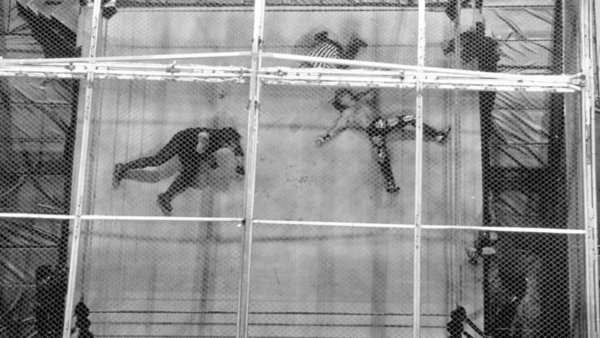
All Japan Pro Wrestling’s Mitsuharu Misawa only used the outlawed closed fist when confronted with the most fierce of challenges. New Japan Pro Wrestling’s Hiroshi Tanahashi, as his (storyline) peak crumbled, took to feigning injury and refusing to relinquish submission holds when his physical superiority deserted him. In the WWF, at In Your House: Badd Blood, Michaels and the Undertaker subverted the classic form entirely throughout the inaugural, all-time classic Hell In A Cell match. ’Taker played the relentless Michael Myers, Michaels the flailing Laurie Strode, in a match that underscored character more than it crowbarred alignments. That Era did End in 2012, ‘Last Time Ever’ be damned.
Funnily enough, the Roman Reigns era sprang into life later that same year.
CONT'D...(2 of 5)