Vince McMahon's Assassination Conspiracy | Tales From Backstage
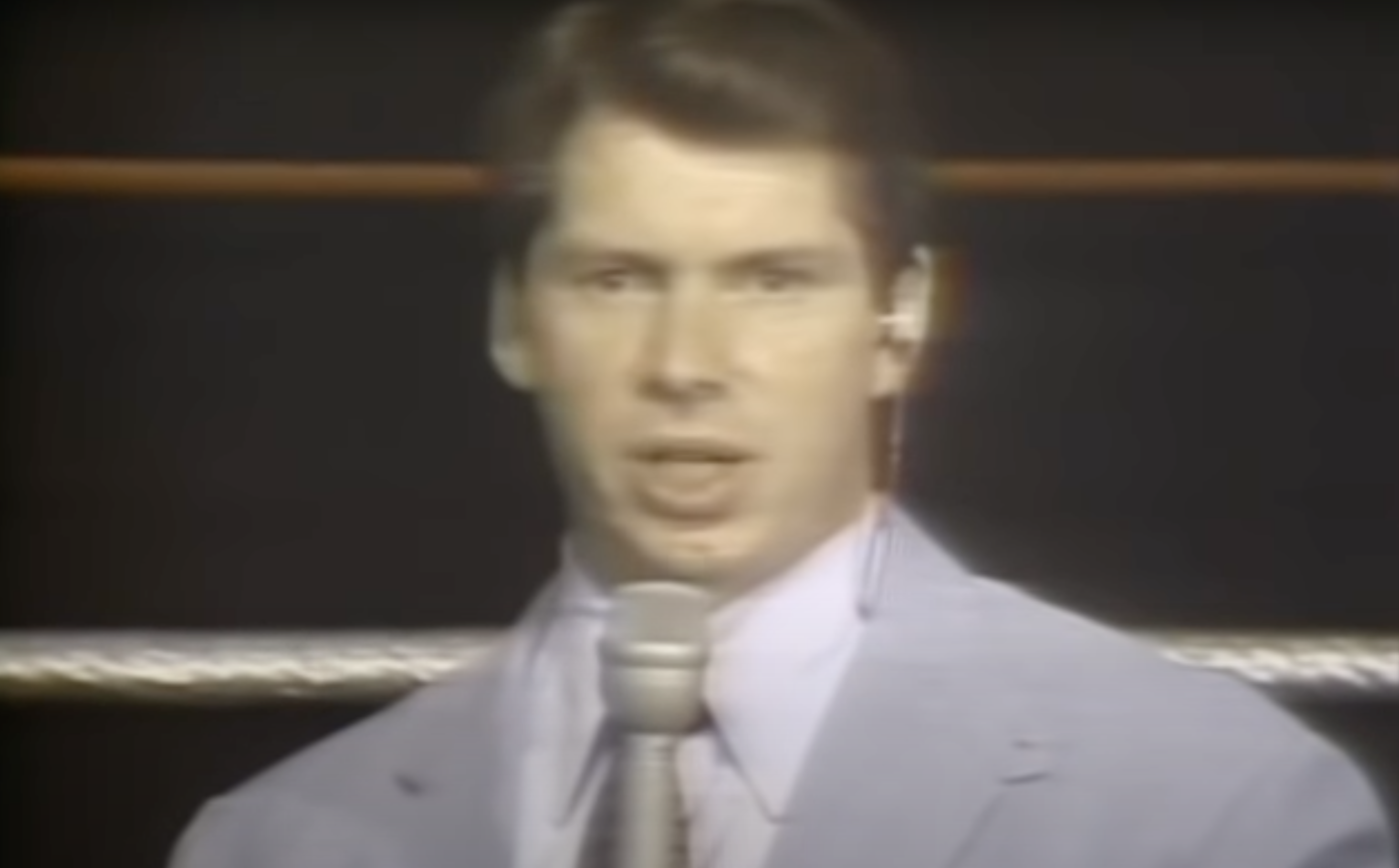
Not long before the aforementioned anointing of Hulk Hogan, Vince McMahon was already making moves. He acquired Southwest Championship Wrestling’s USA Network slot in order to retool it as WWF All American Wrestling, which in turn allowed the the World Wrestling Federation to look and feel a little bit more like the national (and eventually global) market leader McMahon wanted it to be. He thought big, but he thought different too, which perhaps explains why the likes of Tuesday Night Titans arrived in 1984 as a spin on late night television that just happened to feature the wrestlers he was rapidly acquiring to pad out his mid and undercards. Those wrestlers were territory main eventers that stood no chance of taking the top strap from 'The Hulkster', but stood the chance of making a darn sight more if they got the opportunity to work him around the horn. The promise was opportunity rather than the spot or outright cash, but with this sort of position came increased exposure, especially with increasing coverage. The package was understandably too appealing for many wrestlers to knock back, and within a period of a year or so, a substantial number of localised favourites were familiar to millions across the nation.
If this didn't anger the other promoters already, the tone and style of his product certainly did. Vince sat front and centre of Tuesday Night Titans, as it became something of a historic turning point for the company philosophically. Long before kayfabe was blown to smithereens or Triple H moved to outright saying the loud part even louder in the 2020s, TNT at very least was a show about wrestling and wrestlers, not a wrestling show featuring wrestlers. The distinction seems small, but it was hugely important. It was profiles and interviews and skits and bits, allowing people to form bonds with "Superstars" even if they'd never seen them grab a hold or throw a punch. In league with All American, the output created a snowball effect for the WWF, and McMahon assumed he could continue to scoop up more national cable slots. When Ted Turner refused to sell him Georgia Championship Wrestling's slot, McMahon instead negotiating with Jack and Gerald Brisco and Jim Barnett to buy their stakes in GCW in order to turn over control of the the WTBS show to him. The final World Championship Wrestling broadcast under Georgia's management aired on July 7th, 1984, marking the end of an era in wrestling history, and on the 14th, McMahon thought he'd launched the beginning of a new one. He wasn't entirely wrong, but a day remembered as "Black Saturday" tells the real story of how well it went when the biggest brand of southern states wrestling was replaced with old, taped World Wrestling Federation matches.
By the following March, (incidentally not long before the inaugural WrestleMania), a makeshift pairing of Gorilla Monsoon and Eddie Miller hung out on the Crockett-era wrestling space-station set with a WWF block logo slapped in the window, but the substantial damage had been done. Monsoon and Miller weren't Gordon Solie, Hogan wasn't Flair, and none of this was what the viewers of Georgia Championship Wrestling had wanted, or would ever want. Ted Turner's quick fix was to provide Mid-South Wrestling with a Sunday show while placing the Ole Anderson-helmed NWA affiliate Championship Wrestling from Georgia on Saturday mornings. It was a sh*t sandwich but at least the bread was nice. It bothered McMahon that his product was perceived as inferior to two he felt couldn't touch his, and losing money to them wasn't something he liked either. His goal was to take the entirity of North America, not remind a lot of people in the South why they might not actually agree with his strategy. He sold the Saturday night time slot to JCP owner Jim Crockett for a million dollars, ultimately kicking off the chain of events that resulted in Ted Turner's acquisition of World Championship Wrestling in 1988. Infamously, if wrestling apocrypha is to be believed, Turner rang McMahon to let him know he was in the "rasslin' business", and though McMahon re-tells the story like he had a witty retort, smiled and got on with his day, the more likely version involves some fuming, followed by a renewed desire to one day monopolise the whole scene in his own image.
Jim Ross was a key figure for many of the outfits on the opposite side of Vince Jr during this time, and learning a lot of lessons that would ultimately benefit the WWF massively when he worked there, particularly as Executive Vice President of Talent Relations behind the scenes in the 1990s. An under-credited architect of the Attitude Era thanks to the signings he made and the philosophical shifts those signings represented, Ross was a crucial (and at one point unexpected) weapon in McMahon's war against Turner in particular, but he knew all-too-well of what some on the other side were prepared to do to "compete". He couldn't get away from that sort of thing at the time.
Not even during his bathroom breaks...
CONT'D...