10 Best Times Superheroes Became Villains
Why does Superman keep turning bad?!

Comic book characters tend to fall into either one of three brackets as do-gooders, evil villains, or filling some role in a morally ambiguous in between. There tends to be a lot of overlap, and when there is, it's often seriously entertaining. Villains becoming heroes. Anti-heroes becoming anti-villains. That sort of thing.
But possibly the most interesting turn is when heroes become villains. It's a rare sight to behold in Marvel and DC's respective main continuities, which has led to the trend of Elseworlds and various What If...? stories broaching the concept of what would happen if the most kind-hearted protagonists suddenly switched moral allegiances. Factor in the frankly absurd power levels of some of these figures, and it's probably even fair to say that they end up being twice as terrifying as the characters who take up evil as a full time job.
Sure, this specific trope can start to feel a little stale when it's the same heroes doing it over and over again (I think everyone's suffered enough evil Supermen for one lifetime), but every once in a while a creative team arrives to make it all feel worthwhile - especially if said change is long lasting.
From brainwashed apocalyptic horsemen to genocidal doppelgängers, here are the heroes that proved that being bad can also be so, so good - at least for the reader.
10. Apocalypse's Horsemen - Various
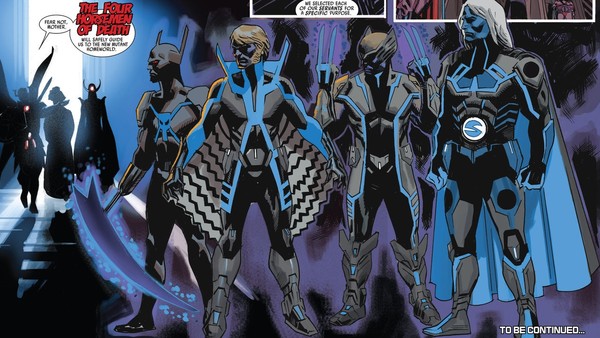
Although Apocalypse has recently rebranded himself as mutant martyr in homo-superior's centuries long struggle against humanity (seriously, what are you doing if you're not reading Powers of X?), the Ancient Egyptian has long been cast as a menacing threat for the X-Men to confront.
En Sabah Nur has been going strong for hundreds of years and during that time has constantly practiced a 'survival of the fittest' mantra, whereby those too weak to survive his rule are deemed expendable. Augmented by Celestial technology, Apocalypse can alter his body at a molecular level and has even been known to restore mutant abilities to those that have lost them. His fascination with evolution has also led him to experiment on and genetically alter certain mutants, adopting them as his own Horsemen in return.
Plenty of X-Men have been turned to Apocalypse's cabal in the past, including Wolverine on a select few occasions. However, while Logan's turn was certainly significant, it wasn't the most famous. That honour belongs to Archangel.
After losing his wings in the Mutant Massacre, Warren Worthington was given a second chance by Apocalypse to get his powers back - so long as he became his servant. Warren then takes on X-Factor with his new metal wings, providing X-fans not only with an iconic betrayal, but a suitably iconic makeover too.
9. Superman's Regime - Injustice: Gods Among Us

DC have a long and storied tradition of Elseworlds comics, but one of the best to emerge in recent memory didn't come from the comics medium at all.
Developed by NetherRealm Studios in 2013, Injustice: Gods Among Us gave DC fans a glimpse of what a world where Superman became a tyrant would actually look like. The results were horrifying, as the Man of Steel ruthlessly stamped out all forms of resistance wherever it emerged, to the point of even murdering Billy Batson in one of the most brutal sequences in DC history ever committed to screens.
The Injustice-verse is brutally unforgiving, and illustrative of how straight-up scary it is to contemplate how certain heroes could turn evil given the necessary push. In this case, it's because the Joker destroys the entirety of Metropolis and tricks Supes into murdering a pregnant Lois Lane, which prompts him to start his own fascist dictatorship alongside the most fickle figures amongst the JLA.
Batman then heads up a resistance of his own, and the results are pretty spellbinding - whether you're playing the game or reading the Tom Taylor comic.
8. Jean Grey - The Dark Phoenix Saga

Jean Grey is one of the noblest X-Men in Marvel history, which is why her turn as Dark Phoenix was such a sight to behold when it first happened.
Although fudged in no less than two separate live action adaptations, the Dark Phoenix Saga is one of the most lauded story-arcs to come from Chris Claremont and John Byrne's run on Uncanny X-Men, and given how it has been fudged so regularly, it stands to reason that not everyone is aware of what actually goes down in the story itself. Here's a brief synopsis:
During a mission in space, the cosmic entity known as the Phoenix finds its way to Jean Grey. Aware that Phoenix is now on Earth, the villainous and conspiratorial Hellfire Club mentally manipulate Jean to join their side, and they prove successful. Jean becomes their new Black Queen, but when she realises she's being mentally controlled, the Phoenix lashes out and takes Jean into space... where she then decimates a life-sustaining star to satiate her appetite.
Countless billions inhabiting a nearby planet perish as a result, and this brings Jean to the attention of the Shi'ar. Grey eventually sacrifices herself to spare the X-Men, but even when she returns the threat of the Dark Phoenix lingers, making this particular turn one of Marvel's most successful.
7. The Maker - Ultimate Fantastic Four

The Ultimate Universe was something of a flash in the pan moment for Marvel. It came around at the turn of the century to galvanise the publisher with modernised takes on classic characters, with Spider-Man and the Avengers benefitting the most. However, things started to fall apart slightly as the years dragged on, exemplified in full by the sheer balls-to-the-walls craziness of events like Ultimates 3 and Ultimatum.
For a while, Spider-Man was the only thing keeping the mythos going, and it became clear Marvel were making moves to pull the plug on the imprint completely ahead of 2015's Secret Wars, which went on to bring Miles Morales to mainstream Marvel continuity. Central to this whole storyline was a foe known as The Maker, the Ultimate universe's version of Mister Fantastic who... kinda... sorta went off the deep end.
So, what caused this version to go evil? Well, basically - when you live through an event as messed up and traumatic as Ultimatum, it's kind of forgivable that you'd go a bit nasty, which is what happens to Reed. He starts collaborating with evil aliens and he ultimately develops into a sinister figure, one intent on destroying his own reality and finding a new one to call home.
Maker proves successful in his endeavour, surviving Secret Wars and making it across to 616 continuity, where he's continued to be a pest ever since.
6. The Justice Lords - Justice League

Before Injustice came along with its more brutal take on an evil Justice League, the DC Animated Universe did the same on its long running and critically acclaimed Justice League cartoon.
Appearing in the episode 'A Better World', the story followed an alternate world where Lex Luthor became President of the United States. He publicly executes the Flash, which leads Superman to murder Lex in the Oval Office, thus heralding the start of a new brutal League.
The rest of the team willingly abide and, as fashionable as they may look, they're still bad to the bone. It takes the main DCAU Justice League to take them down, but the interesting distinction between the Lords and Superman's regime is that all the League form a united front. There isn't any division; they're so blinded by dogma that they all decide to enact a new, more authoritarian approach to crimefighting.
(They did have great costumes though.)
5. Shazam! - Kingdom Come

Kingdom Come is one of the great DC works of the modern era, and a fantastic rebuttal of the grim-dark resurgence that gripped the Big Two during the nineties. How better to approach that topic than to turn DC's golden boy - Billy Batson - into one one of said dark figures?
Mark Waid and Alex Ross' comic positions the Justice League of yesteryear up against a violent new group of vigilantes, led by Magog. It includes a whole host of shocking revelations (including that Batman likes his steak well done - blegh), but the most shocking of the lot revolves around Lex Luthor's efforts to use the ensuing conflict to seize power and influence.
Batman discovers that Billy Batson has been mind-controlled by Luthor, and after relaying that information to Superman, a fight breaks out between them. Captain Marvel is the only one who could match the Man of Steel, and the conflict is rendered in operatic fashion by Ross.
What makes this turn so good, however, is how the heroes bring him back. Superman manages to convince Billy to save the world, which then leads to him sacrificing himself in the process. It's an incredibly poignant moment, but one emblematic of how once optimistic characters had been tinged by cynical darkness as the medium transitioned out of the Bronze Age of comics.
4. Bucky - The Winter Soldier
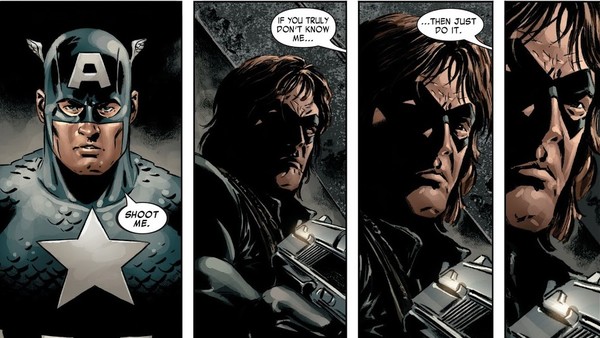
2005 was sort of a year of coincidences for Marvel and DC, as both publishers elected to resurrect long lost sidekicks as violent, gun-toting figures to come back and haunt their former partners. For DC this was Jason Todd, who was resurrected as the Red Hood in the wake of Infinite Crisis. As for Marvel - who arguably had the more successful resurrection of the two - that figure ended up being Bucky Barnes, Captain America's long lost sidekick thought lost as World War II neared its climax.
Ed Brubaker and Steve Epting's run on Captain America proved to be highly influential as it progressed, but by far its most important arc revolved around Bucky's return. Together, the creative duo fashioned a new legacy for the character that revealed how Bucky had been recovered by the Soviet Union, brainwashed, and turned into an assassin.
It thusly falls to Steve Rogers to bring him back, with Bucky's turn being the catalyst that inspired the definitive image of the pair's enduring friendship.
While Bucky would eventually turn good again, his past as a brainwashed assassin has gone on to inspire dozens of fascinating stories, set both in the past and the present Marvel continuity.
3. Terra - The Judas Contract
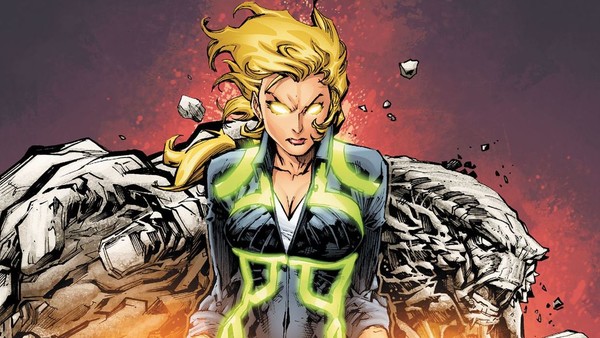
Readers actually discover Terra's deception in the Judas Contract relatively early into the arc in question, but that hasn't stopped it from becoming one of - if not the - most iconic superhero betrayals.
Deathstroke's plot to take down the Teen Titans is ruthless and creepy in equal respect, and it's even fair to say that Terra is herself a victim of the Terminator's machinations. She's manipulated by him to take down the Justice League's teenage counterpart, and pays for it with her life as the story concludes.
The tragedy behind Terra's turn is that she carries it out so ruthlessly, and that creators Marv Wolfman and George Perez explore the emotional fallout surrounding her betrayal by focusing on each member. It lingers on Beast Boy for a while, as Terra had merely gotten close to him to further undermine the team, and you can tell it really stings.
In the end, Terra is killed as the Titans confront Deathstroke at the H.I.V.E headquarters. Only, once the dust settles, they honour her as a full member. To the general public she was still a Teen Titan, proving that, even though she sold the team out, they were mature enough to understand she was as much a victim as they were.
2. Ozymandias - Watchmen

First thing's first - no one's really "right" in Watchmen. Alan Moore and Dave Gibbons' superhero satire has no heroes or villains - only tragic figures with varying levels of humanity.
One of the biggest misconceptions surrounding Watchmen is that Rorschach is the tale's uncompromising hero. In reality he was Moore's attempt at satirising the Randian ideals embodied by old Ditko characters like Mr. A and the old Charlton version of the Question, which had gradually filtered into the modern age of comics with increasingly darker portrayals of once optimistic figures. Again, Rorschach is not the hero.
But neither is Ozymandias. Regardless of either figure's position on the moral scale, the latter most certainly betrays his former colleagues and becomes a villain as soon as he enacts his plan to bring about world peace. He murders millions to bring the world together - a truly horrific act - but there is an important distinction to be made. The heroes only discover his conspiracy once the plan has been initiated, so to expose it now would be to invoke nuclear armageddon, with America and the USSR already on the brink of conflict.
So yes, Ozymandias does betray the Minute Men and yes, the atrocity he commits is unquestionably evil. However, once it has been committed, Rorschach's attempts to expose the conspiracy would jeopardise world peace, and is illustrative of the failings of that old, objectivist philosophy that informed his inspiration up until the mid-eighties.
1. Green Lantern - Emerald Twilight

For a time, Hal Jordan had one of the most important turns in all of comics, where he rebranded as the villain known as Parallax during Emerald Twilight. We'll ignore how that all changed about a decade or so after his initial turn, but - when taken on its own - Emerald Twilight is a really interesting story to consider.
After Mongul and Cyborg Superman destroy Jordan's home town of Coast City, he... pretty much loses it completely. Using his powers, he remakes Coast City as it was before it was destroyed, which is a pretty big 'no' as far as the Guardians are concerned. They send a few Lanterns to apprehend Jordan, who instead goes mad with power, and kills everyone who stands in his way.
Jordan then heads to Oa, kills everyone there, consumes the central power battery and rebrands as Parallax. This actually lasts a surprising amount of time, all the way up until Zero Hour, where he's finally taken down by Green Arrow.
Many think that Emerald Twilight embodies the obscene scale of a bunch of nineties comics, but there is something uniquely interesting about Jordan's switch from good to evil. It showcased the sheer power the Lantern Corps wielded, and while the reason for his betrayal suffered a not so pleasant retcon, that doesn't take anything away from the original story.
Watch Next
DC Quiz: Which Green Lantern Said It?
