10 Facts About The Suicide Squad You Didn't Know
There's a lot more to DC Comics' Suicide Squad than you may realise.

Like so many comic book titles, the current version of The Suicide Squad that is so popular in the modern DC line up did not begin with the intriguing premise and compelling cast that it has today. Even now, when a Suicide Squad story is guaranteed to have likable supervillains doing morally questionable work for the US government, there is still a lot of interesting developments in a story designed to have a rotating cast.
Despite never feeling like the focal point of DC Comics, The Suicide Squad has carved out an impressive legacy and is responsible for bolstering some of the biggest names in DC, while still managing to make readers feel as if they are the scrappy underdogs in way over their head.
This initial lack of mainstream characters along with the unique premise allowed for The Suicide Squad to become popular enough to be the third movie released in the DCEU, with a sequel/reboot fast on its way.
Since the team's re-imagining as 'Task Force X' in 1987, the Suicide Squad has gone from a fringe team within the DC line-up to one of the publisher's most important elements. That's a lot for one property to go through, and so it should come as no surprise that there are plenty of fascinating facts you may not know about the team...
10. They're (Slightly) Older That The JLA

While few people would associate The Suicide Squad with heroism, the inception of the Suicide Squad was removed from the superhero genre altogether. Debuting in the Silver Age of Comics in a time when superhero comics were in decline, the original Suicide Squad had more in common with older pulp magazine teams that came before it, and the unmasked Fantastic Four team that would come shortly after.
The team's first appearance would be in The Brave and the Bold #25 and would span for three issues until #28, which would mark the emergence of the now iconic Justice League of America.
DC would gravitate toward superheroes once more with the success of the JLA's debut. But Stan Lee and his co-collaborator Jack Kirby would take the unmasked superhero approach into their first breakout success in The Fantastic Four.
9. A Revamp For Post-Crisis DC

The Suicide Squad stories we are familiar with was created in the aftermath of Crisis on infinite Earths by John Ostrander in the Legends crossover event in 1987. The team featured a slew of - what were at that point - D-List supervillians who were coerced into doing black-ops missions for the US government under the oversight of Amanda Waller.
This Post-Crisis revamp would be the first time the team would be referred to as Task Force X and would feature Deadshot, Blockbuster, Bronze Tiger, Enchantress, and Captain Boomerang, as well as Rick Flag Jr.
While this incarnation was a massive departure from what came before. This 'Task Force X' version of the Suicide Squad would prove to be the winning formula that would form the basis of every subsequent relaunch and adaptation since.
8. D-List Villians

Although characters like Deadshot and Captain Boomerang are popular now, their inclusion in the Suicide Squad was done because of their lack of popularity. Living up to their name more than the original team ever did, it was made clear that anyone could die on the mission.
This trick can only work for so long, though, and the popularity of the team propelled many of the surviving members of Task Force X into a level of stardom they previously never had.
In this way, the second incarnation of the Suicide Squad carried on the legacy of the original version by giving an alternative to DC's superhero comics. Because these characters were under-utilised in more traditional superhero stories, they were able to incorporate other genres, like spy thrillers and military action, back into the DC Universe.
7. Rick Flag Jr.

Because comic book fans are suckers for continuity, the 'Task Force X' supervillain version of the Suicide Squad often has Rick Flag Jr. on the team. This is in part a homage to the Silver Age version of The Suicide Squad, which was led by Col. Rick Flag Sr.
In the stories, this is justified by Amanda Waller wanting a more conventional spec ops soldier reigning in the supervillains as the leader of the group. But to readers, it gave a sense of legitimacy to the new incarnation of the team by connecting it to the original title.
Like so many other facets of DC continuity, the relationship and number of Rick Flags get murky when you begin to acknowledge that certain characters age. But the fact that Rick Flag is no longer the central focus point of the more modern Suicide Squad shows any version of Rick is not the main appeal of the book anymore.
6. Amanda Waller Is The Only Permanent Member Of The Team

While characters like Rick Flag Jr. and Captain Boomerang spoke to an intention to keep with tradition, the introduction of Amanda Waller spoke to the exact opposite. Although more common now, Amanda Waller was a groundbreaking character in two very distinct ways.
The first was that she was a morally ambiguous government official that was written in a way that made her just as much of an antihero as the supervillains that worked under her. This characterisation paved the way for organisations like A.R.G.U.S and Checkmate to provide more morally ambiguous stories for the DC Universe.
Another more obvious way Waller broke ground was that she is a woman of colour that is shown in a position of authority from her very first appearance as the leader of the team.
Due to her label as a supervillain or superhero being up for debate, she is not expressly "the first" in any specific area. Even so, she still stands out as one of DC's more unique characters, with nobody else like her in the medium.
5. The Unlikely Debut Of Oracle

While The Suicide Squad rightfully gets the credit for popularising supervillains like Deadshot and Captain Boomerang, as well as introducing DC staples like Amanda Waller, one thing the title rarely gets the credit for is being the first place where DC fans would see Barbara Gordon as Oracle.
When DC fans think of Oracle, they often think about Barbara's founding of the Birds of Prey or the many times she is shown to be the "guy in the chair" for Batman. However, her transition from Batgirl into her now-iconic stint as the tech-savvy hacker Oracle was introduced in the first ongoing run of the Suicide Squad.
The decision to bring Barbara back this way after The Killing Joke would transform the character forever, and most certainly for the better.
4. It Helped Make Harley Quinn One Of DC's Most Popular Anti-Heroes

Because of the nature of Amanda Waller's Suicide Squad, the supervillains don't feel like villains for very long, which made it the perfect place for Harley Quinn to transform into one of DC's most popular anti-heroes.
Despite being a breakout success in Batman: The Animated Series, Harley Quinn's runaway success in comic books was not as inevitable as it seems now.
Although it would take close to three decades for Harley to join Task Force X, Quinn was practically tailor-made to be on the team. She was Funny, relatively underpowered, sympathetic, and a lot of untapped potential if put in the right comic. The Suicide Squad allowed her to flourish in a team setting that made her villainous past gel perfectly with her potential as a point of view character that was shown in episodes of the Batman: The Animated Series.
Because of her tenure with Task Force X Harley Quinn is now one of the biggest names in DC Comics, capable of carrying her own titles and carving a destiny away from the Joker.
3. The Suicide Squad Movie Was Edited By A Trailer Company

According to The Hollywood Reporter, executives started wringing their hands after Batman V Superman performed below their expectations. The main takeaway seemed to have been the dour tone of the movie was the main culprit for keeping audiences away, as well as for its poor critical response.
The nervousness of Warner Bros. executives turned to action when they released the teaser trailer for Suicide Squad, which was the next instalment in the then burgeoning DC Extended Universe. Many commentators and fans praised the light-hearted tone that the trailer promised, but the problem was that this wasn't exactly the tone that director David Ayer was going for.
Trailer Park, the company that cut the trailer, was hired to edit the film among many others. Warner Bros. and David Ayer both separately edited the film, with WB trying to recapture the tone of the trailer and Ayer reportedly going for a more sombre edit.
The film performed poorly with critics despite making a splash at the box office, with many taking issue with the editing, among other things.
2. James Gunn Was Brought On To Suicide Squad A DAY Before Making Up With Disney

After James Gunn was unceremoniously fired by Disney for lewd tweets earlier in his career, many fans and former colleagues stuck by him, calling the dismissal short-sighted. Warner Bros. capitalised on the dismissal by hiring him to direct the upcoming The Suicide Squad.
Eventually, Marvel Executives saw the outrage against Gunn was minimal at best, and convinced Disney the same; Gunn was rehired to direct the third instalment of Guardians of The Galaxy 3. Unfortunately for Marvel, the movie would have to be pushed further back than they initially intended as Gunn had signed on to The Suicide Squad the day before.
It is likely that Gunn's comedic tone in Guardians of The Galaxy was exactly what DC Executives had in mind when they greenlit David Ayer's Suicide Squad. Either way, Gunn has assembled a large cast with household names in many roles, and is promising a high death count by the time the credits roll.
1. John Ostrander Is Responsible For Roughly Half The Deaths In Task Force X
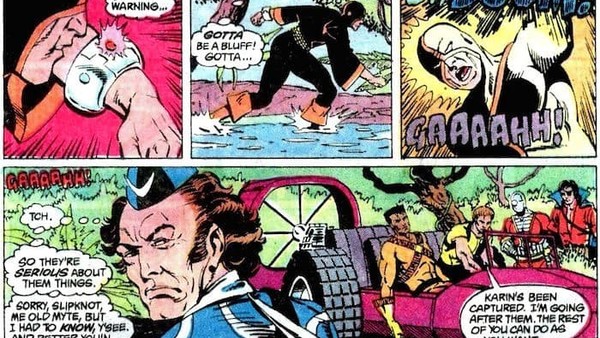
John Ostrander was responsible for the modern version of the Suicide Squad and co-wrote first ongoing series with the team alongside Kim Yale. In this original run. John clearly relished in the feeling that no one was safe, killing 16 Squad members in the 66 issue run and six more in later stories with the team.
Whether it was a lack of sales in subsequent runs, or a hesitancy to kill off characters in a team that became more established, subsequent writers put less emphasis on what was initially a core part of the original appeal of the Suicide Squad comic. Writers that come close to John's death count tend to prop up the team with "red shirts", rather than create a sense of unease that John pioneered.
While some might feel that newer writers are straying from the story's roots, that was exactly what Ostrander did during his run. The Suicide Squad is one of the oldest teams DC has, and yet has always found a way to buck trends and try something different, making it a unique force in DC's lineup.
Watch Next
DC Quiz: How Well Do You Know The Suicide Squad?
