10 Mind-Blowing Facts You Didn't Know About Batman: The Animated Series
Al Pacino as Two-Face? It could've happened.

Batman: The Animated Series was the definitive adaptation of the Dark Knight, and is today revered as one of the greatest animated shows ever produced. BTAS was so successful that it ended up spawning over a decade's worth of animated spin-offs and follow-ups, which is today recognised as the DC Animated Universe. It's basically peerless.
Starring the talents of Kevin Conroy, Mark Hamill, Arleen Sorkin and many more, BTAS glided onto screens in 1992 and made Saturday morning its own. Blending light with dark and past with present, the show set out to prove that children's TV could be genuinely smart and engaging, stunning viewers with dark imagery and even darker themes. It was a master-stroke, pioneered by the likes of Bruce Timm, Paul Dini, Alan Burnett, Eric Radomski, Andrea Romano and the late, great Shirley Walker, who composed most of the series' music with a full orchestra behind her.
The entire project was a massive undertaking, and it's no surprise that a whole host of fascinating 'what if?' moments and stories emerged from behind-the-scenes during and post-production.
There are of course the facts every Bat-fan knows, such as Tim Curry originally being cast as the Joker before Hamill took the part, but there are plenty more that they may not be aware of, involving plans for a Sandman crossover, a Catwoman sequel series, and more network battles than Batman has batarangs...
10. Paul Dini Came Close To Making A Sandman Crossover Episode

If Batman: The Animated Series was the best superhero effort of the nineties, then Vertigo Comics was the best comics-thing-in-general about that decade.
An imprint of DC, Vertigo was the publisher's mature readers line and featured a whole host of great properties, including Hellblazer - a book focusing on John Constantine that span-out of Swamp-Thing - and Sandman, a Neil Gaiman-fronted comic that revolved around Dream of the Endless, the ruler of the dream world.
Although Vertigo was a DC imprint, it would be years until their characters would develop a certain kind of link to the main DCU. It's with that in mind that it should be surprising to learn that BTAS writer Paul Dini approached Gaiman about including Morpheus - a character from the comic - in an episode of the show. Gaiman was reportedly enthused by the prospect, but the show's producers were supposedly put off by the idea of including a character intended for mature audiences in their animated children's show.
Tragically, there were plenty of other seriously brilliant sounding episodes that never ended up seeing the light of day. The show's writers had planned a Catwoman and Black Canary team-up, only for it to be shelved by Fox, who demanded Robin appear in every episode; Alan Burnett had also optioned an episode called 'The Gun Story', which would've followed the life of a firearm from it being built all the way up to it being used in a crime in Gotham. Bruce Timm even had a plan to make an episode where Batman would've been turned into a vampire, and while he did get to live out that concept in the criminally overlooked Justice League: Gods and Monsters, Fox ended up passing on the pitch for BTAS.
9. There Were Some Seriously Cool 'Lost Episodes'

Longtime fans of BTAS will no doubt be aware of the DC Animated Universe. The show spawned an entire universe of spin-offs and animated films that are all equally as beloved as BTAS itself, but the DCAU wasn't just restricted to the animated medium. Video games and comics all formed a part of this particular franchise, and while discerning their canonicity can prove arduous, a lot can effectively be dubbed 'lost episodes'.
Seeing as how Batman kickstarted the DCAU, it only seems fair that a lot of these 'lost' stories are devoted to him. The first and most well known came in The Adventures of Batman & Robin video game, which released in 1994. The title featured a brand new story where most of the cast from the animated series reprised their roles, and while the animation is nowhere near the quality of the actual show itself, it's still worth watching for die hard fans.
Likewise, other video games like Batman Vengeance and Rise of Sin Tzu further expanded upon BTAS, albeit after it became The New Batman Adventures. The former was really quite underrated, and was genuinely really dark, pitting Batman against the Joker and the GCPD. The latter, meanwhile, wasn't as successful, but did introduce a new character in Sin Tzu. There was also a spin-off comic called Shadow of Sin Tzu, which even featured Cassandra Cain's Batgirl in a minor role. (It does not, however, appear to be a part of official continuity.)
Outside of the games, numerous comics centred around BTAS were released from the mid-nineties onwards. They're genuinely brilliant, and one in particular, The Lost Years, even fills in the gaps between BTAS and TNBA. Go check it out if you're in the mood for more!
8. Some Voice Actors Were Involved In Live Action DC Efforts
Although BTAS divested heavily from the Silver Age silliness of the sixties Batman TV show, it didn't dismiss it entirely. The late, great Adam West even starred in one of the most affecting episodes of the show in Beware the Gray Ghost, where he portrayed an actor who played the vigilante that inspired a young Bruce Wayne to take up crimefighting.
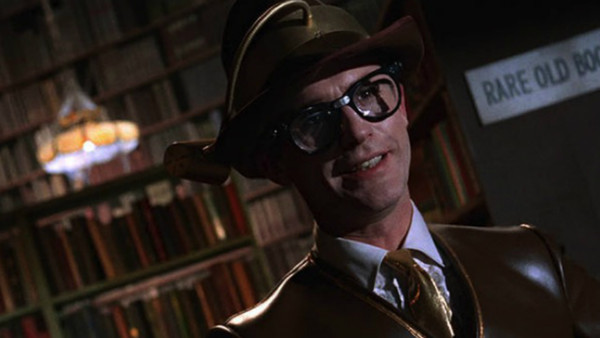
Outside of West, there were other guest actors on BTAS who had roles on the sixties show and other live action Bat-media. Roddy McDowall, the voice of the Mad Hatter, had previously portrayed Bookworm on the earlier series, while Riddler voice actor John Glover portrayed Jason Woodrue in 1997's Batman & Robin, and later Lionel Luthor on Smallville. He even portrayed the father of Doctor Sivana in 2019's Shazam!
Other BTAS actors to have appeared in live action adaptations of DC comics include Ed Begley, Jr. (the voice of Charlie Collins in Joker's Favor), Rene Auberjonois, U.S. Senator Patrick Leahy and Vincent Shiavelli.
7. Kevin Conroy Was The First Actor To Have Batman Disguise His Voice

By now it should come as no surprise to learn that BTAS was highly influential - on comics, film, animation and TV. One of its biggest impacts, however, is down to Kevin Conroy's performance as Batman. It was Conroy who was the first to have Bruce Wayne disguise his voice as the Dark Knight, and it's a trend that's stuck ever since.
(Disqualifying Batman & Robin, of course.)
Although Conroy later switched up his technique to showcase the all-encompassing nature of the Bat, to begin with, there was a clear delineation between his voice for Bruce and his night-time alter-ego. That was all Conroy's idea, although fans do have Andrea Romano to thank for recruiting all of the DCAU's acting talent in the first place, and for specifying that Bruce Wayne's voice had to be "sexy" more than anything else.
Now, pretty much every actor who plays Batman decides to switch up their voice when switching between Bruce and the Bat. Another example of BTAS' enduring legacy.
6. The Series' Font Was Used On Murray Franklin's Show In Joker (2019)

Even though Joker (2019) takes most of its inspiration from the works of Martin Scorsese, it did find time to pay homage to Batman: The Animated Series in one very specific way.
Robert DeNiro's Murray Franklin is a central figure in Joker, and a partial catalyst for Arthur Fleck's descent into madness. Arthur idolises Murray, whose show, Live with Murray Franklin, dominates the airwaves every weekend - just like BTAS did every Saturday morning except, y'know, infinitely less cheerily.
Anyway, those who payed close attention to Murray's scenes will have noticed that the show borrowed the exact same font used in Batman: The Animated Series, called Plaza. It's instantly recognisable as BTAS' lettering, so it's highly unlikely this was anything but a deliberate nod to the show.
5. The Reason Why It Changed To The Adventures Of Batman And Robin

Batman: The Animated Series tends to denote pretty much every incarnation the show went through, which includes both the Adventures of Batman & Robin and The New Batman Adventures. However, while the reason for the change to TNBA was fairly obvious and publicly documented, the explanation for the first name change isn't so well known.
The showrunners behind BTAS have frequently discussed their battles with Fox over the direction of the series, and it's also the reason why the show underwent a name change for its final fifteen episodes. Not content with giving pages upon pages of feedback to BTAS' writers on what they could and couldn't depict, Fox also asked that they change the name of BTAS to include Robin, and to include the character as much as possible.
Fortunately for the writers Robin was already one of the show's best characters, with Loren Lester turning in great performances as the character. Sadly though, Fox's restrictions meant certain episodes never saw the light of day - the aforementioned Canary/Catwoman story being just one of them.
Robin had to be in everything, and it was only when the series made the jump to The WB that BTAS' showrunners were given greater creative freedom.
4. A Ton Of Big Name Actors Were Approached For Different Parts

Batman: The Animated Series' voice-cast wasn't short of celebrity, but there was a time when the showrunners approached some serious Hollywood royalty for certain roles. Al Pacino was approached for the part of Two-Face, which eventually went to Richard Moll, while the likes of Patrick Stewart and Anthony Hopkins were also considered for Mister Freeze, who was eventually portrayed by the late Michael Ansara.
It's difficult to imagine Pacino as Two-Face - especially since he's never done voice acting before - while Ansara was so iconic as Mister Freeze it seems almost ridiculous to suggest anyone else could've taken the part. Still, that doesn't change the fact Pacino, Stewart and Hopkins were all considered, with the latter two having also been targeted for Freeze in 1997's Batman & Robin.
Elsewhere, one of the more famous 'what if' castings involves Tim Curry, who was initially cast as the Joker, until he was forced out because of a bronchial infection. You can actually hear his laugh in Be a Clown, but his actual recorded sessions as the Clown Prince remain sadly ever elusive.
Lastly, Sir Christopher Lee was also considered to voice Ra's Al Ghul, according to Andrea Romano. David Warner was obviously brilliant in that role, but Lee? That would've really been something.
3. The Series Was So Dark, It Was Boarded On Black Paper
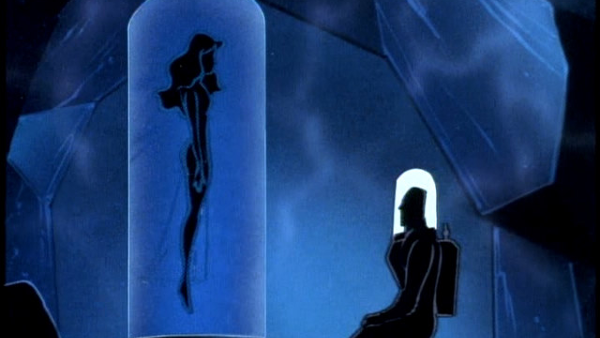
BTAS was dark. Like, not just tonally - I mean literally. Bruce Timm, Eric Radomski and the others behind the series took inspiration from both Tim Burton's '89 Batman film and the Fleischer Superman shorts of the 1930s to create their timeless, art-deco version of Gotham.
It was imposing - a character in and of itself - and part of that was down to a brainwave from Radomski.
Wanting BTAS' backgrounds to stand out from other shows, the producer decided that all of them should be painted on black paper. The effects were extraordinary, and no doubt contributed to the unique tone and feel the series boasted in its earlier seasons.
2. Robin's Older Age Was Down To Censorship Rules
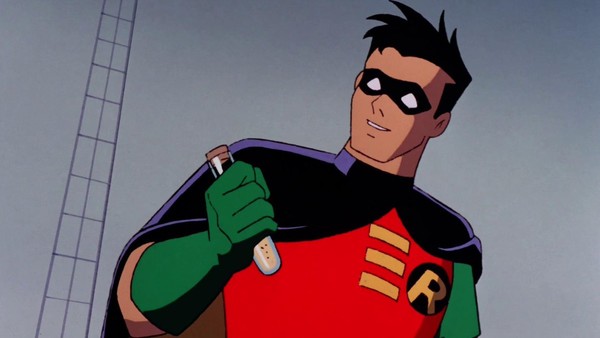
In what could be considered a happy accident, given how it enabled BTAS to depict Robin's transformation into Nightwing, the reason why Dick Grayson was depicted as a university student in the show was actually down to censorship rules.
BTAS had to abide by a lot of censors during those seasons with Fox, with one of the most decisive relating to the endangerment of children. Although Dick Grayson's Robin was commonly depicted as a child in most Bat-related media up until BTAS, the show decided to showcase the character as a young adult to please the censors.
The only time audiences ever saw Grayson's childhood was in the Emmy award-winning two-parter, Robin's Reckoning, which also found itself unintentionally aided by censorship when the episode depicted the deaths of Grayson's parents in a flashback off-screen.
It was only when BTAS moved to The WB that a younger Robin, Tim Drake (a mishmash of Drake and the hotblooded Jason Todd), came aboard.
1. A Sequel Series About Catwoman Ended Up Getting Scrapped
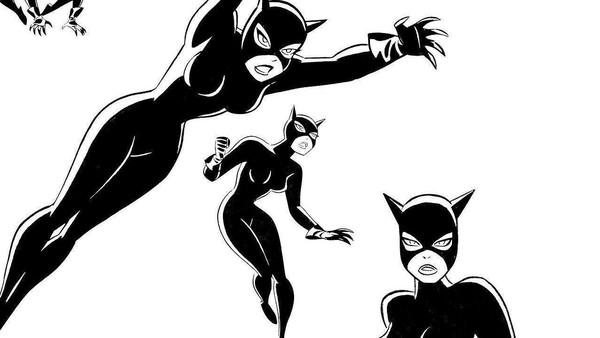
Catwoman may not have had the biggest role throughout BTAS, but she was a clear fan-favourite and - as the character's history has shown - was clearly more than capable of anchoring her own series. It's with this in mind that Fox approached Bruce Timm about the prospect of developing a spin-off based on Selina Kyle shortly after BTAS' debut, with Timm developing a series of sketches soon after.
Only a small amount of production work was ever completed on the Catwoman spin-off though, with Warner Bros. eventually electing to pursue a Superman cartoon instead. Superman: The Animated Series is definitely overlooked when compared to BTAS, and while it's easy to understand why WB opted for the Man of Steel over Catwoman, is there not some world out there where we might've had both?
Interestingly, according to World's Finest, this wasn't the last time a Catwoman series situated within the DCAU would get optioned. A series co-led by Selina and Nightwing was eventually pitched, as was a Birds of Prey show that also tragically never saw the light of day.
Oh, what could've been...
Watch Next
The IMPOSSIBLE Batman: The Animated Series Quiz
