10 Things Everyone Always Gets Wrong About Superman

No, he's not Jesus. And he's not American either.
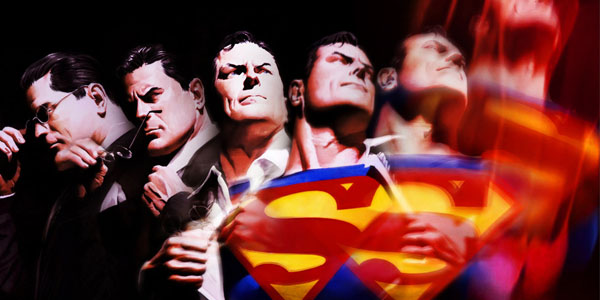
In 1938 after four desperate years of running around trying to find a publisher, two aspiring comic book writers successfully released their character Superman into in the world in Action Comics #1. Nearly 76 years later, Superman has become a strong cultural icon in the western world, a symbol of the inherent good in humanity and the responsibility of power. With his S-shield still regarded as one of the most recognisable symbols on the planet, it's obvious Superman's popularity hasn't diminished over the years, earning such monikers as the Man of Steel, Last Son of Krypton, Man of Tomorrow, and Big Blue Boy Scout. His presence extends all across the entertainment medium, from comic books to television shows to big screen movies. Creators of big-name heroes such as Batman and Wonder Woman have cited Superman as an inspiration for their own characters, and even Marvel superheroes carry the same thematic elements associated with their illustrious forebear. Yet despite these extravagant feats, Superman has garnered a large number of detractors during his storied run. Some have argued that he's a Mary Sue due to his large amount of power, while others say he lacks interest as a character because of the supposed perfect life he leads. Critics of The New 52 have stated that Superman has departed too far from his mainstream counterpart that embodied "truth, justice, and the American way", but on the flipside, his jingoistic and religious inheritance in the pre-52 universe has been privy to scrutiny. In this article, we take a look at the ten biggest flaws haters and connoisseurs alike have put forward about Superman and prove why these are simply misguided ideas.

10. He's Overpowered

Being a major character in the world of comic books, Superman has come to hold a large variety of powers as a result of both his Kryptonian physiology and the rays of the Earth's yellow sun, from superhuman strength/speed to heat vision and freeze breath. Though his abilities have been scaled back since the Silver Age, it's become a mistaken belief that Clark is overpowered and, as such, can't be written well; a notion that John Byrne popularized during his run in the 1980s-1990s. But when you really look at Superman's history and, more importantly, his rogues gallery, you can see that it really isn't that difficult to come up with viable threats. Everyone knows about kryptonite, but do they know about the massive variety, including red, blue, gold and even periwinkle? There's also the fact that Superman isn't immune to the effects of magic, and a red sun, similar to the one that orbited Krypton, will strip away his powers so long as he remains in its vicinity. Even simpler, energy based attacks pose a problem to him as energy isn't something one's durability can protect against, leaving enemies like Livewire and Atomic Skull to pose as dangerous threats to Metropolis. At the end of the day though, when you look at characters like Dr. Manhattan, Doomsday, and Franklin Richards, can you really call Superman overpowered? He certainly is a powerhouse in the DC universe, but this has the sad consequence of birthing another misunderstanding ....

9. He's Unrelatable

In 1985, the creative team of Alan Moore and Dave Gibbons crafted the Superman story "For the Man Who Has Everything", which saw the villain Mongul trap the boy scout in a fantasy dream via an alien symbiote. The title was an intentional play on this idea fans and non-fans had at the time about Superman - that he was basically living the high-life; had god-like powers, a beautiful love interest (Lois), and a career he enjoyed. In other words, there were no regrets in his life. Of course, that was all thrown out the window with the tale, which revealed how Superman truly felt alienated being in a world of humans, his ideal reality being back on Krypton with a family of his own. Whenever fans often claim that Batman is a more relatable hero, it never makes much sense due to the fact that he is basically DC's Tony Stark - a billionaire, playboy philanthropist with hi-tech gadgets and lots of beautiful women. Clark is literally an alien who's had to conform to the rules of Earthen society, and let's face it - we've all been an outcast at some point or another in our life, either at school or work. As Batman said in the Public Enemies storyline, "It is a remarkable dichotomy. In many ways, Clark is the most human of us all. Then ... he shoots fire from the skies, and it is difficult not to think of him as a god. And how fortunate we all are that it does not occur to him."

8. He Can't Be Written As Dark

One common complaint among critics of Man of Steel was that it was too dark for a Superman film. As Zack Snyder pointed out, though, these people weren't Superman fans - they were Christopher Reeve fans. The collaborations between Reeve and Donner will forever be remembered for their heart, charm, and epicness in making us believe a man could fly, but they had the negative side effect of creating this misconception that Superman could only be written as a lighthearted, goody two-shoes character, which simply isn't the case. As stated before, Superman is a much more complicated character than most readers tend to give him credit for, and a few writers have taken to exploring the more depressing elements of his mythology in acclaimed storylines. Alan Moore once again helped kickstart things with his epilogue/love letter to the Superman comics "Whatever Happened to the Man of Tomorrow?". While paying homage to the Silver Age, the story dealt with the superhero fighting against an onslaught of his rogue's gallery after they discover his secret identity, and ended with a haunting finale that convinced everyone the Modern Age would be much darker. The Azzarello/Lee collaboration For Tomorrow dealt with a morose Superman depressed over his inability to prevent the disappearance of over a million people, Lois Lane included. So clouded is Clark's mind he even ends up in a fight with Wonder Woman. This isn't just limited to his mainstream appearances though. In two Batman arcs, The Dark Knight Returns and Hush, his more sinister side was showcased once again. Even Grant Morrison's gleefully expressive All-Star Superman series had its downsides as Superman spends his final days trying to ensure the world he leaves behind will be prepared for future dangers. So you see, this misconception that lead to many negative reviews of Man of Steel doesn't have as much grounding as audiences would like to think. Superman has plenty of shades of grey that a good writer can easily pick up on without sacrificing his core characterisation, as Scott Lobdell has unfortunately done with the New 52.

7. He Doesn't Kill

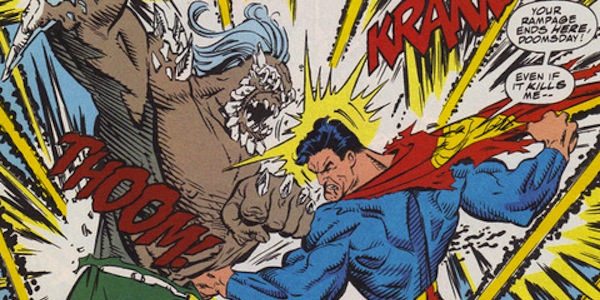
Another major criticism of Man of Steel comes from this oath Superman's unofficially taken in the comics where he'll never take another life. At the end of the movie, we see Superman being forced to kill Zod to save a family from being vaporised by his heat vision. Apparently among the fan community it's perfectly fine if Batman, Daredevil, Iron Man, and the rest of the Avengers kill pre-meditatively, but not Superman. Regardless, it's a notion that's been mostly followed in the comics but isn't absolute - the Golden Age often featured Superman murdering evildoers, from destroying fighter planes to whole weapons factories with employees still inside. Readers looking for more modern examples will surely be familiar with Superman killing the galactic monstrosity known as Doomsday. A more concrete example happened during John Byrne's run, where in Superman #22 he executed Zod, Faora, and Quex-Ul with kryptonite. People still wanting something closer to the 21st century need not look further than The New 52, where Superman heat visions Dr. Light's head off during the Trinity War storyline. The fan outrage towards Zod's death in Man of Steel is proof that many want this "no killing" rule to be respected in the Superman canon, but ultimately this is all at the mercy of the writer in charge. We've come a long way since the days of Superman being a vegetarian.

6. He Doesn't Have Super Intelligence (I.E. He's Just As Smart As A Normal Human)

To be fair, this is a pseudo-criteria his own creators, Jerry Siegel and Joe Shuster, introduced when they conceived his first villain the Ultra-Humanite; a crippled man who was meant to be just as smart as Superman was strong. The idea was this guy would be the polar-opposite of Superman, thus making him a genius. Later Superman villains Lex Luthor and Brainiac added to this misconception since they were extremely intelligent beings (the latter a 12th level intellect) who posed a dangerous problem to Metropolis. More contemporary audiences may have gotten this idea from the television series Smallville, where fictional character Chloe Sullivan was designated as the go-to character for all the problems involving threats and alien tech (though strangely, the series hinted at his super intellect in the pilot where Clark solved Martha's math calculations easily in his head). This is a mistaken belief that's lead to many absurd claims, such as Batman being able to easily outsmart the Kryptonian. Really, the greatest example of Superman's heightened intellect is his ability to think while moving at lightning speeds. Whether he's racing Flash or fighting Doomsday, his thoughts and perceptions always match his velocity. Alongside that, you have the fact that he's mastered the applications of Kryptonian technology, evidenced with its use at Sue Dibny's house during Identity Crisis. There are even times when he's built robots to care for the Fortress of Solitude, "Ned" being the most known since he was put in charge of Krypto after Superman grounded him. In the New 52, one of the more famous scenes fans may recall is when Superman, in the span of 5 minutes, reads every medical textbook in existence and completes a surgery on Lois Lane in seconds that would normally have taken hours.

5. Lois Lane Is His Only Love Interest

Lois is an interesting character in that, not only is she one of the most well-known supporting female protagonists to exist, but also one of the strongest. From day one of her creation, she was never a damsel in distress as many other love interests of heroes were. However, it's this sexy appeal of her personality that's lead to many of the Man of Steel's other romantic partners be pushed to the background in favour of the classic one. Other heroes often have multiple lovers throughout their history - Batman's name brings up Catwoman, Talia al Ghul, Vickie Vale, Julie Madison, and so forth. Almost anyone can associate Gwen Stacy, Betty Brant, Liz Allen, Felicia Hardy, and Mary Jane Watson with Peter Parker. Followers of Iron Man know he's had relationships with Bethany Cabe, Whitney Frost, and Black Widow in addition to Pepper Potts. Fans of Smallville and readers of Superboy no doubt know about Lana Lang and her importance during Clark's childhood, but what about fellow LL holder and mermaid Lori Lemaris? At the Daily Planet, Cat Grant and her zaniness tend to steal the show, with her even going so far as to get breast enlargement surgery to keep the spotlight (though she still paled in comparison to Supergirl). And, to touch on all bases, the New 52 has introduced a Wonder Woman/Superman relationship that will apparently end badly for both of them.

4. He's Jesus

If there's one common scene that every incarnation of Superman both television and film has shared, it's that resemblance to Jesus of Nazareth. From Christopher Reeve descending to Teri Hatcher cradling Dean Cain in her arms to Tom Welling being tied to a cross to Henry Cavill floating away with outstretched arms, this idea of Superman being the Messiah has taken hold. There's no doubt that there is religious iconography very prevalent in Superman's mythology, but while some of it does trace back to Jesus, the central concept is of a completely different figure - Moses. Seigel and Shuster were both Jewish Americans trying to find success in an anti-semitic world, and what better way to stand against this status quo than create a Jewish hero the masses would love? In the Book of Exodus, a mother is forced to send her son away in a cradle for fear that he'll be destroyed by the Pharaoh's infanticide law, leading to him eventually being found by a new mother who names him Moses. In Superman's origin, his parents are forced to send him away in a cradle (sci-fied of course to a rocket) to protect him from being killed in Krypton's destruction, which eventually finds its way to a new family where the mother names him Clark (after her maiden name). To put a cap on it all, Kal-El, contrary to popular belief, doesn't translate to "son of God", as would befit Jesus, but instead "voice of God", as befits Moses, who relates God's words through the Ten Commandments.

3. He's All American

There was a story in Action Comics #900 (ironically written by Man of Steel writer David S. Goyer) where Superman renounced his American citizenship since he was angry over his actions being labeled as U.S. foreign policy. Of course, this caused a lot of controversy and it was immediately retconned by DC to being a standalone story. However, was it wrong for Americans to get upset over this? There's no doubt in anyone's mind that he is a cultural icon in the United States given his role in basically jump-starting the superhero movement; heck, he even wears American colours. But what makes Superman distinctly American? Both his creators were Jewish immigrants, and he himself was by no means a natural-born citizen. Not only that, but If you think about it, none of the many origin stories in Superman's canon (The Man of Steel, Birthright, Secret Origin, New 52) detail how Ma and Pa Kent got him naturalised (the non-canonical television series Smallville had them making a deal with Lionel Luthor). Superman is sometimes viewed as the embodiment of the American dream - an (illegal) immigrant that rises to the top, much like Andrew Carnegie. Let it be known, though, that the "American Way" has since been open to a much different interpretation than what it was originally conceived to be and that Superman is meant to represent the good in all of humanity, not just 'Murica.

2. He Has The Power To Solve The World's Problems
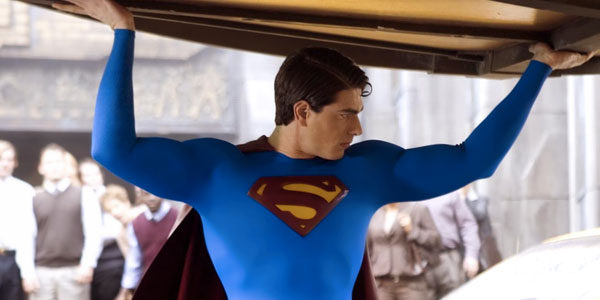
When you have the Flash's speed, Wonder Woman's strength and Batman's intellect, many often question why Superman doesn't just solve the vast number of problems plaguing the globe. From crime to poverty to world hunger, it seems like you could create a utopia quite easily within the span of a decade. Arguments against this will point out that it would ruin the comic book industry, but jokes aside, there are legitimate reasons as to why he's unable to do just that, and they involve both political and societal obstacles. Crime isn't something you can gun down or beat back with just blunt, physical force. Killing all the gangs in a ghetto neighbourhood only creates a more hostile atmosphere of anger and fear. Jailing all the bad guys only leads to newbies taking up the mantle. In fact, this was addressed in the beginning of No Man's Land where Superman tries to help Batman restore Gotham to safety after an earthquake leaves the city in chaos, but soon realises that this is a problem superpowers won't be able to resolve. Creating a safe environment, increasing education opportunities, and significantly reducing the cost of expensive necessities such as healthcare and college fees is what leads to a better place. Some of you may recognise that these are political talking points, and that's the point; Superman isn't a politician, nor is he a god who can force said politicians to follow his agenda. In Superman: Peace on Earth, Clark decides to resolve the issue of world hunger by delivering tankers full of food to impoverished areas, but comes to recognise that humanity's arrogance and penchant for destruction will outweigh any attempts at peace until they themselves change, and summarises his thoughts with the Chinese proverb "Give a man a fish and you feed him for a day. Teach a man to fish and you feed him for a lifetime."

1. He Hides With Just A Pair Of Glasses

Despite its many, many flaws, the 2011 Green Lantern film had a couple of scenes of funny banter, one of which involved Carol Ferris recognising Hal Jordan easily in his disguise. And of course, this brings up perhaps the biggest thing everyone always gets wrong about Superman - that he's able to conceal his identity with just a pair of glasses and hair gel. John Byrne proposed the idea that Clark uses his super speed to blur his face while talking with others in person, but that honestly just complicates things more than it needs to be. Here are the simple facts: Clark's glasses change the colour of his eyes, he speaks in a lower voice, and he melts in the background. But this all is just simple aesthetics that contribute to this idea of Clark Kent being a mild-mannered, clumsy, uninteresting guy. It's not so much that people don't realise Clark bears a similarity to Superman, it's that it doesn't make sense for Superman to hide from the public, let alone act the way he does as Clark. In the pre-new 52 universe, Lex Luthor even revealed in 2002 how he had known Superman was Kent for some time, but had refused to believe it on the grounds that he couldn't accept that Superman would degrade himself like this. Christopher Reeve did an excellent job portraying this difference, but if you still can't accept this as the truth, then there's always Slate's theory that everyone at the Daily Planet suffers from prosopagnosia.

In this post: 
Superman
 
First Posted On: 
Contributor

Red Stewart is big fan of the entertainment industry, with insights into film, television, and video games for starters. Despite growing up in the 21st century's era of modernization, he prefers many retro era ideas over the current trends found in many of today's media. Personally he's an introvert who loves reading as much as gaming.