8 Awesome Comics That Were Unbelievably Cancelled
Alex Ross on a rebooted Fantastic Four? Why wasn't this made again?!

Making comics can be a temperamental exercise. Cancellations are rife, even after a given issue makes it to stands, and that's without even mentioning the prospect of delays, creative shake-ups and editorial changes doing the rounds too.
It's like any other creative industry, and that means that sometimes projects can get cancelled before they've even hit the stands. It's a frustratingly common occurrence, and the most frustrating thing about it is that a lot of these ideas sound incredible. Like, why would Marvel turn down the prospect of an Alex Ross-fronted Fantastic Four comic? Or DC with a Grant Morrison and Jim Lee-helmed Wildcats reboot? The mind boggles.
Making these cancellations even more bittersweet is the fact they're often extensively documented and easily disseminated across the web. Concepts for revamps, re-jigs and just new creative teams have all been dissected almost as much as finished material, but there are some that stick out more than others.
So, spanning across the Big Two (DC and Marvel), here are the cancelled story-arcs, concepts and uncompleted comics that continue to make readers contemplate what could've been...
8. Frank Miller And Walt Simonson's Daredevil
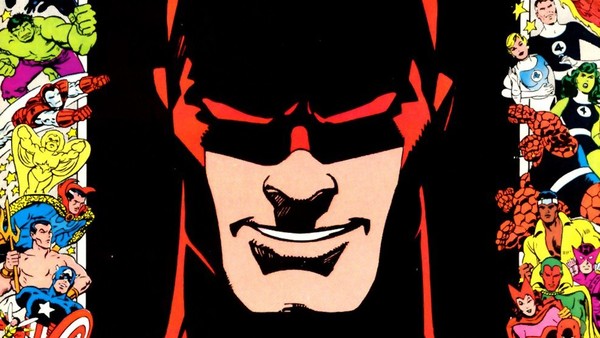
Two legends of eighties-era Marvel, Frank Miller and Walter Simonson were at one time tapped to do a Daredevil comic together. It was meant to release in the aftermath of Miller and David Mazzucchelli's Daredevil: Born Again, but even after Marvel promoted the collaboration, it never came to be.
There are a whole host of reasons as to why this particular team-up would've been great, not least of which because Simonson was in the midst of his ground-breaking run on Thor. Miller was also at the peak of his powers, having been working on Daredevil since the beginning of the eighties, at which point he totally redefined the character's mythology. It seemed a match made in heaven, but it was just never meant to be.
Miller and Simonson's team-up was only going to last two issues (in Daredevil #235 and #236), but it seems like they had something special planned. The comic would've apparently featured a cameo from Doctor Strange, while the arc in question would've been called The Devil's Own (not to be confused with Alan Pakula's ill-fated 1997 film of the same name).
Speaking to Daredevil fan-site Man Without Fear, Simonson explained the reasoning behind the book's cancellation:
"To the best of my knowledge, Frank never scripted Part 2. I never did pencil Part 1. And the reason was that DD was getting a new regular writer [Steve Englehart/Ann Nocenti] at the time after several fill-ins. The new writer wanted his first issue to come out at the beginning of the summer (the good sales period back then) so our 2 parter was put on hold for a few months. And if there's no deadline, the work never gets done--that's an old freelance rule. The gist of it is that by the time Marvel was interested in having us work on the story, Frank was off doing Dark Knight and I was off doing X-Factor. So it never happened. Too bad--it was a cool story too."
7. DC's All-Star Comics

All-Star Batman & Robin was a grotty comic that just shouldn't have been in the first place. All-Star Superman, on the other hand, couldn't be further apart from that other series, with Grant Morrison and Frank Quitely's story about the Man of Tomorrow also being a man out of time now considered to be one of the best comics of the modern age.
Much like DC Black Label, DC's All-Star banner seemingly suffered from a lack of identity, but it still had promise. If its only goal was to unite top talent to deliver their own take on given character - which seemed to be the case with the comics the publisher had planned - then it could've easily worked. Further forays into the banner were ultimately shelved however, despite the fact that the three planned additions all sounded particularly exciting.
First up was All-Star Batgirl, which was going to take place in a different continuity to Frank Miller and Jim Lee's Batman. Geoff Johns was set to handle writing duties, while famed artist J. G. Jones was tapped to be the artist. It was announced and... nothing ever happened.
After that was All-Star Wonder Woman, which would've seen fan-favourite artist Adam Hughes given complete control to tell his own story about DC's most famous Amazon. The comic just never materialised, with Hughes stating in 2010 that it was on the back-burner.
Lastly was All-Star Green Lantern, a comic that would've focussed on the John Stewart version of the character. Brian Azzarello and Cliff Chiang were tapped to write and pencil respectively, but it just never materialised.
6. Alex Ross' Fantastic Four

Alex Ross is a supremely talented artist who's divided his time between DC and Marvel, but is perhaps most famous for his work on Marvels, a 1994 mini-series that showcased the evolution of the Marvel universe from the perspective of a photographer called Phil Sheldon. Ross would then go on to handle cover duties on a wide variety of different projects, only providing interior art on rare occasions.
He's the kind of artist you can't ignore, and one whose style is so strikingly real that the prospect of seeing it repeated throughout an entire comic is pretty exciting. Ross has also tried his hand at redesigning iconic superhero costumes, most famously providing an unused concept for Sam Raimi's Spider-Man films that would later inspire the Superior Spider-Man costume when Dock Ock inherited the title.
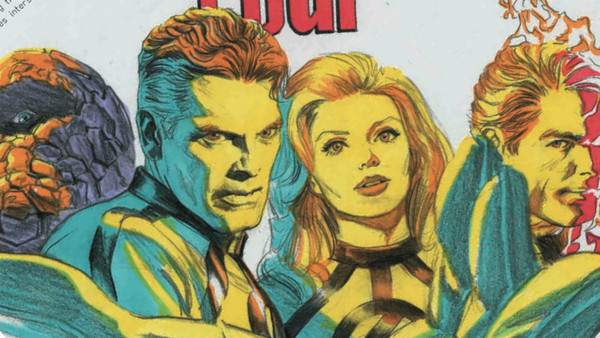
While Ross' Spidey design was admittedly great, it's nothing compared to what the artist had in mind for the Fantastic Four. As was revealed in Marvelocity, Ross explained that he pitched a FF reboot to Marvel while the team were still embargoed as a result of the drama between Fox and Disney over the team's onscreen rights.
Ross came up with new costumes for the Johnny, Sue, Ben and Reed, and centred it all around a "pop-art" motif. The end result is something special, and yet Marvel still ended up rejecting the pitch.
5. Kevin Smith's Spider-Man/Black Cat Ongoing

Kevin Smith is something of an under-appreciated writer when it comes to comics. He masterminded Green Arrow's comeback at the turn of the millennium, told a compelling Daredevil story in Guardian Devil and even has a few great Green Hornet comics to his name while working with Dynamite.
Sure, there's Batman: The Widening Gyre, but it's still the case that the filmmaker has assembled a formidable bibliography - one that reflects his overall passion for the comics medium.
Unfortunately, Smith has also been prone to the odd delay on his work. Daredevil/Bullseye: The Target - a follow-up to 1998's Guardian Devil - never got past the first issue, while at the same time Spider-Man/Black Cat: The Evil that Men Do was also heavily delayed, releasing sporadically between 2002 and 2006.
During this period, Smith had also been tapped by Marvel to write a Spider-Man/Black Cat ongoing. Delays saw Marvel change their mind however, eventually handing a new Spider-Man ongoing to Mark Millar instead.
4. Phoenix By Chris Claremont And Rick Leonardi
X-Men fans don't need reminding that Chris Claremont is quite the legend. The writer was a key architect behind the X-Men's resurgence in the eighties and nineties, a time where pretty much everything he touched turned to gold.
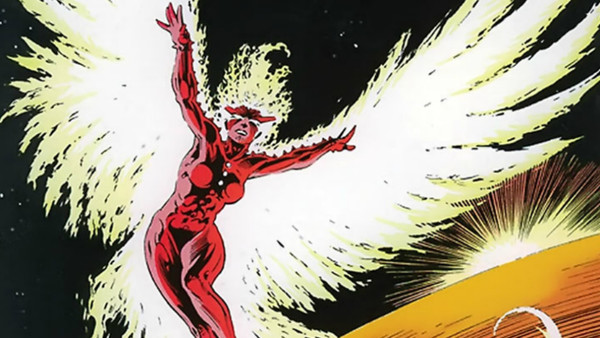
Naturally, then, it should come as a surprise to some X-Men fans that the writer failed to get a certain X-Men spin-off off the ground. At one time, Claremont and artist Rick Leonardi had commenced work on a Phoenix comic all about Rachel Summers, but it never saw the light of day. Why? Well, according to one particular instalment of Cup of Joe (Joe Quesada's own 'bullpen bulletin'), Marvel backed out of the series over anxiety that it would be too complex.
"The series was going to be written by Chris Claremont and inked by Dan Green. Rick said it dealt with Rachel and her relationship with Franklin Richards and the Power Pack. The going logic at the time was that it got too complicated with past/present/future continuity and was subsequently shelved with I believe less than an issue having been penciled. That’s the whole story, folks, wish I had better news to report but it seems that this project was no where near completion before it was killed."
Claremont has infrequently returned to the X-Men since he concluded his ground-breaking run on the series, but one would hope there's a chance the writer will be able to link up with Leonardi again, and hopefully tell an updated version of the story they once had in mind.
3. Grant Morrison And Jim Lee's Wildcats

W.I.L.D.C.A.T.S. is a nineties dream that just doesn't seem to die - and for good reason. Jim Lee nailed a brilliant premise and aesthetic with the Wildstorm series, and it's criminal we've not seen much of it since.
Of all the ill-fated Wildcats revivals though, the most frustratingly promising has to have been Grant Morrison and Jim Lee's series from 2006. It lasted only one issue into a planned twelve-issue run, eventually succumbing to cancellation as a result of multiple delays, and the details revealed by Morrison and Lee only makes the series' loss all the more disappointing.
As a part of Wildstorm: A Celebration of 25 Years, Morrison actually shared his script for the second issue. It's chockfull of political intrigue, classic action and character-driven drama, and would've pitted Wildstorm's premier team against a Thatcher-esque demagogue - what's not to love?
Morrison seems to float between different projects all the time (Multiversity took a notoriously long time to get made, and it seems as though the follow-up will be no different), so there's still a chance he could return to Wildcats. Here's hoping that, if he does, the team's co-creator will be right there with him.
2. The Last Galactus Story

The Last Galactus Story is one of Marvel's last great mysteries. Why? Because the arc saw all but one issue published, making the conclusion as elusive and sought after as Chief Wiggum's forbidden closet of mystery.
The Last Galactus Story was told in the pages of Epic Illustrated during the nineteen eighties, and saw legendary writer/artist John Byrne pen his own mystery centred around the pairing of Galactus and his new herald Nova (Frankie Raye). It was a veritable cosmic romp, showcasing the pair as they attempt to get to the bottom of a trail of destruction - specifically, a trail of destroyed galaxies.
It was just the exact kind of cosmic storytelling that gets readers excited, but even the scope and scale of the Last Galactus Story was unable to survive the cancellation of Epic Illustrated; the story concluded - without an ending - with its ninth chapter, dubbed 'The Face of the Foe'.
With no way of finishing the story, Byrne decided to reveal the planned ending online (which you can read here). It was also rumoured as recently as July 2019 that IDW could assemble the first trade collection of The Last Galactus Story with Byrne's completed tenth issue, but for now, the story-arc remains tragically elusive.
1. Crisis Of The Soul

Everyone loves a good Crisis. Well, mostly everyone. DC mastered their talent for reboots and retcons with 1985's Crisis on Infinite Earths, a story written and illustrated by Marv Wolfman and George Perez that gave DC fans what many consider to be the publisher's definitive continuity.
In the decades following Infinite Earths' publication, DC has returned to the Crisis motif on several occasions. There was Zero Hour: Crisis in Time! which released in 1994, Identity Crisis, published some twenty years later, and after that came Infinite Crisis and Final Crisis. Since then, Crisis-like events like Flashpoint and the potentially misnamed Heroes in Crisis have cropped up too, but DC actually had another in the pipeline way before Zero Hour came around.
Dubbed Crisis of the Soul, the series would've seen artist Jerry Ordway and Paul Levitz collaborate to tell a story all about the evolution of evil in the DCU. The project eventually evolved into a comic called Legends, but the premise for that particular series differed massively from what Levitz originally had in mind. Via Crisis on Earth-Prime:
"The selling point on the project was that it was to be a more intimate story, with galactic repercussions,” Jerry explains. “Crisis [on Infinite Earths], by its very nature, had a sort of distant view of the armies of heroes battling the threat, which was huge … Soul was about corrupting individuals, and that appealed to me. I liked the idea of getting into the head of Batman, or Green Lantern, and seeing what could push them over the edge."
In a way, Crisis of the Soul sounds almost ahead of its time. The idea of a more introspective crisis fed into both Brad Meltzer's Identity Crisis and later Tom King's Heroes in Crisis. One can only wonder how things might've been had Levitz and Ordway's series been published instead.
Watch Next
The Ultimate Fantastic Four Quiz
