8 Creators Who Secretly Defined Your Favourite Heroes
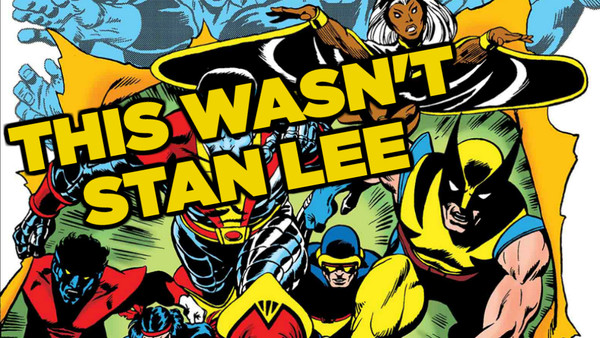
The X-Men were created by Stan Lee and Jack Kirby, but they weren't defined until years later.
Comic book creators are the most famous figures in the industry, not counting their creations themselves. Pioneer a successful hero, villain or supporting character, and you're pretty much guaranteed a lifetime of credits and praise - or so you would think.
The reality is that creating intellectual property is a messy business. If it's not work for hire contracts denying justice for key creatives, then it's bound to be mythologised narratives overshadowing the natural development of a given character. It's the latter aspect that I want to focus on today, and specifically how latter-day comic book celebrity has managed to impede mainstream recognition of more modern creatives, who, in some instances, actually went on to leave a bigger mark on a certain character or property than the people who first created them actually did.
That's not always the case, but plenty of writers, artists and editors have gone on to imprint an indelible impact years after a given comic came into existence. Sometimes they redefine certain creations, other times, they simply go on to add to the mythology that was already present, but they're just as important - and invariably overlooked.
This isn't to downplay the legacy of the architects of Marvel and DC either - Stan Lee, Jack Kirby and Steve Ditko's influence is unquestionable, and without them, most of these later arcs and runs wouldn't have been possible. It's more that mainstream narratives tend to forget that the medium didn't stand still after they completed their work. The industry continued to craft legends, redefine heroes, and innovate. Here are the figures responsible.
8. Dennis O'Neil And Neal Adams - Green Arrow

Dennis O'Neil is a name that'll crop up quite a few times here - so great is his influence on the superhero genre.
O'Neil emerged as a force during the Bronze Age of Comics alongside frequent collaborator and artist Neal Adams. Both presided over a defining period for Batman during the early seventies, but the duo's stint on Green Lantern/Green Arrow is often hailed as their most important work.
The story saw a number of firsts for DC, let alone Green Arrow. O'Neil and Adams injected a contemporary current into the title by using Hal Jordan and Oliver Queen to travel a United States reflecting on the social change of the 1960s. DC were no strangers to including political commentary in their work (the original Superman was about as working class and anti-corruption as you could get), but the company had never really been so overt before. Over the course of the comic, O'Neil and Adams tackled the lack of progress made in regards to Civil Rights, the emergence of drugs and the role of the hero in championing social justice, seeing Arrow and Lantern clash repeatedly throughout.
So, in one instance, the comic championed a new approach for DC in respect to social commentary, but it also redefined Green Arrow too. Adams outfitted the character with his trademark Van Dyke beard, while O'Neil divested from the shoddy Batman analogue that came before by reimagining Queen as a left-wing firebrand watching out for the little guy.
It's stuck ever since, to the point where the modern Arrow couldn't be further apart from his original incarnation.
7. Frank Miller - Daredevil
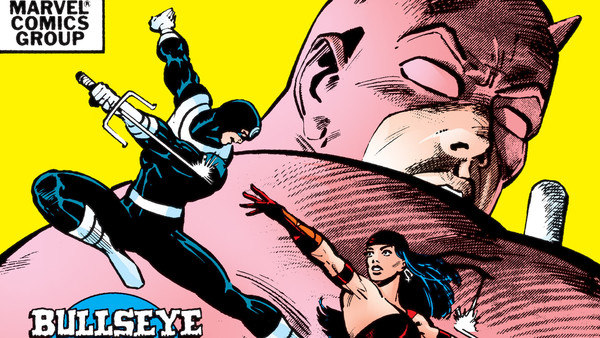
Daredevil was created by Stan Lee and Bill Everett at the zenith of the Marvel bullpen era. The Man Without Fear joined fellow legendary figures like the Fantastic Four, Spider-Man and the X-Men, but it wouldn't be until years later where Matthew Murdock would gain prominence as a seminal Marvel character.
While the initial concept created by Lee and Everett was solid enough, many of Daredevil's trademark elements wouldn't come into play until much later. The red suit, for instance, didn't come along until Daredevil #7, courtesy of artist Wally Wood, and that's twice as recognisable as the yellow outfit the character sported beforehand.
Of course, the most important aspects of the Man Without Fear go way beyond visuals alone. Today, the character is seen as a dark, conflicted crime-fighter who works at a street-level, occasionally battling wits with supernatural forces like The Hand. Writers have occasionally returned to the swashbuckling motif championed by Lee, but for years now, most have found themselves working from Frank Miller's blueprint.
During the seventies, Daredevil had been undergoing a bit of a change. Dennis O'Neil was laying the groundwork for what would come later, at which point Miller came on as artist and then as the series' main writer. During his stint, Miller oversaw the creation and death of Elektra, the transformation of Bullseye into a menacing foe, and reimagined the character's origin in The Man Without Fear. Going further, Miller also collaborated with artist David Mazzucchelli on Born Again - to many Daredevil's defining tale, and one of the greatest comics of all time.
Ann Nocenti would also carve out a bunch of Daredevil's defining traits after Miller, but it was the Born Again scribe who really made the character in the eighties and nineties.
6. Dennis O'Neil, Neal Adams, Steve Englehart Et Al. - Batman

No one needs reminding that Batman's history is a bit of a weird one. The Silver Age saw the character depart from the dark world of Gotham and engage in sci-fi hijinks. It was a perfectly acceptable and entertaining version of the character, but one wouldn't argue that it was definitive, no matter how much we all love Adam West and Burt Ward matching wits with Frank Gorshin's Riddler.
With Batman, the classic narrative is that the Caped Crusader didn't shake his Silver Age funk until Frank Miller came around and beat it out of the character with works like The Dark Knight Returns and Batman: Year One, but that's not true. The actual truth is that the World's Greatest Detective was experiencing a quiet revolution in the seventies, courtesy of writers Dennis O'Neil and Steve Englehart, as well as artists Neal Adams and Marshall Rogers.
As he was with Green Arrow and later with the Question in the eighties, O'Neil proved instrumental in conjuring a version of Batman that could be called definitive. He introduced the character of Ra's al Ghul, reinstated the Joker as a homicidal maniac in Five Way Revenge, and returned the Dark Knight to his former glory as a dark spectre of vigilante justice - or as a "hairy chested love god", as Grant Morrison likes to call him.
O'Neil and Adams' seminal stint on the character would be followed up by one equally as important, with Englehart reinforcing the new status-quo in Strange Apparitions alongside Rogers. It's where the modern image of the character was born - a whole decade before most tend to think it was.
5. Chris Claremont, Kelly Sue DeConnick Et Al. - Captain Marvel

Although Carol Danvers has always been at the centre of the modern Marvel Universe, she hasn't always been depicted in a manner befitting her stature. In fact it's only recently that the character has really come into her own, and, without those recent runs, it's possible she may have never made it to the big screen in the first place.
Created by Roy Thomas and Gene Colan, Danvers first appeared in the pages of Captain Marvel as a supporting character and love interest for the eponymous hero, Mar-Vell. Eventually, she gets caught up in a Kree explosion and receives the same move-set as her betrothed, and becomes Ms. Marvel (the Ms. at the time was considered quite progressive - so there's that too).
Sadly, Carol enjoyed little during her early years. Her treatment was best exemplified during the pages of Avengers #200, where Carol is kidnapped, raped and decides to spend eternity in a parallel dimension with her son (the rapist in question), and the Avengers are perfectly happy with this happening!
It was a complete joke, and it was only when Chris Claremont brought the character back for X-Men that she embarked on an upward trajectory. Claremont presided over her back-and-forth with Rogue, and laid the groundwork for Kurt Busiek and Brian Bendis to reinstate Carol as a key member of the Avengers decades later.
Arguably the biggest contribution to the character, however, was made by Kelly Sue DeConnick and Jamie McKelvie. McKelvie gave Carol her iconic red and blue uniform, while DeConnick gave her the Captain Marvel identity that defined the hero's modern self.
4. Gerry Conway And John Romita - Spider-Man

Even though Stan Lee, Steve Ditko and John Romita undeniably built the defining image of Spider-Man, the wall-crawler isn't so unique that later creatives haven't been able to leave their own mark on the character. There's the iconic Alien Costume Saga of the eighties, which saw several seminal stories emerge from the likes of Peter David, J. M. DeMatteis and Tom DeFalco.
The nineties - although often seen as an awkward period for the web-slinger - also saw important developments made as far as visuals were concerned, with Todd McFarlane, Mark Bagley and John Romita Jr. all emerging as key forces.
However, there's another duo that deserves to be held in nearly as high regard as Lee and Ditko, and that's Gerry Conway and John Romita Sr. Romita had succeeded Ditko on Spider-Man when the artist left Marvel, but Conway was still a relative newcomer. In fact, he was only nineteen when he first started scripting The Amazing Spider-Man. Nineteen!
Conway and Romita are important to Spidey for different reasons, with the latter responsible for crafting the defining version of Spider-Man's world, and the former more-so because he oversaw the introduction of several important Marvel staples. Conway scripted The Night Gwen Stacy Died, introduced the Punisher and Jackal, and ultimately left the character having changed his world forever.
3. Len Wein, Chris Claremont, John Byrne Et Al. - The X-Men

The X-Men were created by legendary duo Stan Lee and Jack Kirby, but while Stan and the King came up with the original premise, it wouldn't be until another decade when the X-Men would come into their own. In fact the original line-up is nowhere near considered the team's most definitive, with it lacking key series staples Wolverine, Nightcrawler and Storm, among others.
The X-Men's evolution goes a lot deeper than just their roster, however. Although the original comic did boast a modicum of social commentary (albeit not the Civil Rights motif Lee later claimed it did), it wasn't until Chris Claremont and John Byrne revived the title in the seventies and eighties that the X-Men achieved their own identity.
Before that - and after the original X-Men comic was cancelled - it fell to Len Wein, Gil Kane and Dave Cockrum to revive the uncanny group in the pages of Giant-Size X-Men #1, which introduced the likes of Storm, Nightcrawler and Colossus, and also made Wolverine a member after his first appearance in The Incredible Hulk #181.
After this issue, Claremont and Byrne would embark on a journey that would see the X-Men feature in their most iconic stories. Days of Future Past; God Loves, Man Kills; the Dark Phoenix Saga - all came during this golden era for the team, at which time the group also developed as a powerful allegory, standing up for the oppressed.
There's a lot to be said about how genius Lee and Kirby's original idea was, but it's still the case that the most iconic version of the comic didn't emerge until years after they'd left the book.
2. Steve Englehart - Captain America

Captain America, in essence, hasn't changed much since his first appearance. Joe Simon and Jack Kirby envisioned the Sentinel of Liberty as a strong anti-fascist symbol to rally a then isolationist America into action against the Axis Powers, and, for the most part, Steve Rogers has continued to do just that - only, as the years went on, the battle lines were less clearly demarcated; the Captain had to adjust to a more modern challenge.
Lee and Kirby's decision to thaw Cap out of the ice in the pages of The Avengers was one of the smartest decisions they ever made, as the WW2 hero has gone on to cement himself as one of Marvel's most important figures. Writers have used Steve to delve into themes surrounding patriotism, American exceptionalism and even corruption, but the modern image of the character was only really articulated in the seventies during the Nixon presidency.
Without delving too deep into the seventies milieu and the delineation between that and other decades' respective zeitgeists, 1974 was a period of discontent for the US. The Vietnam War was finally deescalating, and Richard Nixon had been brought into office off the back of what appeared to be a groundswell of support for New-Right politics. The 'silent majority', as they were known, were pushing back against the sweeping social change the sixties ostensibly wrought.
It would later come to be known as the 'Watergate era', so-called because of the infamous scandal that exposed the level of paranoia that pervaded the Nixon White House, and the divide in trust between the public and government. Writer Steve Englehart decided to use Captain America to address the climate head on in 1974's Secret Empire, which sees Steve not only turn his back on the Captain America identity, but also sees him expose Nixon as the grand architect of the titular secret society.
Cap has continued to adapt to modern challenges in a politically charged manner, but it was Englehart and artist Sal Buscema who paved the way.
1. Bill Finger - Batman

Injustice is a common theme when it comes to comic book creators. There's a general sense of injustice in the sense their ideas constantly get used for the biggest films on the planet, and yet none ever see close to the amount of publicity or royalties as those who adapt them do, as well as in the fact they get treated poorly by comic con organisers in favour of on-screen talent.
If that sense of injustice isn't exemplified by the story of Jerry Siegel and Joe Shuster (and it is), then it most surely must be by the story of one Bill Finger.
For decades, if you were to encounter any piece of media related to Batman, you'd probably see an opening credit that stated the character was created by Bob Kane. The actual truth of the matter is that Kane was nowhere near as instrumental in the creation of the Dark Knight as was once proclaimed, and that the real architect behind the character, Bill Finger, passed away without receiving the credit he deserved.
Without Finger, the Caped Crusader wouldn't have sported his iconic black and grey outfit; Bruce Wayne wouldn't have been called Bruce Wayne, and it's doubtful the character's rogues gallery would've looked half the same either, with fellow creator Gardner Fox having also been erased from the conversation, courtesy of Kane's determination to proclaim himself the one true creator of DC's most successful property.
--
For more on Finger, be sure to read Marc Tyler Nobleman's Bill the Boy Wonder: The Secret Co-Creator of Batman.
The ULTIMATE Marvel 80th Anniversary Quiz
