9 Famous Spider-Man Comic Book Moments That Will Never Happen In The Movies
Includes radioactive semen and Aunt May becoming an unwitting suicide bomber
The world of Spider-Man comics contains a treasure trove of iconic moments that make the universe ripe for adapting to the big screen. Over the course of the movies, Spider-Man fans have witnessed many all-time great storylines get a Hollywood spin, such as Spidey's origin (at least twice), the death of the Green Goblin (Sam Raimi's Spider-Man), the death of Captain Stacy (Marc Webb's The Amazing Spider-Man), the death of Gwen Stacy (The Amazing Spider-Man 2), Spider-Man No More (Raimi's Spider-Man 2), and the Sandman's origin (Raimi's Spider-Man 3).
As universally loved as many of these comic book stories are, the Spider-verse is also chock full of controversial and demonstrably awful moments that would be a poison pill for any Hollywood studio that dared to reimagine them on the big screen. When it comes to these moments, no amount of money or talent would be able to save these hypothetical Spider-Man movies from the fan or political backlash they would unquestionably inspire.
In some instances, these storylines were so reviled and rejected; they sparked a steady decline in comic book sales. So, theres definitely no way a major studio will sink hundreds of millions of dollars into a Spider-Man film, only to watch its investment flop tremendously because one of these 10 storylines was selected.
9. Kravens Suicide
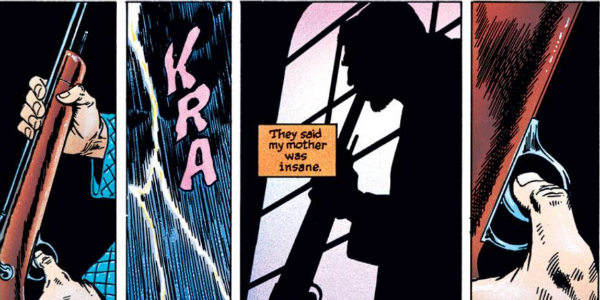
Kraven's Last Hunt, courtesy of J.M. DeMatteis and Mike Zeck, is considered by many comic book fans to be one of the greatest Spider-Man stories ever written. Yet, there's one moment in particular towards the end of the six-part arc that also makes it one of Spideys most controversial stories ever, and a likely hard sell for a Hollywood adaptation.
After shooting Spider-Man with a tranquilizer and burying him alive, Kraven the Hunter dresses up as Spidey and sets out to prove himself as a superior Spider-Man. Spider-Man eventually pulls himself out of the Earth and confronts Kraven, but before Spidey can get his revenge, the Hunter throws one last obstacle his way, releasing the animalistic Vermin into New York City. As Spider-Man deals with Vermin, Kraven reflects on his life and finds himself content with the fact that he proved himself as a superior Spider-Man. He then inserts the barrel of a rifle into his own mouth and pulls the trigger, killing himself.
Critics of the storyline claimed the scene glorified suicide. DeMatteis and Zeck addressed these complaints a few years later with the tepidly received Soul of the Hunter one-shot, which showed Kraven's spirit stuck in a purgatorial state because of his suicide.
Many Spider-Man fans have lobbied for a Kraven's Last Hunt adaptation over the years but, if it ever happens, Kraven's suicide would likely be cut out or totally re-imagined somehow. In addition to morally alienating a significant portion of moviegoers, graphically depicting Kraven's suicide as it appears in the comics would most certainly bump the rating up to an R, a kiss of death for a summer blockbuster.
8. Doctor Octopus Is The Superior Spider-Man
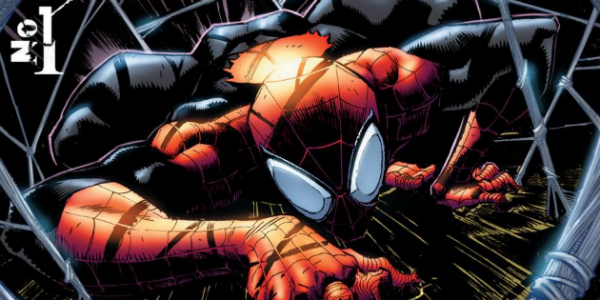
Despite the acrimony the storyline initially caused, The Superior Spider-Man has been an unqualified success. Writer Dan Slott found a way to develop an entire series around the idea of lifelong villain Doctor Octopus stealing the identity and body of his enemy Peter Parker/Spider-Man, and masquerading as a new and improved version of the Web Slinger. But, the tastes of comic book fans and moviegoers are not always aligned, and it's more likely than not that The Superior Spider-Man is far too wacky and abstract of a concept to work as a two-plus hour feature film.
For one, casual moviegoers tend to identify and sympathize with a clear-cut hero, and it would be immensely difficult to achieve that by building a film around a character that murdered his adversary in order to assume his identity. Additionally, a Superior Spider-Man movie would need a tactfully-written script for the nuances of the character to translate.
Who can forget what we got the last time Peter Parker went to the dark side - a bad haircut and disco dancing. Such things need to be avoided.
7. The Hobgoblin Is Revealed To Be A Dead Guy
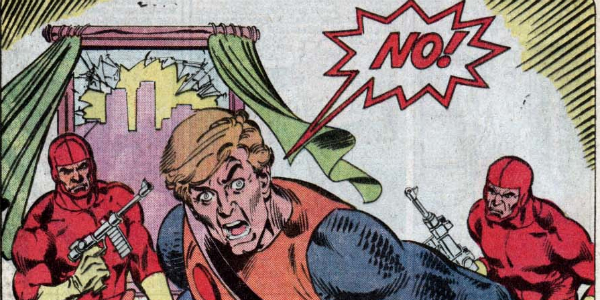
How could a story that started off with such promise end so, so badly? In 1983, Roger Stern and John Romita Jr., introduced the world to the Hobgoblin, a successor to one of Spider-Mans greatest villains, the Green Goblin. The villain was an instant success, with comic book fans clamouring to guess his secret identity.
Editorial politics ultimately derailed the Hobgoblin saga, and led to one of the most convoluted reveals in comic book history. Stern and Romita Jr. had left Amazing Spider-Man years earlier, and Tom DeFalco and Ron Frenz were planning on revealing Richard Fisk, son of the Kingpin, Wilson Fisk, as the Hobgoblin, with Daily Bugle reporter Ned Leeds being used as a red herring. But Spider-book editor Jim Owsley (now known as Christopher Priest) clashed creatively with DeFalco/Frenz and fired them from Amazing Spider-Man.
Owsley, thinking Leeds was going to be revealed as the Hobgoblin, killed the character off in the Spider-Man vs. Wolverine one-shot. Owsley was soon relieved of his editorial authority, leaving the job of revealing the Hobgoblin to up-and-coming writer Peter David.
In Amazing Spider-Man #289, readers were finally promised a resolution to this long-running mystery. The Hobgoblin was unmasked as... Ned Leeds. Fans were confused and irate. How could a dead guy be the mighty Hobgoblin? A new Hobgoblin was immediately introduced the second-rate villain Jason Macendale, aka Jack OLantern.
Ten years later, Stern set the record straight with the Hobgoblin Lives miniseries, revealing wealthy business mogul Roderick Kingsley as the villain all along (Ned Leeds had just been brainwashed into thinking he was the Hobgoblin). Meanwhile, no studio is crazy enough to adapt the Hobgoblin's original reveal to the big screen.
6. Spider-Man's Radioactive Semen Kills Mary Jane
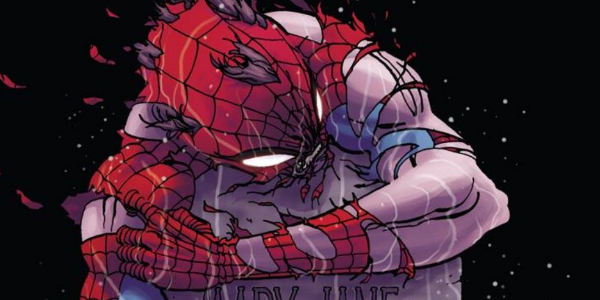
Despite the fact that it recycles much of its content from the far more acclaimed Dark Knight Returns, the Spider-Man: Reign miniseries by Kaare Andrews is filled with interesting ideas and good intentions. Set in a dystopian future, Reign focuses on an old and alone Peter Parker, who has to rise to the occasion one last time to combat social injustice.
The problem with this storyline is that nobody who has read it can ever get past the reason Spider-Man is all alone: Peter's wife, Mary Jane, died from radiation poisoning. She was exposed to this radiation via sexual intercourse and Peter's semen.
Fans of Reign will justify their love for the book by talking about Andrews's elegant writing and art, and the story's introspective themes of isolation, despair and growing old. But, radioactive semen is radioactive semen. It's a non-starter and there's no way a movie studio will ever adapt a comic book storyline wherein the lead female is killed off by poisoned semen.
5. Peter Parker Is A Clone
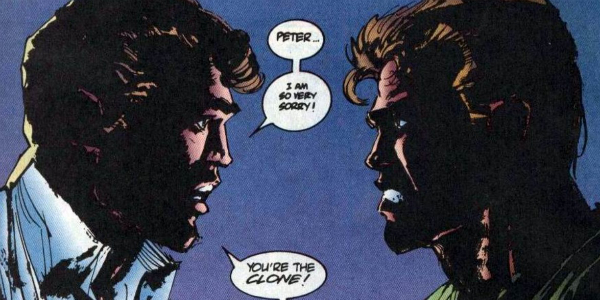
Just the words Clone Saga are enough to send any Spider-Man fan from the 90s into fits, as the long-running, convoluted storyline is often referred to as the creative low-point for the character. But, there are actually some worthwhile stories to be found within the Clone Saga (Aunt May's death in Amazing Spider-Man #400 is one of the best Spidey comics ever), plus Brian Michael Bendis proved a writer could create a coherent, well-structured clone-centric storyline in Ultimate Spider-Man in 2006.
The storyline from the original 90s Clone Saga that likely never will be adapted for a movie is the one wherein Peter Parker is revealed to be a clone, while Ben Reilly is unveiled as the actual Spider-Man. This began a year-long period during which Ben was the lead character in all of the Spider-Man comics, while Peter disappeared to live a normal life with Mary Jane.
Beyond the Peter/Ben switcheroo being hugely unpopular with comic book fans, the storyline just wouldn't translate to the big screen. For one, it creates an emotionally confusing status quo for viewers: they've been introduced to and become invested in a likeable character, and are now being told that this other guy who just showed up a little while ago is the actual superhero to cheer for. To make matters worse, in order to sell the clone idea in the comics, some writers had Ben talk about Peter as if he were a villain of sorts who had stolen his life away from him.
Comic book fans responded poorly to this idea, and there's no reason to believe moviegoers, who tend to have a lower tolerance for comic book logic, would respond any better to it.
4. The Green Goblin Hires An Actress To Fake Aunt May's Death, Installs Bomb In Her Brain
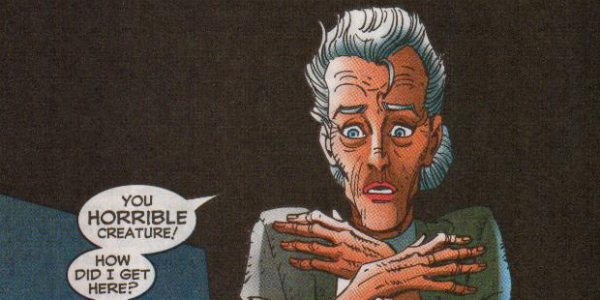
It's true that nobody stays dead in the world of comic books (except for Peter Parker's Uncle Ben), but an elderly woman with no superpowers, who had long been portrayed as being ill and one heart attack away from biting the dust, seemed like a pretty safe bet to rest in eternal peace. Instead, the powers that be at Marvel decided that the world of Spider-Man comics really needed Aunt May back, so they created one of the most perplexing resurrection explanations in history: May had actually been kidnapped by Norman Osborn, aka, the Green Goblin, while an actress had been hired to die in her place as part of some grand scheme to emotionally torment Peter.
To make matters worse, after Aunt May is revealed to be alive, Osborn tells Peter that he installed a genetic bomb in her head that would detonate if anyone tried to remove it. Of course, the bomb is removed, nobody is hurt, and May remains alive to this day, as resilient as ever.
Aunt May's resurrection remains one of those only in comic book kinds of moments and even with that explanation, it's a story that strains credulity to its limits.
3. Norman Osborn Kills Peter Parker/Mary Jane's Baby
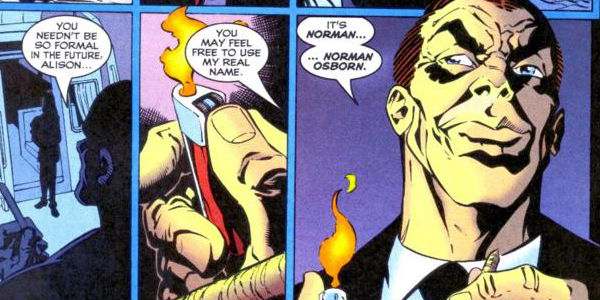
Infanticide is a pretty horrible thing, and is not usually a plot point in a major motion picture that aspires to make a billion dollars at the box office. As such, the stomach-churning Spider-Man storyline that features a freshly back-from-the-dead Norman Osborn kidnapping Peter and Mary Jane's newborn baby, and then disappearing the child (it is assumed that he killed her) will, in all likelihood, never be adapted to the big screen.
In addition to the storyline just being in terrible taste, having a superhero movie that is geared towards a very broad audience depict the murder of a newborn baby would invite such a storm of controversy and criticism from certain political/religious groups that no studio in its right mind would green light the idea.
2. Mephisto Now Pronounces You Divorced
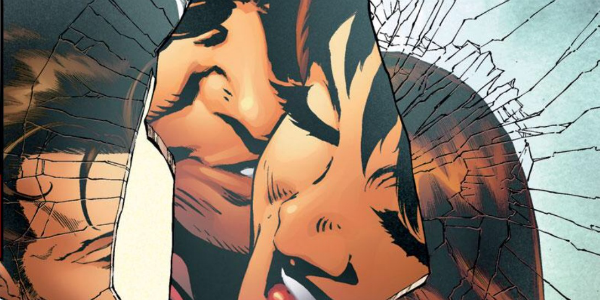
Peter Parker's marriage to Mary Jane Watson had been a point of contention within Marvel's hierarchy for decades. Many saw the union as nothing but a sales-driven stunt concocted by former Marvel editor-in-chief Jim Shooter. Some thought it was unrealistic for an anti-social wallflower like Peter to land a supermodel like MJ, while others argued that married superheroes just dont work, because creators inevitably have to age the characters by depicting them growing old together, having children, etc.
Still, despite the front office dissention, Peter and MJs marriage stayed in place for more than 20 years, with intermittent interruptions (MJ was apparently dead for a bit in the early 2000s and, after she was found very much alive, she ended up taking a break on the West Coast for a handful of issues). But, by 2008, then Marvel editor-in-chief Joe Quesada finally came up with a way to pull the plug on the Peter/MJ marriage in a way that was so final, and so definitive, there would be no clear path for future creators to backtrack.
As part of the One More Day storyline, Marvel's version of the devil, Mephisto, makes an offer to Peter that he shockingly does not refuse. In exchange for saving the life of his Aunt May, who is in critical condition after being shot by a bullet meant for Spider-Man, Peter and MJ's marriage is magically annulled.
Readers were irate after this storyline was published, damning Marvel for not only undoing more than 20 years of continuity, but for having Peter - not a saint by any stretch, but still a good, moral person, make an actual deal with the devil to make it all happen.
For many fans, One More Day was the straw that broke the camel's back, and they haven't read the comics since. Meanwhile, Marvel has stood by its decision, but that doesn't mean any production studio would ever dare to adapt One More Day as a film for risk of fans bringing rotten fruits and vegetables into the theatre and pelting the screen once Peter says I do to Mephisto.
1. Sins Past
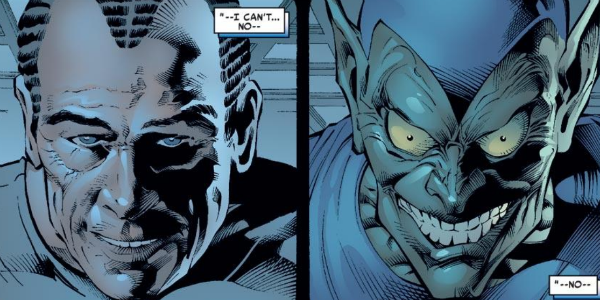
For those who have successfully blocked this universally reviled comic book arc out of their minds, Sins Past crassly defiles the reputation of Peter's deceased former girlfriend, Gwen Stacy, by retconning an affair between her and Spidey's greatest villain, Norman Osborn, aka the Green Goblin. As if Osborn's creepy O face isn't bad enough, the storyline also introduces the world to the regrettable notion of Gwen and Norman's demon spawn twins named Gabriel and Sarah.
The twins are fueled by Norman's Goblin Serum (in more ways than one), and set out to destroy Peter/Spider-Man under the belief that he is their real father. Considering how charismatic and terrific Emma Stone is as Gwen Stacy in Marc Webb's The Amazing Spider-Man, imagine just how shocked and disgusted moviegoers would be if she was seen shacking up with Chris Cooper's Norman in a future film. And that's ignoring the fact that Marvel is so clearly embarrassed by Sins Past that nary a reference to the storyline has been made in the comics since it was first published in 2004.
Either way, there's no way Sins Past will ever find its way onto the big screen.