The Best Batman Era Is One You'd Never Suspect
For a brief period, Batman truly was Reborn.
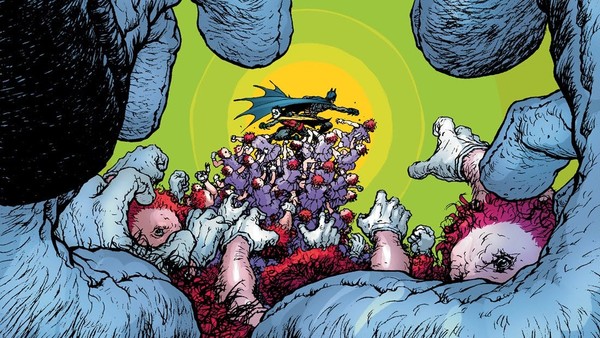
When a character's been through as many shifts, changes and incarnations as Batman, there's always going to be an era that sticks out as their best. Longtime readers of the Dark Knight may point to Dennis O'Neil and Neal Adams' revered stint on the character during the 1970s, or maybe even the Steve Englehart and Marshall Rogers comics that followed.
More recent fans, meanwhile, may even cite Scott Snyder and Greg Capullo's run as the hero's most definitive, with the pair having presided over a decade's long association with the character after the advent of the New 52 (which sort of rebooted DC's entire continuity).
There are other... slightly less conventional periods that fans may latch onto however. There's a great deal of love out there for Ed Brubaker's Caped Crusader, despite his work on Gotham Central overshadowing it somewhat, while others may even cite the Legends of the Dark Knight - a series that brought together dozens of legendary creators to tell their own Batman stories - as the one that imparted the definitive visage of Bob Kane and Bill Finger's creation.
I'm not here to talk about the most definitive or necessarily iconic Batman runs however. Yes it's Bruce Wayne's big eightieth anniversary, and while efforts to discern the character's most traditionally beloved periods are worthwhile, with Batman, it's often the case that the unexpected leads to his best storylines. That was the case with Frank Miller's The Dark Knight Returns, and - though it's still not finished - Tom King's ongoing stint on the character. For my money's worth though, the moment Grant Morrison collided with Batman conjured the Caped Crusader's greatest ever era.
Morrison's time with Batman was brief, but it coincided with a period of resurgence for the character. Brilliantly introspective and encompassing in its approach, Morrison kickstarted a veritable Bat-themed renaissance during their time on the main comic, introducing new characters, concepts and ideas even while readers railed against said introductions - Damian Wayne, the now beloved son of Bruce Wayne, one such example.
It's likely still that Morrison's Batman retains a somewhat divisive reputation amongst readers, but that's irrelevant. Pre-Final Crisis it was superb, but after Bruce's death in that very story DC's entire line of Bat-titles took on a whole new energy, with the Batman Reborn banner encapsulating the diverging paths the publisher's Bat books embraced.
Sadly, as with most tremendous periods of change in the superhero genre, the little ideas and innovations Reborn imprinted on Batman and his world weren't to last. They were extinguished - quite abruptly - in 2011, but that doesn't take away from just how impressive the era was, or stop us from reflecting on its greatness.
4. Morrison's Batman Reappraises A Forgotten Lifetime

Grant Morrison's journey with Batman started in 2006, and would conclude seven years later in the pages of Batman Incorporated. Throughout, Morrison was dedicated to deconstructing the inner workings of the character, the legacy of the mantle, and the dichotomy between Batman and Robin. That last aspect is especially important, because while other writers often pushed the relationship between Bruce Wayne and his ward into the background, Morrison venerated it and made that partnership a guiding force in their overarching story, irrespective of who was donning the respective cape and cowls of the Dark Knight and the Boy Wonder.
It wasn't just a story about Batman - it was a story about the history of being Batman.
In part, Morrison's understanding of the character's history is what makes their interpretation so gripping. There are little flavours of all the past Batmen to have graced DC's pages throughout the years, whether that be what the writer referred to as the "hairy chested love god" of O'Neil and Adams' series, or the "snarling, paranoid soldier of the ‘90s." Morrison was motivated by that history to tell something grand, and it's what transformed what was initially meant to be a fifteen-issue mini series into the character-defining run we're talking about today.

"I became fascinated by the idea that every Batman story was in some way true and biographical," Morrison said to DC in 2013. "By taking his entire publishing history as the story of his life, I was able to approach Batman from a different angle and the multifaceted character that was revealed became the subject of my story."
Indeed, it was this idea that made Morrison's Caped Crusader so captivating. Previously forgotten elements from the Silver Age were reintroduced and reappraised, and yet in a way that blended with the character's modern incarnation. It was inspired - at times a little discombobulating - but it distinguished Morrison's interpretation all the same.
Of course, as with any good Batman story, Morrison wove an engrossing mystery. Starting with the introduction of Damian Wayne and the Black Glove, before concluding in the seminal Batman RIP, Morrison brought Bruce Wayne to the brink of defeat... and then pushed him over. Never did the Dark Knight give up, and so it was fitting that his final sacrifice came in Final Crisis, firing the radion bullet that would ultimately fell Darkseid and save the universe from his dominion.
But this wasn't where the story would end. This was all merely the first chapter, and while what followed bore all the trappings of a new beginning, with Bruce dead and a Battle for the Cowl swiftly following, Morrison still took the opportunity to analyse what it meant to be Batman in a whole new way.
3. How Batman Reborn Changed Everything
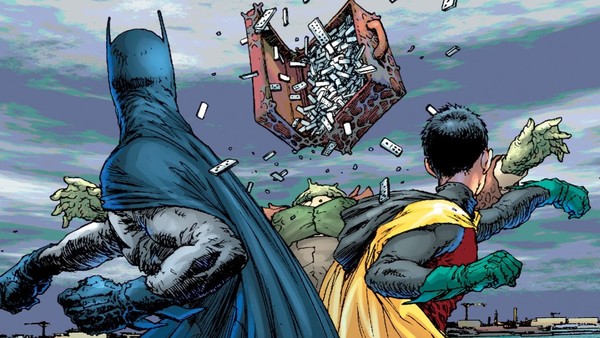
Suddenly - and violently - the status-quo was shattered. Gotham had lost its Dark Knight, and the rest of the Bat-Family - namely a conflicted Dick Grayson, and a determined Damian Wayne - were left to pick up the pieces. DC's Bat-books were now in uncharted territory, but it proved to be just the thing to galvanise the mythos.
After the conclusion of Battle for the Cowl confirmed Dick Grayson as the new Batman, a number of changes were introduced. First, Damian would become the new Boy Wonder, providing a new dynamic to an initially un-dynamic duo; Tim Drake, meanwhile, would respond to his father's passing in a completely different way, donning the identity of Red Robin to prove that Bruce was still alive. It was during this time that Stephanie Brown became the new Batgirl, and Kate Kane led Detective Comics as Batwoman.
It was an exciting period, permeated by exciting books spinning off from Batman and Robin, the era's flagship comic written by Morrison and pencilled by All-Star Superman collaborator Frank Quitely. I'll come to those other comics in just a second, but for now, let's focus on Batman and Robin.
As was stated earlier, Morrison's Batman is biographical in its approach. There's a lot in there about Bruce Wayne specifically but also the symbolism of Batman and how that's evolved throughout each decade. It results in an interpretation of Bruce Wayne that may well be definitive, but it's with Dick Grayson and Damian where Morrison's approach yields its greatest results.

Dick and Damian are the new Dynamic Duo - only, very different. Grayson has spent the majority of his life trying to escape his mentor's shadow, and yet Batman seems inescapable - almost oppressive; he has to learn to be Batman on his own terms, and discover what the symbol - and more importantly the wearing of it - means to him personally.
Damian, meanwhile, is almost the complete opposite. As the biological son of Batman he believes he's destined to be the Caped Crusader, and that becoming Robin is merely a stepping stone to achieving that goal. Much like Grayson grows to understand Batman, however, so too does Damian grow to understand Robin. It's a wonderful journey to see play out, as is the sheer novelty of seeing a slightly more easy-going Batman team up with what Morrison described as a "scowling, badass Robin." In their own words, it's pretty much "a reverse of the traditional dynamic."
Thematically the series is as brilliant as ever, but again, there's a mystery placed front and centre to Reborn that compliments the tonal disparity between it and the previous Batman series. Come its final issue, and this very unfamiliar incarnation of Batman and Robin had everyone convinced they were the Dynamic Duo, because they were.
2. A Whole New Bat-Family
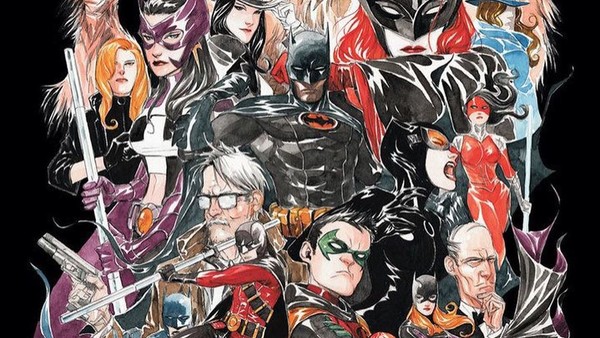
But of course, in discerning Batman's greatest era it would be remiss to ignore the other books that supported Morrison's run. Love it or hate it, Batman is more than just the main Batman comic and it's often the case that these supporting series carve out their own devoted followings while the main arc progresses. Reborn was no different.
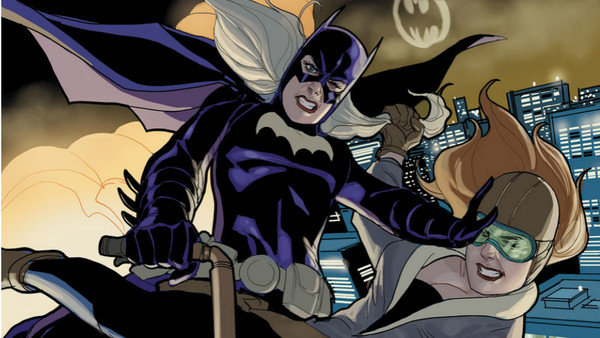
While Morrison worked on Batman & Robin, Return of Bruce Wayne and later Batman Incorporated, other writers and artists were busy at work fleshing out this new period. Greg Rucka and J. H. Williams III produced the formidable Batwoman: Elegy while on Detective Comics, Bryan Q. Miller helmed a cult favourite Batgirl comic with Stephanie Brown under the cowl, and Fabian Nicieza presided over an old school (and criminally overlooked) Bat-book in Red Robin, which saw Tim Drake attempt to discover his father's true fate while fending off with the League of Assassins.
All of these books were tremendous, but certainly one of the more underrated was Paul Dini, Dustin Nguyen and Derek Fridolfs Streets of Gotham. The trio had previously collaborated on Private Casebook and Heart of Hush, and Streets continued that hot-streak with three volumes' worth of brilliant stories, mirroring the main Batman & Robin title by showing Dick and Damian adjusting to their new roles, but while also fleshing out the city's criminal underworld and giving Hush his best arc to date. It compliments Morrison's main comic wonderfully, and is a must-read for those enamoured with Dini's work on Batman: The Animated Series.
Lastly, there's The Black Mirror. Released after Bruce Wayne's return and the commencement of Batman Incorporated, The Black Mirror was Scott Snyder's first stab at Batman and it's arguably his finest moment with the character. Joined by Jock and Francesco Francavilla, The Black Mirror was a haunting, psychological look at Dick Grayson's past and present, and reaffirmed in no uncertain terms that he was every bit as much Batman as Bruce was.
All of these books, though not Morrison's design, reflected the ambition of that main series. This was a genuinely brilliant era for all Batman characters, one duly reflected across the range of titles DC were publishing at the time.
1. How Batman's Greatest Era Ended With A Whimper
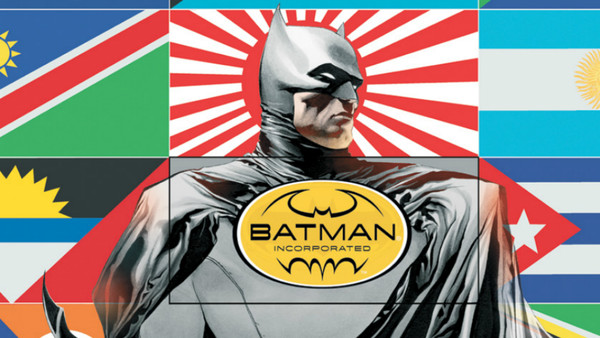
Sadly, for all that Batman Reborn and Batman Incorporated heralded a fresh and exciting direction for the Dark Knight, it just wasn't to be. DC announced in 2011 that they were would be rebooting their entire continuity at the end of the year, and that Scott Snyder and Greg Capullo would preside over the main Batman title. Inc. was suffering from delays, and it seemed as though this new continuity just wouldn't have any space for it, even if Morrison would be given the chance to finish his story.
It might be slightly pedantic to dwell on how Morrison's Batman came to a close, but it seems pertinent. Although they managed to wrap up Inc in 2013 - and with it their seven year association with Batman - it felt almost inconsequential. It went unacknowledged by the other Bat-books, which had long since restored the traditional Bat-family to the forefront. The decision to take away the Inc. suit's yellow symbol - introduced in the book as a metaphor for the Dark Knight coming out of the shadows - seemed to intimate a general indifference from DC in regards to what Morrison was trying to accomplish.
Just this year, Tom King has found himself in a similar position. Like Morrison, he's found himself pushing Batman in a new direction, but it seems as though it was a direction DC were uncomfortable with, hence why he's now been tasked with finishing his story on a separate maxi-series next year - again, just like Morrison.

It's only natural that publishers will feel a glint of anxiety when a major character is faced with the prospect of genuine change, but it shouldn't stifle progression the way it's done with Batman. Reborn and Inc., for all that they managed to invoke change on a major scale, and made major contributions to the Dark Knight's development, were both ultimately neglected in the midst of a vacuous reboot.
It was a sad end for what was, frankly, Batman's best period. Be that as it may, it's important not to dwell, and instead focus on what Reborn gave Bat-fans during its brief existence. It might not've been the Dark Knight as you've come to know him, but for the past six years, I find myself thinking about Morrison's experiment, and how thankful I am I got to see it from start to finish.
Watch Next
DC Quiz: How Well Do You ACTUALLY Know Batman?
