Why Miguel O'Hara Is Marvel's Most Important Hispanic Character
Fighting crime (and stereotypes) since 2099.

There has arguably never been a better time than the present to be a Hispanic/Latino comic book fan.
These days, Marvel Comics alone has numerous heroes running around their pages that readers from a Hispanic background can admire and feel represented by. Robbie Reyes/Ghost Rider, America Chavez/Ms. America and even the biracial Miles Morales/Spider-Man are just a few examples.
However, while this shift is certainly a welcome one, the recent influx of high-profile Hispanic Marvel characters has resulted in an incredibly important forerunner often being overlooked by modern audiences: Miguel O'Hara.
Created by writer Peter David and artist Rick Leonardi, Miguel O'Hara was introduced in 1992 as Spider-Man 2099, a distant successor to Peter Parker who assumes the Spider-Man mantle in a world where most of the heroes we know and love have been forgotten by time.
One of Marvel's first major characters of Hispanic descent, Miguel is undeniably a trailblazer who helped open the door for many other Latino crime fighters. However, this is a bit of a double-edged sword since, as previously mentioned, modern Marvel readers tend to overlook Miguel's significance, effectively turning him into the publisher's unsung hero of Hispanic representation.
This is a shame too, as Miguel is not only one of the most unique and complex Marvel heroes out there, but is also arguably the New York-based publisher's single-most important Hispanic character of all time. Here's a deep dive into exactly why.
7. His Place In The Cultural Zeitgeist

Miguel O'Hara is a character who was ahead of his time in more ways than one. Years before Hispanic superheroes rose to the prominence seen today, Miguel was mixing it up on the pages of Spider-Man 2099 in the early 1990s.
Of course, Miguel wasn't the first Marvel hero from a Latino background, as a couple others do predate him, most notably Bobby da Costa/Sunspot. However, Miggy was the first Hispanic hero to star in his own major solo series at the House of Ideas.
The original Spider-Man 2099 title was the crux of Marvel's 2099 imprint and ran for a total of 46 issues, plus an annual, a special and even a crossover with the original Spidey thrown into the mix for good measure. And it could have lasted even longer, had editorial drama not led to Peter David prematurely stepping down from the book.

What's more, Miguel was the first person of Hispanic descent to take up the mantle of Spider-Man, or any Spider-hero for that matter, predating Anya Corazon by over a decade and Miles Morales by nearly two. Speaking of beating Miles to the punch, Miguel was also the first biracial Spider-Man, being half-Mexican and half-Irish.
In recent years, Miles has rightfully become one of Marvel's most celebrated champions of diversity. And his star has only risen thanks to the Oscar-winning animated film Spider-Man: Into the Spider-Verse. However, it should be remembered that, at least to an extent, it was Miguel who walked so that Miles could run.
If you want an example of Miguel being an unsung hero, just consider the fact that Miles was the lead character of Into the Spider-Verse, whereas Miggy was relegated to a post-credits scene (albeit a hilariously great one.)
6. His Staying Power

Despite not being as well-known to some modern Spider-Man fans as he deserves to be, Miguel O'Hara is a character who has enjoyed a fair bit of longevity since his debut nearly three decades ago.
In fact, Miggy is arguably the most enduring character of Marvel's 2099 lineup, maintaining a respectable amount of relevance long after the imprint itself came to an end and characters like Ravage 2099 and Doom 2099 fell by the wayside.
For starters, it was in the mid 2000s that an alternate version of Miguel became a bona fide member of the dimension-hopping Exiles.
A few years after that, the Spider-Man of tomorrow was given more to do in Marvel's main Earth-616 continuity, coming back in a big way during the Superior Spider-Man run, which was due in large part to demand from the character's diehard fans.
This set the stage for a new Spider-Man 2099 series in 2014, which ran for 12 issues and tied into the now iconic Spider-Verse event. The title was relaunched yet again in 2015, this time running for 25 issues and setting Miguel on a brand-new, culturally-aware adventure, which also saw him get involved in the major Civil War II event.
All of this is important to note because some modern day detractors have attempted to dismiss Marvel's push for diversity as a passing fad. However, Miguel, a prominent character of Mexican descent, was not only a major player way back in the early nineties, but has proven that while he may not always be at the forefront of Marvel's product, he's definitely here to stay.
5. His Background, Education And Accomplishments

A lot of prominent Hispanic characters in the world of pop culture, including comic books, tend to be portrayed in more or less the same way: they struggle financially, come from a downtrodden area, are surrounded by crime and may find themselves at risk of falling victim to an environment that champions street knowledge over formal education.
Mind you, while it can sometimes get a bit too stereotypical, these stories still deserve to be told, as they do represent the trials and tribulations faced by many Mexican-Americans today. In fact, Marvel has proven that such stories can still be effective, with Robbie Reyes being a prime example of a Hispanic character whose troubled background is handled well.
Miguel O'Hara, however, is quite literally a man of the future. Sure, the year 2099 has its own major problems as far as social equality is concerned. However, people facing discrimination due to their ethnic background is largely a thing of the past (as it should be).
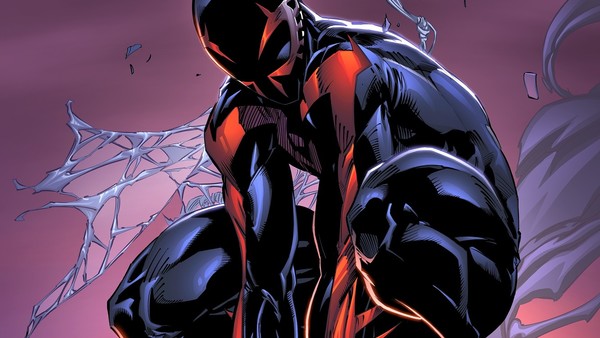
What's more, Miguel is incredibly intelligent and well-educated, traits that were largely encouraged during his upbringing and allowed him to carve out a rather decent life for himself, at least from an onlooker's perspective.
Not only that, but before the 2099 continuity was upended, Miguel became the CEO of major company Alchemax, working to undo the wrongs the company was responsible for, not to mention becoming a certified worthy wielder of Mjolnir to lead the future into an age of prosperity.
What makes this so important is that Miguel's extraordinary life is one that tells young Hispanic readers that they can accomplish truly monumental things, as opposed to simply getting by. It can also help just about anyone to envision a more united future.
4. His Challenging Beliefs

In addition to the trope of Hispanic characters coming from a crime-ridden backgrounds, there are numerous other Latino stereotypes out there that the character of Miguel O'Hara pushes back against. One major example is is views on religion.
Whereas most Mexican-Americans are portrayed as being devout followers of Christianity (usually Catholicism) who never bother to question the beliefs they were brought up on, Miguel is openly critical of religion and tends to embrace enlightenment values, despite himself being raised Catholic.
Of course, this doesn't automatically make him better than Hispanic characters who embrace their religious upbringing, but it does provide yet another example of Miguel challenging tradition and being savvy to cultural shifts in the real world. After all, this day and age, more and more people are beginning to step away from organized religion, due in large part to antiquated practices and values.
Mind you, characters from innately religious cultures who stand by their faith do still have their place, so long as their portrayal is nuanced enough, with Matt Murdock/Daredevil and Kamala Khan/Ms. Marvel being great examples.
However, by distancing himself from religion entirely, Miguel further embraces his role as an educated Hispanic person being ahead of his time. More importantly, it sends the message that the things that were preached to you while you were young do not have to dictate who you become, nor does questioning those things (and outright renouncing them, if need be) disconnect you from your heritage, in spite of what some may say.
3. The Way His Comics Handled Abuse

One of the more problematic elements of Hispanic culture is how it tends to turn a blind eye to, and in some cases, even condone child abuse.
Mexican-American children being on the receiving end of physical punishment is something that is frequently brought up in media aimed at that demographic, but rarely ever challenged. Rather, it is portrayed as something that's just another part of growing up in that culture, and ultimately harmless.
Once again, Miguel O'Hara is here to challenge convention, shining a light on the harsh realities of this pattern of behavior.
Domestic abuse is a difficult subject to tackle in any form of media, but not one Peter David shied away from addressing in his original Spider-Man 2099 comics.
While Miguel didn't have to deal with a lot of the racial discrimination his ancestors did, and while his family's connection to the Alchemax gave him a professional edge, his childhood was anything but easy.
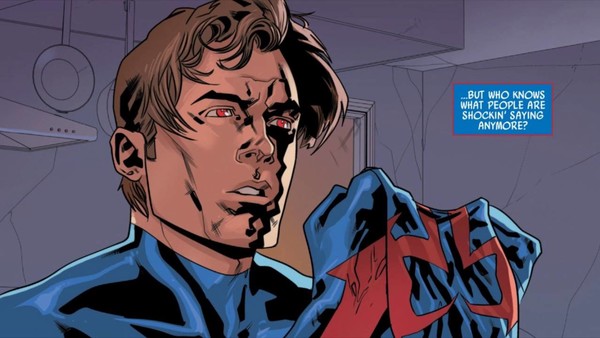
Miguel, his younger brother Gabriel and his mother Conchata were all victims of verbal and physical abuse at the hand of Miguel's father, George. These conditions turned out to be anything but harmless, as they caused Miguel to grow into an angry, resentful adult with a few toxic traits of his own. Traits he would spend years unlearning and atoning for in an attempt to break the cycle.
Worse yet, even after Miguel and Gabriel grew up, and their father was out of the picture, they still had to put up with behavior from their mother that bordered on emotional abuse, which certainly didn't make the healing process easier.
It is this aspect of Miguel's backstory that will undeniably strike a chord with countless Hispanic readers who grew up in a similar situation and often find themselves being told to "get over it."
2. How He Represents His Heritage

There are some people out there who will try to tell you that Miguel O'Hara is not a good example of Hispanic representation because he looked "too white" in his original design. However, this argument doesn't really hold water for a number of reasons.
For starters, fair-skinned Latinos do exist and to pretend that they don't is absurd. Secondly, it's sort of a moot point anyway, seeing as how later redesigns gave Miguel a more recognizably Latino skin tone. And finally, it doesn't really matter what his skin looks like, because he openly represents his Hispanic background in another way: his suit.
As confirmed on the pages of 1992's Spider-Man 2099 #2, Miguel's Spider-suit is actually a costume he bought while visiting his mother's homeland of Mexico for the Día de los Muertos (Day of the Dead) celebration, with the skull on the outfit's chest making this unmistakable.
Admittedly, Marvel could have done a bit better to make Miguel more visibly recognizable as being Hispanic from the off. However, the fact remains that while most other Spider-heroes, and in fact most superheros in general, often have their ethnic background concealed by their costume, Miguel wears his loud and proud whenever he suits up as Spider-Man (which is fairly often, seeing as how, well... he's Spider-Man.)
It just goes to show that while Miguel hasn't forgotten his roots. An while he sets himself apart from other Hispanic characters by challenging convention, he is still very proud of the culture he comes from.
1. His Nuances Represent A More Complex Demographic

A common theme throughout this article has been the fact that Miguel O'Hara is a unique character, in that he tends to eschew many of the norms and stereotypes typically associated with Hispanic characters.
He is undeniably proud of his heritage, but he isn't solely defined by it. He has a unique identity beyond the family he was born into. And therein lies why Miguel ultimately has to be considered Marvel's most important Latino superhero.
Hispanic culture, much like most cultures, is filled with people who don't always feel like they fit in. Maybe their skin is a bit lighter or a bit darker than that of most of their friends. Maybe they don't speak Spanish as well as their peers or family members. Maybe they would rather not attend Sunday mass. Maybe their tastes in music and movies are different than those of everyone they grew up with. Maybe they're told they "aren't Mexican enough" or something to that effect because of these things and feel alienated from their own culture as a result.
Miguel represents Hispanic people, but also represents this more nuanced demographic of lost souls. His story teaches them that they can be proud of their heritage, while also not feeling obligated to conform to everything that is expected from other people of that heritage, be it the stereotypes perpetuated by others or the conventions imposed by friends and family.
And, at the end of the day, that's what representation is all about, isn't it? Embracing what makes us similar, while also celebrating what makes us different in the hope that everyone can feel comfortable being who they are.
Marvel Quiz: How Well Do You Remember Spider-Man: Into The Spider-Verse?
