10 Classic Movies That Only Pretentious People Like
 Whether it's a thirty-something slaving over their grad school film criticism or slouchy couch potatoes who enjoy Criterion Collection's extra features more than the films themselves, there's a considerable number of us "cineastes" (that's what pretentious people who love movies call themselves) who love the movies no one else can love. When you ask what kind of movies we love, we don't reply with action or anything Jennifer Aniston. We'll answer, with confidence, Italian Neo-Realism, D.W. Griffith's silents, the Iranian New Wave, or Third Cinema. I'm starting to bore myself. Whether or not you're a populist; whether or not Steven Seagal's tiny eyes represent the epitome of badassness; whether or not you wish the Hugh Grant rom-coms of yore would resurface with new-found relevance, you're allowed to love the movies you love. And you probably love them even more for having seen the following films, dubbed classics, that you otherwise thought to be the celluloid version of a general anaesthetic...
10. The Last Picture Show
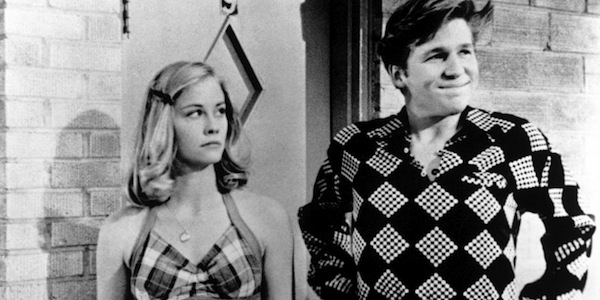 With the introduction of color films in the late 1930's, the signature classic black & white look became obsolete by the late 1960's. Enter: Peter Bogdonavich's The Last Picture Show. There's no better way to make a self-important film than by stripping it of a varied visual palette. Film's like The Elephant Man, Schindler's List, and Good Night, and Good Luck followed the same formula to drive away popular audiences and receive praise from critics and movie snobs alike. But 1970's The Last Picture Show has another thing going for its pompous reel. It's a film about the death of independent, small-town theatres. Taking place in early 1950's rural Texas, Bogdanovich's coming-of-age story is really just a snail-paced tsk-tsk at Hollywood's burgeoning desire to make money. Even Bogdanovich was bored by the prospect of reading the book upon which the film is based. It's obvious Bogdanovich yearns for innocence lost, like any adult worth their weight in angst. The film is about a teenage boy (Timothy Bottoms) who sparks a doomed affair with the lonely, haggard, middle-aged housewife (Cloris Leachman) of his high school football coach. Yeah. Okay. We get it. The new generation is clashing with the old and loses interest quickly. That's the nature of propagation, Bogdanovich. Total Film called The Last Picture Show "stunning" upon its re-release. The kind of stun that knocks you unconscious, right?
9. Picnic at Hanging Rock
 Whenever a director tackles the corruption of innocence, we're lead down a path similar to that of eastern medicine - a minute dosage of that which ails us. Peter Weir is an astute director who understands and conveys feeling and emotion more effectively than most. But in this classic, Weir achieves that effect with hazy greenery reminiscent of Renaissance portraiture evoking Victorian Era prudence. The only thing that happens in Weir's mystery is the disappearance of three girls. For the most part, they don't reappear. And you certainly don't get an answer as to why. So what's all of the hullabaloo about? For film lovers, Picnic At Hanging Rock is an experiential film. My dog ran away on Easter once. I found that to be a more experiential experience than the lingering shots and penetrating, ethereal sunlight that supposedly exude divine enigma in Weir's film.
8. The Birth of a Nation
 If you love D.W. Griffith's 1915, 3-hour-plus silent epic about the U.S. post-Civil War South, you've got to be proud that you're seeing something the rest of us aren't. Yes, Griffith made the movies into a grand experience with complex story telling, and technical wizardry to match it. But classic may be a term better used for a movie that the internationally recognized hate group Ku Klux Klan doesn't use as propaganda in support of its race-hate manifesto. Few movies so unapologetically give credence to the archaic, unfounded theory of white superiority. And there's an even smaller amount of films like this one that are held in such high esteem. You'd have to be really in love with the making of a film to overlook its content. Do you respect Hitler because he was a charismatic leader? Yeah, I went there. I can forgive content given its filmic significance and influence. But The Birth Of A Nation is just too damned long to be sat through in this day and age to walk away from a proper viewing (without the distractions of the internet) and think, "My oh my, that was a fine film." You know you're pretentious if you walked away from this film at all. Did you know the average person burns 200 calories sleeping for 3 hours?
7. Solaris
 The 1960's and 1970's had a rash of sci-fi films that, up until 1977's Star Wars, were meditative, psychological thrillers. Evocative of the cocaine and acid-addled decade, most of these movies feature trippy, psychedelic sequences in which no one really knows what's going on or why. Well, no one unless you talk the arrogant know-it-alls that make watching these kinds of classics unappealing. It's no surprise that the guy who directed equally pretentious snooze-fests like The Mirror, Andrei Rublev, and Offret would craft a mind-bending, nay, mind-numbing movie. Solaris is the name of a planet whose body of water is presumed to be a thinking entity. And this body of water is a heck of a lot smarter than you, so good luck trying to understand the movie about it. Perception is reality in Andrei Tarkovsky's Solaris. He said it's about grief and loss, and I completely agree. Grief over losing valuable time otherwise spent playing stick ball.
6. Anything Ingmar Bergman
 Personally, I'm a huge fan of Bergman. But let's be honest, Bergman is condescension corporeal. The famed Swedish director is obsessed with death, the fear of death, the death of love, the love for death, God's death, and life after death. Bergman has arguably contributed one of the most expansive oeuvres to the standard film classics. Wild Strawberries, The Virgin Spring, Fanny And Alexander, Persona, Cries And Whispers, The Seventh Seal, Scenes From A Marriage, Winter Light, etc. Each of these films is thought to be a classic. But all of them have crucial qualities of pretension in common. Bergman, a pessimist who longs for optimism, made films wrought with dry, meditative dialogue - the kind you would find in a university's humanities course. And although he had a flare for eery moments of transcendence, you have to wade through a bevy of familial conflict and tedium before you can feel feelings. With a body of work held on an esoteric pedestal, the classics of Bergman aren't for everyone. In fact, they're pretty much meant for the select, pretentious few.
5. Saló or 120 Days of Sodom

4. Eraserhead
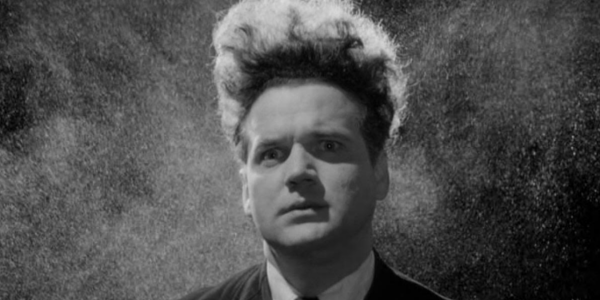 When you meet someone who loves David Lynch you've met someone who knows something you don't. Lynch burst onto the scene with his eery, black & white nightmare, Eraserhead. And the world of conceptual artistry would never be the same... it would be far more repulsively exclusive than anyone could have ever imagined. IMDB.com's plot description is as follows: "Henry Spencer tries to survive his industrial environment, his angry girlfriend, and the unbearable screams of his newly born mutant child." Someone got something out of it. Eraserhead, for all intents and purposes, is actually about making the audience feel like they missed out on something. You know when your friend starts to explain their dreams or nightmares to you and you take that opportunity to think about bills you have to pay and whether or not you cleaned your ears this morning? On default you say things like "That's so weird!" and "Crazy!". Your brain goes to the mental washroom while some faceless copilot takes the helm. Yeah, that's like watching Eraserhead. No, Mr. Lynch, most of us don't really care about your REM sleep, nor do we really understand it. I'm perfectly content leaving the drooling, Swimfan-ian adoration to contemporary art students and people who own both DVD & Blu-Ray versions of every movie in the Criterion Collection.
3. 8 1/2
 What's more pretentious than a movie made by a man, for a man, and about a man who thinks his movies are too pretentious? Federico Fellini made this self-deprecating movie about a movie director who knows he's full of it. He's a man in love with women who love him. And while he can't get enough, it's all too much. Fellini thought he would shatter his own image by immortalising it in a semi-autobiographical, surrealist film from the perspective of a man who escapes the obstacles of film making by retreating into fantasies and memories. The end result of Fellini's efforts is a masturbatory piece enshrined by his contemporaries and subsequent auteurs alike. Finally, a man who captures our plight! What we're left with is a classic, espoused by film experts as one of the essential films that caters myopically to straight male film directors and leaves pretty much everyone else wheezing and teary-eyed in their self-satisfactory dust.
2. 2001: A Space Odyssey
Arguably Stanley Kubrick's definitive work, 2001: A Space Odyssey is an epic journey through the silence and sterility of space and the dangerous implications of technology. Like so many movies after it, 2001 is really all about humanity's mortality pitted against the intelligent design of our own creation: the computer. Although 2001 is a beautiful and powerful movie, it has all the components of a "timeless" classic that alienate itself from the laypeople. The first 30 minutes we watch what is supposed to be the dawn of man. What we really see is a bunch of men acting-a-fool in chimp suits, playing with animal bones in the desert when suddenly a black monolith appears, all set to Aaron Copland's Fanfare For The Common Man. How profound. After what seems like hours of various classical symphonies played over long, long, long takes of space and people walking upside down in monochromatic space suits, the main computer, HAL 9000, goes haywire and succumbs to the hands of space pilot Dave while singing A Bicycle Built For Two. What follows is a psychedelic acid trip through Willy Wonka's tunnel that lasts for a good 20 minutes. Beautiful and creepy? Yes. The makings of a classic? Only to those with their noses held haughtily to the sky.1. Citizen Kane
 News Flash! Citizen Kane Tops Another List! The movie that's at the top of every film critic's list; the pinnacle of every film institute's filmographic retrospective; every director's greatest influence, Citizen Kane takes the top spot on 10 Classic Movies Only Pretentious People Like because, well, only pretentious people like it. Orson Welles starred, directed, and produced the film that may or may not have changed film forever, depending on which chairman of which academy you talk to. He's the director that every director wants to be - the man with the controls firmly in his (what I imagine to be) sweaty palms. The fact of the matter is Citizen Kane isn't an unenjoyable movie on the whole. The beginning bang is an accessible newsreel of Kane's life story before we see it play out over the course of the film. And the movie is fast-paced--something anyone in the Information/Attention Deficit Age can appreciate. But it (d)evolves into a noir mystery--and what's that mystery? Why Kane said "rosebud" on his deathbed. The film drags on and on while we sit on the shoulders of reporters in search of the significance of a dying man's final word. And what do we get in return? A burning sleigh. This is the greatest film of all time? Like this article? Let us know in the comments section below.