10 Horror Movies Based On True Stories (That Were All Lies)
Based on a completely made up story...

"Based on a true story." Those words alone can be all it takes to convince moviegoers to check out a feature. After all, a film should be more riveting, not only if it could happen but if it already has happened. And if a slasher, creature feature, or a possession drama is classified as non-fiction, it's sure to amplify the scares exponentially.
What's interesting about horrors inspired by real events is how they can entice people to check them out, even if they don't normally gravitate towards the subject matter. If you had no belief in alien abductions, demons, or ghosts, you still might be intrigued by a paranormal or sci-fi flick that's been historically documented.
Of course, there are times where "based on a true story" is nothing more than a turn of phrase. After doing a little digging, it's obvious the events surrounding these so-called biographies are greatly exaggerated or 100% fabricated.
More often than not, there simply isn't enough evidence to substantiate the claims made in the film in question. Other times, the people which the movie is centred around have publicly admitted their wild claims were all lies.
Just to be clear, there's nothing wrong with a true-story feature taking a few liberties for the sake of entertainment. However, the entries on this list made so many embellishments, they're more fantastical than biographical.
10. The Entity
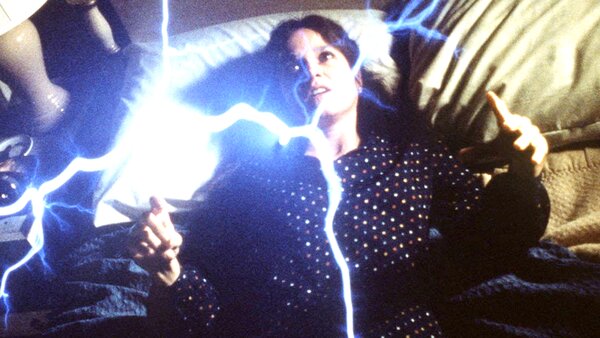
Sidney J. Furie's chilling horror centres around a mother called Carla Moran who finds herself being regularly attacked and sexually assaulted by an invisible force. The Entity was adapted from the 1978 book of the same name, which was based on the life of Doris Bither.
However, Doris' name wasn't the only thing changed for the movie. Though Carla is portrayed as a composed, single mother, Doris struggled with substance abuse, had a traumatic upbringing, and lived in a condemned house with her four children at the time of the reported haunting.
Though Doris' film counterpart acknowledges she's suffered psychological damage since childhood, this plot-point is quickly swept under the rug. Obviously, these elements were omitted or toned down so claims surrounding abusive ghosts or demons seem more believable.
Although the investigation in The Entity is meticulous and methodical, the study conducted in real life wasn't scientifically structured at all, mostly relying on anecdotal evidence. Though the poltergeist assaults are witnessed on several occasions throughout the movie, nobody associated with Doris saw these attacks being carried out.
Also, it goes without saying the parapsychologists didn't try to capture the non-corporeal creature with a freeze ray, as is depicted in The Entity.
9. The Serpent And The Rainbow

Wes Craven's folk-horror is based on an investigation by ethnobotanist, Wade Davis, who ventured to Haiti after hearing about a dead local, Clairvius Narcisse, who was resurrected as a zombie through Voodoo.
As fascinating as this premise is, almost every aspect of Haitian culture is grossly inaccurate, since zombies and resurrection aren't a part of this spiritual practice. Voodoo focuses on healing, not summoning evil spirits and malevolent forces, as is depicted in the film.
Then there's the investigation itself. Although the real Wade Davis tried to find a logical explanation for Clairvius' alleged resurrection, The Serpent and the Rainbow only offers one explanation: black magic. Davis believed a paralytic poison called tetrodotoxin was used to place Clairvius and other Haitians in a mindless state, akin to the undead. But in the movie, it's believed the plant itself turns people into literal ghouls.
Though Davis' theories sounds reasonably grounded, pharmacological experts thought his findings were nonsense, to the point where were classified as "scientific fraud".
Taking all that into account, it's safe to say The Serpent and the Rainbow is pure fantasy from beginning to end.
8. Winchester
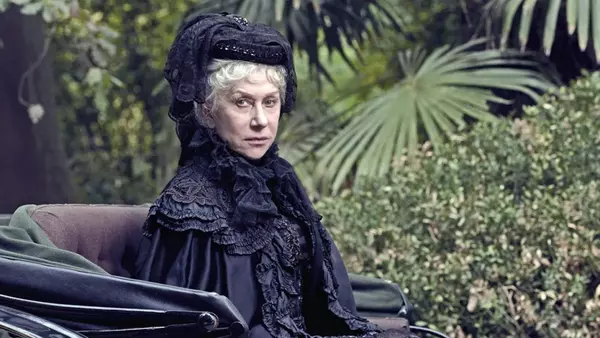
During the late 19th century, Sarah Winchester inherited the firearms company, Winchester Repeating Arms Company fortune. Following the deaths of her husband and daughter, she became consumed by grief and spent the last 38 years of her life turning her mansion into an elaborate and non-sensical labyrinth.
Although these historic elements are portrayed in 2018's Winchester, accuracy is a word that shouldn't be associated with this horror drama. Though it's been theorised Sarah restructured her home to confuse or trap ghosts, her friends, associates, and employees said she never came across as superstitious. She was deeply troubled and eccentric, but didn't behave deranged like her movie counterpart. Also, the plot-point that Sarah is being tormented by spirits who died from her husband's rifles stems from an urban legend.
Also, many stories centred around Sarah were concocted to jazz up her home after it was converted into a tourist attraction. For example, the real-life tour guide claims Sarah had a special room for nightly seances (as is depicted in the film). But not only did this never occur, the room in question belonged to Sarah's gardener.
Sarah Winchester's life was marred with such grief and tragedy, this feature could've been a gripping character study, even without the spooky elements.
7. The Possession

In Ole Bornedal's body-horror, a young girl called Em purchases an antique box at a yard sale. When Em becomes obsessed with the ornament, her father investigates its origins, only to learn it houses a wicked spirit called a dybbuk.
The Possession draws inspiration from a cursed wine cabinet called The Dybbuk Box, which became a viral sensation when Kevin Mannis sold it on eBay in 2003.
Not only is the film frightening, the production itself was creepy, since the actors, the producer, and the director claimed there were besieged by freak accidents during production, including exploding lights and an entire storage unit being burned to the ground (which included the Dybbuk Box prop).
However, it's unlikely the production was being plagued by evil forces since The Dybbuk Box never existed. In a 2019 interview with Skeptical Inquirer, Kevin Mannis confessed he concocted The Dybbuk Box's sinister backstory. To verify his claim, he said he'd pay anyone $100,000 and tattoo their name on his head if they could find any reference to the Dybbuk Box prior to his eBay post.
Nobody has taken Mannis up on his challenge so it's safe to say the tales surrounding The Dybbuk Box are bogus.
6. The Texas Chain Saw Massacre

One of the central reasons why The Texas Chain Saw Massacre left such an impact was because it was promoted as a true story. The opening narration states the film serves as an account of a real tragedy, suggesting Leatherface and his cannibalistic family really did terrorise a group of teens with chainsaws and meat hooks.
However, there's only one aspect of Tobe Hooper's masterpiece that's based on reality. The main antagonist, Leatherface, wears a mask crafted from human skin, much like real-life murderer, Ed Gein.
But that is where the similarities end. Gein never used a chainsaw in his crimes, lived in Texas, or committed murders in the same manner as Leatherface and his family. Most importantly, Gein wasn't a cannibal.
It's worth mentioning Gein was the main inspiration for Norman Bates in Psycho and Buffalo Bill in The Silence of the Lambs. Despite the fact these villains had more similarities to Gein than Leatherface, neither film was labelled as a biography.
Even though Gein took part in many disturbing acts, virtually none of his behaviour was implemented into The Texas Chain Saw Massacre. As a result, referring to the 1974 classic as a true story is a bit of a reach.
5. The Fourth Kind

Although the phrase "based on a true story" should be taken with a pinch of salt, The Fourth Kind looked believable, despite the far-fetched premise. In this found-footage thriller, Dr. Abbey Tyler (Milla Jovovich) heads to Nome, Alaska to investigate people who went missing shortly after they were abducted by aliens.
Though this type of story has been done to death, the trailers emphasised The Fourth Kind used archival footage of proclaimed abductees, which should've made the testimonies in the film more authentic.
Despite what the marketing implied, the "archival footage" were re-enactments carried out by actors. What's worse is these sessions aren't convincing, so they come across as cringey or unintentionally comedic, when they should be terrifying and heart-wrenching. Also, this kind of research was never conducted since Abbey Tyler didn't exist.
Even though the story is based on a historic investigation in Alaska, the real FBI report was very anticlimactic. According to all available evidence, the culprit behind the 24 missing persons was the subzero temperature. Nome can get as low as -40 degrees Celsius during the winter, so it's not too hard to believe two dozen people froze to death over the last few decades. That explanation may sound mundane, but it's more likely than what's depicted in The Fourth Kind.
4. The Exorcism Of Emily Rose

Scott Derrickson's directorial debut follows the trial of Father Moore (Tom Wilkinson), who was accused of negligent homicide after a young woman named Emily Rose (Jennifer Carpenter) died during his exorcism.
Although the majority of possession films focus on the supernatural, The Exorcism of Emily Rose is surprisingly grounded. Most of the story takes place in a courtroom, playing out more like a legal drama than a paranormal flick. Since it takes a surprisingly realistic approach to the matter of hand, viewers may assume there's more truth to the story than what's usually conveyed in the genre.
But that's not the case. The Exorcism of Emily Rose was inspired by a German woman called Anneliese Michel, who underwent a whopping 67 exorcisms before succumbing to malnourishment.
Despite the fact the film emphasises the titular character was terrorised by numerous demons, all evidence indicates Anneliese endured a terrible mental episode, since she suffered psychosis, depression, and temporal lobe epilepsy for seven years.
Even thought the Catholic Church have a dense record of each exorcism, they dismissed this case, stating there was insufficient evidence that Anneliese Michel was possessed.
3. The Amityville Horror

Inspired Jay Anson's novel of the same name, The Amityville Horror is one of the most iconic haunted house stories ever. With that said, the 1979 classic is often seen as the go-to example that "based on a true story" doesn't mean much.
The Amityville Horror begins with George Lutz (James Brolin), his wife, Kathy (Margot Kidder), and their children moving into a house where former resident, Ronald DeFeo Jr, murdered six family members.
Now, this aspect of the story is completely true. However, the historical inaccuracies don't go any further than that. The rest of the movie plays out as the Lutzs claimed, with the family abandoning their home within 28 days after being attacked by devilish forces. During their monthly stay, the family stated they saw green slime oozing on the walls, objects levitating, and a red-eyed demon.
However, there's no physical evidence, photos, or recordings of these occurrences. The neighbours never saw or heard anything unusual during the Lutz's stay nor were there reports of demonic occurrences in the house before or since.
While being interviewed by People's magazine, DeFeo Jr's defence attorney, William Weber, stated he helped the Lutz invent the haunting story over "many bottles of wine” as a potential money-making scheme. Most damning of all, George Lutz's own stepson, Christopher Quaratino publicly claimed the haunting was falsified.
Even though the story has been adapted into over 40 films, there doesn't seem to be any truth to The Amityville Horror whatsoever.
2. The Haunting In Connecticut

In The Haunting in Connecticut, Sara Snedeker and her family move into a former funeral home to be closer to a hospital for her son's cancer treatment. Over time, Sara discovers the house has ties to black magic, causing souls to bind to her home.
Rather than just dealing with insidious spirits, Sarah finds credible evidence that satanic rituals and necromancy have been performed in the ex-mortuary. Worst still, she uncovers hidden rooms filled with sinister artefacts and desecrated corpses. Even if there there was no evidence of the supernatural, finding cadavers and Devil-worshipping paraphernalia in your house is pretty messed up.
As such, it's underwhelming to learn these genuinely unsettling elements were invented for the film solely to elevate the tension and scares. On top of that, many claims made by the Snedekers originate from Ray Carton's book, In A Dark Place: The Story of a True Haunting, which he admitted was fictionalised, due to wild inconsistencies in the family's accounts.
Other outlandish tales surrounding the house were pushed or fabricated by a pair of famed parapsychologists, whom you may have heard of... which brings us to our next entry.
1. The Conjuring (Franchise)
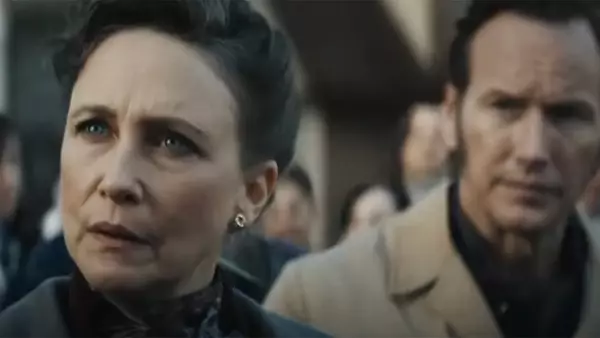
Self-proclaimed demonologists, Ed and Lorraine Warren, investigated a myriad of famous hauntings throughout their prolific careers, which have been depicted in The Conjuring (and several films on our list).
In the first Conjuring, Ed and Lorraine investigate a house in Rhode Island owned by the Perron family, which was supposedly cursed by a witch.
Carolyn Perron swore she had paranormal experiences in her home, but there's no evidence to back it up. The exorcism the Warrens perform never occurred since the practice can only be conducted by a Catholic priest. Furthermore, nobody has ever reported the Annabelle doll doing anything abnormal except the Warrens. (Also, the real Annabelle was a Raggedy Ann.)
The Conjuring 2, which focuses on The Enfield Poltergeist, takes further liberties than its predecessor. Even though the Warrens take centre stage in the story once more, they were barely involved (except to tell the family they could make money from the story). Skeptic investigator, Joe Nickell, stated all the spooky going-ons in the case were nothing more than unconvincing pranks.
The Conjuring: The Devil Made Me Do It revolves around the first legal case in US history where a defence sought their client's innocence by pleading he was possessed. This sequel establishes this was the central defence of the accused despite the fact the real judge dismissed this claim outright. Also, the scenes of Ed nearly dying, the Warrens finding evidence of demonic cults, and encountering ghosts were nothing more than Hollywood inventions.
Factoring in the Warrens' highly questionable methods and propensity for confirmation bias, it's best to view The Conjuring as pure entertainment, nothing more.