Godzilla 2: 10 Ways To Make Sure The Sequel Is Better Than The Original

Why can't Godzilla facepalm like the rest of us?

When the first trailer for Godzilla showed us a stressed-out Bryan Cranston, an epic skydive followed by red flares, and two doors closing as we see an impossibly large beast roaring right at us, audiences felt they were in for quite a treat. After over a decade, the bad taste left by the previous American Godzilla film in 1998 had faded away and the franchise could start anew. This was bolstered by the hiring of Gareth Edwards, director of the low-budget yet highly acclaimed sci-fi film Monsters. Altogether, this seemed like a dream project. But - often like real dreams - audiences woke up to a sober reality once they saw the finished product. While still considered better than the previous American effort, this Godzilla has broken the fanbase down the middle. Some say it's a worthy addition to the Godzilla canon, while others feel it's yet another failure. Those on the latter end point to almost every aspect of it failing in some manner: Godzilla was too fat, the heroes too white, etc. Even those in favor of the film seem to be stingy in praise. Alas, since this film was a large box office draw, we will see another film in Edwards' Godzilla canon. With that in mind, let's speculate how he and everyone involved can turn this initially lacking series into a winner. If you have suggestions about how the sequel could be better or - gasp - a defense of the first film, feel free to comment below!


10. Why So Serious?

Those seeing the trailer for Godzilla probably expected a more sober affair. With the casting of Bryan Cranston, one would assume the producers wanted to add some gravitas to the feature. Which would have made sense in a film that centered on Godzilla as a natural disaster and not as Rocky Balboa. The film relies so heavily on the "superhero" version of Godzilla that it almost feels like a cheat that he's in the same film with a man seeing his wife die, the army being massacred and several civilians being crushed to death. Say what you will about 19958s Godzilla, but at least it's tone was consistent throughout: a giant monster attack is pretty damn silly when you think about it. Assuming the next film continues in the "Godzilla vs (insert here)" tradition, the least they could do would be to have some fun with it. By the end of the first film, we see that the news has dubbed Godzilla a savior, complete with a praising banner. Imagine how funny it would be if Godzilla becomes a pop culture phenomenon. Little kids wear Godzilla hats. Godzilla gets a cartoon show. Godzilla appears in McDonald's ads eating a Big Mac. The film could make a humorous commentary on Godzilla's real-life fandom. More importantly, lightening up the tone could further ingrain fans of the overall franchise and casual moviegoers.

9. The People's Godzilla

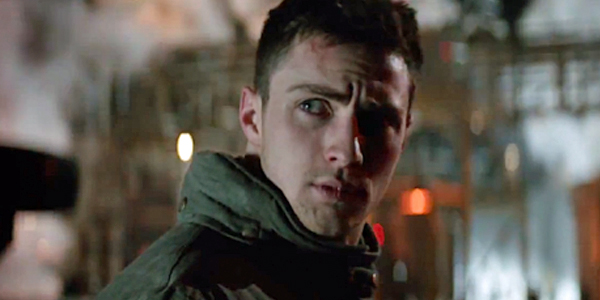
Despite the human characters being of nominal importance, the true protagonist for most fans is Godzilla himself. Some didn't mind Aaron Taylor Johnson but nobody wants to see a film about G.I. Kick-Ass, despite how cool that sounds. As such, shouldn't Godzilla have some kind of personality? Obviously he can't speak but he can at least emote physically. It wasn't uncommon for other kaiju films to depict Godzilla face-palming or shaking his head. The sequel doesn't have to go that far: something as simple as eye movement or posture could tell us what state Godzilla is in. Most versions of King Kong managed to communicate the innocent nature of Kong through his facial expressions, which made audiences genuinely sad when he dies. This is because we understood the creature. In Godzilla, Ken Watanabe's character has the utmost faith in Godzilla as someone who will defeat the Muto for the sake of mankind. This is in spite of the fact that we had never seen Godzilla do anything to establish his goals as a "hero". What makes Watanabe so confident in his heroism? How does Godzilla display his feelings to the world? That's a question that needs to be answered for us to have faith in him as well.

8. The Devil You Know

When most people saw the initial scenes from Godzilla and saw an insectoid appendage emerging from something, one would assume that they either blocked it out mentally or at best assumed it was one of Godzilla's stranger rivals. Otherwise, why would a Godzilla film introduce a brand new monster that would only serve to confuse audiences? Gareth Edwards and Co. seemingly didn't consider this confusion when they introduced the oddly named Mutos. While they weren't necessarily bad-looking beasts, given that the film was clearly meant to be in the vein of the Vs. movies it would have made sense to actually see one of Godzilla's classic villains. Even casual fans recognise Godzilla's past arch nemesis King Ghidorah, a triple-headed space creature that starred in eight films prior. Even Battra - Mothra's evil counterpart - could have been sufficient as an insectoid stand-in for the Mutos. The next film could compensate by using one of these guys as an antagonist. Ghidorah would fit the best, since he's often considered the strongest beast to face Godzilla. He'd be a greater threat than the Mutos, since Ghidorah actually intends to kill people during his raids on the Earth. Rather than just running into him at inconvenient times, Ghidorah forces Godzilla to be an active protagonist. Not to mention it opens up the realm of space monsters, which could lead to other space villains and possibly even Space Godzilla!

7. Show, But Also Tell

Modern sci-fi has a tenuous relationship with exposition. Traditional sci-fi authors like H.G. Wells and Robert Heinlein pretty much spent a chapter explaining how the rules of their world work. While this works for introducing unfamiliar concepts, it grates on modern audiences - for good reason. If done poorly, exposition is boring. Worse, it could distract from an engaging story. We assume this is why the film didn't really explain much about this version of Godzilla. Presumably, audiences already know that he was awoken through nuclear testing, so that explanation could be mentioned offhand. Except in this case, leaving out Godzilla's history leaves way too many questions. Why would he help humanity after being attacked in the 50's? Has Godzilla attacked before? Is Godzilla really the embodiment of nature? Obviously, nobody wants to hear Ken Watanabe dryly explain these things for a half hour, but even a flashback to his first appearance would elucidate some elements. The flashback doesn't even have to be during his 1954 appearance; we could see Godzilla appearing before prehistoric man or the dinosaurs. Godzilla could have somehow connected with humanity during our prehistory. Maybe Godzilla even destroyed the dinosaurs to save humanity, thus establishing his role as a hero. Given that Godzilla is firmly a hero in this continuity, they should establish his role in world history.

6. Godzilla On The Ropes

When most non-gamers play Street Fighter, they tend to pick Ryu. When most Americans have to choose a fast food restaurant, they choose McDonalds. When people go to a film with freaking Godzilla in the title, they place their bets on freaking Godzilla. It's hard to beat a guy with God in his name. Due to this, it's necessary that the Godzilla sequel should at least suspend our disbelief of Godzilla's superiority long enough for us to be concerned. The first Godzilla film portrayed every battle before the climax as inconclusive; we see him confront the Mutos but we can't see who has the upper hand. While I assume the goal was to save the "real" battle for the ending, this tactic didn't so much build tension as it just stretched out the inevitable. We KNEW Godzilla was going to win, but at least they could have made it look difficult. In the upcoming film, this could be alleviated simply: have his first encounter with the antagonist be a failure. What better way to create tension for an audience than to show the titanic Godzilla get defeated by a stronger opponent? The first film establishes Godzilla's ability to innovate in combat, so this would illustrate how the monster learns from his failures and comes back stronger.

5. Say Hello To The Bad Guy(s)

Before anyone gets worried: no i'm not suggesting that the Godzilla sequel become the Batman and Robin of Kaiju film. There should be a chief antagonist for Godzilla just like most films. What i'm suggesting is that there are more things for Godzilla to fight in the meantime. If the villain of the film has to be saved for the final battle, it would make sense if either another monster or several smaller threats challenged Godzilla until then. Since the first film waits so long for a decisive battle, Godzilla has few satisfying moments of destruction before it's climax. No one wants to wait till the last half hour for Godzilla to be a badass. The other enemies could be underlings of the villain: perhaps King Ghidorah has smaller children which could prove a nuisance to Godzilla. The other enemy could even be humanity: it's not hard to imagine that the reveal of Godzilla would attract several groups that might try to destroy or capture the monster. Instead of just making it another "lets all try to shoot Godzilla" movie, humanity could actually pose a threat by creating tech to rival the beast. Imagine a film where the Japanese government - terrified of the power of Godzilla - creates an artificial beast strong enough to fight him. This would be a great way to introduce a character like Jet Jaguar - an equally large robotic humanoid - as a counter to Godzilla. Not only would that be another nod to the franchise's quirky history, it could even turn into a team-up if the two end up facing a greater threat.

4. Godzilla - Defender Of Earth

Blue Oyster Cult's Godzilla song asserts that "history shows again and again how nature points out the folly of man", referring to the monster himself. Despite being partially created by nuclear energy in the 1954 film, Godzilla is constantly implied to be nature's reckoning for humanity's unnatural activities. Ken Watanabe echoes this feeling as he muses that "The arrogance of men is thinking nature is in their control and not the other way around". The trailer took this even further by comparing Godzilla to the Hindu deity Vishnu by quoting his famous assertion "Now I am become Death, the destroyer of worlds". Wow, this all sounds really meaningful... except that none of this stuff really pays off as Godzilla seems to have no more of a "divine mission" than the Mutos. We aren't told that the Mutos are products of science or human tampering, so they're no more unnatural than Godzilla himself. If the series wants to play up Godzilla as a divine being of nature, his antagonist should somehow represent something diabolical and unnatural. For example, the smog monster Hedorah was an alien life-form which arrived on Earth to feed on its pollution. It's basically the Captain Pollution to Godzilla's Captain Planet. Whereas Godzilla enforces ecological equilibrium, Hedorah literally feeds off of the degradation of Earth. Rather than just being a giant bug monster, Hedorah embodies the evils humanity have wrought upon nature, making him a worthy opponent for Earth's protector.

3. Godzilla/Human Relations

One of the biggest issues films with non-human protagonists have is that non-humans are hard to relate to. This was/is an issue with the Transformers film series, which had humans with equal or more screen time just so the audience could feel connected to the story. This has the unfortunate side effect of stealing focus from the characters we care about: the actual Transformers. While this wasn't an issue in the original Godzilla film where he was a villain, the recent film has a protagonist whose plot is totally unrelated to the monster. Any screen time spent with him had no bearing on Godzilla as a character, which made many feel as if his scenes were a waste of time. The next film could remedy this by having a human either attempt to work with Godzilla or at least be interested in it. While the idea of Godzilla having a little buddy sounds a bit corny, it's not as if this hasn't happened before. The American Godzilla animated series focused on a monster-battling research group that used the spawn of Godzilla to fight various threats. The hero was the scientist Nick Tatopoulos from the 1998 film, who legitimately wanted to foster the beast and not just use him as a weapon. If the next film is unable to have as much monster-battling as rabid fans want, it can at least give us a hero who has a close connection to Godzilla. And not in that way, you pervert.

2. Let There Be Light

Unlike most of these suggestions, this one is more about visuals than story. Particularly the literal darkness that engulfs the film. Pretty much any scene with the Mutos or Godzilla is completely dark or filled with particle effects that obscure the monsters. While this is at first meant to build up tension for the eventual reveal, Edwards' incorporated this into EVERY scene with the monsters. Even the climax! This isn't helped by the fact that the screen never manages to fit in Godzilla's whole body, so we're never really sure what his entire body looks like. Before the film was released, an article on Vulture.com relayed that Edward's goal with the revealing of Godzilla was "to tease them. It€™s kind of like cinematic foreplay". And just like any overdone foreplay, by the time Edwards was about to do the deed, the audience had already lost interest. We understand the need for build-up, but if half the movie is over and we haven't fully seen the main attraction, the tension has already been lost. The thing about darkness is that it often obscures lurking dangers. This is why Michael Myers being in the shadows is scary; you never know when he might strike. The point of Kaiju is that they're BIG. They're natural disasters; you can't hide a tidal wave or an earthquake. As such, the next film should emphasize the scale of the monsters by having more scenes in broad daylight. Imagine a scene where an approaching monster blots out the sun for several city blocks. Rather than the monsters being hidden, they'll be something un-ignorable and - more importantly - unavoidable.

1. Holding Out For A Hero

Despite how divided Godzilla's fanbase is over the film's elements, probably the most consistent complaint is about it's hero. Do we personally have a problem with Lt. Brody? Not really; Godzilla films aren't known for their compelling human characters. For many, however, it was the biggest reason the film failed to entertain. The character's motivations are unclear and the actor doesn't seem to understand where his personality lies. It results in a bland protagonist: his father's death, which should be by far the most emotional scene in the film, seems to barely register on the face of our hero. When he goes after the Mutos, we never get a clear idea if he's looking for revenge or just simply doing his job. This is probably the primary reason his journey is so uncompelling; we should know how exactly our hero feels. Compare this to the character Daisuke Serizawa in the original film: he's the only man who holds the weapon that can defeat Godzilla, but worries over whether or not to use it. It's not out of cowardice; he fears that the weapon would be so effective that governments would be compelled to replicate it. When he finally does use it against Godzilla, he kills himself so that no one can know his secrets. Despite being a monster movie, the protagonist had an equally compelling motivation and conflict. Not only was it understandable, it reflected the larger real life issues of the film, which in this case was nuclear escalation. While we're not saying Godzilla's human protagonists need to be politically aware, their concerns and motivations should be grand in order to justify sharing screen time with a city-destroying monster.

Contributor
Contributor

I'm a nice dude, with some nice dreams See these ice cubes, see these Ice Creams? Go to http://blackcomicguy.wordpress.com/ to read some of my thoughts on comics, film and television.