The Hobbit: The Battle Of The Five Armies - 5 Reasons It's Awesome (And 6 Why It Sucked)

The final Hobbit satisfies... but not without some stumbles.

Though it hasn't yet released in the U.S., the final entry into Peter Jackson's Middle-Earth franchise, The Hobbit: The Battle Of The Five Armies, has already hit cinemas in over half the world. The consensus? After 54 reviews, it's sitting at a good-but-not-great 70% on Rotten Tomatoes, keeping it firmly in step with the two previous Hobbit movies. Jackson gives fans of the series a solid send-off, jam-packed with action and helping bring things full circle, though it's also a far cry from the brilliance of the director's Rings trilogy, and pretty much pales in every way that a movie could. Simply, it's one of the year's biggest mixed bags as far as entertainment value goes: on one hand it's still thrilling to a point and can't help but muster some emotion, but it's also weighed down in several key areas, and some of the technical choices Jackson has made were clearly huge mistakes in retrospect. If you loved the last two Hobbit movies, this will likely leave you satisfied enough, and if you hated them, then this'll do nothing to change your mind either. It's a perfect summation of everything these movies represent, both as an adaptation of Tolkein's work and as a reflection of Hollywood greed at its most aggressive. Here are 5 reasons The Battle Of The Five Armies is awesome, and 6 reasons why it sucks...

5 Reasons It's Awesome...

5. Smaug Destroys Laketown
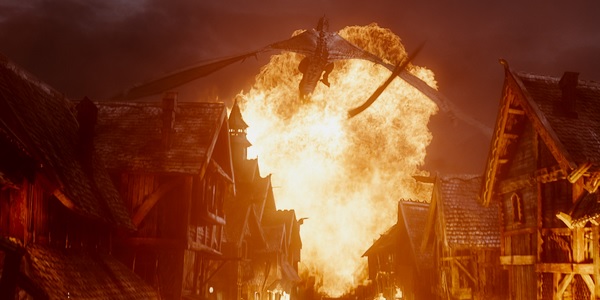
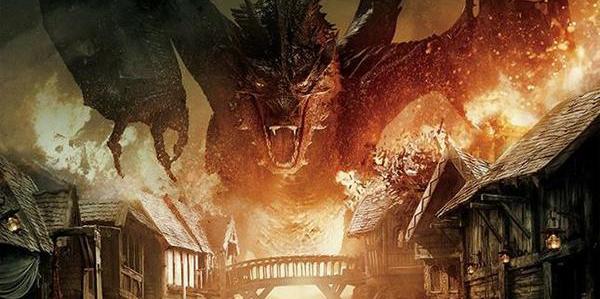
The Battle Of The Five Armies opens in spectacular fashion, wasting absolutely no time in depicting Smaug's (Benedict Cumberbatch) destruction of Laketown, burning it to a crisp in what is easily the movie's most technically sound display. It's a superb way to start the movie, as it provides plenty of hope that the flick will be 144 minutes of pure pay-off, and though this isn't the case, it at least doesn't waste more time building up Smaug's assault. The scene arguably doesn't last long enough, and Smaug is perhaps killed a little too easily by Bard (Luke Evans), but it's still a supremely bada** moment, with some exemplary visual effects giving this movie the strongest intro sequence of the three Hobbit films.

4. Bard Steals The Show

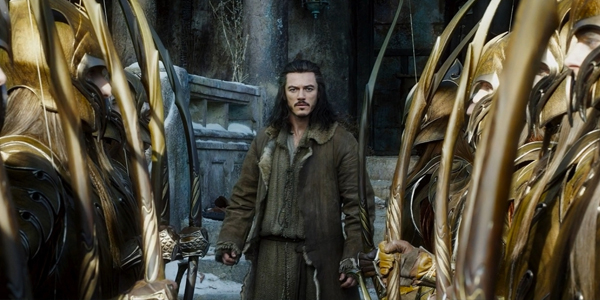
Though Bard was already introduced as an extremely likeable presence in The Desolation Of Smaug, he becomes easily the most entertaining character in the third and final movie, and it all begins once he breaks free from his imprisonment by the Master of Laketown (Stephen Fry) and kills Smaug with a black arrow given to him by his son. Bard then becomes the reluctant de facto leader of Laketown's survivors, and proves a voice of reason when attempting to forge an alliance with the Elves and Dwarves. In the first half of the movie prior to the titular battle taking place, Bard hogs much of the screen time and frequently wins a greater focus over protagonist Bilbo (Martin Freeman), and as such it's easy to feel that Bard is really the protagonist of the piece in more ways than one. He's more bada**, more charming, surely better looking and simply, Luke Evans is infinitely more watchable than Martin Freeman in this movie. Perhaps this reflects a failure on Jackson's or Freeman's parts, or merely that Evans is so brilliant in the role that he can't help but own pretty much any scene he's in. Needless to say, his fine work here will give the up-and-comer another fine career boost.

3. It's The Shortest Of The Six Movies
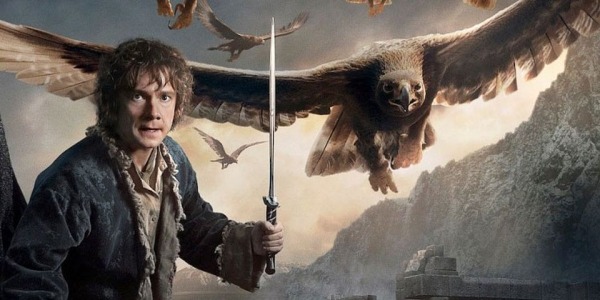
Fans the world over rejoiced when it was announced a few weeks ago that the final Hobbit movie would be clocking in at a "mere" 144 minutes, leaving it roughly 20 minutes shorter than any of the other 5 movies in the series, and a whole 57 minutes shorter than the 201-minute conclusion to the original Rings trilogy, The Return Of The King. Many expected that The Battle Of The Five Armies would, as the finale to the entire Middle-Earth franchise, likely run in at a similar length to Return, but after squeezing one movie's worth of content into three, Jackson apparently couldn't wring anymore time out of the story, and mercifully kept this one short for the standards of the franchise. As mentioned, it's clear that Jackson isn't messing around from the opening Laketown sequence, and though there's still the feeling that PJ could have cut it down even further to perhaps 130 minutes, it's easily the most tolerable of the three Hobbit movies as a result, with the action-to-dialogue ratio being pretty close to equal.

2. The Final Battle

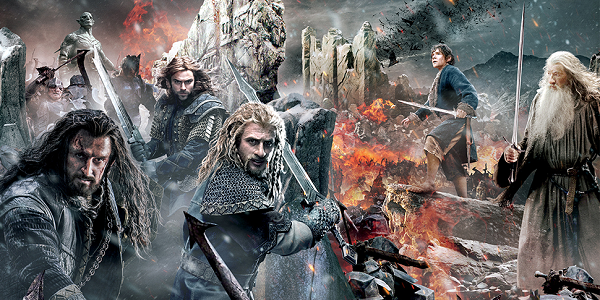
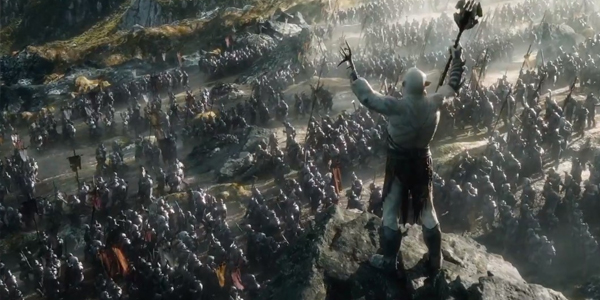
Say what you want about how Jackson has dealt with adapting The Hobbit, but after around 7 hours of build-up, the final battle certainly delivered the epic scope and insane action fans were hoping for. Kicking off roughly half-way through the movie, the titular battle lasts approximately 45 minutes (including a few short breaks for dialogue), and is a mostly relentless stream of smaller, self-contained fight sequences featuring almost all of the major characters. Some of the more impressive moments include Kili (Aidan Turner) being killed by Bolg while protecting Tauriel (Evangeline Lilly), Legolas (Orlando Bloom) killing Bolg (complete with a hilariously ridiculous skipping-stone sequence), and of course, Thorin (Richard Armitage) and Azog killing one another as the battle comes to an end thanks to Radagast, Beorn and the Eagles. Though it still can't quite find a way to live up to the immensity of The Return Of The King's final battle and there are a number of technical issues holding it back from true greatness, it's still easily the most scintillating action in any of the Hobbit movies, and proves that Jackson's still got what it takes.

1. The Ending

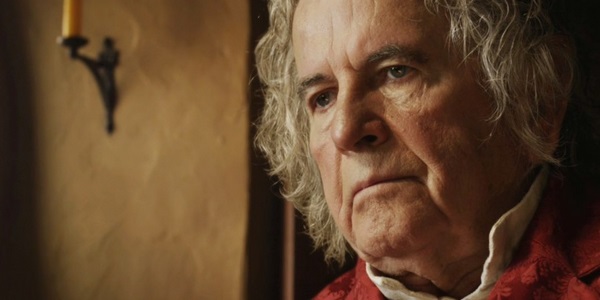
Thorin gets to make his peace with Bilbo as he dies, kick-starting a speedy but efficient epilogue sequence which provides a lead into The Fellowship Of The Ring. Legolas talks to his father Thranduil (Lee Pace) about finding Arathorn's son, the man known as Strider (Aragorn), and when Legolas asks for his real name, his father tells him that he must find it out for himself. Bilbo then says his goodbyes to Thorin's men and returns to the Shire, but before entering, Gandalf (Ian McKellen) tells Bilbo that he knows about the Ring he found. Bilbo arrives home, where his wares are being auctioned off under the belief that he is dead, and as Bilbo enters his empty home, the scene shifts to his 111th birthday, as Gandalf knocks at his door and the events of Fellowship kick off. Though it lacks the sheer emotional impact of Return's brilliant but overlong ending, Jackson instead ends The Hobbit on a far snappier note that links the two sub-franchises together without hammering the point home too hard. As an added treat, the mega-long end credits sequence is backed by a cracking original song from Billy Boyd (who played Peregrin Took in the Rings movies), The Last Goodbye. Even though The Hobbit trilogy has been hit and miss at the best of times, Jackson at least ended it in the style it so deserved. Now, however, it's time to look at which aspects of the movie just didn't work at all...

...And 6 Reasons It Sucks

6. Poor CGI
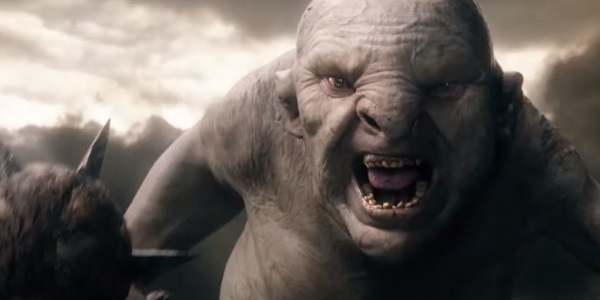
Though it's acceptable that the visual effects aren't always going to be note-perfect in a production as elaborate, costly and time-consuming as this, this third Hobbit movie features arguably the most egregiously bad CGI in the entire six-film saga. It begins with the Orcs, which are rendered in CG and pale completely in comparison to the humans in make-up that were largely used for the Rings movies. Then there's the various other creatures throughout the movie which look like something out of a bad video game (pictured above), the weirdly skittish physics during some of the action, and the fact that so often it's clear that you're watching someone standing in front of a green screen with the entire background painted in. While the Rings films themselves were also saddled with a lot of effects issues during particularly busy action sequences (who can forget the atrocious rendering of Legolas atop the Mumakil?), it's pretty shocking that a movie made 11 years later in many respects looks worse than what came before. It's just mind-boggling to believe that this is really the best they could come up with on a $250 million budget.

5. Alfrid = Jar Jar Binks

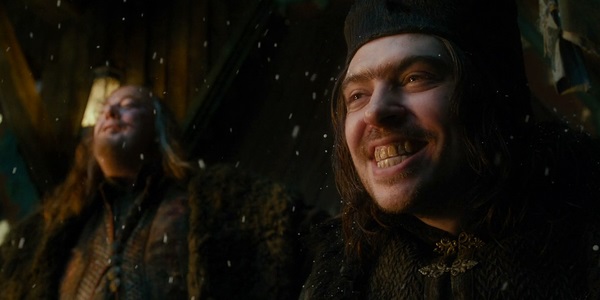
Destined to become known as the Jar Jar Binks of the Middle-Earth series, Alfrid Lickspittle (Ryan Gage) is only mentioned in passing in Tolkein's novel and never named, but Jackson somehow felt the need to not only name him but give him a significant comic relief role in this final movie. It begins with him and the Master of Laketown attempting to escape during Smaug's attack, bringing as much gold and treasure with them as they can. Bard then calls upon him to help with the survival effort ahead of the final battle, which he begrudgingly does, all the while maintaining a keen focus on how much gold he can escape with. This leads to the most cringe-worthy scene in possibly the entire Middle-Earth series, as Alfrid dresses up as a woman and stuffs treasure inside his bra, giving him the appearance of a busty wench, much to the bemusement of anyone who catches a glimpse of his face (most of all the audience). Though it's absolutely no fault of actor Ryan Gage, who tries his damnedest to make the part work, Alfrid is an unnecessary affectation intended to lighten the load in the darkest of the three movies, but he mostly just undermines the dramatic stage Jackson is trying to construct. Cut him out of the movie and you've immediately lost about 10 minutes of needless silliness right there and then.

4. The Build-Up Is Too Long

As thrilling and exciting as the final battle is, this Hobbit film, despite being the shortest of the lot, still feels front-loaded with far too much bloat. After the brilliant 10-15 minute opening attack on Laketown, things calm down for about an hour, where a number of lengthy diplomatic dialogues take place that simply don't move things along quickly enough. The movie could easily have clocked in at a square 120-130 minutes without losing anything of importance: Jackson rakes the same points home several times, and by the time the final battle begins, audiences may be struggling to maintain their interest through the relentless chattering. Is the payoff worth all that build-up? Basically, yes, but had Jackson cut it down in a few key areas (ditch the comic relief for one), then the movie would feel all that much tighter as a result, and it might not feel quite so much like a film of two halves, one slow and meandering and the other visceral and intense.

3. Not Enough Benedict Cumerbatch

After the dark ending to The Desolation Of Smaug, it was expected that Smaug's assault and subsequent death at the hands of Bard might comprise the first half-hour or so of the final movie, but Smaug is in fact taken care of in a snappy quarter-hour, making you wonder why Jackson didn't just kill him at the end of the previous film. A sad by-product of this fact is that it means that the final movie has little in the way of Benedict Cumberbatch, who did such a splendid job voicing the malevolent dragon. After his lengthy, terrifying monologues in Desolation, it was pretty disappointing that he just shouts a few threatening lines here before Bard kills him, and that's all she wrote. Though it's no doubt all the same to Cumberbatch, who likely recorded all of his lines in one go, to see the character built up so much only to be killed off in a relatively curtailed battle was a slight disservice (despite the overall brilliance of the scene) to both the character and the actor voicing him.

2. Terrible Cinematography & Lighting
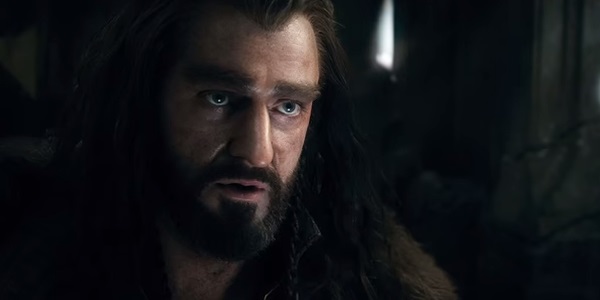
While the occasionally rough effects are one thing, another major issue with the movie is just how unfortunate some of the lighting and cinematography is. Take this shot from the trailer, for example: the soft focus and light reflecting off Thorin's head looks cheap and tacky, like a corny flashback from a daytime soap opera, rather than a $250 million movie. Though this was also a problem in the two previous movies, it feels more pronounced this time, with Jackson's use of slow motion only making the weird digital cinematography look even more like a low-budget BBC costume drama. Had Jackson shot on film, at least this one problem could have been fixed. As for the cornball soft focus? It's just a bizarre creative choice from Jackson and his frequent director of photography Andrew Lesnie. And this is without even mentioning the HFR presentation, which has proven massively divisive with audiences.

1. Tauriel Doesn't Die

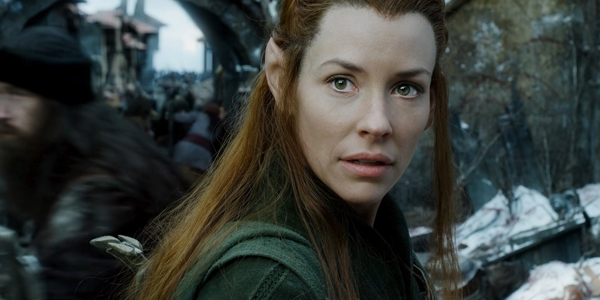
One of the more controversial additions to the Middle-Earth franchise by Jackson and co-writer Fran Walsh is Tauriel (Evangeline Lilly), a female Elf who many fans felt was added in largely to sprinkle a little more femininity into the male-dominated cast, something Jackson and Walsh have admitted was a major part of their decision. However, it was widely rumoured prior to the release of the final film that Tauriel would be killed off, considering that her survival would cause fans to wonder where she was in The Lord Of The Rings. Nevertheless, Tauriel does survive the events of the movie, albeit while left distraught over the death of her romantic interest Kili earlier on. It would have made much more sense for Tauriel to be killed off in the final battle as well, restoring a certain order to the world by allowing Jackson and Walsh to have their new creation, but without raising any exterior questions for the Rings movies. Instead, perhaps for fear of killing off the film's only significant female, they let her live, even though her death, if predictable, would have served the story much, much better, and also given Legolas a more interesting lead-in to Fellowship. Have you seen the final Hobbit movie yet? What did you think? Shout it out in the comments!

Contributor
Contributor

Stay at home dad who spends as much time teaching his kids the merits of Martin Scorsese as possible (against the missus' wishes). General video game, TV and film nut. Occasional sports fan. Full time loon.