War For The Planet Of The Apes: 10 Things That Must Happen

After two pretty darn good chapters, what does 'War' need to do before calling it a trilogy?

The new Planet of the Apes series has been an interesting ride thus far, breaking new ground and breathing new life into a rather stale franchise (no offense, Mark Wahlberg.) The story grows increasingly epic; the first movie saw our protagonist Caesar evolve from mere ape to leader and liberator of his kind, while the sequel had him battling to keep his vision for the apes' future alive amid escalating turmoil. The human race, meanwhile is... struggling. After experimenting with a cure for Alzheimer's disease, they give birth to the simian flu, which both creates super-smart apes and decimates the world's human population by the beginning of the second movie. Now, with the apes and humans firmly set on their decidedly opposite paths, it's time to close this out with a bang. There are a thousand ways it can all go down, but it definitely feels as though the whole thing would feel incomplete without a few key points. So read on, and see if you can picture being pleased without seeing the following ten things in 'War.'


10. The Apes Abandon Sign Language

Easily the most compelling aspect of this series has been the evolution of Caesar (and later the rest of the apes) from head-scratching simian to master of his domain. Each chapter has seen them make notable strides in terms of intelligence and in particular communication skills. In Rise, we see Caesar start off as a garden-variety (albeit enhanced) ape who learns sign language, taking that first step into a realm occupied only by humans. The big moment comes when he later speaks his first word ("no.") Then in Dawn, the rest of the apes have followed suit, using a mix of sign and speech. Even though this series is clearly not intended to be a direct prequel to the originals, it stands to reason that all this verbal progress is actually building towards the walking, talking apes in that classic mold. So the only place to go from here is to have the apes talking full-time, otherwise the development is wasted. We're not talking Dr. Zaius here, just some relatively sharper vocal skills, and naturally leaving sign language behind.

9. The Humans Have Attacked

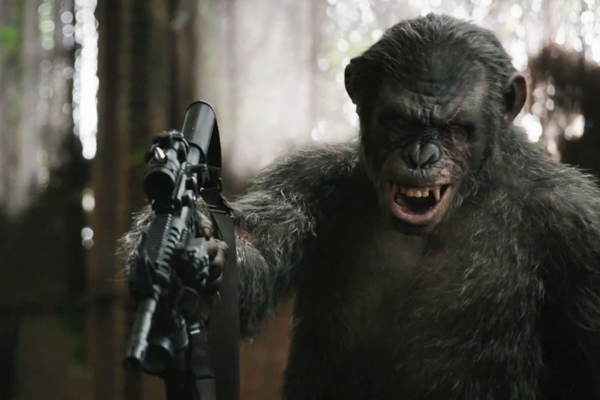
At the risk of shocking the reader, in a movie called 'War for the Planet of the Apes,' one thing that needs to happen is a war. It's pretty much a promise, unless this is going to suddenly become a dark comedy about apes discovering divorce. And of course, the back end of Dawn makes it pretty clear who's going to strike first. Ideally, the war should probably erupt during the opening credits, or else it should already be under way. They've already gotten the five W's out of the way, and this film would probably do better dumping audiences right in the middle of the action so it can tell the rest of the tale. The first two chapters liked to explore the moral landscape at different tipping points, and hopefully the next one follows suit. Challenging the viewer to tell the good from the bad in us is a calling card of he series, so in all likelihood they'll squeeze all the subtext they can (and some choice action snippets) out of the humans' retaliation for Dawn.

8. Koba Has Left His Mark

The third movie had better not make the mistake of letting Koba fade into the past like some defeated stage boss while the story moves on. Sure, he got exactly what was coming to him, and it's not a victory if Caesar doesn't win back the apes' loyalty. However, this subplot (hopefully) marked another step in the apes becoming more like us; they discovered politics and dissent. This needs to be reflected in War, at the very least as a sign of development on pace with the previous films. Maybe Caesar didn't win back all the apes, and now the tribe isn't fully unified... Maybe some of them are still loyal to Koba, or maybe an even worse character arises to lure the tribe towards the dark side. Whichever shape this idea takes, it definitely needs to be part of the story. For maximum effect, the seeds Koba sowed should have direct ramifications on both Caesar's mentality and the apes' continued development into us.

7. Caesar Saw It All Coming

Obviously, it's not as though a movie series with the ending essentially in the title has to do a whole lot of foreshadowing to prep the viewer. But it would be nice if the big conflagration to come was made to look prophesied by other elements in the preceding movies. The best way to do this would be through Caesar, of course. At different points in both movies, he seems to approach human/ape interactions as problematic and best avoided. It's almost as if he knows no good can come of them, and he constantly has a look on his face as though maintaining harmony is a losing battle. In particular, he's all too quick to accept the reality that "human will not forgive," so there's already a clear whiff of fatalism in the air. In all likelihood, this is not just a coincidence, and there will be some focus on Caesar reacting to the war as inevitable. It would retroactively inject even more drama in those already frosty diplomacy scenes in Rise and Dawn.

6. The Peace Effort Continues (And Fails)

It's going to be necessary to depict some sort of effort to end the conflict peacefully. This needs to happen on both sides, and maybe there could be sort of clandestine ape/human alliance. After two movies of commenting on human behavior by injecting it into the apes, it would be quite the misstep to have one side (or both) completely disregard the hope for peace, because omigod you guys, what would that say about us? It would be nice to leave theaters with one's faith in humanity mostly intact; our pacifistic sides need to be on display. Of course, if it's actually going to be the Planet of the Apes, let's not be foolish enough to have this end well. The war can't be won if it gets called off, and the only way the Earth will see peace at this point is if BioWare gets contracted to script a synthesis ending. Actually, that kind of ending might explain the apes' appearance in the older films a little too perfectly...

5. Maurice Dies Of Natural Causes

Lovable, loyal, librarian-like. That was Maurice the Orangutan. After playing Caesar's right hand throughout the apes' exodus and all their misadventures (and considering his apparent age,) he pretty much serves as a symbol of the old guard. He's also somewhat of a stabilizing force to all the apes, to complement Caesar's leadership. Meanwhile, things are about to move into a brand new era, and the more they move on, the more they leave the past behind. What better way to symbolize the transition than by having the old guy pass on to banana heaven? Is anybody else picturing a tear-jerking bedside scene à-la Batman and Robin? It would be one of the emotional high points of the franchise, right up there with Caesar's separation from Will in Rise. There's really nothing left for Maurice in the future that's about to unfold, and when you think about it, his passing is a necessary step towards wrapping up the trilogy. Natural causes is key, because a violent death should serve some purpose to the story which he needn't be a part of.

4. Caesar Dies Violently

Remember that comment a few weeks back, about how a violent death should serve a purpose to the story? Now this entry on the list assumes that this is going to be the final installment in a trilogy despite the director's noncommittal comments on the future. If this is indeed going to be the end, then we need to bid our hero adieu, and just like so many heroic tales, the most logical conclusion for his long-time struggle is martyrdom. Meanwhile, the apes go on to fulfill a destiny only he could have made possible. Audiences are going to need some sort of finality in a story with an otherwise limitless future. Whodunnit and why is anyone's guess, but the possibilities are interesting. Perhaps the humans did it, which sparks a response from the apes, or hey, maybe they introduce an ape named Brutus. What you can't have is Caesar dying in his sleep, and the apes just carrying on, which would horribly diminish his impact (and the preceding four hours of cinema.)

3. How About A James Franco Flashback?
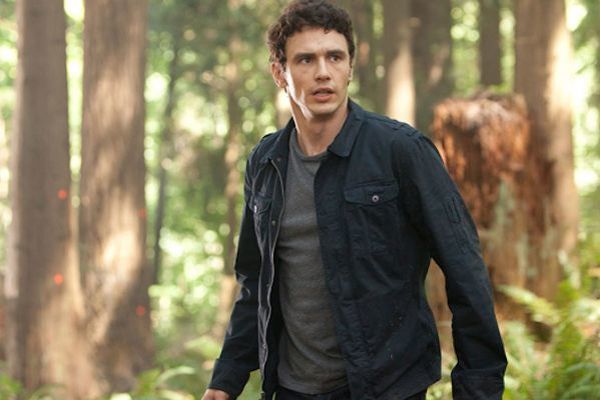
Okay, so this isn't so much a "must happen" as a "certainly would be perfect," but isn't it it hard to imagine a Caesar death scene without a cameo from his first friend, former father figure and only link to the human world? The same humans that dragged him and his kind into a war they never wanted, and the same humans who may or may not be killing him at that moment? Then again, who says it has to be when Caesar dies? They could plug in a scene most anywhere in which he reflects on how far he is from his years as a pet, and something, something, something... look, this why screenwriters get paid, okay? The third movie in a trilogy has a bit of a tradition of circling back to the original in some interesting way, and Will Rodman had a pretty meaningful influence on the future of the world, did he not? Imagine seeing his face again just as humanity teeters...

2. The Apes Win (But Something Else Is Lost)

As with the whole 'War' thing, the title pretty much gave this one away in 2011. So the apes take it all, wiping out the humans' last armed soldiers and driving who's left to the brink for good. It's hard to imagine the apes slaughtering every last human, but we (mankind) will need to disappear. Hiding underground, perhaps? Now, if Caesar does indeed die, then perhaps something could be lost with him: sympathy. Without his tempered outlook and familiar grasp of the human foreigners, the two sides could become alienated permanently. So maybe the apes get cynical and go on the offensive, taking no prisoners and ending the war. These are just brain loogies, of course; the movie really doesn't need to execute this one way over another. What it does need to do is a) live up to the title, and b) carry some moral weight even after humans are off the map. If it can do this and converge with other events as well, all the better.

1. The 'Planet' Part

No more waiting. Through two movies, viewers have looked past the fact that the story took place on a decidedly sub-planetary scale. It was normal for the first movie to be set entirely in the Bay Area, and the sequel got away with keeping the apes' emancipation local by at least having the simian flu go global. But now, it's time to set the stage for this war (and the apes' territory) to spread as far as advertised. Hopefully a decent chunk of running time is dedicated to how exactly the conflict is won worldwide. Surely, there are other pockets of survivors all over the planet, so how do they get dragged into battle as well? Does the simian flu at large have the same level of effect on apes elsewhere as direct exposure to the virus had on Caesar and company? These are questions that will more likely than not require asking and answering before the credits roll. If we never find out how this whole thing is going to live up to its title, all we're really watching is The War for the District of the Apes...

Contributor
Contributor

CKUT radio host, underground lyricist, Michael Myers scholar and all-around world-class opiner. Signature move: Irony Bomb. Blood type: chai. Never seen in the same place and time as Logic Johnson, former featured columnist for Bleacher Report. Hopelessly unfamiliar with Yellow Submarine.