What Does The Ending Of Captain America: Civil War Really Mean?
Wait, so who wins?
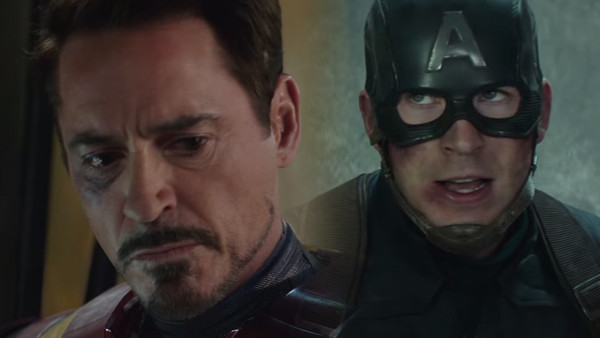
An expertly-paced, character-driven thriller that boasts some of the most fan-pleasing spectacle you could imagine, Captain America: Civil War is, without a hint of hyperbole, one of the greatest superhero movies ever made. It's also Marvel's most complex movie yet, both in terms of the amount of character interactions it's juggling and the thematic weight it's carrying, and just begs further exploration.
That's especially true when it comes to its tricky, morally ambiguous ending. Like much of the movie's plot, it's a massive departure from the original Civil War comic, with none of the fabled (and, as a result, much-anticipated) events coming to pass. As such, there's a whole host of questions and ideas to be broken down, explored and theorised upon.
It goes without saying, but there's MAJOR SPOILERS for the entire plot of Captain America: Civil War and its two post-credits scenes within. You have been warned.
What's The Story And Its Wider Themes?
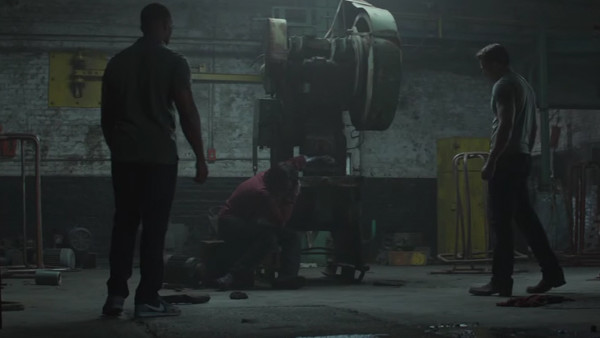
As is customary with these ending breakdowns, let's first set-up the basic story and ideas that we're going to be talking about
The conflict of Captain America: Civil War is mainly motivated by the question of accountability, with The Avengers called into check after their latest mission results in mass destruction and the death of innocents. The Sokovia Accords are introduced as a result, a policy that would make Earth's Mightiest Heroes a government-sanctioned organisation, the prospect of which splits the group down the middle, with Iron Man on the side of pro-registration and Captain America against it.
The problem is catalysed when the Winter Soldier seemingly comes out of hiding and bombs the Accords signinh, only furthering the debate by bringing in personal and relationship bias into the mix. Bucky's internal HYDRA programming is reactivated by the mysterious Helmut Zemo, sending him on a violent rampage before being stopped by Cap and revealing there's other soldiers like him.
After one of the best action sequences in superhero cinema history, Captain America and Bucky make their way to Russia to stop the other soldiers being activated, followed closely behind by Iron Man and Black Panther.
What Happens At The End?

As the film enters its third act, it's revealed that the whole plot up to that point had been part of a scheme orchestrated by Zemo to get the Avengers to tear themselves a part as recompense for his family's death during the events of Avengers: Age Of Ultron. He reveals that Tony Stark's parents were killed by Bucky, forcing him into a fight Cap and The Winter Soldier. Black Panther takes the villain hostage and, after a brutal fight, Steve Rogers incapacitates, rather than killing, Iron Man, leaving his shield, which Tony claims his father's, behind.
Tony returns to the Avengers compound where the Accords are in effect and gets a letter from Steve saying he'll still be there if he's needed. Simultaneously, a costume-less Captain America frees the captured Avengers.
Who Wins?

Civil War is built around the conflict between Captain America and Iron Man, and the marketing really steered into that debate, but actually deciding who wins isn't all that easy.
In the comics, Iron Man is the undisputed victor - during their climactic fight, Captain America realises the terror and destruction they're causing and relents, handing himself in to the authorities. In the film, Steve Rogers does have a similar moment of realisation, but because the movie has been so different up to this point the outcome is very different.
The basic events of the fight would suggest that Cap wins - he beats Tony Stark and with his defiant "returning" of the shield to the Starks draws a line under how pathetic he knows views the conflict as - but the hollowness of that righteous decision when juxtaposed with Iron Man left battered and bruised should make it clear that physical victory isn't what Civil War is, nor ever was, about.
After all, the debate wasn't originally over friendship or whether Bucky's to blame for the death of the Starks, but the morals behind superhero registration. In it's carefully paced opening hour, Civil War explains where each character falls on the debate spectrum and then lets those forced team allegiances divide them down the middle, letting personal tensions spill over.
This, along with the later ambiguity of the fight, leaves the decision of who's right up to you (the same goes for those later questions of Bucky's role in Tony's parent's death and whether Cap was right to hide it). And, with the ending seeing Tony go one way, with Rhodey still believing the Accords the to be the right thing, and Steve the other, freeing Falcon and co. from The Raft, it's clear that there's likewise no real winner. Well, aside from...
What Was Zemo's Real Plan?

In many ways, the only character who "wins" in any quantifiable way is Helmut Zemo. But what exactly was he trying to achieve?
OK, so Zemo was a former member of the Sokovian military who lived outside of the country's main city. During Age Of Ultron's finale, his wife, daughter and father were killed, something he blames on The Avengers and their flagrant ignorance of collateral damage. Over the next year he uses the S.H.I.E.L.D. documents released by Black Widow at the end of The Winter Soldier to plot his revenge.
His goal is to tear The Avengers apart, which amounts to pitching Captain America against Iron Man. To do this, he takes advantage of the emergent paranoia around the Sokovia Accords to frame Bucky for the bombing of the US Embassy, drawing the former Winter Soldier out of hiding and activating him, in turn getting him to lead Captain America to the Russian HYDRA base using the insignificant other super soldiers as a cover.
Before heading out there for the final stage of his plan, he reveals his previous cover as the UN interrogator, convincing Iron Man he too was wrong and sending him after Cap. Once the three are together, he reveals Bucky killed Tony's parents and hopes the trio will kill each other while he gets a quiet moment of clarity before killing himself.
However, as he believes he's won despite not succeeding in the final two points of his plan - Steve stops himself before delivering a killing blow to Tony and Black Panther stops his suicide attempt - it appears those weren't the main focus, but additional goals. By the end he's already pushed the Sokovia Accords debate long enough to split the team regardless; he revealed his hand just late enough that the damage had already been done. What he really wanted was to avenge his family by dividing their "killers", a motivation not dissimilar to the emotions later powering Cap and Iron Man.
Where Are All The Avengers Now?

The major repercussion of all this is that The Avengers are split, with an Accords-approved, branded version and an off-the-grid team.
In the official, Stark-backed Avengers compound you have Iron Man, War Machine and Vision, who, while licking their wounds, still concede that they're doing the right thing, thus suggesting the schism Zemo caused was somewhat inevitable. Then you have the group made up of Steve, Bucky and those he busted out of The Raft - Scarlet Witch, Falcon, Ant-Man and Hawkeye - who you can imagine are going to work as before, albeit with less funding, and be on-call for real dangers from Stark. It's worth noting that, on top of tossing away his shield, Cap isn't wearing his usual costume in the final shot, perhaps hinting he's given up on the Captain America role altogether.
That final letter Steve sends to Tony gives almost a best-of-both-worlds situation - the Accords are passed, but their is still the opportunity for the old way of doing things - ending the film on an borderline positive note.
The outliers in this are Spider-Man, Black Panther and Black Widow. The former two we'll get to in a minute, but the latter is quite a big dangling question; the last we see of her is leaving the Avengers compound after Tony tells her Secretary Ross will come after her for her betrayal at the airport, suggesting she's gone underground separately (although could easily reunite with Steve, Clint and co.).
What About The Other Characters?

Of course, it's not just the Avengers we have to consider when it comes to the ending - there's several non-superpowered people who've played a big part in the film also.
The biggie is Zemo, who joins Loki and... nope, just Loki, as the only major MCU villains to make it to the end-credits alive, taken by Black Panther to the UN and held captive in the same box that held Bucky earlier. It's from this captivity he claims he's won, which ties up his arc for the film, but keeping him alive means that he could easily come back down the line, perhaps in a more indoctrinated, comic-accurate form (on that note, one of the best marketing tricks for Civil War was the misdirection with this character's name, which the fans just lapped up).
The other "antagonist" who's primed to reappear is Thaddeus Ross. William Hurt is back in the MCU in a big way, now the US Secretary of State and, based on his comments to Stark before he heads to Russia, now a little less calm than he suggested at the start. He's unlikely to let Steve springing The Raft's captives lie.
Another, unrelated Ross is Martin Freeman's Everett, a UN suit last seen addressing Zemo. He wasn't in the film as much as the actor's casting so suggesting, but as the character has strong ties to Wakanda in the comics, it'll likely turn out this was all set-up for his appearance in Black Panther.
Rounding off this lot is Sharon Carter, a key motivator in Captain America standing strong to his convictions throughout the film. She's obviously now got a relationship with Steve Rogers to fall back-on, and will likely reappear whenever either Ross or a S.H.I.E.L.D. derivative is needed.
What Does The Ending Mean For Phase 3?

As the end of Civil War has a pretty seismic effect on the Avengers status quo, what does that mean for the MCU as it moves forward into Phase 3? Well, perhaps not as much as you might expect.
Guardians Of The Galaxy Vol. 2 and Thor: Ragnarok take place in other worlds/realms and Doctor Strange appears to be rather self-contained. Spider-Man and Black Panther will continue their respective threads (which I promise I'll get to) and may be somewhat impacted by this change-up, but for all intents and purposes they too will be stand-alone.
That means the film where we'll see this dual Avengers deal pay-off will, most probably, be Avengers: Infinity War. That makes a lot of sense given the Russos are already developing the story for that, able to build straight off what they've done here.
None of this is to say Civil War is light on foreshadowing. There's lots of allusions to the wider world in here (and plenty more things that can be read into) - Vision talks of leaning about his Infinity Stone head, Ross comments on the absence of Thor and Hulk and many more (keep an eye for a whole article looking at that in the coming days).
The Wakanda Mid-Credits Scene
As is pretty traditional at this point, Civil War has two post-credits scenes, and they're both doozys.
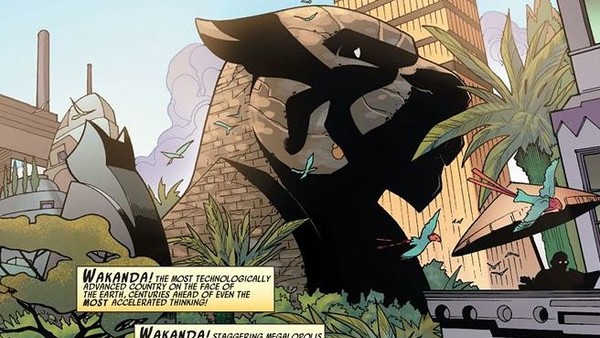
First up is a plot wrap-up one at the mid-point, with a one-armed Bucky choosing to go back into stasis until a cure to his HYRDA programming can be found. Only after he goes under is it revealed that he's in the possession of T'Challa and we're in Wakanda, with the camera panning over the lush, dense jungle to reveal a giant vibranium panther statue.
After lots of action set near the secluded African country, we finally get to see it in all its live-action glory. And it looks solid; even though it's set on Earth, with the thick trees and large-scale constructions this is the sort of world that couldn't have been created anywhere near as well a decade or two ago.
This sets the scene nicely for Black Panther's solo film; seeing the country here along with his large part in the main film means we'll hopefully get to the action straight away, rather than having to go through the usual new character pleasantries and introductions. This also opens up the possibility that Bucky will appear in the film - Sebastian Stan still has six movies out of nine left on his contract, and over the past three films has proven himself incredibly versatile, so he could easily slot into T'Challa's adventure.
The Spider-Man Post-Credits Scene

The second stinger at the very end of the credits, which looks at Spider-Man back home in Queens, is a little more on the jokey side, although not without some clues towards the future.
Peter's recovering from the scrap in Germany, using a retelling of the real events as a cover (a guy named Steve from Brooklyn punched him, he had a really big mate) and fiddling with the new web-shooter Tony's made for him. He accidentally activates some laser, having to hide it from a doting Aunt May before finally getting to see what Stark's crafted.
Ostensibly what we learn here is that the new gear Spidey's got is a bit more high-tech than we're used to - on top of the shutter-eyes (used to great effect in the Falcon/Bucky fight), he has this projecting ability. It's not clear what it does, but expect Jon Watts to have a lot of fun with it.
On top of that concrete detail, there's also some suggestion of the sort of tone the Marvel/Sony project will be going for; with a fumbling Peter barely hiding his Spider-gadgets and concocting excuses on the fly, it seems we'll be getting a more honest geek and lighter tone. The way that Peter alludes to Uncle Ben's death briefly in the film proper, quickly explaining it as life-changing event without going mopey certainly points towards the teenage angst being a little more organic than previously.
Also, and not meaning to be crude here, but between Falcon's comment about where Spidey's webbing comes from and Peter hiding the webbing from his Aunt, will we see Homecoming explore some more awkward teenage elements?
What did you think of Captain America: Civil War's ending? Let us know what you thought down in the comments.