10 Amazing Video Game Franchises That Were Abandoned
Seriously, why do these franchises get no love?
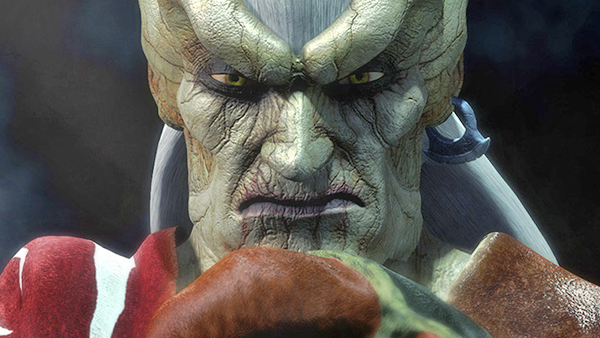
While 2023 in video games is a veritable buffet of choices no matter your preference in genre, game mechanics, or narrative, we still can’t help but miss some of our old favourites that got left by the wayside.
For every Final Fantasy and The Legend of Zelda that carries forward seemingly until the end of time there are plenty of fantastic franchises that aren’t so lucky. These are the series that, whether they got well under way or barely began, were unfortunately left to rot long before their time.
No genre is big enough nor publisher popular enough to escape the video game franchise cemetery that inevitably swallows up some offerings that truly don’t deserve it.
10. Suikoden
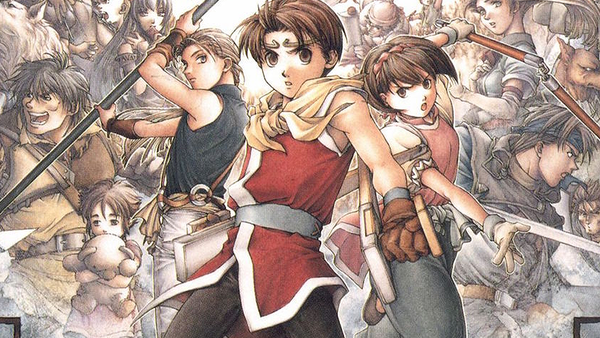
Konami is known for a number of massive franchises but not all of them lasted as long as they should have.
One such franchise is RPG series Suikoden whose first entry arrived in 1995 in Japan and ran until 2006 in its mainline series with Suikoden V and until 2009 in its spin-off titles. While JRPGs of all shapes and sizes boomed in the late 90s and early 2000s, after that point it became apparent only the strongest would continue to receive support from their publishers. Despite the love the franchise developed for its epic narratives and fascinating characters, ultimately Konami disbanded the Suikoden team, reallocating them onto its numerous other titles and essentially leaving the franchise for dead after its fifth instalment failed to meet Konami’s commercial expectations.
Though a number of unofficial entries in the franchise would crop up and there is both a spiritual successor and a remaster of the original two games slated to come out this year, Suikoden VI is unlikely to ever grace your gaming library.
At the very least those who care about this iconic JRPG franchise are trying to keep it alive however possible, even if the mainline series has been dead in the water for over a decade. If you were a fan of this one, keep an eye out for Eiyuden Chronicle: Hundred Heroes, a crowdfunded JRPG made by the original creator of Suikoden, Yoshitaka Murayama.
9. Banjo-Kazooie
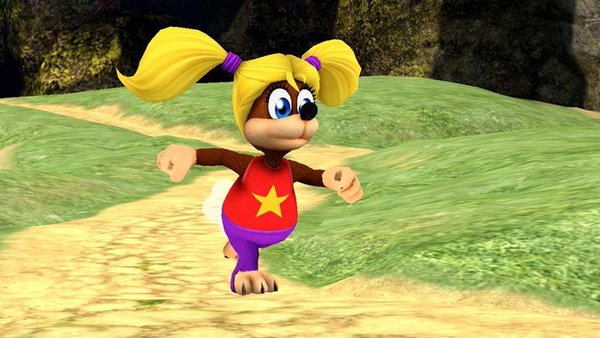
You probably don’t need me to tell you about Rare’s iconic 3D platformer series, Banjo-Kazooie and its impact on the industry but just in case you missed this one, let me get you across the fundamentals.
Both Banjo-Kazooie and Banjo-Tooie were must-have titles for the N64. Released in 1998 and 2000 respectively, they were praised for their visuals, humour, electric characters, engaging writing, and catchy soundtrack, not to mention the frequently inspired level design. At the time, these games represented the pinnacle of what platformers could be, and even gamers now would argue they’re still fantastic.
Unfortunately after Microsoft’s acquisition of Rare in 2002 the series pretty much ground to a halt, releasing a couple of handheld entries and then 2008’s Nuts & Bolts which altered the mechanics and visual style in a way that, to put it nicely, didn’t resonate with many fans.
To put it less nicely, it essentially marked the death of the franchise.
Aside from rocking up in Smash as playable characters and 2017’s middlingly received crowdfunded spiritual successor Yooka-Laylee, that's pretty much all she wrote.
8. Clock Tower

It’s been proven over and over again lately that survival horror, particularly the classic video game horror franchises, are far from dead.
Unfortunately, that doesn’t mean every fantastic survival horror series has made it to 2023, case in point: Clock Tower.
While Resident Evil continues to go from strength to strength and even Silent Hill seems to be quickly approaching a resurrection, the delightful psychological minefield that was the Clock Tower franchise has been left dormant for over two decades. If we don’t include the two spiritual successors, 2005’s Haunting Ground for the PS2 and 2016’s crowdfunded NightCry, there hasn’t been an entry in the series since Clock Tower 3 which hit shelves in 2002.
Adding insult to injury, the franchise was left for dead even before its last entry as the third instalment was created without the input of creator Hifumi Kono and was ultimately both a critical and commercial failure.
Though the games did receive some mixed reviews for their somewhat obtuse puzzles and tedious sections, they were universally praised for their chilling atmosphere, creepy antagonist Scissorman, and impressive horror themes. Adding a nail to the coffin was the fact that the slow point-and-click gameplay was sized up against another horror game that launched the same year as Clock Tower II, Resident Evil. Given the resurgence in interest for combat-free survival horror games featuring defenceless protagonists, it’s a shame that Clock Tower was abandoned.
7. Zone Of The Enders

The first Zone of the Enders game, a brainchild from the now severed partnership of Hideo Kojima and Konami, came out in 2001.
For the uninitiated, this series had you battling it out in space with giant robots so, look, you can see why people fell in love with it even if you haven’t had the pleasure yourself. Despite pulling in fans for its intriguing concepts, stylish action combat, gorgeous visuals, and deep narrative, Kojima was a pretty busy guy around the early 2000s and other projects at Konami took priority. Though Kojima announced work on the fourth instalment had begun in 2012, 9 years after the last instalment hit shelves, the project was ultimately cancelled due to issues with the release of the Zone of the Enders HD Collection which was burdened by a flawed plan to up the frame rate.
With Kojima and Konami now firmly parted ways, it’s very unlikely we’ll see another Zone of the Enders game to the dismay of its fanbase.
6. Breath Of Fire
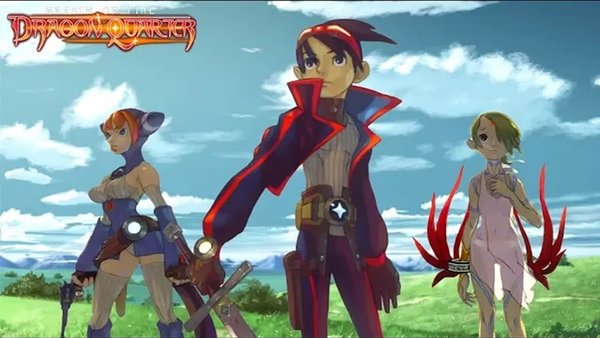
You probably know Capcom from their wildly popular franchises like Resident Evil, Monster Hunter, and Street Fighter among many others, but one series that might not spring to mind immediately is Breath of Fire.
Breath of Fire was an RPG series that kicked off with its first entry that was released in Japan in 1993 and was Capcom’s first traditional RPG series. It won fans for its unique gameplay mechanics, curious post-apocalyptic world, and colourful characters. While the franchise which spanned six mainline entries garnered more success in Japan than North America, there was still enough commercial success to continue on with the series until 2003 with the release of Breath of Fire: Dragon Quarter.
Though it was received quite well, the gameplay mechanics were markedly different than what long time fans had become used to, making the entry massively divisive amongst players and critics.
Breath of Fire 6 did eventually come out a whopping 14 years later in 2016 but it only came to PC and mobile and was not released outside of Japan. In 2009 a Capcom exec said the series remained a “resting IP” but it’s unlikely we’ll see anything more from the franchise any time soon.
5. Half-Life
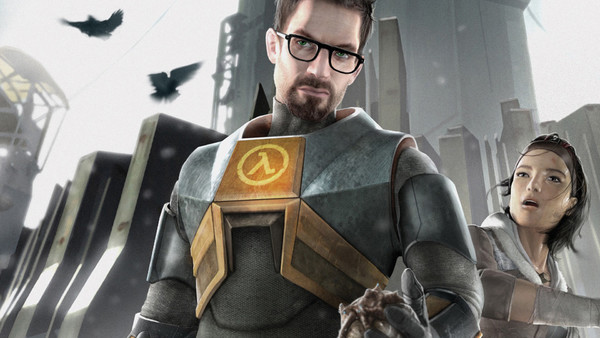
Yes, I know, VR game Half-Life: Alyx came out in 2020, but given the mainline series has been sitting on a cliffhanger for *checks watch* 16 years now, I think we can call this one solidly abandoned.
Even though audiences and critics agree that the Half-Life franchise stands as one of the best video game series of all time, Valve has had a lot of trouble putting Half-Life 3 into action. Even the Twitter account “Is Half Life 3 Out Yet” has given up on its 8 year dedicated quest to let people know whether or not the game was finally out. Half-Life 3 was in development between 2013 and 2014 before being abandoned, while several other Half-Life entries spanning from ports to expansions and VR experiences were at various points in development before all each being cancelled.
Half-Life 2: Episode 3 was due to come out over Christmas in 2007 but it was revealed that Valve were struggling to arrive at a good enough idea to carry the series forward.
And so, the abandonment of Half-Life continues to be one of the greatest gripes in the industry for fans and critics. Especially if you’re not into VR.
4. Dino Crisis

Another beloved Capcom franchise that fell by the wayside when the zeitgeist decided zombies were cooler than dinosaurs was Dino Crisis.
Much like Resident Evil killed Clock Tower, so too did it kill its younger sibling, Dino Crisis, which ran for four entries between 1999 and 2003. The survival horror had you facing off against fearsome dinosaurs, unveiling a secret plot, and, in the case of its third entry, jumping several hundred years into the future to the year 2548.
The original game was adored for its mix of action and strategy, genuinely frightening atmosphere, realism, and stellar soundtrack. Dino Crisis sidestepped into action-shooter territory for its second entry Dino Crisis 2 which was wildly critically acclaimed though its threequel’s space action shenanigans resulted in mixed reviews.
Regardless, fans were begging for a Dino Crisis 4 and while Capcom have often hinted that a new entry or a remaster might be possible, there’s been no real movement on that front to speak of.
3. Sly Cooper

Sucker Punch Studios’ Sly Cooper games were a hit for many gamers due to their engaging stealth and platforming mechanics, clever humour, colourful characters, and delightful story beats. The franchise spanned 5 entries between 2002 and 2013 if we include 2010’s Sly Collection which remastered the first three games in the series.
As developer Sucker Punch shifted focus to Infamous and more recently, Ghost of Tsushima, the game’s fourth entry was developed by Sanzaru games.
The latest and final Sly game, Thieves in Time, released in 2013 to generally favourable reviews and even ended on a cliffhanger, yet there’s been very little news of any plans to follow it up. Rumoured film and TV adaptations failed to come to fruition and Sly 5 was again rumoured as soon as 2021 but nothing has come of those murmurings as yet.
All we know is that neither Sanzaru or Sucker Punch are involved with any possible fifth instalment.
2. Bushido Blade
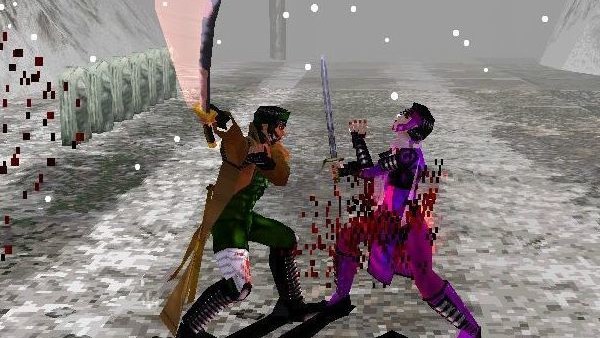
Bushido Blade was a 3D fighting game originally released for PlayStation in 1997. We’re playing it a touch fast and loose with the definition of the term ‘franchise’ here as Bushido Blade was cut short after only two entries but the instant-death-on-hit combat, themes of honour and the warrior code, and innovative strategy mechanics set it apart from other fighting games at the time, and even today. Despite both entries being critically acclaimed and initially a slam dunk for publisher Square Enix, we haven’t seen anything else from the series since 1998.
Developers Lightweight did work on another fighting game for the Xbox after this point called Kabuki Warriors but given its considered one of the worst video games of all time I think we can safely set it aside away from Bushido Blade’s legacy.
1. Legacy Of Kain
As we round out this list of frustrating “why hasn’t anyone kept this franchise going” conundrums, we land with one of the most head-scratching examples, Silicon Knights and Crystal Dynamics’ Legacy of Kain. Legacy of Kain ran from 1996 until 2003 and though it jumped between developers during this time, the heart and soul of the critically-acclaimed and fan-adored fantasy action adventure games stayed consistent.
Praised for its rich fantasy world and characters, innovative storytelling, voice-acting, and cinematic sequences, the series was a hit end to end.
It’s puzzling, then, that it all came to a halt with Legacy of Kain: Defiance in 2003. While, admittedly, the series had dipped in quality by this point, the game still reviewed very well, in part due to its attempts to tie up many unanswered questions left by the story that had been told so far. The series had been identified as perhaps a little too ambitious for any studio to take on, which may have resulted in the series being abandoned for so long.
I do have a happy ending for you though because the IP has since been acquired by Embracer Group, previously THQ Nordic, who has been on a remastering and sequel-creating spree of late so fingers crossed we might see more of Legacy of Kain.