10 Amazing Video Game Moments Created By Fans
You're welcome, Bethesda.

In recent years, the relationship between video game developers and their fans has become increasingly complex and intimate, with the Mass Effect 3 debacle raising a debate about fan entitlement and how much companies actually owe their paying customers.
But sometimes fans haven't been content to simply complain and make petitions for new features - they've just bloody gone and done it themselves.
That's certainly the case with these 10 gaming moments, modes and full-on games, all of which exist solely because a dedicated, unpaid fan wanted to make the game better.
Thankfully the devs were smart enough to either officially endorse the modifications, incorporate them into the game themselves or even offer the fans jobs, but as the annals of gaming history have shown us, not all fans are quite so lucky.
A week doesn't go by without a promising fan project being shut down by publishers desperate to protect the commercial viability of their brand.
Yet in our present remix culture, more forward-thinking companies are smart enough to foster such dedication to their IP rather than brutally stamp it out.
Without developers and publishers embracing the creativity of their fans, these 10 awesome video game moments never would've enjoyed the success that they did...
10. Just Cause 2's Online Multiplayer

If a developer lacks the resources or, more likely, is simply too lazy to give paying customers what they want, you can always count on committed fans to just...do it themselves.
That's certainly the case with Just Cause 2, a game so brilliantly chaotic that it begged for a multiplayer component, yet developer Avalanche Studios sadly delivered "only" a single-player sandbox.
Two enterprising modders, Jaxm and Trix, took it upon themselves to create a multiplayer mod for the PC version of the game, which allowed literally thousands of players to run around the same version of Panau island, spawning items and causing chaos.
Naturally it was rough around the edges and lacked the finesse you'd expect with a professionally authored product, but it proved popular enough that Avalanche later endorsed it as an official add-on for the game, even putting the base game on sale to draw attention to the mod and introducing achievements support.
The mod was officially released in late 2013, and given that the developer has yet to create multiplayer modes for any subsequent Just Cause games, it remains a landmark case of players taking matters into their own hands.
9. Mario Kart's 200CC Class

Mario Kart 8 was the first game in the hit racing series to introduce the ultra-fast, insanely punishing 200CC racing class, as was included as a free update to the game in 2015.
The new class created mayhem for players, allowing them to glitch through segments of tracks while effectively rendering the controversial "fire-hopping" exploit useless, though Nintendo did patch the Nintendo Switch release of the game to fix these "issues."
Nevertheless, 200CC mode was long requested by fans, and prior to Mario Kart 8's update, had been a popular mainstay in the series' hacking community for years.
Given how hilariously easy it was to mod games for the Wii, 200CC mode became extremely widespread among hardcore fans of Mario Kart 7.
Thankfully, Nintendo appreciated the demand and made fans honest by ensuring they didn't have to mod their Wii U to get their breakneck thrills. And the rest is history.
8. Sonic Mania Redeems The Franchise

It's fair to say that the Sonic franchise has had a pretty rough go of it over the years, for despite the character's obvious popularity, Sega's output has proven wildly inconsistent, with numerous brand-damaging releases killing the general public's enthusiasm for the series.
But in 2017, Sonic Mania came along and reminded everyone why they loved Sonic in the first place: the frantic pace, the charmingly timeless art style and, yes, the savage difficulty.
But Sonic Mania was no conventional Sonic release - it was a game created by Sonic modder Christian Whitehead, who had previously been employed by Sega to develop enhanced mobile ports of earlier Sonic games.
Whitehead made a name for himself by creating his own proprietary Sonic engine, the Retro Engine, which he used to develop the aforementioned ports and present a Sonic Mania prototype to Sonic producer Takashi Iizuka, who authorised him to develop an official franchise title.
Iizuka suggested that the game include "remixed" classic levels alongside new ones, while Sonic Team provided support to Whitehead to ensure a professional-grade end product.
The result, of course, was the best-reviewed Sonic game in 25 years, with many deeming it the best entry into the franchise ever.
Though no plans for a sequel have yet been announced, one has to imagine that Sega will be throwing money at Whitehead and his team to make sure it happens.
7. Diablo II's Secret Cow Level

Now technically speaking, Diablo II's infamous Secret Cow Level was developed entirely by the fine folk at Blizzard, but it never would have come to pass had fans not first dispersed the myth that the original Diablo featured said cow level.
The urban legend dictated that players could click on the corpse of a cow and be transported to a special land filled with the animals, a prospect so ridiculous that it quickly took on a life of its own with fans, even though it absolutely wasn't true.
Blizzard had plenty of fun teasing fans about the level's non-existence, even including a cheat code in their game StarCraft - activated by typing "there is no cow level" - and publishing what appeared to be a photo of a Secret Cow Level on April Fools' Day 1999.
But when Diablo II hit stores the next year, it turned out not to be a prank at all - the Secret Cow Level allowed players to battle hordes of "Hell Bovines", and even a cow boss called The Cow King. Nice.
But the Secret Cow Level never would've come to pass had a daft fan not propagated the ridiculous rumour in the first place. Whoever you are, thank you.
6. Fallout: New Vegas' Hardcore Mode

Bethesda is no stranger to relying on players to do a lot of the heavy lifting for them: practically every single game they publish has performance-boosting fixes released by fans long before any official patches come out, and fans also have a penchant for creating mods which are then adopted into a subsequent game.
For instance, modders introduced weapon modifications to Fallout 3, so Obsidian was smart enough to include them in Fallout: New Vegas, while Fallout 4's base-building mechanics were clearly inspired by similar mods for both Fallout 3 and New Vegas.
But the most significant adoption of fan input was unquestionably the addition of Hardcore mode in New Vegas, where stimpaks only heal players over time, players have to make considerations for dehydration and sleep deprivation, ammunition has weight, and recruited companions have perma-death. Yikes.
Hardcore mode was inspired by the several fan mods for Fallout 3 which introduced similarly punishing mechanics, most famously the Wanderer's Edition of the game, which comprehensively allowed players to tailor the difficulty and "realism" to their own preferences.
Given that Hardcore mode is now viewed by many as the definitive way to play a Fallout game, it's a shame that Bethesda simply included the watered-down Survival mode for Fallout 4, though of course, it didn't take long for fans to just make their own Hardcore mode.
5. Street Fighter X Mega Man
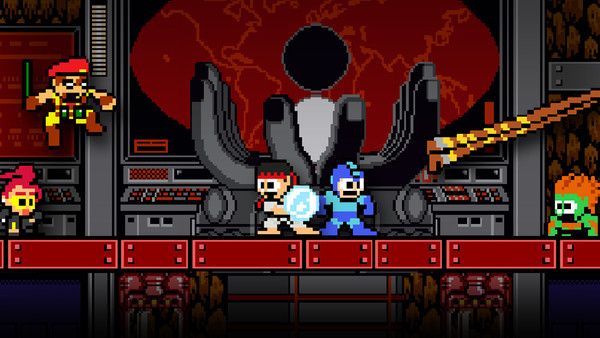
Crossover game Street Fighter X Mega Man might seem like a pure exercise in brand awareness from Capcom, but the action-platformer actually started out life as a fan game developed by Singaporean amateur dev Seow Zong Hui.
Hui was eventually able to present a prototype to a Capcom VP, who not only endorsed Hui's continued development but also assigned Capcom teams to help work on QA testing and marketing.
Better yet, when the game was finally released in late 2012, it was completely free. Though fans and critics noted its overall lack of polish, it was largely praised as a well-realised fan project, and Hui released a patch a few months later which fixed many of the initial teething problems.
For a game that could've so easily been shuttered by Capcom, it's awesome that they took Hui's hard work and gave him a huge platform for it, resulting in over a million downloads within three months of its release.
4. Far Cry's Tent Glitch Fix
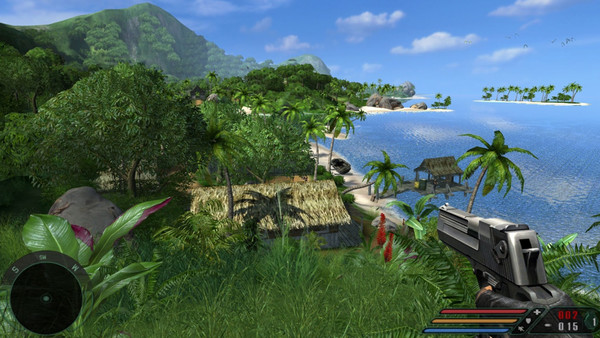
Believe it or not, the original Far Cry was released way back in 2004 - oh, how time flies. Crytek's final patch for the game came out in 2006, which also introduced a most infuriating bug: enemy combatants being able to see through tents in order to fire upon the player.
Naturally, this proved massively frustrating to fans, yet because Crytek had moved onto developing Crysis, the complaints largely fell upon deaf ears.
It was left to modders, then, to patch the issue themselves, with fan FarOut creating his own hotfix which remedied the improper A.I. response.
But it wasn't until literally last month that the fix was incorporated into an official version of the game, with the GOG release finally including, per their patch notes, "a small fix to prevent AI bots from shooting through tents (thanks to FarOut for reaching out to us)."
Of course, most players have long since moved on from the original Far Cry, but it's nevertheless undeniably cathartic to see more than a decade of fan angst finally taken care of. Embarrassing it had to take so damn long, though.
3. The Birth Of The MOBA Genre

With games like League of Legends and Dota 2, there's no arguing with the popularity of the MOBA (massively online battle arena) genre, though it actually started out life as a fan-created series of mods which the industry quickly took notice of.
StarCraft's custom map Aeon of Strife is widely credited with laying the framework for what would become the MOBA game, as was expanded upon by the Warcraft III: Reign of Chaos custom map Defense of the Ancients (Dota), released by Kyle Sommer in 2002.
A small community of fans continued to iterate on the map, and by 2005, professional Dota tournaments were taking place. In the late 2000s, Valve took control of the IP, hiring lead designer IceFrog to create the absurdly successful 2013 sequel, Dota 2.
League of Legends was of course released in the interim, and at its peak in 2014 enjoyed a mind-boggling 27 million daily players.
This combined with the massive commercial viability of the MOBA through eSports is proof perfect of how a pop-culture phenomenon can spawn from the most innocuous of ideas.
2. Hitman's "Silent Assassin, Suit Only" Challenge

When players get good enough at a game to the point that it becomes boring, the next step is to play said game with self-imposed challenges and restrictions.
This is certainly true with the earlier entries into the Hitman franchise, where players mastered the mechanics of executing a flawless Silent Assassin run, which required only killing targets, having no bodies be discovered, avoiding being spotted and erasing evidence of your presence.
Because this apparently wasn't tough enough, some fans forced themselves to pull it off while never once changing Agent 47 out of his iconic suit - basically, no disguises allowed. Oof.
Naturally, it ramps the difficulty up to ludicrous levels, requiring unfathomable pinpoint precision from players, yet proved so popular with fans that IO Interactive actually made "Silent Assassin, Suit Only" an in-game challenge starting with 2016's Hitman.
1. The Creation Of Team Fortress & Counter-Strike

And finally, we have a double-whammy with two of the most influential first-person shooters of all time, both of which were originally modded from existing classic games.
First up, we have Team Fortress, which started out life as a 1996 Quake mod, before Valve hired the designers to port it to Half Life's GoldSrc engine in 1999, whereby it became a veritable online multiplayer phenom.
In 2007, a long-gestating sequel was finally released to massive critical and fan acclaim, and has continued to be iterated upon ever since in free-to-play form.
On the other hand, there's Counter-Strike, which had a remarkably similar origin story, beginning as a Half-Life mod which was eventually acquired by Valve in 2000, with developers Minh "Gooseman" Le and Jess "Cliffe" Cliffe also being hired by the company.
In its various iterations, Counter-Strike has been a popular FPS mainstay ever since, and late last year transitioned into a free-to-play model. But neither game would exist without the tireless work of devoted fans first and foremost.