10 Awesome Multiplayer Video Games Nobody Played
You probably slept on these cult classic multiplayer games.

As entertaining as the simplicity of a straight-forward single-player campaign undeniably is, it's tough to argue with the visceral thrill of taking your skills online to compete against others.
And as insanely popular as many of the greatest multiplayer video games are, there's no denying that we as gamers have slept on some squandered classics over the years.
These 10 multiplayer games, whether AAA tentpoles or more modest indie offerings, all came and went without much of a peep, despite the fact they represent some of the finest online multiplayer out there.
In some cases the games simply arrived at a crowded area of the market too late, while in others the multiplayer suite was tethered to an inferior single-player experience - to be kind - and elsewhere their brilliance got lost amid poor business management.
Whatever the reason for their failure, though, these terrific multiplayer games deserved far better fates than fading into obscurity so quickly, offering up unique riffs on familiar genres as they did, all while less-creative iterations of the same ideas continue to flourish today...
10. Onrush

Codemasters' innovative car combat game Onrush came and went in a flash in the summer of 2018, no matter its intriguing hook and the pedigree of its revered publisher.
Onrush largely ditched typical multiplayer racing for an online experience focused on co-operative, objective-based play, pitting two teams of vehicles against each other as they attempt to outrun and destroy their rivals, yet without a conventional chequered flag finish in sight.
Between its sharp visuals and well thought-out, easy-to-pick-up gameplay, Onrush had all the potential in the world to become the next viral racing sensation, but sadly the player-base fell off a cliff within a few months of its release and never recovered.
Though you can still find scatterings of players online, for all intents and purposes the game is effectively dead, with poor sales resulting in lay-offs at Codemasters including the game's director, Paul Rustchynsky, and updates therefore becoming increasingly sparse.
Considering how creatively the game innovated the racing genre, it's a damn shame that more people didn't give Onrush a try. However, the sensible inclusion of bots will ensure it remains playable even when the servers inevitably get shut down. Phew.
9. LawBreakers

Oh, LawBreakers. Easily one of the most surprising failures on this list, Cliff Bleszinski's frenetic FPS had a lot going for it on paper: an arena shooter with a neat, gravity-defying gimmick and a unique enough aesthetic in a crowded genre.
And yet despite being relatively well received by critics and players alike for its fast-paced gameplay, interest in the game quickly dwindled post-release, leading to LawBreakers becoming free-to-play barely 10 months after release, and being shut down entirely another three months later.
Though Bleszinski's made the rather bone-headed assertion that the game failed because he was too "political," its fast petering-out can be better attributed to the market becoming oversaturated with me-too Overwatch clones, its more serious-minded tone, the fact it probably should've been free-to-play from the beginning, and it releasing just as the Battle Royale boom - headed up by PUBG - was kicking off.
It's an unfortunate collision of bad timing and business miscalculations, because on the pure merits of its actual quality LawBreakers had everything it needed to carve out a firm niche for itself in the multiplayer FPS arena.
8. Massive Action Game (MAG)

If LawBreakers perhaps arrived a little too late to take advantage of the hero shooter boom, Massive Action Game was years ahead of its time with its massive-scale multiplayer console battles.
Released exclusively for the PS3 back in 2010, MAG's big, juicy hook was that players could take part in battles of up to 256 players, an unprecedented feat for consoles at the time, and one which the game largely pulled off impressively well.
Yes, there were technical issues and the game's short lifespan made it tough to actually get 256 players in a single match long after release, but the moment-to-moment huge-scale gunplay was a ton of fun.
Sadly sales were rather on the soft side compared to developer Zipper Interactive's much-loved SOCOM series, and though servers remained in operation for four years, it quickly became a cult game rather than the phenomenal success it deserved to be.
7. Shadowrun

Inspired by the RPG of the same name, Shadowrun was a 2007 FPS which brought a totally distinct flavour to the genre arena, melding typical fetishistic gunplay with arcane fantasy elements.
The result was a ludicrously entertaining 16-player online kill-fest where players were encouraged to experiment with the platter of available skills and races to see what worked best for them, ensuring that if nothing else, there was nary a dull moment to be found.
The Counter-Strike-inspired buying system forced players to make tough decisions about what to bring to the battlefield, and in many ways it feels like a precursor to some of the more refined hero shooters we see today.
Sadly Shadowrun never became more than a cult fave due to both being locked to the widely-loathed Windows Vista OS and its excessive launch price for the modest - if we're being kind - amount of content on offer.
Yet what Shadowrun offered it offered with personality and gusto, even if being eclipsed by the release of Call of Duty 4: Modern Warfare mere months later was all but inevitable.
6. Gigantic

Gigantic was a MOBA/hero shooter which truly should've stood out among the rest, what with its enticing, gorgeous art-style, neat character designs, and incredibly moreish central gameplay loop.
Yet Gigantic was in trouble from the jump, given that a large portion of its dev team was laid off almost 18 months before the game was finally released, and in an extremely crowded market, it simply failed to find the mind-share necessary to be commercially worthwhile.
And so, despite enthusiastic reviews and a small but loyal cult of hardcore fans, Gigantic's player-base cratered to less than 200 concurrent users on Steam within a few months, and that was all she wrote.
More staff at developer Motiga were laid off, and Gigantic was finally shut down for good barely a year after it first launched. A depressing fate for a game that didn't reinvent the wheel, but at least slapped it with an appealing new coat of paint.
5. James Cameron's Avatar: The Game

Even with James Cameron's involvement, Avatar: The Game couldn't find a way to break the movie-licensed video game curse, at least as far as its mediocre single-player campaign was concerned.
The online multiplayer mode was a wholly different beast, however, with 16 players able to duke it out in epic battles between the Na'vi and human RDA forces.
Beyond the solid wealth of maps and gameplay modes on offer, the multiplayer feels like a more accurate translation of Cameron's movie than the campaign, focused on the utter chaos of two diametrically opposed forces slugging it out.
The map design was inspired, the sheer variety of assault options on both sides was terrific, and while not the most balanced game in the world, it was a credit to what games based on movies actually could be.
Sales were middling due to mixed reviews, yet the sparsely-populated servers at least stayed online for almost five years.
With The Division devs Massive Entertainment currently working on a tie-in to Avatar 2, hopefully it'll offer up a similarly dynamic and compulsively addictive multiplayer suite.
4. Daikatana

Much like Avatar, Daikatana is not a game you'll want to bother playing for its single-player campaign, because John Romero's long-delayed FPS is ultimately one of the most disappointing releases of its genre ever to hit stores.
The sheer fact that it was a commercial failure means that most people never got around to touching Daikatana's surprisingly robust multiplayer component.
In addition to including a modified co-op version of the execrable campaign, players could also partake in the usual multiplayer FPS modes such as Capture the Flag and Deathmatch, with a loyal team of modders helping flesh out the core experience considerably. The Rocket Arena map is especially fun.
Daikatana enjoyed a mild resurgence in 2016 when the game's unofficial 1.3 patch was released, substantially improving both the campaign and multiplayer portions of the game, in the latter case updating multiplayer support after previous online provider GameSpy shut down in 2013.
Though Daikatana's wider fate was sealed by its infamously terrible campaign - which, even with the patch-fixes is still far from a good game - the multiplayer was significantly better than it ever got credit for, and lives on today through the small-but-dedicated "Daikatana Multiplayer Association."
3. Shattered Horizon

Shattered Horizon was nothing if not a bold attempt to do something totally different with the FPS, for while it launched with an undeniably scant package - namely no single-player mode - at its core it was one of the most unique multiplayer shooters on the market.
From the sadly now-defunct outfit Futuremark, Shattered Horizon saw players thrown into team-based, zero-gravity space shootouts, and as terrific as the core shooting mechanics and graphics were, many took umbrage with its undeniably steep learning curve.
On launch there were no bots to help players get acquainted with the game's eccentric locomotion - it being space and all - and so many simply failed to invest sufficient time to get used to laying down fire in space.
Basically, this wasn't just Call of Duty in space several years before Call of Duty itself actually went to space.
Between the patience required to "git gud," the small amount of content available on launch, and the game requiring DirectX 10 several years before most AAA games themselves did, Shattered Horizon's time in the spotlight was unsurprisingly short-lived.
After Futuremark stopped supporting the game in 2014, they had it removed from Steam. Gutting.
2. Laser League
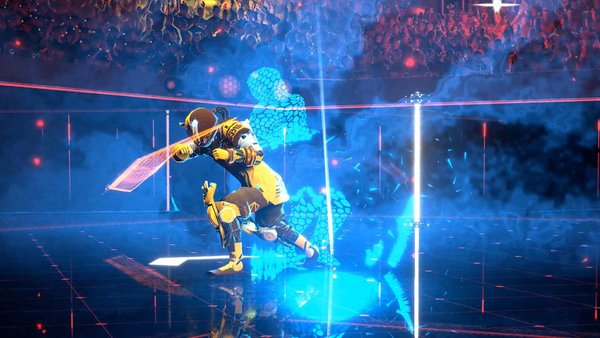
It's fair to say that an absolute glut of futuristic sports games have come down the pike over the last five years since the monolithic success of Rocket League, and while most of them barely made a dent, Laser League was an altogether different beast.
Hailed as an "instant modern-day multiplayer classic" by Eurogamer, Laser League was a Tron-inspired, neon-soaked sports game in which players attempted to switch on laser nodes in order to obliterate the other team and win the round.
It sounds simply enough, yet there was an enormous amount of strategy involved in ensuring you had the drop on your rivals while not opening yourself up to attacks, and using the right power-up for the right moment.
It is absolutely a game which unfurls its true complexity the longer you play it, yet with such a howlingly generic name, perhaps Laser League never really stood a chance in its over-saturated market.
Sadly it never reached more than a few hundred concurrent players on Steam, and even a stint on Xbox Game Pass couldn't boost its popularity much, largely due to the fatal lack of cross-play functionality.
Barely three months after its release, developer Roll7 transferred development to publisher 505 Games, and that's basically all she wrote.
1. Werewolves Within
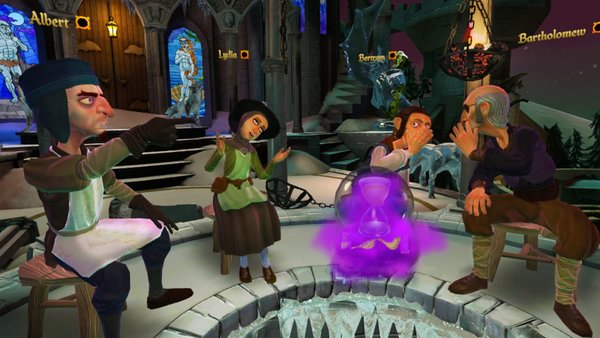
Werewolves Within was one of the first great multiplayer games for VR platforms, but like almost all online VR games, it was always going to struggle with one thing - maintaining a player-base.
Even so, the first few months of the game's life were extremely promising, delivering up a VR version of the classic social deduction game that benefitted enormously from VR's social features - namely in-built microphones.
And though a passionate player-base sustained in those early months thanks to cross-play support between PSVR and PC VR platforms, players eventually discovered a game-breaking exploit which allowed knowing villagers and werewolves alike to manipulate the game's outcome in their favour.
And so, many frustrated players stepped away from the game while waiting for Ubisoft to deliver a patch. However, it ultimately took several months for them to do so, by which point most had moved onto other games and simply never returned.
Today, Werewolves Within is effectively a desolate wasteland where finding players even through exterior matchmaking sites is now extremely difficult.
It's a depressing fate for a game which was a formative VR experience for so many people, and one of the most ludicrously entertaining multiplayer games of the entire generation.