10 Beloved Video Game Studios That Publishers RUINED
"That beloved project that you've been working on? Just do Call of Duty instead."
As with any other medium, those who love and consume video games tend to follow specific creators wherever they go. The likes of Rockstar, Naughty Dog and Insomniac Games have all developed reputations for putting out consistent, high quality work, and all enjoy the advantageous position of being supported by strong parent companies; none of the previous three have ever had to worry about being yanked off their next title to support a different series, or have their offices gutted thanks to some restructuring.
However, not every studio is as fortunate. Sadly, for the last few decades, numerous studios have fallen to the wayside thanks to mismanagement from various video game publishers. Some were responsible for some of the best loved games of the last couple of console generations, but today, they're either dead, or have long since transformed into something unrecognisable.
It's a sad reality of the industry today that video game development is fraught and occasionally torturous, but it can be made so much worse given just the wrong push from a given publisher.
The following studios were given that exact push, whether by being forced to adopt a specific engine, shift development to support a different title or just by being liquidated entirely.
One thing's for certain though: No matter their fate, they're definitely not what they used to be.
10. Visceral Games

All the developers on this list were short changed in one way or another, but Visceral got shafted hard. The studio never seemed like a good fit for EA, who actively didn’t want the kind of single-player, slightly-out-the-mainstream games the team were so good at delivering.
The first two Dead Space releases were home runs, but then the publisher decided to stick their neck in. Wanting to transform the property into the next Call of Duty, the third game was mandated to be more action focused, to include co-op (never a good look for a survival-horror title) and be stuffed with microtransactions.
When that sequel failed to sell (a frankly ridiculous) 5 million copies, EA put it on ice, and drafted Visceral in to make a Battlefield spin-off, the cops-and-robbers themed Hardline. It was a fine game in and of itself, but you could tell the studio didn’t have much experience creating a first-person shooter before.
Things looked up after that though, with Amy Hennig joining the studio to begin work on a story-driven Star Wars game. Everything sounded promising, but EA cancelled the title as they moved towards live-service experiences instead, killing the studio along with the game.
[Josh Brown]
9. High Moon Studios
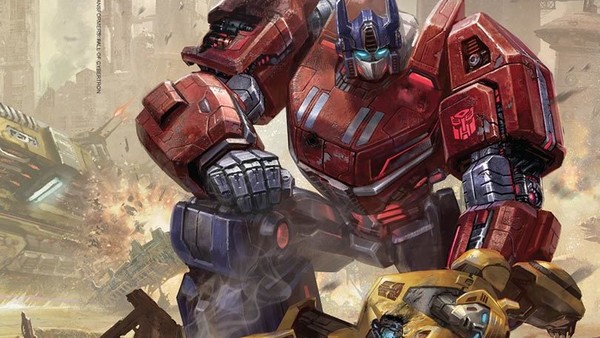
One of the many casualties of Activision's cutthroat approach to video game development, High Moon studios was effectively killed in 2013 when the publisher laid off 40 of its employees. Instead of leading development on its own games, the studio would be reassigned to lend support to Call of Duty and Destiny, a sad indictment of Activision's greed.
High Moon's Transformers games weren't incredible, but they were great. Starting first with War for Cybertron, the studio carved out a niche with one of the best developed license titles of the decade, bringing the Transformers back to their eighties roots by divesting from Michael Bay's films, which were still dominant in 2010.
It was everything that fans wanted and more, and it only improved with the sequel. Fall of Cybertron introduced the Dinobots, and chronicled the cyber-planet's dying days. It also included an enjoyable multiplayer mode, co-op survival, and pretty much every fan's favourite Transformer. The game even ended with the Transformers heading to Earth, but High Moon would never get the chance to finish that story, with 2013's Deadpool their final release.
It's a familiar story by now; Activision-owned studio produces several great games, before being restructured and sent to do nothing except support Call of Duty. Awful, awful stuff.
[Ewan Paterson]
8. Rare

Rare's fall from grace will always remain one of the industry's biggest tragedies.
Back in the 1990s, the British studio was seen as a scrappy upstart, a cutting-edge team of people looking to deliver iconic characters, worlds and experiences on consoles. The relationship they struck up with Nintendo was endlessly fascinating, as they twisted the platforming genre on its head by delivering the foul-mouthed Conker's Bad Fur Day on the family-friendly Nintendo 64.
Between colourful platforming titles like that, Donkey Kong Country and Banjo-Kazooie, as well as first-person shooters like Perfect Dark and Goldeneye 007, Rare were seemingly unstoppable, and their impending purchase from Microsoft, a company which at the time shared a similar roguish charm, led many to believe they'd be set for life.
And in a way, they were right. Rare have never gone away, and continue to produce games for Microsoft, but shortly after their acquisition, the charm and spark of creativity quickly faded. The first warning sign came when Bad Fur Day was ported over to the original Xbox and was censored, but that was just the tip of the iceberg to come. Perfect Dark Zero was a mess of an Xbox 360 exclusive, Viva Piñata left a lot to be desired, and most recently Sea of Thieves ended up disappointing Xbox One players.
The decline happened pretty much overnight, and fans have spent a decade trying to figure out why.
[JB]
7. Beenox

For the longest time, Beenox were the little studio that could. Initially conceived as a porting house, the company eventually moved on to create their own original games (starting with, uh, Bee Movie Game) before Activision put them in charge of Spider-Man.
After a few years of disappointing open-world tie-ins, the new developers took the reigns and created Spider-Man: Shattered Dimensions, a genuinely innovative take on the wall crawler that blended a bunch of different versions of the superhero into one story-driven extravaganza.
Despite selling well and scoring high with critics, the harsh reality of licensed games quickly caught up to the studio. Activision gave them a year to craft a follow-up, Edge of Time, which wore its rushed development on its sleeve. They bounced back with the criminally underrated tie-in to the original Amazing Spider-Man film, but suffered again from a lack of time and money on the sequel.
Following this, Beenox were relegated to being a support studio for Call of Duty and other Activision titles, taken off their own original games. That’s what they’ve spent the past few years doing, with their only notable game being the (admittedly stellar-looking) remake of Crash Team Racing.
Spider-Man is in better hands now, but Beenox’s talents are being wasted.
[JB]
6. LucasArts
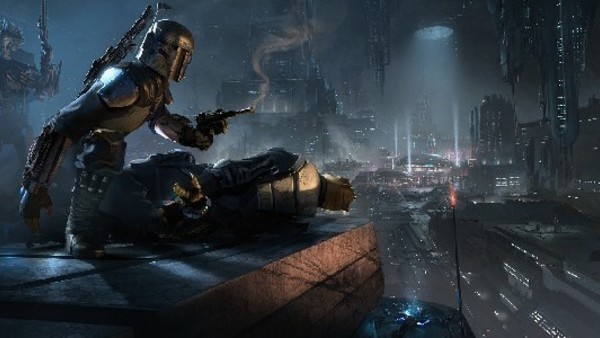
This might technically be cheating, given LucasArts acted as both a publisher and a developer (it's equally true that problems within the company seeded their eventual downfall too), but there's no denying the industry landscape is worse off without it.
At its peak, LucasArts was one of the most formidable forces in the gaming industry. Front and centre to its success were its Star Wars titles, which it both developed in-house and published from external studios. Seminal titles like Monkey Island and Grim Fandango came from within the walls of LucasArts, and though the company was afflicted with a myriad of issues during its twilight, they were still creating genuinely worthwhile ideas, with Star Wars: 1313 its final E3 demo.
For all the good that Disney have done unto Star Wars since their acquisition of Lucasfilm in 2012, there is no arguing with how poor their handling of the Star Wars license has been when it comes to video games. They effectively gutted LucasArts to shop the Star Wars license to EA, who are yet to produce a single-player Star Wars experience in the six years since they acquired the license.
It was such a needless exercise, and though there's reason to be optimistic regarding Jedi: Fallen Order, referring to LucasArts in the past-tense doesn't get any easier.
[EP]
5. Pandemic Studios
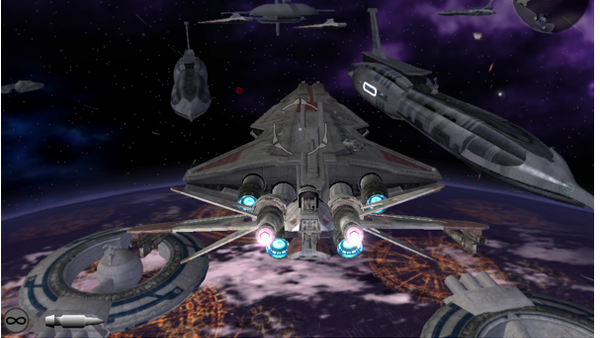
Yet another studio EA drove into the ground, for a time Pandemic Studios absolutely ruled the mid-2000s with a string of beloved franchises, including the original Star Wars: Battlefront, Mercenaries and Destroy All Humans!
The problem was, while all of these different properties were notable and had their fans, they weren’t gigantic successes. EA are a company that likes hoovering up every nickel and dime they can get their hands on, and as a result Pandemic were put onto new original projects to tap a bigger audience when they were purchased in 2008.
That led to the studio's final two games, which were both released in 2009. Lord of the Rings: Conquest was envisioned as the next big multiplayer hit, using the LOTR name as leverage, but it failed miserably in finding a playerbase (probably on account of it not being all that good). The second release was the criminally underrated The Saboteur but, again, it failed to really capture the imaginations of players.
After that, and a mere year after being bought by EA, the publisher began the process of shutting the studio down.
[JB]
4. Raven Software
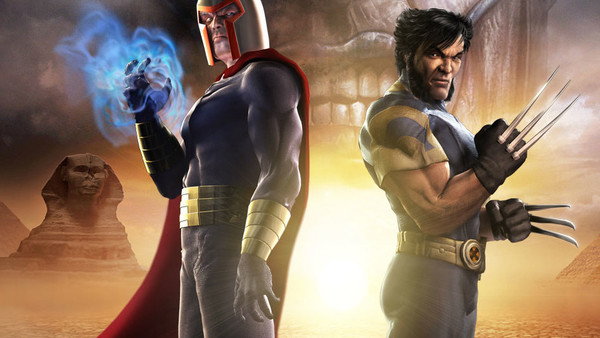
Back during the early noughties, Activision were in full control of the Marvel license. Although this did lead to the occasional dud, for the most part the company enjoyed modest success from their Marvel games; Treyarch produced a seminal release in Spider-Man 2, and an underrated classic in Ultimate Spider-Man. But it wasn't the wall-crawler who was having all the fun - Marvel's mutants where fully in on the act too.
Releasing in 2004 and 2005, the X-Men Legends series put players firmly in the shoes of the Uncanny X-Men, with the sequel - Rise of Apocalypse - even allowing them to play as Magneto's Brotherhood of Evil Mutants. Raven would later expand their horizons with Marvel: Ultimate Alliance and X-Men Origins: Wolverine, before trying their hands at the FPS genre again in Wolfenstein and Singularity.
The latter would prove to be their last full release.
Shortly after Singularity released in 2010, the studio was restructured and shipped off to assist on Call of Duty. In the decade since, every single project Raven has worked on has had something to do with Call of Duty.
Before this, Raven developed seminal titles in Star Wars Jedi Knight II: Jedi Outcast, as well as its follow-up, Jedi Academy. Today, however, they do nothing but 'assist' development on CoD. Cheers, Activision!
[EP]
3. Bungie
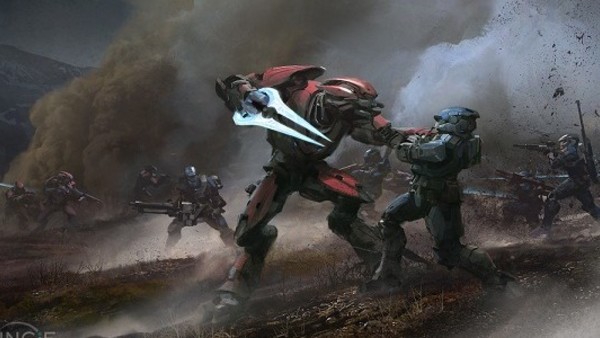
Bungie's Halo series is one of the most influential gaming franchises of all time, and was the title that launched Microsoft's foray into the medium some eighteen years ago. From Halo: Combat Evolved to Reach, the studio helmed hit after hit, and managed to ensure that Halo will go down as one of the greatest video game series ever created.
Reach, a prequel to the first Halo game, ended up being Bungie's final contribution to that series, and fans were excited to see what they had planned next. They'd signed a deal with Activision earlier in 2010, but the studio wouldn't bring everyone across with them. Some would stay to assist 343 Industries on Halo 4, and Activision's reputation sort of goes without saying at this point.
Bungie's 'next big thing' was meant to be Destiny, and the hype was real. The game proved to be a massive commercial success, spawning several successful content add-ons and even a sequel in 2017. The Bungie of yesteryear, however, has ceased to be.
Instead of crafting a mythos as rich or as vibrant as Halo, the studio now spends their time crafting a repetitive loot-shooter with an aimless story. Micro-transactions are prevalent, and the grind, as they say, is real.
Whether this was Bungie's fault or Activision's is still up in the air, but with the studio having ended their partnership with the publisher this January, one can only hope they get back to their best.
[EP]
2. Hangar 13
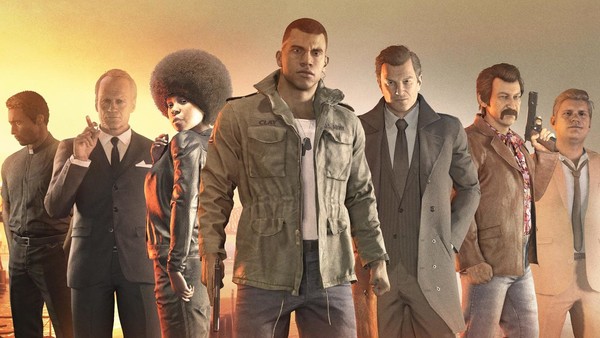
Mafia III is a criminally underrated title. Yes, it wasn't without its flaws, but you'd struggle to find a single-player experience as authentic on this generation of consoles.
Hangar 13's command of history distinguished Mafia III immediately upon release, and it was clear the studio had some great ideas worth sharing. Headed up by ex-LucasArts designer and comic book scribe Haden Blackman, the studio looked as though it would be 2K's next big outlet, only the story since has proven to be a bit of a bummer - at least depending on who you listen to.
According to Kotaku's Jason Schreier, the years following the release of Mafia III have been unkind to Hangar 13. Although they've set up a new office in Brighton, many who worked on Mafia III left or were moved on by 2K. Several promising titles are said to have been shelved by 2K, including an espionage title set in Berlin, while Schreier's report also mentions how it was 2K who demanded the studio shoehorn in open-world activities to Mafia III. 2K were also apparently responsible for refusing requests to delay Mafia III so that more time could be spent polishing the title.
There's still a chance Hangar 13 could become the studio it promised to be when it was initially founded, but judging from accounts so far, 2K have prohibited it from coming into its own.
[EP]
1. Bioware

Bioware’s decline is probably the most recent tragedy on this list, to the point where the wounds are still sore. The once-great RPG maker arguably started to falter after botching the ending of Mass Effect 3, but it was EA’s decision to make them adopt the Frostbite engine for all future games which sealed their fate.
Even on the well-received Dragon Age: Inquisition, it’s been documented that the engine caused the team a huge amount of pain, as they struggled to get the technology (which is optimised for first-person shooter games) to accommodate their vision for grand, third-person role-playing titles.
Across Dragon Age, Mass Effect: Andromeda and most recently Anthem, the tools have hindered the team's ambition at every step, and EA apparently haven't offered much in way of support. If anything, the publisher only punished the studio for getting to grips with the engine, as they moved Bioware staff over to help similarly struggling devs on FIFA.
There’s blame to be shared by the developers themselves as well, but there’s no denying EA’s disdain for single-player and their forced tech mandates forced Bioware’s hand.
[JB]