10 Biggest WTF Gaming Moments Of 2015

Exploitation, persecution and little cars playing football. It's been one hell of a year.
It's been as weird a year as any in video games, shaped by revelations about totalitarian games publishers, $60 AAA games that are over in a few hours, and controversial DLC packs. Many of the little things that we mocked and despised in 2014 have come back in mutated, expanded form to make us scratch our heads and wonder if we're heading towards the digital end times. But there have been some equally crazy moments in the industry this year that have surprised us all in the best possible way; decisions by console manufacturers and new IPs that have blown us away and made the gaming medium a slightly better place. So, for both better and worse, here are the 10 craziest moments to have happened in our beloved industry in 2015.

10. Players Being Locked Out Of Destiny Content

Destiny is a game that breeds loyalty through addiction, and people have happily splashed out $20 for each of the moderately-sized Dark Below and House of Wolves DLCs. But when Bungie announced that its latest DLC, The Taken King, would cost $40 and lock existing players out of much of the game's content, a reaction was inevitable. That's right, even if you'd spent a total of $80 on Destiny up to that point, you'd be locked out of key parts of the game - like the Heroic Strikes and Nightfall missions - unless you coughed up another $40 for The Taken King. Many of the weapons from the vanilla version of the game were also reset, negating the many hours Destiny's tireless players had poured into upgrading them. The Taken King is, in fairness, the best version of Destiny yet, and the $80 Collectors' Edition (which also contains the base game and first two DLC packs) is worth the money if you haven't got it yet, but Activision's approach to moving existing players onto Taken King was exploitative - and showed brutal disloyalty towards the game's longstanding player base.

9. Xbox Hololens

With Sony announcing its own VR headset last year, it wasn't going to be long before Microsoft got in on the action, announcing the HoloLens at E3 2015, and blowing us away with what it presented. The HoloLens distinguished itself from the competition by calling itself a 'Mixed Reality' headset - essentially a pair of shades through which you can see the real world, but with full-on 3D holograms laid over it. The demo of Minecraft looked impressive, with a full-on interactive hologram of a player-created world projected onto a table in front of the user. https://www.youtube.com/watch?v=29xnzxgCx6I But this was a WTF moment in more ways than one - would other people be able to see these holograms, as the video here suggests? Would this really be that functional for games, or is it more of a productivity tool, as most of the other HoloLens marketing suggested? The answer to the first question is 'no', and you actually need to wear the lens to actually see the holograms (we knew it looked too good to be true). So it's not really a hologram headset, but more a high-end augmented reality one - which currently costs $3,000 for developers to play around with. Sure, it may still be intriguing, but it's a far cry from the Star Trek device it appeared to be when we first saw it.

8. Microsoft Caving And Allowing Backwards Compatibility On The Xbox One

PR-wise, 2015 was a resurgent year for the struggling Xbox One, with some solid releases, plenty of exciting exclusive games lined up (particularly on the indie scene), and - unexpectedly - the announcement of full-on, no bulls**t backwards compatibility with Xbox 360 games. Just when the world was beginning to lose hope that any console other than a Nintendo would let people play their favourite games from the previous generation, Microsoft announced that the Xbox One would be updated with X360 emulation software in December (the update has just been released). Microsoft asked gamers to vote for which X360 games they wanted to see on the Xbox One, and over 100 of these are already playable on the console in excellent working order. The backwards-compatible games can be played from X360 discs or simply installed from your Xbox account if you already own them digitally. The whole process is extremely smooth, and marks the most gamer-friendly move made by any major game company this year. It's a sign of the times that such a positive move came as a surprise to the gaming community, but hopefully it'll encourage other companies to give a bit more back to consumers. It certainly puts Sony's efforts to let people play their older games to shame. What's that? You haven't heard of the PS4's 2015 answer to 'backwards compatibility'? Well, you're in for a treat...

7. The Ludicrous Price Of PS4's 'Reverse Compatibility' For PS2 Games

When Microsoft announced at E3 that the Xbox One was getting a software update that would allow people to play their old Xbox 360 games, it won a major battle in the console war. Even if Sony responded with something similar, it was Microsoft's idea, and no one would forget that. Lo and behold, Sony did respond by releasing a bunch of PS2 games as digital downloads for the PS4, upscaled to 1080p and with full trophy support. So this is a sign that the PS4 is integrating some kind of backwards compatibility, right? Well, no, far from it. Firstly, Sony confirmed that old PS2 discs won't be compatible with the PS4, which already loses them the battle on this front against Microsoft. What really riled gamers up though, is the fact that people who bought these PS2 games as digital downloads for the PS3 will need to buy the games again if they want to play them on the PS4 (at a substantial price of $15/£12). Sure, these versions are upscaled to HD and have trophy support, but at a time when Microsoft is offering a great bit of free fan service by including no-fuss backwards compatibility on its console, Sony's pathetic response looks greedy and opportunistic by comparison.

6. The Awful Working Conditions At Konami
In August, a report by Japanese news site Nikkei found that Konami employees were subject to the kind of working conditions that'd make Oliver Twist think "bollocks to this" and return to his old job at the workhouse. From non-security cameras that monitor the movements of employees and randomised emails that are changed by the company regularly to avoid employees being headhunted, to developers being forced to work long hours as cleaning staff or factory workers if they're not seen as 'useful' at a given time. The remnants of Hideo Kojima's in-house studio, meanwhile, Kojima Productions, have been renamed to Number 8 Production Department and don't have access to the internet - something deemed so necessary that even prison inmates have it. In fairness to Konami, they do actually offer their employees monitored internet access - evidenced by when an employee shared a status on Facebook that he was leaving the company, and any employees who 'Liked' the comment were punished through various demotions. The current mess at Konami feels like the Last Days of Rome, and you have to wonder if they're on the verge of a cataclysmic implosion. We may moan about major publishers being cheeky with their micro-transactions and DLC, but what Konami is doing here is bordering on Human Rights violations, and should make people think twice about buying their games. With that said, if you really want to buy MGS V, that's fine so long as you repeatedly tell yourself that you're buying it in support of Kojima Productions rather than Konami.

5. The Five-Hour Cutscene That Was The Order: 1886

Try to imagine, if you will, the excitement you felt for The Order: 1886 at the start of the year. The graphics were incredible, the Steampunk-London setting was unique, and it looked like it could've been the natural successor to the likes of Naughty Dog's great PS3 adventures. But it's not easy to try and recreate the pre-release excitement to a game that was so abysmally disappointing. The Order: 1886 wasn't the great adventure of the new console generation, but a beautiful, glossy five-hour cut-scene that was about as interactive as watching the game's stage demo at E3. The Order teased players with what was clearly a thoughtfully designed and interesting world, yet never allowed you to explore any of it. Even if you wanted to just stop and listen to a conversation that a couple of people on the street were having, you'd feel like there was a character waiting for you at the end of the street, tapping their foot impatiently on the ground as they waited for you to hurry along to the next objective. In a way, The Order really was quite incredible. Even playing it, you could see the game's potential and technical effort that went into it, and yet the whole experience feels like a monorail ride through a stunning location when you want to be out there really experiencing it. Coming to the quick end of The Order, you'll utter a disbelieving laugh that it's over before you really got the chance to actually play it, before checking the Refunds policy of the store where you bought it.

4. The Unexpected Rise Of Rocket League

Several years ago now, a little indie game called Supersonic Acrobatic Rocket-Powered Battlecars came out for the PS3. It was a game in which two teams of cars tried hitting a giant floaty ball into each other's goals. The gameplay was skilful and highly addictive, but the game just didn't leave a massive impact. In 2015, that game's sequel, Rocket League, was released with very little hype or build-up, but ended up being the sleeper hit of the year. It transcended its role as a casual indie game, and within a few months of its release became a cultural phenomenon and E-sport. The magic of Rocket League is that, like a professional sport, it's mechanically simple. There are a few buttons, and your objective is to 'Hit Big Ball Into Goal'. Anyone can play it casually, but to play it well takes training and dedication, because the skill ceiling is one of the highest in any game out there. If you play Rocket League, then going on YouTube and admiring its best goals is like a casual football fan watching Match of The Day's Goal of the Month. Rocket League is more than a game, it's a craft and a sport, and it's going to join the likes of Team Fortress and Counter-Strike in becoming a timeless mainstay of the medium.

3. EA + Star Wars = The Most Money-Hungry Deal Ever

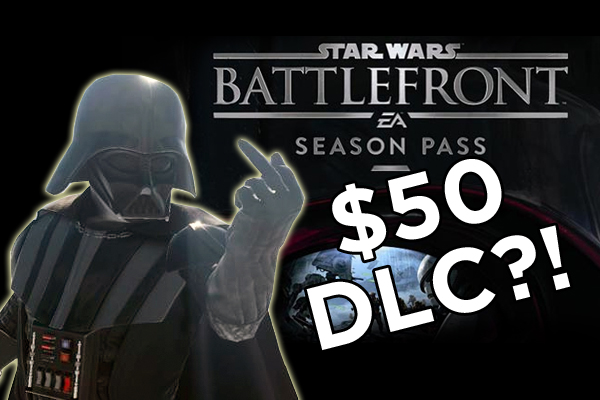
The Stars Wars/Battlefield hybrid game from EA was always going to be a filthy cash-in. It does, after all, entail Star Wars, Battlefield and EA. Smash those three things together into a well-presented but otherwise insubstantial video game, and you have yourself a goldmine. True to their approach with the Battlefield series, EA put the base Battlefront game up for a price of $60, and is also offering a Season Pass for $50, which will be made up of four DLC packs with four maps in them each. So that's a total of $110 for the 'full package'. Now, you can question EA's dodgy DLC practices, but for better or worse they've been going on for a while, so nothing new or fascinating there. What's shocking, however, is the lack of content in the base game. While EA claims a half-decent twelve maps in the standard version, these are set across four planets, with each map on the same planet essentially being a cordoned-off area of a larger one. EA cut some big corners on the map variety (and weapon variety, and gameplay depth, the list goes on), essentially forcing people into buying the season pass to get a satisfactory amount of content. With Battlefront, EA's long-questionable approach to offering players a decent amount of content at the point of entry to a game has reached new lows. Unfortunately, the fact that it's a Star Wars game means that the vulnerable, frenzied fanboys will cough up the money in an instant, thereby allowing this unsavoury cycle to continue.

2. The Botched PC Port Of Batman: Arkham Knight

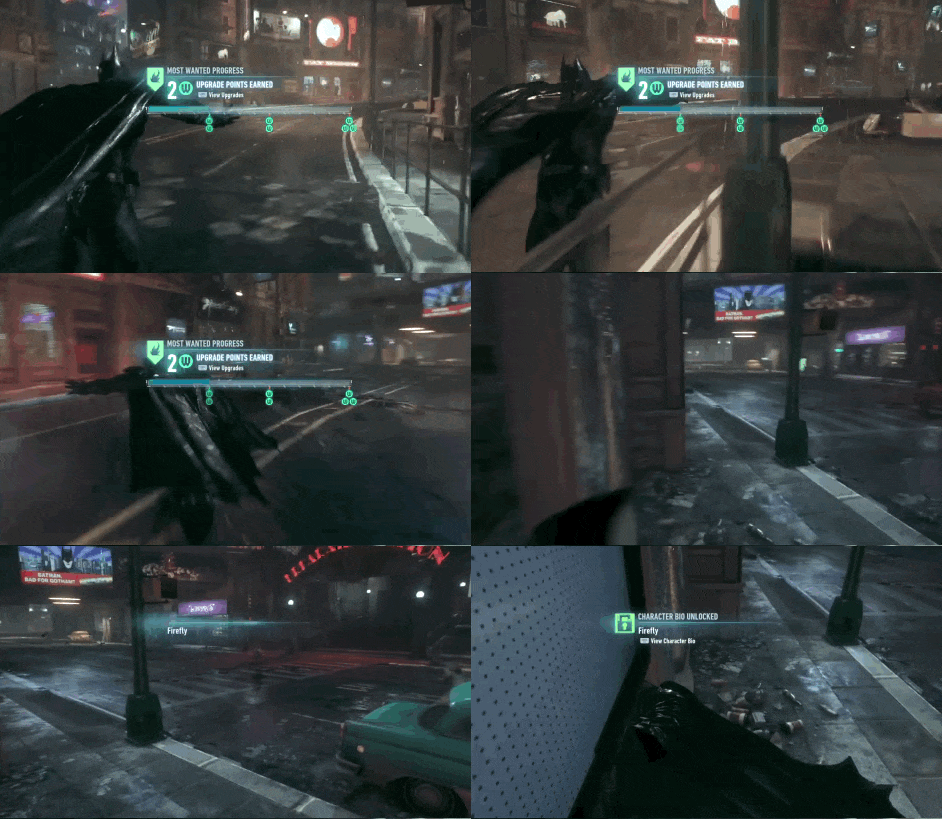
In another example of a worrying trend picking up the pace, there were several PC versions of major games released this year that have proven unplayable for large numbers of people who bought them. The recently-released Just Cause 3 is still suffering from crashing and game-breaking bugs for many players, while Warner Bros' Mortal Kombat X PC port has also suffered from countless stability issues. But the biggest culprit is another game published by Warner Bros, Arkham Knight. The eagerly-anticipated final instalment in developer Rocksteady's final Batman game runs perfectly well on consoles, but despite having been out for around half a year now, it's still unplayable for many PC gamers - who have been reporting overheating, shoddy frame-rates (unless you had well over the 'recommended' amount of RAM), or the game just outright not working.
The issues were so bad that it was taken down from Steam, and Warner Bros have since been offering refunds and free games to affected people. One anonymous insider at Warner Bros even told Kotaku that the publisher had known about the game's PC woes for months before release, but turned a blind eye to focus on the console versions. It was later revealed that Warner Bros. had outsourced at least part of the PC version's development to another studio, Iron Galaxy - incidentally the same people who made the broken PC port of Arkham Origins. Many of these high-profile PC port flops in 2015 have been connected to lazily outsourcing PC development to other studios, indicating an alarming complacency towards gaming's most powerful but ostracised platform.

1. Everything About The Konami Vs. Kojima Scandal

While not necessarily the most well-known thing that's happened in the games industry this year, the fiasco between Konami and Hideo Kojima that ended with Kojima being sacked and his studio dissolved, is without doubt the event that left any who heard wondering "What the f*** is going on?!" So, across the year, although Konami reassured the gaming community that Kojima would finish working on Metal Gear Solid V: The Phantom Pain before moving on, the name of his in-house development studio, Kojima Productions, was removed from the box art and promotional materials of the game. That, combined with Phantom Pain's thin story and unsatisfactory ending have led to speculation about whether he was even allowed to finish the project in the first place. In addition, gamers had to bear the grim news that another Kojima game, Silent Hills (demoed as P.T.), was cancelled, with Konami focusing instead on making a depressingly garish Silent Hill pachinko machine instead (warning: the below trailer will shred your soul). Most recently at time of writing, Kojima was blocked by Konami from attending the Game Awards and picking up accolades for Metal Gear Solid V - the game that he and his studio spent years making. At least the touching show of support for Kojima (and boos for Konami) rounded off the year by showing the world whose side people are on in this mysterious dispute, and it's one that'll no doubt continue into 2016 before we get a clear picture of what really started it all. https://www.youtube.com/watch?v=_ht4dbyPIcM What's been your biggest WTF moment of the year, either industry-wise or in a specific game? Let us know in the comments!

Contributor
Contributor

Gamer, Researcher of strange things. I'm a writer-editor hybrid whose writings on video games, technology and movies can be found across the internet. I've even ventured into the realm of current affairs on occasion but, unable to face reality, have retreated into expatiating on things on screens instead.