10 Brutally Difficult Opening Levels In Video Games
You're lucky to make it through the tutorial.

These days, when we hop into a new video game for the first time, we expect to be broken in gently.
A tutorial stage, simple on-screen prompts to explain the controls and mechanics, that sort of thing. Let us get into the swing of things for a little while. After all, you’re not put behind the wheel of a supercar and expected to break the land speed record on your very first driving lesson, are you?
Instruction booklets seem to be all but extinct, so we’ve got to learn the basics of how to play the game somewhere.
Classic titles, meanwhile, usually had manuals (quite thick ones, too, in some cases), but they often compensated for that by being harder than Arnold Schwarzenegger’s pecs, right from the off.
As a result, then, we’re going to be taking a look at a combination of classic and more modern games, exploring some of the hardest opening levels and areas in gaming memory.
10. Driver

That’s right, our first pick’s sure to have been a popular one. If you’re a gamer of a certain age, you reached gaming maturity right around the late nineties. You started to crave more ‘grown up’ experiences, like the ever-controversial Grand Theft Auto series. Driver was another title that surely scratched that itch too.
The original game released in 1999, a driving game (funnily enough) inspired by the awesome, adrenaline-ridden car chases that were everywhere in the movies of the time.
The player took the role of undercover cop John Tanner, who had been sent to Miami to investigate the activities of the Castaldi criminal syndicate without their knowledge. Needless to say, he has to win the trust and respect of some shady individuals in order to do so.
This is how Tanner finds himself in that notorious parking garage. This stage serves as the game’s tutorial, a series of tests of the player’s driving prowess.
For a simple training level, though, it’s infuriatingly difficult, demanding you try to pull off the kind of manoeuvres that aren’t really called for in the course of the main game.
It’s silly, but it's mandatory, and it’s zero fun for anybody concerned.
9. Star Wars: Rogue Squadron II - Rogue Leader

Quirky and
super solid as Luigi’s Mansion was at launch, it’s arguable that it just wasn’t the title
that sold fans on the GameCube’s capabilities. That game, perhaps, was Factor
5/LucasArts’ Star Wars: Rogue Squadron II - Rogue Leader.
Licensed games are infamous for the way they vary in quality, but Rogue Leader was absolutely the real deal. The concept was simple: use every ounce of technical grunt the console had to offer to recreate some of the most epic battles and setpieces from the original trilogy, then cast the player as Luke Skywalker or Wedge Antilles.
The presentation was all-around incredible for the early 2000s, and the game threw the player right into the thick of the action from the start. There’s an open training level set on Tatooine, introducing the basics of control and some intermediate flying techniques, but the first level proper is a real doozy: the iconic attack on the Death Star.
From culling pursuing TIE fighters to wiping out ground defenses and firing those Proton Torpedoes, there’s a TON to manage, and many struggled to make it past even the beginning of this awesome game.
8. Jet Set Radio

As connoisseurs will know, Sega’s Dreamcast was a console that just didn’t get the reception it deserved. It had its flaws and foibles, as with all consoles, but it brought so much creativity to the table.
With THAT controller, the curious Tamagotchi-esque memory cards and a small but brilliantly inventive catalogue of titles, this futuristic system deserved much better.
One of the more notable games in the console’s repertoire is Jet Set Radio, which launched in the year 2000. The goal of the game, essentially, is to explore Tokyo as part of a young skater gang and spray as much graffiti as possible while performing impressive tricks. Think Tony Hawk’s Pro Skater, only with a different kind of skating and much more civil disobedience involved.
As one of the first games to venture into the idea of a 3D open world, there was a lot for the player to learn here.
Honestly, we arrived at a similar scenario to Driver’s parking garage: A super comprehensive tutorial that demanded prowess you just didn’t have yet. The final challenge, the 50 trick combo, is one that drove many players to play something else.
7. Bloodborne

Bloodborne, as fans will remember, arrived in late March 2015. This was a crucial time for a fantastic PlayStation 4 exclusive to arrive, as… well, there weren’t any fantastic PlayStation 4 exclusives at that point.
FromSoftware’s spiritual successor was a super enticing prospect for many, proving to be the killer app that sold many on the system. A thrilling, obscure, gothic tale with a heaping helping of Lovecraftian weirdery, there’s nothing else quite like Bloodborne on the market at the moment.
Needless to say, FromSoftware never pull any punches, and (depending on who you ask) Bloodborne is just as difficult as anything the iconic Dark Souls series has to offer. Interestingly, with its more action-oriented, counter-heavy combat, even FromSoftware veterans would struggle at first, and that first run through the opening area was brutal for many players.
Numerous Huntsmen lurk, and while they’re some of the game’s most basic enemies, they can cut you down in seconds if you’re overwhelmed.
Which you will be, for many more deaths, until you eventually overcome this gauntlet of death.
6. Tomb Raider III

The Tomb Raider series was a whole new breed. The original adventure arrived in 1996, and it was instantly clear that players were in for an adventure larger than Ms. Croft’s terrifyingly angular breasts. At the time, gamers were accustomed to platformers and action titles consisting of a series of short levels, and Tomb Raider was far from that.
Vast, explorable levels filled with secrets were the order of the day here, and things became increasingly more elaborate as the series went on. 1998’s Tomb Raider III is particularly notorious, and the first level sets the bar extremely high on the difficulty front.
Set in an Indian jungle, this large and open environment is loaded with traps. Within half an hour or so, careless players could be impaled on spike traps, fall to their doom, be crushed by a boulder, mauled by a tiger or some grim combination of these things.
Deathtraps-amundo aside, It’s a long, winding level that is super easy to get lost in. If this was your first Tomb Raider game, you had no idea what you were letting yourself in for. Training in Lara’s mansion did not remotely prepare you.
5. Contra

The late eighties were an incredible time, weren’t they? The hair. The fashion. The Walkmans. The cellphones roughly the size of the Chrysler Building. It was a simpler, ridiculous-looking time, and we just didn’t appreciate it enough while we were living.
Do you know why we didn’t? Because Contra (and other dastardly difficult arcade titles) were making us realize how inadequate we all were, that’s why. Arcade titles are notorious for being incredibly hard (arcades themselves wanted players to keep pumping in their money, after all), but the Contra series is one of the most infamous of all.
Realistically, any of the games in the series would fit comfortably in this entry, but we’ve opted for the original. Jungle was an outright fiendish level, especially for newcomers who didn’t even know which button was to shoot and which was to jump.
Your character has barely spawned before the enemy onslaught begins, and it never lets up. Swarms of agents, gun turrets and all manner of other nasties approach, from behind you as well as from in front, and the simple controls give you little chance to react to them.
How much health does that compound door boss have, too?
4. The Witcher II: Assassins Of Kings (Pre-Patch)
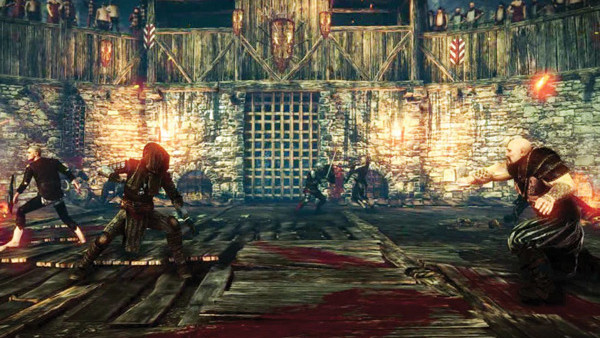
Now, there’s an important caveat here. The Witcher II: Assassins Of Kings was given a significant patch to the tutorial. It’s no longer the garbled mess it once was. Nevertheless, though, we’ve just got to give it a shoutout, because it was a tutorial and a half, right there.
Originally, players were presented with a less-than-glamorous mass of text to explain some of the finer points of The Witcher II. Not only was this utterly sub-par as a tutorial concept (well, a contemporary one), but it just plain didn’t explain much of anything.
In a game as mechanically complex as this, players can easily be left fumbling in the dark if they aren’t introduced to certain important ideas.
Even where the tutorial actually did let us play, it took the approach of teaching how the combat works by simply throwing us to the wolves and seeing if we survived (spoiler: we didn’t). Those were some brutal waves of enemies if ever we’ve seen them.
3. Mega Man
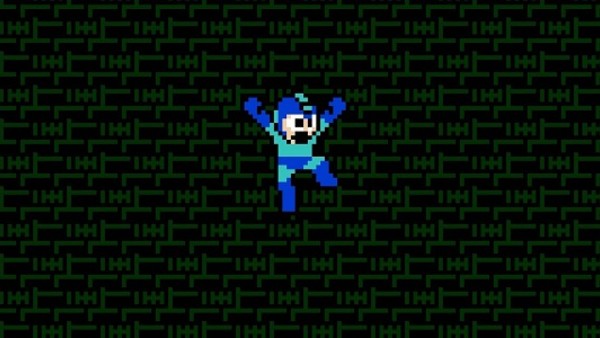
As with Contra, Mega Man is a franchise notorious for being less than accessible. Simple controls and gameplay ideals bely the absolutely relentless difficulty that’s staring you in the face right from the get-go.
As such, everyone will have their own personal picks for most difficult game in the series, and the most challenging stage within it. You can pick your poison, really: if you have traumatic memories of a Mega Man stage or boss that left you a shattered shell of your former self, we can empathize with you.
A popular pick for most difficult of all, however, is the original game, which first released for the NES in Japan in 1987. Right from the off, the central tenets of the series’ gameplay were established: you could take on the Robot Masters in any order you like.
Needless to say, whichever stage you pick first, it’s going to be a baptism of fire. Ice Man’s stage gets our vote for most brutal, though, largely because those Foot Holders are an absolute nightmare to traverse.
2. Ikaruga

Now, if there’s any genre infamous for coming at players full-throttle right from the word go, it’s shoot ‘em ups. Because the controls tend to be so basic, we get little more than a cursory tutorial at best, before being dropped right in the deep end.
The deep end of a pool filled with flesh-hungry piranhas and the shark from Jaws (the real one, not the plastic ones).
Cult favourite Ikaruga is certainly guilty of this. Fans of shoot ‘em ups will know that this particular title has a very unique mechanic: the polarity system. The player’s ship, the Ikaruga, switches between a black polarity and a white one at the touch of a button. This also switches the bullets they fire accordingly. Enemies, in turn, are either black or white, and the same also applies to their projectiles.
Enemies take twice the damage when hit by the opposing polarity, while the Ikaruga itself absorbs matching colours and is instantly destroyed by the opposite one. This novel concept makes the action even more frantic than usual (quite an achievement for a Treasure game), but also demands an opening level that teaches how these things work succinctly.
Ikaruga’s opener isn’t as challenging as later stages, but it’s certainly a trial by fire. The polarity-juggling will really bend your brain the first time around.
1. Super Mario Bros: The Lost Levels
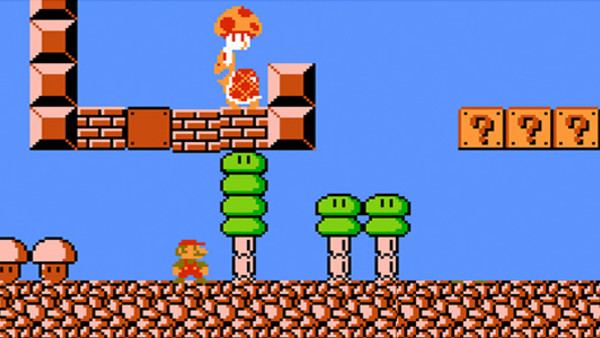
Come on, you might be thinking. It’s stage 1-1 in a Super Mario game. What could possibly be super difficult about that? Well, friends, you reckoned without the fiendish Super Mario Bros: The Lost Levels.
This release is simply known as Super Mario Bros 2 in Japan, a follow-up to the original. As you’ve probably heard, though, it’s surprisingly more difficult than the original, having been given a variety of curious tweaks and changes to throw off even the most seasoned Super Mario player.
Whereas stage 1-1 in Super Mario Bros. is a very straightforward affair, fine-tuned to teach new players the ropes (such as that Goomba perfectly positioned to be squished at the beginning), the Lost Levels takes the opposite route.
The layout of the level hasn’t changed much, but there are a whole lot more enemies, including Koopa Paratroopas jumping around in unpredictable patterns to throw you off.
The hidden blocks can be a pain to find for first-timers, too, while the Poison Mushrooms can also put a swift and grim end to Mario’s adventure.