10 Cancelled Video Games That Could Have Been Masterpieces
You were robbed of these future classics.

Why might a video game be cancelled?
Sometimes, it’s for no reason whatsoever, or as a consequence of stupendous mismanagement,
budgeting or general incompetence. Sometimes, the game in question is much
anticipated, but that alone isn’t always enough to guarantee its survival.
After all, publishers are cautious by their very nature, especially when it
comes to spending money on projects with uncertain prospects.
Crowdfunding is the obvious alternative, but even that doesn’t guarantee success. In some cases, developers simply cannot raise the necessary funds; in others, irresponsibility forces projects into a premature oblivion, despite substantial backing from a community of supporters. Sometimes, the cost of actually making a game will exceed initial expectations, the project suffering because of overestimation on the part of its creators.
Either way, the following games demonstrated massive amounts of potential, but were cancelled regardless. In some cases, the games themselves were doomed from the start, or fundamentally flawed; in others, only the publishers can be held responsible for robbing us of these potential classics.
They could have been instant successes or massive duds, but either way, our opportunity to find out has been taken away, which is a crying shame.
That said, here are 10 cancelled games that could have changed the world…
10. Darksiders 3

Darksiders is a decent series with awesome music and a sizeable fanbase. Its second instalment – Darksiders 2 – however, was partially responsible for the closure of its publishers, who were in pretty dire shape prior to their eventually closure four years ago.
THQ –
hoping to generate massive returns on their investments – began sinking money
into the series, hoping to save themselves from the inevitable, failing
miserable in the process.
The sequel – which outperformed the original significantly – fell short of expectations, considered a commercial disappointment by its publishers who shelved the franchise in response to its ‘poor’ sales. Darksiders 3 – which was planned to begin development shortly after – was subsequently cancelled, despite the series’ increasing mainstream appeal, loyal fanbase and ever growing critical admiration.
Likely, the third instalment would have expanded upon aspects of the original exponentially, helping to transform the series from a humble hack-n-slash into something even more impressive.
9. Mega Man Universe

Mega Man Universe was planned as the ultimate Mega Man experience, combining aspects from the entire series – though taking particular emphasis from Mega Man 2 – permitting players the opportunity of customising their own unique stages and sharing them with friends.
While a
huge departure for the series, the game had buckets of potential, allowing
players to create their own characters, uncover special abilities, and redesign
classic stages.
Following the departure of series creator, Keiki Inafune from Capcom, several Mega Man projects were immediately cancelled – including Mega Man Legends 3. Chances are, Inafune was the one person keeping them alive, the company infamously clueless when it comes to this particular franchise. Capcom itself cited ‘various circumstances’ as their reasoning behind the decision, but the timing of the cancellation can’t possibly be a coincidence.
Similarly to Super Mario Maker, Mega Man Universe might have been infinitely enjoyable, maintain the series’ appeal for the foreseeable future, but clearly the publishers disagreed. It might also have been the perfect send-off for the character, but again, Capcom had others ideas.
8. The Black Glove

The Black Glove was being developed by
the creators of Bioshock (well, some of them anyway), but – despite its
exceptional premise and execution – will never be realised. The project was
cancelled after failing to meets its fundraising ambitions; there simply wasn’t
a large enough audience for the game, the team forced to abandon the project.
In the game, players travel through time, manipulating events in order to influence artistic mediums, transforming the environment of the future in order to solve puzzles, and advance through the story.
The entire thing would be set in a surrealist theatre ripped right from the 1920s, the antagonist a spectral arcade cabinet of demented proportions. As such, the word ‘intriguing’ doesn’t quite do the thing justice, because it sounds completely captivating, unlikely anything we’ve ever seen before.
Currently, there are no plans to revitalise the project; however, there is always a chance the team will find themselves a more reliable source funding somewhere down the line. If so, we might just be in for a treat.
7. Fable Legends

Fable – a series beloved by many, and mocked by me – has endured a rocky history. The original is generally considered a classic; the sequel received a mostly positive reception, but the third instalment was critically panned. Despite its relative merits, its creator – Peter Molyneux, the king of hyperbole – has rubbished the reputation of the series with his exaggerated promises, ridiculous embellishments, and blatant deceptions.
Fable: The Journey – a rail-shooter controlled using the Xbox Kinect
– was the final nail in the coffin, souring any semblance of favour sustained
by the series.
So, how might you remedy this situation?
Returning the franchise to its roots wouldn’t be the worst idea in the world, but instead, Lionhead Studies decided on something altogether different: Fable Legends – a multiplayer role-playing game in which four players control four separate heroes, working together to overcome a succession of forgettable dungeons, enemies and bosses, a shallow plot tying everything loosely together.
In March 2016, the servers were shut down and the game was cancelled indefinitely, the unfortunate players who purchased the game given complete refunds. In the end, no one was even remotely interested in Fable Legends, largely because it appeared to preserve nothing of the personality to which the series was famous.
6. Earthbound 64

Beginning development in 1994, Earthbound 64 was cancelled in 2000 following six years of continuous setbacks and countless delays. The game was originally planned to be released on the Super Nintendo Entertainment System, but was later moved to the N64, and finally the GameCube.
Despite his lack of experience, Shigesato Itoi developed Earthbound
64 using 3D technologies, which ultimately exceeded the capabilities of the
platform. Likewise, the game was rumoured to be over sixty hours in length,
which would have made it the longest game in the entire series.
The game was planned to be completed three years after beginning, but development continued for several more years. Eventually, Satoru Iwata made the decision to cancel the 3D version of the game in favour of a more practical 2D counterpart, which was later released as ‘Mother 3’ exclusively in Japan.
Outside of Japan, Earthbound 64 never materialised, despite being rumoured to be over 50% complete. In 1999, IGN managed to get their hands on a fully-fledged demo of the game, and claimed the project was progressing nicely, and looked very promising.
Nintendo did everything within their power to keep the project alive, but ultimately, it was sunk by its own ambition. Earthbound 64 just couldn’t meet its own unrealistic expectations, and was left playing catch up for years prior to its eventual cancellation, which comes across more as though a mercy killing in retrospect.
5. Conker: Gettin' Medieval
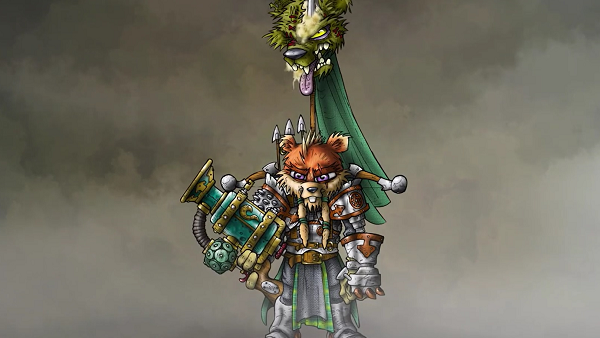
Rare was purchased in its entirety in 2002 by Microsoft, who immediately scrapped several ongoing projects, including a sequel to Conker: Live & Reloaded, itself a remake of the original Conker’s Bad Fur Day. Rare had planned to develop a sequel which would have emphasised co-operative multiplayer, as well as large scale siege warfare.
The sequel –
entitled, Conker: Gettin’ Medieval – would have included numerous playable
characters, but was cancelled for unclear reasons.
In September, Rare released a video in which they outlined the project, showcasing several relevant examples of unused concept art, perhaps hoping to reignite interest in the game.
The video (shown below) goes into great detail about the game’s premise and artistic ambitions, even outlining plans for alternate modes and features, essentially a mausoleum of wasted potential and unrealised possibilities.
Ultimately, Getting’ Medieval could still happen, but it’s likelihood is unfavourable. Interesting, it isn’t the first game in the series to find itself unceremoniously cancelled. In 2001, Rare began work on a direct sequel in which players would reassume the role of titular protagonist, Conker, whom having been crowned king is sentenced to execution for spending the entire treasury on booze and hookers.
Tonally, the game was intended to remain faithful to the original, several prominent characters planned to make reappearances throughout the story.
4. The Stomping Ground
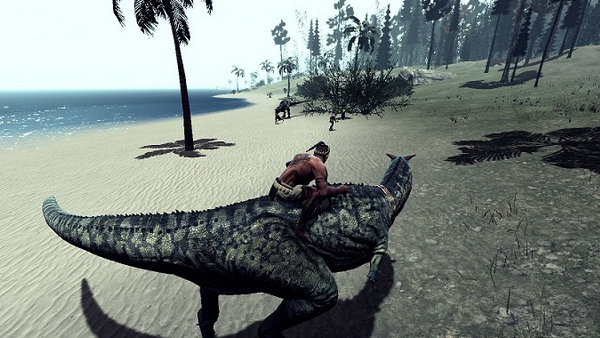
Released on Steam Early Access following a successful crowdfunding campaign, The Stomping Land – a multiplayer survival game featuring dinosaurs – was receiving a decent amount of traction, and seemed to be coming together into something rather promising.
Several
months later, its creator – Alex Fundora – seemingly disappeared from the face
of the planet, abandoning the project entirely having made back his
investments.
The game was promising – though has since been surpassed by other entries in the genre – impressing backers with its numerous promises and exaggerated ambitions, eventually disappointing everyone involved. Fundora reportedly ignored communications from employees, even refusing to pay contractors for their efforts, all in a desperate attempt to disown the project.
Since then, numerous individuals have attempted to obtain refunds, but none have been successful.
In the end, this was not only unprofessional, but downright dishonest, and while the game might be resuscitated in the future, it will never escape the infamy of its defeat.
3. Syndicate (Original Version)
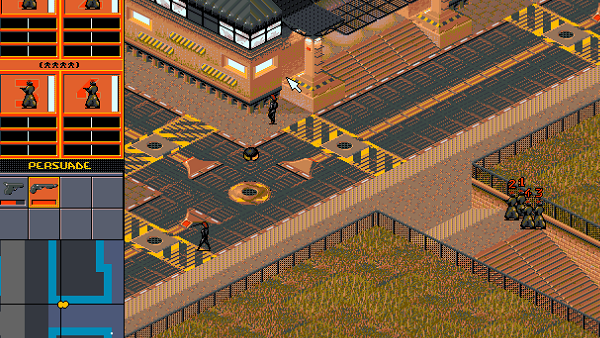
Syndicate – an isometric real-time strategy game, released on PC in 1993 – involves commanding a team of soldiers around a battlefield, performing tasks, fulfilling objectives, and managing resources.
In the game, players assume the command of a corporation in a
cyberpunk future, the objective being world domination, a goal achieved through
the capturing and maintaining of enemy territories scattered around the globe.
The game was given a sequel – Syndicate Wars – three years later, which was well received. After that, there were several attempts to revitalise the franchise, and several attempted sequels went into development, but were cancelled prior to their release, each in varying stages of development.
In particular, Syndicate Creation (a codename), seemed the most interesting of these prospective sequels, developed in collaboration with Bullfrog Productions. In the game, players would have assumed the role of a biologist, transported to an alien world, tasked with overthrowing EuroCorp using cybernetically enhanced dolphins of semi-sentient intelligence.
Premise aside, the game was well into planning stages when it was cancelled. It would take over almost a decade for another instalment to materialise – Syndicate (2012) – which ultimately underwhelmed, the game coming up short in a number or areas when compared directly to the original, despite getting a handful of things right and changing its genre entirely.
2. StarCraft: Ghost
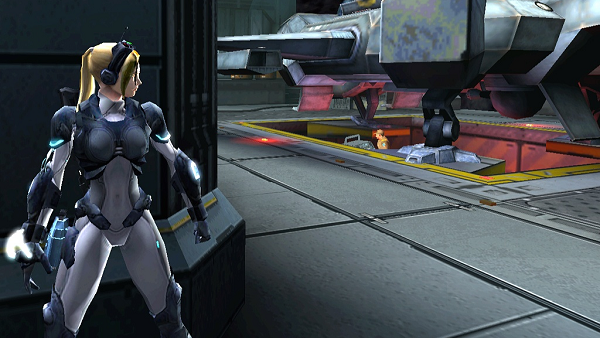
Developed by Blizzard Entertainment, StarCraft: Ghost – a third-person military stealth shooter – excited a significant amount of people, especially those with a particular interest in the franchise.
In the game, players would have assumed the role of Annabella
"Nova" Terra – a human stealth specialist with psychic abilities–
tasked with overcoming a powerful race of insectoid aliens responsible for the
murder of her family.
Additionally, the game was to include a multiplayer mode completely dissimilar from the singleplayer campaign, in which players coordinate efforts as part of a team, utilising a selection of available weaponry in order to achieve a host of multiplayer objectives, which would have been fairly innovative for the time, especially on consoles.
Reportedly, the game was meant to run of PS2 and Xbox, despite the imminent release of the Xbox 360 and PS3 looming on the horizon, threatening the success of its eventual release. As a result, the game was quietly cancelled around this time, the cost of swapping development to an entirely new system too much for the publishers to stomach.
1. Silent Hills

Silent Hills – first announced in 2014 – was heavily anticipated, planned as the ninth instalment in the classic series, directed by Hideo Kojima and Guillermo Del Toro.
Unveiled via a playable teaser
– entitled, P.T. – players were tasked with navigating themselves through cyclical
a haunted house, which malformed with each successive playthrough. Solving the
final puzzle (which was virtually impossible) revealed the title for the
upcoming project, as well as a number of crucial details.
However, due to ongoing disputes between Kojima and Konami, the game was cancelled abruptly, the dispute – the details of which still unconfirmed – resulting in the departure of Kojima for pastures new, which is a massive shame, especially considering the overwhelming promise exhibited throughout the teaser.
Appearances can be deceptive, but it appeared as though something utterly unique, a milestone of a survival horror significant enough to revitalise the entire genre, providing considerable mainstream appeal in the process.
--
Let us know in the comments which other cancelled games you really wanted to play!