10 Classic Games That Modern Gamers Can't Handle

Games have gone soft on us, and they've turned us soft too...
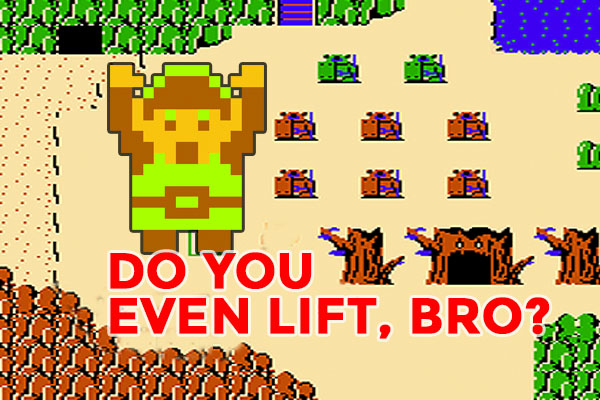
Gamers have it easy nowadays: even in fantasy worlds (ahem, Witcher 3), our horses can gallop on auto-pilot, following a SatNav style line to our destination. Puzzles are becoming a thing of the past too, telling you to pull this switch, or having your character make nudge-nudge-hit-you-over-the-head comments like "Hmmm, looks like I can slide that statue across the floor". Danger and player agency are all but gone from today's videogame blockbuster, and while it might encourage completion, it comes at a cost to the gaming experience. But things weren't always like this. While the games of today are overprotective mothers, sheltering us and feeding us into gaming obesity, the games of old were like the cold, disciplinarian father who made you call him 'sir' and left belt-buckle welts when you didn't pay enough attention. It's not like they set out to be that way though; it was just a sign of the times. Older games made us work hard for their respect, and challenged our minds in ways that seem unthinkable today. Which is precisely why older generation gamers sneer at the blurring of hardcore and casual players: you've all got it too bloody easy. And here are the best of these games; great games you may have loved many moons ago, but would drag you through the dirt and make you suffer if you went back to them today.

10. Resident Evil 3: Nemesis

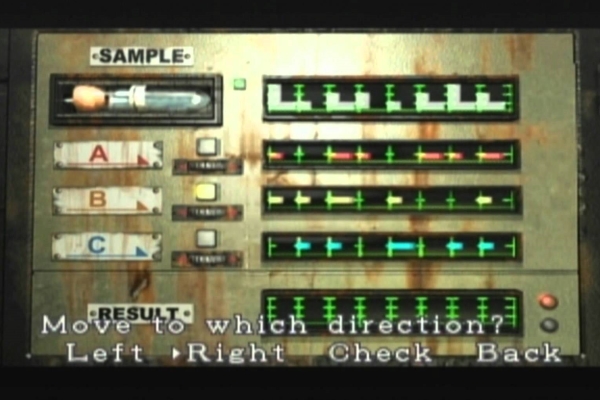
The first three games in the Resident Evil canon were well known for their stiff, awkward gameplay and bizarre puzzles, but it's the third game in the series that took this to the most mind-bending extremes. Like its predecessors, Nemesis had sclerotic tank controls (making turning around to shoot a zombie shambling towards you from 30 feet away a genuinely nail-biting experience), as well as limited ammo supplies, save points and health. It was awkward, sometimes barely possible, and as a result utterly terrifying. Then there were the puzzles, with the water sample puzzle being the pick of the lot. Here, you had to adjust the wave ranges on a water control panel to recreate the graph in the 'Sample' section (pictured). There are almost no clues on how to solve this, and for some reason the wave ranges on the panel fall like Tetris blocks if there is no block in the panel below. Inexplicably, I was more capable of completing this, and other, Resi puzzles when I was a good-for-nothing teenager than I am today.

9. Tomb Raider

Going back to any of the first three Tomb Raider games is like surreptitiously Facebook-stalking that kid you had a crush on when you were 12 years old, only to find that the years haven't been kind to them, or that your ideas of attractiveness have changed since you were 12 (which is just as well, given that you were probably into fellow 12-year-olds). Casting aside the fact that Lara's looks like a conical mess, the game is nigh-on unplayable. Was there always a two-second delay in Lara's jumping? Was the frame-rate always locked to about 10? Yes, all these are many more awful things are true of the original Tomb Raider, but in the 90s gamers were just too tough to care. The only aspect of Tomb Raider that still feels playable is the swimming, which is just as awful in all of today's games as it was back then. It makes you wonder, if you Back-To-The-Futured yourself from the 90s to today and introduced your younger self to today's buttery-smooth games, would your younger self put your older self to shame? The smart money's on 'Yes'.

8. Banjo-Kazooie/Banjo-Tooie

3D platformers have changed. In fact, for the most part they've died out and been replaced by more 'adult' (see 'adolescent') games that have reduced the classic skill-based mechanic of jumping to simplistic free-running. The N64 gave us some of the most memorable 3D platformers of all time, but the idea of using skill to manually jump and fly around 3D spaces is virtually unfathomable today. The N64 Banjo games were more ambitious than Mario 64, offering more open levels, more collectibles, and more moves to master, but that's also why they're tougher to go back to. Banjo effectively threw you into vast, open levels then left you to seek out their riches yourself. While this represented freedom back in the day, today it would face the charged of being directionless. Combine that with some tough platforming and a camera that tended to get confused in 3D space, and these vibrant, innocent games become insurmountable slogs for the today's gamer. Intriguingly, much of the team that worked on the original Banjo games has got back together to work on its spiritual successor, Yooka-Laylee (you can check out its Kickstarter campaign here). Will these classic games of a largely forgotten genre rise again?

7. Contra

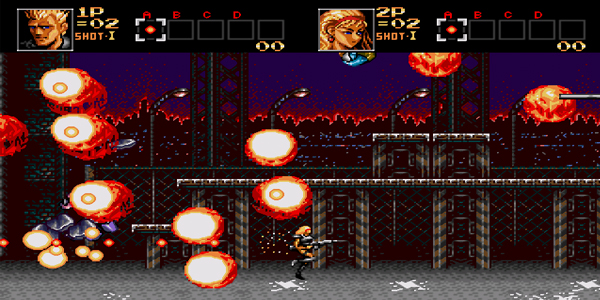
This game epitomises the late 80s action-platformer. Like so many games of its time, Contra started life in the arcades. In other words, it was designed in a way that kept you inserting as many coins as possible. And what's the best way to do that? Well, to keep you dying of course. Konami achieved this for Contra not strictly by making the game impossibly hard, but by enforcing one-shot kills on the player. The fact that you only ever had a limited amount of coins in the arcade gave these games an urgency, forcing the arcade gamer of the era to hone their reflexes to levels that the modern gamer simply doesn't require. When a game is quite literally pulling the money out of your pocket, then you're going to try a hell of a lot harder to get the most bang for your buck. Contra is up there with the likes of R-Type and 1942 for games that were designed for the hardcore arcade crowd, with its subsequent console port barely easing up on the intense gameplay. Playing these games today is like being thrown into a gladiatorial arena when your only fighting experience comes from boxercise.

6. The Hitchhiker's Guide To The Galaxy

It's probably fair to say that just about any 80s-era text adventure game sounds like an ordeal to today's average gamer. With typing having become such a central part of our working lives, the idea of going home after a long day's typing to play a game that demands you do it even more - with a whole load of trial and error - is pretty nightmarish. And that's precisely what the Hitchhiker's Guide text adventure demands of you. Type your way through an adventure consisting of endless oblique puzzles - the most infamous example being the one where you need to obtain the Babel Fish. The puzzle involvese pressing a button that throws a fish across a room into a hole in the wall. To stop the fish flying into the hole, you need to hang a dressing gown above the hole to block it; use a towel to block a drain below where the fish falls to prevent it going down the drain; attach some junk mail to a satchel, so that when a cleaning robot comes out to throw the fish and satchel up towards a second cleaning robot, the second robot is distracted by the junk mail on the satchel, thereby leaving the fish to be thrown into the air then landing in your ear... obviously. And it's not like this game was some niche little oddity either. In fact, Hitchhiker's Guide was one of the best-selling games of its era, showing that there was once a real taste for convoluted puzzle games.

5. Any NES Game On The Original NES Console

I should disclaim this entry by saying that many NES games continue to be wonderfully playable to this very day, but ideally through the medium of an emulator, which lets you save your game progress whenever you choose. If you were forced to spend a week with the original Nintendo and its fine library of games, then you'd find yourself unable to switch off the console for fear of losing your precious, fragile game progress. You'd also be surrounded by scrap bits of paper with tons of level codes jotted down on them, making your room look like that of some conspiracy hack trying to work out whether stock market figures reveal the co-ordinates of the Reptilians' underground lair. Such a prospect is unthinkable to us today, as we need our game progress saved, quick-saved, checkpoint, and preferably backed up to the cloud where we know it's safe.

4. The Elder Scrolls II: Daggerfall

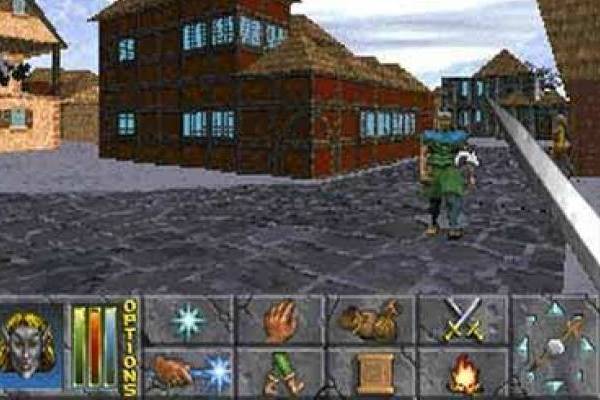
Remember the unprecedented sense of freedom you felt when you first played Morrowind - or Oblivion if you joined the Elder Scrolls party a bit later? Well, they had nothing on Daggerfall's world, which is widely regarded as the biggest videogame world of all time. Sounds great, except for the fact that it'll leave today's gamer feeling completely, hopelessly lost. Back in the 90s, it was normal to hand-draw maps of dungeons so you can find your way out, spend hours searching for quest-assigned monsters to kill, and receive one-day timed quests that you fail after getting lost in the game's daunting wilderness. Daggerfall was revolutionary, for sure, but it was also harsh in a way that probably actually replicates its fantasy world much more accurately than today's SatNav-directed RPGs. While open-world games are all the rage today, Daggerfall's non-linearity and relentless openness will be enough to turn the average Skyrim player agoraphobic.

3. The Monkey Island Series

Anyone today can pick up one of the old Monkey Island games and appreciate it for its whimsy, humour, and colourful cast of well-rounded characters. It's a game that you'd happily just traipse around in, listening to the stories and quips of its denizens. But try to progress with the story, you'll face puzzles that turn you into a monkey at a typewriter. The specific conditions in which puzzles had to be completed could have you retreading your footsteps for literally hours. For example, in one sequence where you need to pry open a case, an NPC offers to help you out. At that point, you just have to click various combinations of objects in various places until you eventually hit the right one (in this case, you need to 'Use' the crowbar on your buddy, so that he can then use it on the case). This type of 'try combining this object with another object in the hope of triggering an unforeseeable action' was all too common in classic adventure games, but where the 90s gamer - your 90s self - had the patience for it, today's gamer would've quickly moved on to a game with a more linear sense of cause-and-effect (for example, shoot a man in the face, man's face explodes).

2. Legend Of Zelda

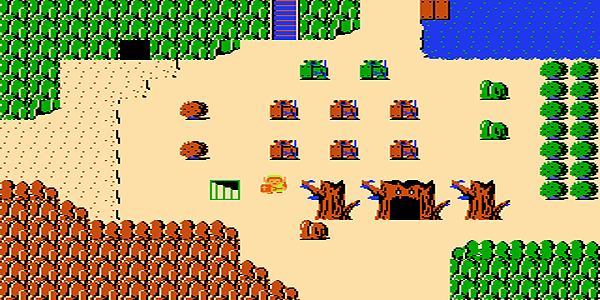
You may be thinking that Legend Of Zelda should fall under the 'Any NES game' category, but this was one of the few NES games that actually allowed you to save games, thanks to a small battery inside the cartridge. Legend of Zelda makes this list because it's regarded as one of the most important games of all time, and yet you'd find it utterly tortuous if you played it today. From the navigation to the deceptively strategic combat, Zelda was a tough game even by 80s standards, and one which would have us gamers of today bemoaning its lack of maps and tutorials. Back then, gamers were accustomed to limited colour palettes and copy-pasted textures throughout the whole world, but go back to this aesthetic today, and you'll find yourself wandering around in circles, grumbling "it all looks the same to me" and complaining about the lack of a trail telling you exactly where to go.

1. Myst

Another game where a pen and notepad come in handy, Myst is hailed as one of the best, and most challenging, puzzle-adventure games of all time. As the Stranger, you traverse an island from a first-person perspective, unravelling puzzles which transport you to various dimensions, all while trying to solve the mystery of... something mysterious. With no prospect of dying (though sometimes you'll wish you could), Myst encourages you to lean back in your chair and contemplate the puzzles it presents you with. Clicking manically on various objects, Monkey Island-style, will get you nowhere, and you may quickly start feeling anxious that much of the games puzzles are solved not by frantic trial and error, but by logical thinking. Myst was the best-selling PC game of all time until 2002, an indicator - like HItchhiker's Guide - that there was a huge demand for this sort of stuff. Check out our list of the best-selling video games of all time, and you'll see that it's mostly made up of recent games without a single puzzler in sight. A sign of changing times. Do you have some legendary games that you no longer find playable? Or are you still able to get your 90s gaming cap back on and enjoy these classics?

Contributor
Contributor

Gamer, Researcher of strange things. I'm a writer-editor hybrid whose writings on video games, technology and movies can be found across the internet. I've even ventured into the realm of current affairs on occasion but, unable to face reality, have retreated into expatiating on things on screens instead.