10 Clever Ways Developers Make You Addicted To Video Games
Ever get the feeling it's YOU who's being played?

So, it happened again.
You just bought a new game and swore that it was going to be used as a part-time amusement, but suddenly, you've been able to generate more free time than you've ever thought possible. There is no impending task that can't be put off in order to keep playing just that little more. You have become addicted, but don't worry, it happens to the best of us.
While some gamers are more susceptible to addiction to others, almost anybody that plays video games long enough will find themselves hopelessly hooked on a specific title. From sweeping epics like World of Warcraft and Skyrim to simple mobile titles such as Candy Crush or Desert Golf, addictive video games come in many forms, and can strike at any time.
However, if you stop to look at these titles from a critical standpoint, youll notice that theyre not so different after all. Many contain clever combinations of design methods, all aimed to get you to playing with no end in sight.
10. Giving You That First Big Win

If you're going gambling for the first time, the worst thing that can happen is you win big. Since gambling is designed to place the odds heavily against the player, there is nothing more dangerous than the getting it into your head that victory is anything but an exception.
For years, developers have taken advantage of this effect to keep us glued to our screens. By far the biggest user of this technique are RPGs. When you first start out, the game generously doles out experience points, levels, cinematic moments and items in order to show the player just how sweet victory can taste. From there, of course, the true nature of the game begins to reveal itself as you gradually begin to understand that those early moments represented an anomaly.
Simply because that initial sugar rush felt so great means you'll be subtly hooked for the duration. You'll stick through to the end to find all those rare moments of glory, even if they don't come for hours at a time.
9. Generating The 'Tetris Effect'

The 'Tetris Effect' is a term coined in the mid-nineties by Wired writer Jeffrey Goldsmith, to describe the way that the colors and layout of Tetris stay in your head long after you've stopped playing. Many Tetris fans surely have vivid memories of closing their eyes after marathon sessions only to see the game's famous shapes falling slowly in front of them.
Though the first appearance of this effect was a happy accident, developers have since learned that intentionally designing it can reap tremendous benefits. While the Tetris Effect can occur as a simple byproduct of an already addictive game, by designing a game around aesthetically coherent color palettes and repetitive motions, it is actually possible for developers to increase the chances of it occurring.

From rhythm games to Angry Birds, a variety of titles have reaped a hefty amount of sales by ensuring that you never stop seeing the game play out in front of you.
8. Instantaneous Replay Options ("Just One More Try")
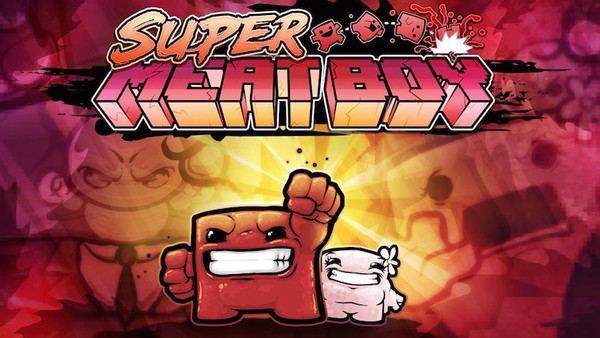
The "Do you want to continue?" screen has been a part of basic video game design since the industry's arcade origins. Developers understood early on that implementing a screen with a countdown timer and the word "Continue?" on it would encourage gamers to pump in quarters as fast as possible in order to ensure it didn't reach zero.
Over the years, this concept has only been tweaked and perfected by subsequent generations of developers. The current state of the continue screen either offers players the chance to start again in under a second or, even better, just throws them into a new session immediately. While both examples are most prominent in mobile games, one of the most successful uses of the later technique can be found in Super Meat Boy, which allowed players to enter an infinite loop of barrier-free continues that perfectly meshed with the "almost got it, just one for try" style of gameplay.
When you no longer have the chance to even consider if you're going to keep playing, the odds are that you are going to keep playing.
7. Creating The Illusion of Socialization

Some games actually do offer players the chance to socialize with real human beings. Surely we've all heard stories of players in games like World of Warcraft find friends, jobs and even the love of their lives simply because of the interaction options these titles present. Socialization is one of the fundamental human desires, and online games have benefited greatly by offering players the chance to interact.
As many single-player games can not offer this social component naturally, they have instead taken to creating it as an illusion. From classics like The Sims to recent successes such as Fire Emblem and Stardew Valley, many addictive titles over the years have based a large portion of their gameplay off of interacting with NPCs. As these NPCs are designed to be fairly as realistic as possible, the games often end up successfully satisfying the inherent desire for socialization.
While many will find this effect cannot permanently replace genuine human interaction, it can still create the illusion long enough to ensure a significant amount of playtime.
6. Perfecting The "Easy To Learn, Tough To Master" Design Philosophy
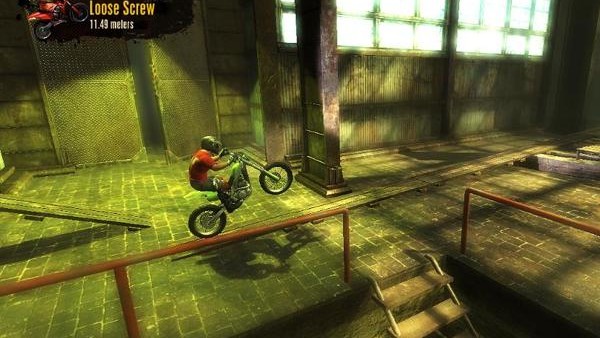
Designing a game to be addictive is not necessarily a malicious thing. In fact, many addictive games earn that reputation because they are well-made titles that are so great, you just don't want to stop playing them.
One of the most common characteristics of such games is their "Easy To Learn, Tough To Master" design structure. Similar to how a developer will get you lost in valuable early game rewards, these games hook players by allowing them to believe that they have figured out everything there is to know in a relatively short timeframe, before showing them just how little they actually know.
This concept may be simple, but the successful execution of it may just be the most difficult thing a developer can strive for. However, many of the greatest - and most addictive - games ever made possess this elusive quality.
5. Making Their Game Painfully Simple To Play

Generally speaking, the longer you play a game without consciously realizing that you are playing said game, the more addictive it is. As an escapist form of entertainment, games often lose their hook the moment that the player is able to look outside of the digital world and step back into their own.
It's why we see so many recent mobile gaming hits feature such incredibly simple gameplay. A title like Candy Crush or Temple Run requires almost no real thought or strategy to play beyond some instinctive reactions. Because of this, you never really consider turning to them for sustained amusement, but they are integrated so easily into your daily life that you never need to consider starting or playing them - you simply already are.
How many times have you ever opened a new internet tab, only to instinctively redirect to Facebook before even thinking? It's that. When playing a game becomes as easy and thoughtless as breathing or walking, it's capable of achieving a new level of addictiveness.
4. Games That Factor Into Multitasking

The ability to multitask has always been a desirable human trait, but these days it almost feels like a requirement. Not only do many modern careers require employees to be able to monitor several tasks at once, but we have also taken to multitasking in our personal lives. You are rarely just reading a website, listening to a podcast or playing a game. Most of the time, you are trying to do them all at once.
It's why more and more games are being designed with multitasking in mind. Titles like Hearthstone or Civilization V can easily be thrown in a windowed mode on the corner of your screen while their turn-based gameplay allows for moments of downtime, ensuring the player does not need to provide their undivided attention in order to receive 'the full experience'.
While this effect is not always necessarily intentionally planned, it is nonetheless an increasingly valuable quality.
3. Making The First Taste Free

If there was one thing I knew as a young gamer, it's that the majority of free video games were free because they were awful. After all, if the game was really good, wouldn't the developers have charged money for it?
While that may have once been the case, modern developers have discovered - much as drug dealers discovered long ago - that the best way to get someone hooked on an addictive substance is to make that first taste free.
While a free video game was universally considered to be a relatively harmless, if not necessarily an entertaining prospect just a few years ago, today the addictive - and sometimes exploitative - nature of these titles has turned "free-to-play" into a bad word among certain sections of the gaming community.
Say what you will about these free titles, but the reason you see so many of them is because they work.
2. Inserting As Much Loot As Possible

'Loot' may be most commonly defined as an item taken from an enemy during times of war, but among modern gamers, loot is perhaps best defined as the ultimate incentive.
Although it wasn't the first of its kind, 1997's Diablo really set the template for how the simple act of collecting items can become the most addictive thing in the world. Unlike other RPGs of that time which gradually presented an increasingly powerful series of items to the player in order to help them complete the adventure, Diablo treated its items more like status symbols.
While the items certainly helped you progress through the game's increasingly difficult battles, the battles themselves became secondary to the simple pleasure of seeing what new item you were going to acquire next.
Today, games like Borderlands and The Division base the majority of their entertainment value on the simple pleasure of collecting new and better equipment, constantly. It's a compelling concept to build a game around that becomes all the more addictive when coupled with the next entry on this list...
1. Randomizing Rewards

Do you remember that episode of The Twilight Zone where the gambler believes that he has gone to heaven because it is impossible for him to lose any game he plays in the afterlife? Soon, however, he quickly discovers that the joy of gambling goes away when victory can be achieved on command.
In that moment, he realizes that he is truly in hell.
It's the same thing with video games. While spacing out a series of rewards as designated points was once the prevailing method of game design, now developers realize that it is far more lucrative to ensure that those rewards are not doled out equally for completing the same actions.
Going back to Diablo, you might kill a skeleton one time and get a legendary weapon as a reward. The next time, however, he drops nothing. Convinced that this action will eventually reward you again, you play for hours and hours to achieve it - such a method was employed in Destiny, and resulted in that game's userbase having an average play-time of 500 hours. Yes, really.
This same design makes slot machines one of the most popular destinations in every Las Vegas casino, and now it's making the random reward system in titles like Hearthstone and Overwatch one of the most surefire sources of addiction in all of gaming.
Have you ever had the encroaching feeling that you're being played, just as much as the game itself? Let us know in the comments!