10 Fake Game Over Screens You Need To See
Don't turn the game off. Not yet.
Traditionally speaking, Game Over screens indicate one of two things: You either just screwed up and got yourself killed, or you've reached the end-point of the main story, no matter if the game lets you continue exploring the world thereafter.
And generally, there's not much ambiguity to the matter... unless the developer has decided to be a tad sneaky and toy with players' preconceptions of what a video game should be.
And that's exactly what these 10 video games did so masterfully, throwing up fakeout death screens and not-so-final closing credit sequences, only to pull the rug out moments later and reveal that the game was still very much afoot.
Meta-narratives may be a far more common conceit nowadays, but back when these games hit stores, they felt genuinely ahead of their time with their truly unexpected sleights of hands.
Basically, if you claim you didn't fall for the trick in each case, most people probably won't believe you, and rightly so.
From gloriously goofy fourth wall-breaking moments to Game Over scenarios that genuinely left players panicking about when they last saved, these 10 fake endgames are about as ingeniously convincing as they come.
10. Isaac Accepts His Fate (Or Does He?) - Dead Space 2

After the first Dead Space ended on a downer jump scare ending, it was easy to believe that the sequel would once again put protagonist Isaac Clarke through the wringer.
In the game's apparently closing cut-scene, Isaac finds himself stranded on the space station known as The Sprawl as its reactors melt down and his life support begins to fail. He simply sits down and appears to accept his fate.
Grimly, the game's title appears and the voice actor credits start to roll as Isaac takes in the carnage around him...but after 20 seconds or so, the credits are interrupted by Ellie, who crashes through the ceiling in a gunship.
The player is then given back control of Isaac as he flies to catch up with the ship and leap aboard, finally escaping The Sprawl in the process.
And in an hilariously self-aware moment, the final seconds of the game tease another jump scare ending, only to subvert it completely (Ellie simply looks at Isaac and says, "What?").
9. Fission Mailed - Metal Gear Solid 2: Sons Of Liberty

Next up we have perhaps the most famous - or is it infamous? - example of a Game Over fake-out, in Hideo Kojima's bewildering, ahead-of-its-time Metal Gear Solid 2: Sons of Liberty.
It's safe to say that the game goes off the narrative deep-end in its final few hours, as protagonist Raiden ends up faced with a number of increasingly bizarre goings-on. This includes the erratic behaviour of Colonel Campbell, who even urges the player to turn the game off (and is later revealed to be an AI recreation of Campbell).
The trolling continues at the tail-end of the game as Raiden and Solid Snake battle their way through Arsenal Gear. At one point, the screen briefly flashes white, before a Mission Failed screen appears...except it reads "Fission Mailed", along with the options "Emit/Continent" rather than Exit/Continue.
Also, rather than showing the player's fail state in the left-hand box as per usual in a Mission Failed scenario, the player can continue playing the game because, indeed, you haven't actually failed and the game is still running.
God bless you, Hideo Kojima, you bloody maniac. It's fair to say his barmy, post-modern antics influenced a number of the other entries on this list.
8. Makarov Kills You - Call Of Duty: Modern Warfare 3
The earlier entries into the Call of Duty: Modern Warfare franchise clearly had plenty of fun toying with players who perhaps didn't expect such ambitious and expectation-defying storytelling from fetishistic military shooters.
The first Modern Warfare dared to kill a player character in a nuclear blast and quickly shift perspective to another hero, while Modern Warfare 2 controversially placed players in the middle of a terrorist attack at an airport (and gave them the option to participate or not).
Modern Warfare 3 featured a similarly shocking sequence - where the player briefly controls a tourist as he's killed along with his family in a bombing - but it's the game's fourth level, "Turbulence", that serves up a truly clever rug-pull.
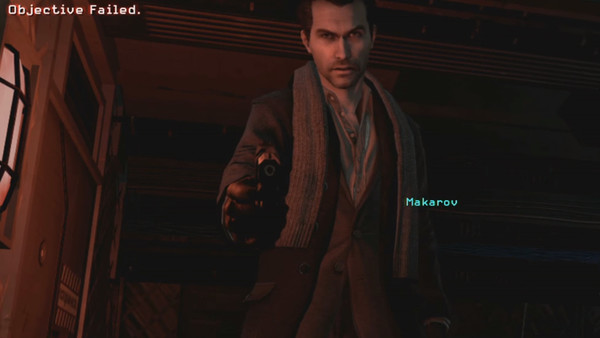
The mission in question sees the player controlling Andrei Harkov, one of the Russian President's bodyguards, and just as you finish escorting the President to a waiting chopper, franchise villain Vladimir Makarov opens the door.
"Objective failed" then appears in the top-left corner of the screen, implying the player did something wrong, before Makarov guns you down and pops a second cap in your dome for good measure.
But of course, this is exactly what was supposed to happen narratively, and though Harkov failed his mission, the player did not.
The action simply jumps to another character in the next level, and everything continues as it's supposed to. But admit it, they got you with that text, didn't they?
7. Mario & Luigi Get High - Mario & Luigi: Dream Team
At a glance the Mario games are probably the last place you'd expect to see developers trolling players, but several of the Paper Mario games in fact feature fake-out deaths, and in surely the most nerve-wracking troll-job of all, so too does the 2013 3DS game Mario & Luigi: Dream Team.
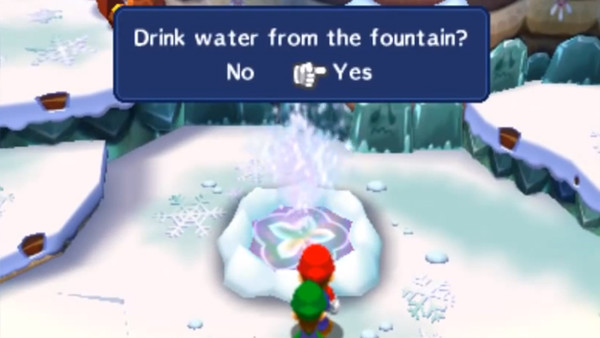
When Mario and Luigi reach a glowing fountain at Mount Pajamaja, the player is given the option to drink from the fountain or not.
Doing so will result in a two-minute scrawl of text as the game explains that the brothers fell into a deep sleep after taking a drink, only to be awoken by the sweet smell of mushrooms, which they consumed with an uncontrollable hunger, causing them to grow as large as islands.
After the pair realise that they can't ever go back to normal, a "Game Over" screen flashes up for a few seconds, before Prince Dreambert wakes them up and confirms that while the fountain will restore their health, it will also make them dream. Right.
If you hadn't saved recently this was definitely a brown-trousers moment. It's a bit of a shame the brothers' trippy tale was told only through text, though, because it would've been one hell of a bonus level.
6. Sweet Sorrow - Metal Gear Solid 3: Snake Eater
Not content with MGS2's meta antics, Hideo Kojima of course upped the ante in the third Metal Gear Solid by actually allowing the player to induce their own death with a fake death pill, which could be used to avoid encounters with enemies. Waiting too long to activate the revival pill, however, would result in Snake dying legit.
This gets cleverly flipped on the player later in the game, however, when they're facing off against the boss The Sorrow, in what's not so much a boss fight as it is an interactive cut-scene.
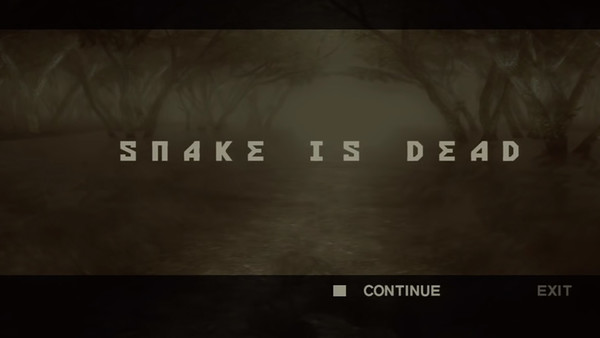
After spending a few minutes avoiding the ghosts of enemies you've put in the ground throughout the game, you'll catch up to The Sorrow, who will appear to kill you. At this point the usual "Snake Is Dead" Game Over screen then flashes up.
If you haven't made much use of the fake death pill throughout the game, it's a genuinely puzzling end to the boss fight, and you'd be right to assume there's a trick to the battle you hadn't noticed. But in fact, you can "cancel" the death screen simply by using the revival pill, which also brings the "fight" to an end.
How incredibly, ingeniously sneaky.
5. Busted In Vegas - Need For Speed: The Run
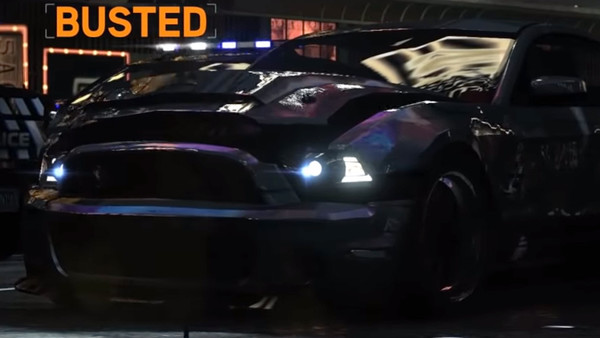
Need for Speed: The Run may not be a particularly good or memorable game - beyond being that one Need for Speed game that featured on-foot QTE sequences - but it did boast one clever moment that actually caught most players unawares.
In Stage 3 of the game's career mode, the player will end up trying to escape Las Vegas while being doggedly pursued by the cops, only to eventually find themselves stopped by an impossibly large roadblock.
The game flashes up the "Busted" fail screen as usual, only to transition into a cut-scene where police officers surround the player.
However, a QTE sequence then kicks off, allowing the player to break free from the cops, fight off a police dog and escape after causing a diversionary pile-up in the street. Nice.
Considering that the game throws some pretty aggressive roadblocks at the player ahead of this fake-out, it's actually pretty damn convincing. Shame it wasn't put to use in a better game, though.
4. Sinclair "Wins" - Killzone: Shadow Fall
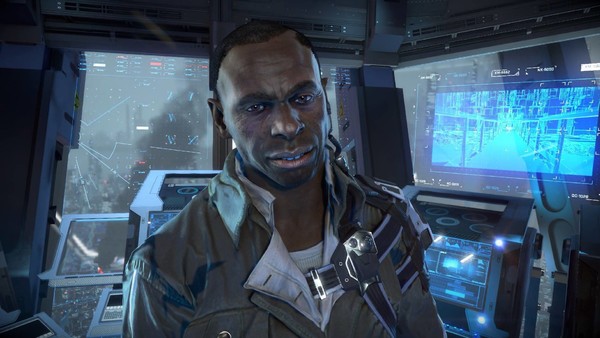
It's fair to say that this PS4 launch title is better remembered for its thrilling multiplayer than its fairly so-so campaign, but if you actually bothered to play Killzone Shadow Fall to completion, you were likely blindsided by its clever stinger of a non-ending.
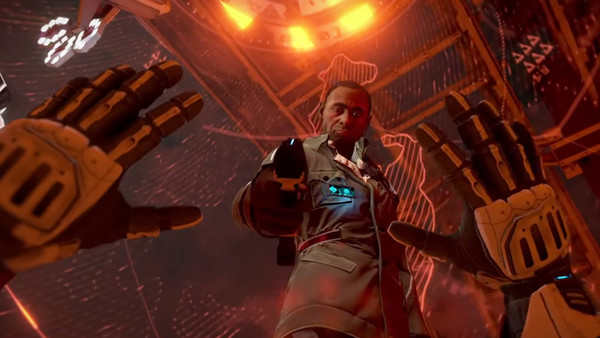
The game "ends" with player character Lucas Kellan being mortally wounded by surprise antagonist Thomas Sinclair, who after a little villainous monologuing shoots Kellan once more in the face as the game cuts to black.
Some extremely realistic-looking white-on-black credits then start to roll. Another 30 seconds pass before the screen starts to glitch out, and our perspective shifts to another hero, Echo, for the final two minutes of the game.
From here, the player is able to launch a satisfying retaliatory attack against Sinclair, taking him out with a sniper rifle during a speech while swearing revenge for Kellan, after which some decidedly glossier - and, yes, real - end credits play out.
3. Denied By Hades - Kid Icarus: Uprising

Cult 3DS third-person shooter Kid Icarus: Uprising appears to revolve around angelic protagonist Pit battling his way to the Goddess of Darkness herself, Medusa, and a mere nine chapters into the game, the player gets the chance to take her down.
Following a tough battle, Medusa is turned to dust and to the player's surprise, the end credits roll after just a few hours of play, while Pit proudly exclaims, "We did it! We really did it!"
The celebration is ultimately - and thankfully - short-lived, however, as the villainous Hades booms off-screen, "Now wait just a minute!", before slamming his gigantic paw onto the screen and literally ripping the end credits away, revealing that there's plenty more game to go.
It turns out the player is in fact barely one-third through the main story, with another sixteen levels to go once Medusa is defeated. But for a moment, players understandably felt like they'd been ripped off here.
2. Not Quite The Ending - Sunset Overdrive

Insomniac Games' deliriously entertaining third-person action-adventure game "concludes" with the player launching a giant bottle of soda at the FizzCo building (seriously), and being killed by some falling rubble in the process.
After the player is mourned by their comrades, the end credits quickly roll, listing employees "in order of termination." Yet after about 10 seconds, the player re-emerges in front of the credits, complaining that they deserve a better ending.
The game then literally rewinds a minute, with the player being miraculously resurrected out of the rubble and hurled into one final boss fight against the FizzCo building, which has turned into a giant robot (because why not?).
This time the player survives defeating the boss and even quips, "Now that is how you end a game", while all the survivors celebrate and the much fancier real end credits finally roll.
If the game's overall meta tone maybe clued some players into the fake-out, it was still an easy one to fall for.
1. Sanity Effects - Eternal Darkness: Sanity's Requiem
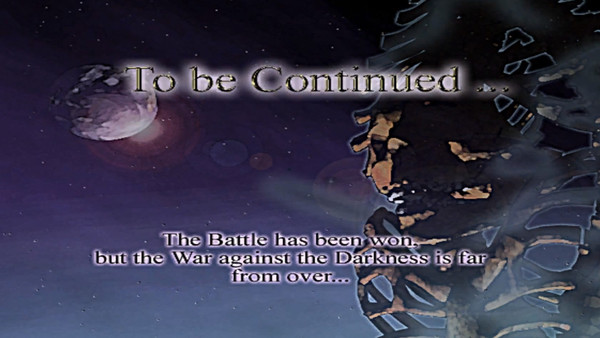
Eternal Darkness: Sanity's Requiem was a criminally under-appreciated GameCube game which successfully attempted to keep players on edge by toying with their perception of reality.
Throughout the game, the player must keep track of their Sanity meter, a bar that drains whenever they encounter an enemy, and when the meter gets low, one of the game's many "Sanity Effects" will kick in, reflecting the protagonist's slipping grip on reality.
There are fairly simple and subtle Sanity Effects such as an off-kilter camera angle or slight changes in the environment, but some of them get devilishly, dementedly creative.
The more ambitious effects include the game throwing up an extremely convincing Blue Screen of Death, appearing to restart to the GameCube boot screen, randomly killing the player and even teasing that the game has actually finished, with a "To Be Continued..." screen teasing a sequel.
Some of these effects were convincing enough that nobody would blame you for falling hook, line and sinker, believing that your game had crashed, you'd been killed for real or you'd even reached the bizarrely abrupt end of the game.
Sadly, despite near-universal acclaim for its insanely inventive meta-narrative elements, Eternal Darkness was a commercial bomb, and numerous attempts to get a sequel off the ground have fallen flat.