10 Famous Video Game Franchises That Haven't Made Anything Good In Years
There's flogging a dead horse, and then there's what these have become...

Longterm success in any field is immensely difficult to attain.
Sure, the MCU makes crafting 20 good-to-great movies over the space of a decade look like a cake walk, but it takes a lot of effort and even the occasional misstep for most video game franchises to deliver quality experiences for that long.
Sadly, the games on this list are a testament to just how difficult that creative process is. They might have started off strong with a string of releases that captured imaginations across the globe, but eventually they all ran out of steam and spent years - sometimes even decades - as a shadow of their former selves.
However, these games are also reflective of how one great idea or concept can see fans stick around through thick and thin, hoping that one day a franchise might reclaim its former glory.
It's the hope that kills you.
10. Contra

You'd be forgiven for thinking that Contra was just a relic of the past. The arcade series has never really left the public consciousness, being synonymous with the glory days of arcades and gathering around an NES with your friends to blast some space aliens, but you'd be hard-pressed to name any of the games after the mid-90s sequels.
That's mostly because Contra pretty much came out the gate swinging, with its brand of non-stop action and 1980s movie pastiches starting out at the top, and not really leaving the franchise with anywhere to go but down.
As a result, most of the sequels amounted to being simply "more Contra". A couple attempts at a re-brand in the 2000s with the grittier Contra: Shattered Soldier and weird futurism of Neo Contra were admirable but nothing special, while a full-on resurgence after Contra 4 was short lived.
The most recent release, Rogue Corps, is the lowest the franchise has sunk yet, and after decades slugging out okay-at-best titles, maybe it's time Contra finally put its guns down.
9. Double Dragon

If you were growing up in the late 80s and early 90s, you'll no doubt have fond memories of playing Double Dragon in arcades. The beat-em-up was immensely popular - such a cross-media hit that it received its own big-screen adaption, though the less said about that the better - and only grew in popularity as sequels were released, and the franchise eventually made its way to home consoles.
Like a lot of games at the time though - including Contra - the basic (but immensely refined) gameplay struggled to adapt to a changing landscape. By the time the fifth title rolled around in '94, both the audience and the genre had moved on, and with the 3D revolution right around the corner, Double Dragon was put on ice for the rest of the decade.
The franchise still sees sporadic releases today, but at this point, new Double Dragon games exist almost entirely to cash in on nostalgia. The problem with that is there's no real attempt to refine the archaic arcade fighting, and only a cursory attempt to retain the charm that made the originals so beloved in the first place.
8. Mass Effect

One of the younger franchises on this list, Mass Effect already has all the hallmarks of a series that's overstayed its welcome. After two genre-defining releases, Bioware and EA totally dropped the ball with a rushed third instalment that became a complete laughing stock with fans.
The game could have been something special - and there are real moments of genius tucked in there - it's just that the obviously rushed development shows at every angle. Side quests turned into bland fetch quests, dialogue options were limited to two responses rather than three, and it goes without saying that Bioware was crushed under the weight of tying off the story in a satisfying way that also honored the choices players made across the saga.
The devs got another chance with Mass Effect Andromeda, which had a whole new galaxy of possibilities to play with. Sadly, despite high ambitions, this game was even worse than ME3 - or at the very least, more forgettable.
The franchise is currently "on ice" at EA, and it's probably for the best.
7. Tony Hawk's Pro Skater

Originally this entry was only going to cover the Pro Skater sub-franchise of the Tony Hawk games, but the skating series' mistakes run far deeper than that.
Initially, every game with the Tony Hawk moniker Activision put out was an excuse to print money. The original run of four Pro Skater games perfected the style of arcade tricks and flips that defined the entire sub-genre, while the games managed to evolve with the times in the early 2000s with the Underground releases, and even the underrated Project 8 and Proving Ground.
It was once developers Neversoft were taken off the franchise that the rot started to set in. Activision moved their focus to peripheral-led spin-offs like Ride and Shred, and trying to play a game on a plastic skateboard in front of your TV was as finicky and frustrating as it sounds.
After a couple years on ice, the series received one more shot at redemption with Pro Skater 5, a back-to-basics sequel to a beloved sub-series, but the devs shat the bed on that one as well. Somehow, this was worse than the peripheral games, and proved that Activision had no interest in rejuvenating this once trailblazing series.
6. Crash Bandicoot

Now, I know what you're saying, "Josh, how dare you say that our boy Crash hasn't been in anything good for years, did you even play the N. Sane Trilogy or Crash Team Racing: Nitro Fuelled?"
Well, it's true, Crash is now on top of the world once again, but it's thanks to the publisher reviving games from the 1990s and the nostalgia and adoration players have for them, rather than anything new Activision has come up with recently for the character.
Likewise, Crash desperately needed those remakes of previous titles because Activision drove the Playstation mascot's popularity into the ground pretty much as soon as they bought him. Wrath of Cortex and Twinsanity were admirable continuations, but failed to capture the magic of the original trilogy, while everything that came after was pure schlock.
Activision tried to make Crash cool by giving him some tats and a bunch of mutants to hang around with and control, but those games just proved how much the publisher didn't understand the appeal of the character.
Consequently, there is worry that any new games Activision might make with the bandicoot that aren't based on previous releases might similarly fail, but here's hoping they deliver new Crash games that capitalise on the renewed interest.
5. Duke Nukem

Duke Nukem is one of those franchises where the main character is more iconic than the games they actually starred in. The first two titles were side-scrollers that pretty much nobody played, but Duke was catapulted to success in Duke Nukem 3D, which was the kind of first-person shooter that only the 90s could produce.
Tragedy struck after that first real taste of success though, as developers 3D Realms struggled to produce a follow up that eventually turned into the infamous Duke Nukem Forever, a game which clawed its way out of development hell after 15 years to terrible reviews.
The character wasn't totally idle in the meantime though, and lived on in a variety of third-person spin-offs. Time to Kill was first and was decent enough, but by the time Land of the Babes came along, Duke's schtick was starting to wear thin.
Considering he was very much a product of the 90s, it probably makes sense that devs have struggled to reinvent Duke for the modern age. He's still out there spouting "hail to the King", but the monarchy was abolished long ago.
4. Fable

A lot of the franchises that defined the original Xbox have struggled through a process of rebirth only to persevere across multiple console generations. Gears of War wrapped up its trilogy and then finally found its footing again with Gears 5, Halo never quite captured Bungie's original magic again, but still proved itself with Halo 4 (and to a lesser extent 5), but Fable hasn't been so lucky.
In fact, the series couldn't even round out its original trilogy without faltering. The first two games were great RPGs (even if they were overshadowed by Peter Molyneux's big mouth), but the third made the fatal mistake of trying to be more "streamlined", which in video game terms always means gaining more mass-appeal by gutting features fans love.
That release soured many on the fantasy series, and it was clear Microsoft had no idea what to do with the property going forward. The next two titles were the Xbox Arcade Fable Heroes and the Kinect-centric Fable: The Journey, both of which were essentially just cashing in on the branding.
Developer Lionhead folded during the development of Fable: Legends, which was planned for the Xbox One, but rumours suggest Microsoft is reviving the series with a new studio for a proper Fable 4, which will hopefully buck this losing streak.
3. Bubsy

Bubsy is such a notorious franchise that you might not even know that, at one point anyway, it was actually rather good. The bobcat's first outing, which boasts the groan-inducing title Bubsy in Claws Encounters of the Furred Kind, was a stellar (if a touch derivative) 2D platformer, as was the sequel, which dropped the puns for the cleaner title of Bubsy 2.
That was the last time the words "Bubsy" and "stellar" were ever in the same sentence though, as the third platformer came out to diminishing returns, with critics in agreement that the series was in need of a creative kick up the bum.
Those same critics probably cursed their own words when they had to review the next game, which did indeed attempt to revolutionise the series in glorious 3D. The transition was not elegant, and the sequel was like a LSD trip, with ugly, garish textures making up the environment, unresponsive controls and nightmarish enemies defining the release.
It might have gotten away with being so rough considering it was an early attempt at 3D, but it releasing in the same year as Mario 64 rendered it a total embarrassment.
The series never recovered, and it took until 2017 before the old Bobcat received another shot at the big time. As you can probably guess, it didn't turn out well.
2. Alone In The Dark
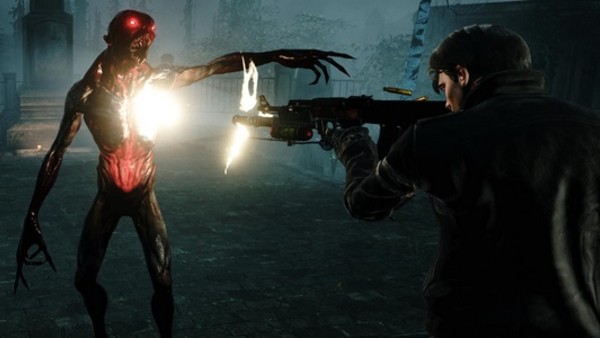
Like Duke Nukem, Alone in the Dark is one of those games that helped define a genre, but by now has way more bad games than good ones. Before Resident Evil burst onto the scene, Infogrames' Lovecraftian trend-setter helped set the foundations of survival-horror, but sadly didn't have what it took to build on those sturdy bases.
The original trilogy was well enough received, but even those three games struggled to maintain the interest of an audience, with the rapid release of each sequel making it clear that they were being pushed out as fast as possible.
As a result, Alone in the Dark went on a short hiatus, and has struggled to reinvent itself ever since. 2001's The New Nightmare was a solid effort, taking more cues from Resident Evil more than its own history, but it didn't sell, and the brand was rebooted again under new publisher Atari in 2008.
This release similarly boasted some neat ideas - especially when it came to the revolutionary fire effects and then-novel TV episode framing - but didn't come together as a cohesive whole and, once again, struggled to find an audience.
The lowest point came with the next game though, Alone in the Dark: Illumination, which launched in 2015 on PC and amounted to little more than a barebones shooter farted out to coast on the name alone. Fans and critics tore it to shreds, and the series hasn't been seen since.
1. Silent Hill

From one iconic survival-horror series to another, Silent Hill's steep decline into obscurity hurts the most. The series set a new bar for atmospheric storytelling in games, acting as the mature(ish) cousin to the B-movie inspired Resident Evil.
The first chunk of games were all amazing in their own way, with 2 being one of the best the industry has seen, but after the fourth title showed cracks in the formula, it all started going downhill.
A new team was brought in which clearly didn't quite grasp the DNA of the franchise. The iconography remained, and on the surface it didn't look like the following games, including Downpour, Origins and Shattered Memories, deviated too much from the style of the previous releases, but the spark was gone.
In its place was clunky gameplay that couldn't keep up with the times, stories that were all style over substance and recycled motifs that copied the best parts of previous releases.
The worst part is, the series was due a rejuvenation after years of disappointment with Silent Hills, but Konami cancelled that game and hasn't shown any enthusiasm for reclaiming the franchise's former glory since.