10 Features That Should Be Standard In Every Fighting Game

Why aren't they in every game?
In most genres, quantity of content is king over all else. Most AAA titles are praised for having the most content available to see, with the most superfluous game modes and generic side activities to keep you busy. Fighting games aren't like that. In fighters, mechanical depth is the most important aspect of the experience. It doesn't matter how €œlong€ the game is, all that matters is having tight, polished mechanics with a plethora of features to enhance those components. As such, a few added extras can really go a long way in making that "perfect" fighting game experience for players. With this in mind, it should be noted that these things won't make or break an experience, but they should always be included nonetheless. If you've played any amount of fighters, you've probably found one or two features that make you think aloud €œwhy isn't this in every game!€. That€™s this list. Whether it€™s something as simple as deeper customisation or as impactful as better community management, there€™s always something your favourite fighting game doesn't do quite right that some other game nails, making you wonder why everyone doesn't just copy the games that get it right. Many of these features seem simple enough to implement, so why not?

10. Saving, Naming And Uploading Your Replays
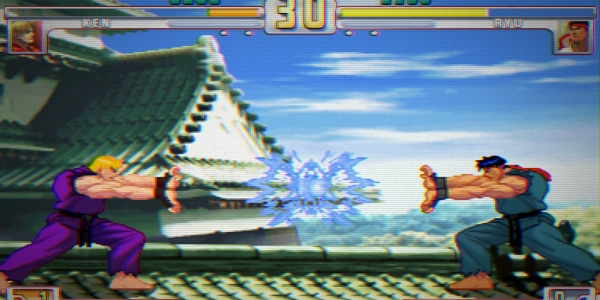
You just fought a hype match in your chosen fighting game against an online opponent, and you want to make sure the world sees how much of a huge badass you are. You blocked, you parried, you countered and clutched it out, and when you win, you go to save a replay of your match, only to find out there isn't much that can be done with it. You have a record of several close battles fought against online warriors, but you can't do anything with them. You just made your enemy look like a scrub, you need to show the world! The first game that comes to mind when it comes to getting replays right (along with just about everything else) is Street Fighter III: Third Strike Online Edition. After completing an online match in Online Edition, you're prompted to save a video of it to your HDD for later viewing. This alone isn't in every game, but it's still a fairly common feature. Online Edition takes this a step further, by you the option to give each replay a unique name to keep them organised. Then, each one can be uploaded to your own YouTube account with minimal hassle. Now the whole world knows how much of a scrub you are!

9. Accurate Movelists Based On The Source Material
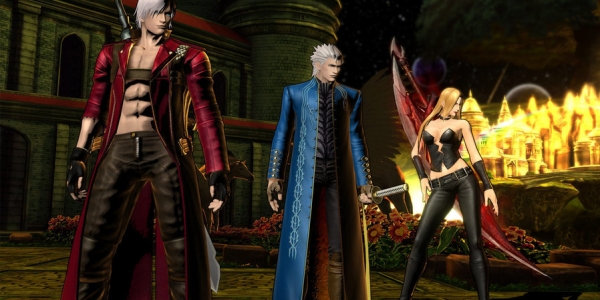
When crossover games happen, fans from both sides are desperately hoping that their favourite characters play exactly like they do in their source material. Certain titles such as Street Fighter X Tekken make half the cast play more or less like the other in order for the game to play properly. Considering those two franchises weren't even played on the same plane, it's not hard to see how some sacrifices needed to be made, though the illusive Tekken X Street Fighter may have been able to address this issue by bringing Street Fighter into the 3D plane, offering two options for fans of both franchises. In some games, say Capcom vs. SNK, the task is much more manageable, because of the similarities between games. Aside from a few obvious tweaks, you can go in as Geese Howard and clash your Reppuken against Ryu's Hadoken and there won't be any problem. Compared to the logistics of making a 3D and 2D fighting game franchise work nicely together, it's easy to see how one might default to one or the other. On the other hand, you have one of the hypest fighting games ever made, Marvel vs. Capcom 3. In Marvel, characters play about as much as you'd expect them to, and that's awesome. Characters like Nova, Deadpool, Chris Redfield, Frank West and many others have throwbacks to their source material that long time fans will certainly appreciate. This can also be seen in JoJo's Bizzare Adventure: All Star Battle, a game that aims to please long time fans of the original manga series as much as possible by cramming every inch of the game with references, to the point where almost every move in the game is named after a line or attack from the series. Then you have instances of characters playing very similar to how they did in their own games. Though it's not a very good fighting game, it's important to give credit where it's due, and the characters in PlayStation All-Stars Battle Royale have movesets and attacks from their own titles, such as Raiden from Metal Gear Rising: Revengance. To give a better example, Dante's moveset in Marvel vs. Capcom 3 feels like it was ripped straight out of the original Devil May Cry series, which just feels right. Taking a character's animations and combos from a 3D character action game and putting it into a 2D fighter might not seem necessary, but the die-hard fans will certainly appreciate that extra attention to detail.

8. Rivals And Blacklisted Players

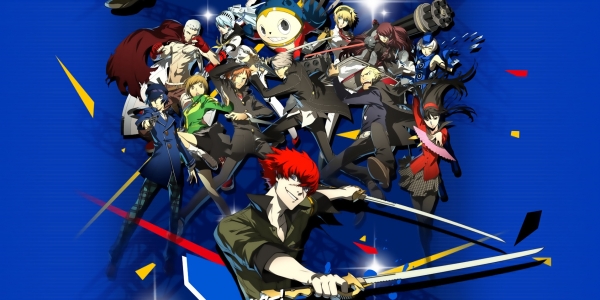
Amongst many features added by the recently released Persona 4: The Ultimax Ultra Suplex Hold is the ability to add certain players in either a "Good" or "Bad" players category. The good, or "rival", players are online fighters you enjoy fighting against, and would prefer playing over others. Bad players are the ones you don't like, either because they stomped you too hard, they're incredibly laggy or otherwise. No matter your reasoning, you can finally sort out the good from the bad, leaving you with more fun times against good players you enjoy fighting. We've all been there. Sometimes the matchmaking system continually insists on pairing you with a player you hate, even when one or both players cancel the match. The result is two players stuck with each other and not being able to actually play the game, which is a lose-lose situation for everyone involved. Inversely, you might find a player you really like, only to find yourself unable to play them again after a match or two. This simple system bypasses all of that by allowing you to select which online warriors you want to fight, and which you don't.

7. Custom Music

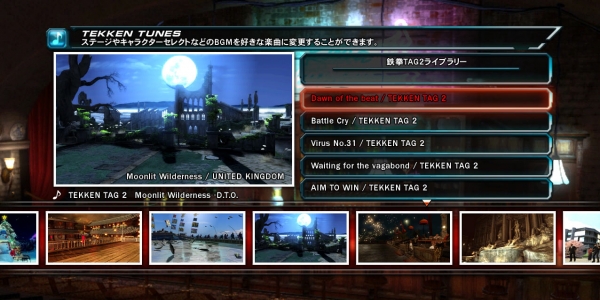
Good music is a must in any video game, and this genre is no exception. That being said, no soundtrack is so great that you won't eventually want to mix it up a little with something different. When that happens, using your own custom music is a great alternative, no matter what your tastes are. Sometimes, you just want to jam out to your favourite tunes as you practice and other times you want to find that perfect tune to set the tone for a hype battle. No matter the reason, games like Tekken Tag Tournament 2 and JoJo's Bizarre Adventure: All Star Battle have you covered. You might not have considered replacing game's background music with songs on your hard drive to be an essential feature, but it's one that's sadly missing from most games. In a fighting game, in which hype is king, finding that perfect song to battle it out just feels right. Now it doesn't matter if "Voodoo Kingdom" isn't included in the JoJo's Bizarre Adventure: All Star Battle soundtrack, you can still have a Jotaro versus DIO match with Soul'd Out playing in the background all day long!

6. Edition Select

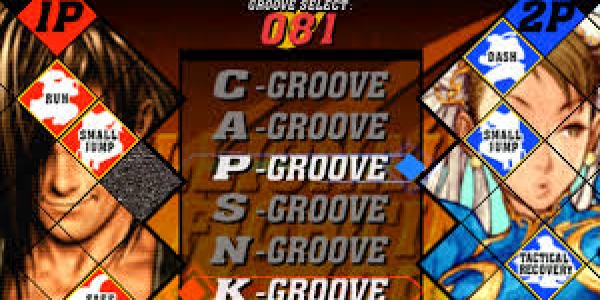
Fighting games practically thrive on re-releases. For a genre so focused on systems, re-releasing the game every so often with seemingly minor tweaks to the roster with a few extra mechanics might not seem like much, but those changes go a long way. On the surface, these character changes might seem minimal. However, this is not the case, especially if one compares Sagat from vanilla Street Fighter IV to Ultra Street Fighter IV. Implementing old versions of characters, as well as allowing players to choose from a variety of preferred mechanics (the Groove Select option in Capcom vs SNK 2 for example), offers a wider variety of gameplay options, whether there's any strategic value to it or it's just for laughs. In addition to eliminating any need to keep playing older versions of that game, it also opens up a wide number of possibilities for competitive play, which is always welcome.

5. Quick Rematch For Offline As Well As Ranked Online

4CapcomLosing sucks. Inversely, winning against an opponent you really like, and not being able to play them again also sucks, though to an admittedly lesser degree. We've all been there. You're looking for good matches online, and after countless battles with opponents of a vastly different skill level or connection strength, you find that one fighter. You know the one. That player you meet online who's skill is around the same level as yours, with a decent connection that makes fighting with them enjoyable, even if you don't win. Then of course, you never get connected with that person again. Sometimes you just want one quick rematch. Sadly, once the match is over, you're booted back to the lobby, and you may never play that person again. Fighting games are fast-paced, and once a game is over, you usually want to hop right back into the action with as few interruptions as possible. The most obvious reason why you don't have a quick rematch option in ranked online matches (most games do for local versus modes) is to prevent boosting, which can be seen as a legitimate problem, even at the expense of honest players. However, we like to think that some sort of compromise can be met. What if players could keep hitting rematch until one player wins the best of three/five matches, Evo style? At the very least, one or two rematches to settle who's better couldn't hurt.

4. Character Customisation

Everyone loves to customise their own character. It's a fun and engaging process that allows you to add your own personal touch to the game world. Whilst purely aethestic, creating your own character adds immense variety and replay value to games like Soulcalibur V and most recently, the Miis in Super Smash Bros. for the Wii U. With the endless possibilities in customisation for which these games allow, you'll never know what freaky character you'll run into next. Not every fighter needs or should have an in-depth "Create a Soul" mode. Capcom vs SNK 2 for example, allows you to change the name and colour palette for any character on the roster to whatever you wanted. This means that you're no longer stuck with half a dozen or so alternate colours. Instead, you can make them whatever you want! This way, everyone wins.

3. An In-Depth Series Of Tutorials

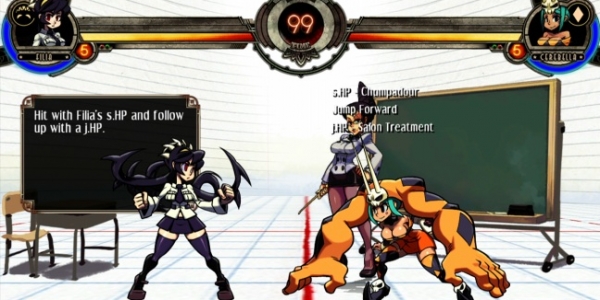
Fighting games are hard. They're hard, incredibly complex and require a whole lot of practice to get even somewhat halfway semi-decent. "Git gud" gets thrown around a lot, but most new players simply don't know how. How does one get good exactly? Where do you start? With too many fighters out there, the answer is "anywhere". Most of the time, you're expected to just jump in and learn as you go. For those thinking about getting into the genre, this is a big barrier of entry that deters them from really getting started. Skullgirls however, is not one such game. Though there are probably plenty of other great examples of fighting games with great in-depth tutorials, Skullgirls is by far one of the best we've seen. Whether you're just getting started with the genre as a whole, or want to jump into learning a certain character's bread and butter combos, Lab Zero's got you covered with several beginner-friendly starting guides.

2. Punishment For Rage Quitters

Rage quitting ruins fighting games. Fighting game matches are personal bouts between two people, so when you disconnect just as you are about to lose, you're ruining an entire game for someone. In many titles, a player disconnecting often counts as a draw, meaning even though you bodied the opposition so hard as to make them surrender to you out of frustration, you get nothing for it. That's not just unfair to the winner, it's unsportsmanlike and flies in the face of the hypest part of fighting games: epic comebacks. In competitive play especially, there's nothing more awesome than seeing a losing player clutch out a victory from the jaws of defeat. Rage quitting is a serious offence, and unfortunately, it's one that often goes relatively unpunished. Recently however, Killer Instinct has implemented a "rage quitter jail" where repeat offences of quitting or disconnecting during a match will land you in jail, where you can only play with other rage quitters. This way, everyone wins, except for the the scrubs.

1. Delayed Pause

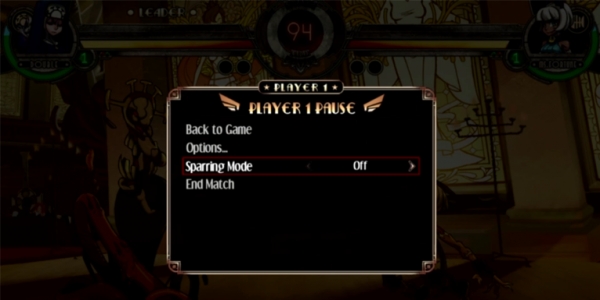
You might be thinking "what's so special about a pause menu?" You just press the pause button and a menu comes up and that's it, right? How can on possibly improve upon something so basic? By delaying the pause menu, that's how. Accidentally hitting pause is, at worst, an inconvenience that might cost you some vitality in an online match if you're playing by yourself. In tournaments however, accidentally hitting the pause button can result in forfeiture of a round, which can be especially nerve-wracking if you're playing on a controller with the pause button so close to all of your face buttons. Plenty of fight sticks try to avoid this problem by putting the pause button out of the way of your fingers or even including a lock switch to prevent such buttons from working, but surely, there must be a more elegant solution. There is. In Skullgirls, tapping the pause button does nothing. If you hold the pause button for a few seconds however, the game will then pause. By delaying the pause menu for just a few seconds, you remove any concern one might have about disqualification from competitive play. With a solution this simple, we don't really understand how this isn't standard in every single fighting game. What did we miss? Sound off in the comments section below and let us know which features you think should be in every fighter!

 
Posted On: 
Contributor
Contributor

Ken was born in 1994, and before the turn of the century, he was already a gamer for life, starting with Pokémon Blue Version. He has a passion for storytelling, especially in the gaming medium. Growing up on a healthy diet of JRPGs and point and click adventure games, young Kenny grew up playing Nintendo and Sony consoles, before becoming a snobby member of the PC Master Race. Nowadays, he resides in a time warp, refusing to believe the nineties ended as he fills up his Steam library with old point and clicks and cRPGs.