10 Games That Forever Changed Video Game Graphics

More than just a pretty face.
We like to think that looks don't matter and that what really counts is on the inside or, at least, deeper than the skin. But the truth of it is that your eyes are powerful decision-makers, and looks do have a major role in many aspects of life. Video games are certainly no exception to this rule. Just like you eat with your eyes first (think about that for a second), oftentimes when deciding whether to play a game or not, the first thing you process are the graphics. Whatever value graphical fidelity holds for you personally in the overall quality of a game, there is no doubt that gorgeous visual presentation can seriously move units. There's a reason that innovative indie games aren't used to advertise new systems over big-budget shooters. There is just something so fascinating about a game that advances visual technology in a way that we could have never imagined. At least, that's the case for each of these games. They are not only beautiful - for their time anyway - but each of them forever changed the way we looked at video games.

10. Hang-On

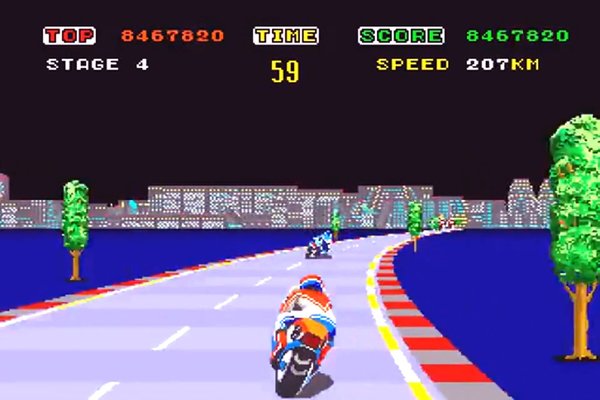
At a time when others were asking "How?" and "Why?"; Hang-On just went out and did it. In 1985, video game graphics didn't have the same culture they would later develop. A big reason for this is because the technology was still being poked and prodded to understand what it was capable of. Then Hang-On comes along and completely destroys the competition in terms of pure graphical prowess. Built off of Sega's "Super Scaler" technology (the company really loved their catchphrases) Hang-On was one of the first 16-bit arcade games. Impressively for a game that looked so much better than anything else, it also moved much faster and smoother than just about any arcade title as well. Hang-On set the first true graphical standard in video games, at a time when the industry didn't even know it needed such a thing.

9. Infinity Blade

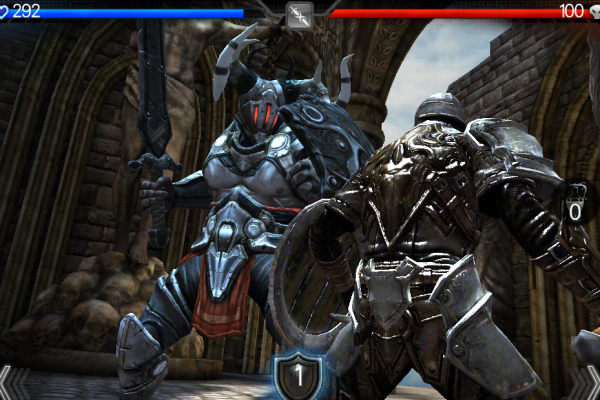
Say what you will about the casual - sometimes deceptive - nature of the mobile games industry, but the one thing you can't deny is that they are here to stay. So if we're going to have a mobile game market we need mobile games that aim for something greater. That is most certainly the case with Infinity Blade. At a time when many technologically savvy people had long ago stopped doubting what the industry was capable of, Infinity Blade completely shattered expectations of the kind of graphics a smartphone could produce. Infinity Blade made it clear that the potential of mobile gaming was far greater than most people could have imagined, in the same way that games like Halo and Soul Calibur would introduce their respective systems at the wave of the future. Infinity Blade is the kind of game that you show to your friends just to share the experience of looking at it. That's a sure sign of graphical advancement.

8. Super Mario World 2: Yoshi's Island
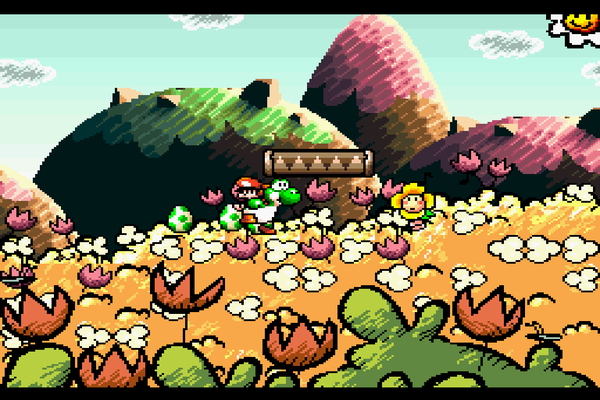
Yoshi's Island probably seems like a strange choice for this list. It didn't introduce any kind of new technology and didn't really push the Super Nintendo to its limits like similar games at the time did. But what Yoshi's Island did was help introduce an entirely new philosophy when it came to gaming graphics. Rather than try to make a huge technological leap forward from what came before, the designers of Yoshi's Island decided to implement an art style that didn't look like anything else at the time. They chose to be artistically innovative over technologically innovative and the result is a game that stands the test of time over other titles from the era. That noble commitment to artistic integrity at a time when such a thing wasn't really popular would prove to be forebearer for a generation of indie games yet to come, as well as future Nintendo classics like The Wind Waker.

7. Donkey Kong Country

On the opposite side of Yoshi's Island is Donkey Kong Country. Donkey Kong Country started its life as developer Rare's attempt to create a new kind of 3D graphics for the current generation of systems. Nintendo was so impressed with their work that they acquired the company and handed over the Donkey Kong license for them to apply their innovations to. The resulting game received a heavy marketing push under the tagline that Nintendo had a 32-bit game on a 16-bit system. Whether or not that's actually true is still up for debate, but the looks of Donkey Kong Country immediately resonated with gamers everywhere. As a result, Donkey Kong Country would go on to become the 2nd highest selling Super Nintendo game of all-time. Its success served as a clear notice to everyone that the right kind of graphics could sell games like nothing else.

6. Final Fantasy VII

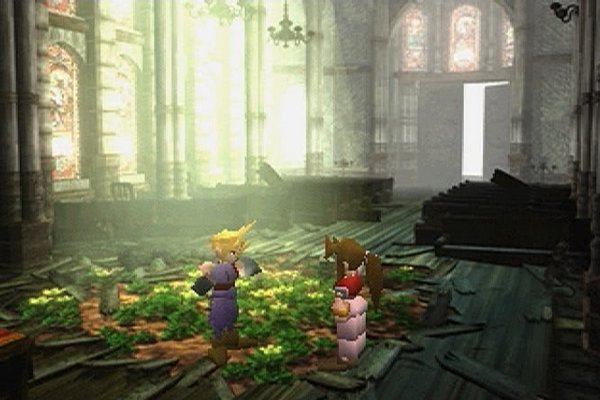
When you're launching your first video game console, you need a game that will make you stand out. In every possible way, that's exactly what Final Fantasy VII was for Sony. It didn't matter that Final Fantasy was the seventh game in a franchise or that RPGs didn't typically sell that well to the wider video game market. The moment that the first commercials for the game hit and showed off the game's stunning cutscenes and epic scope, people that had never even played video games started saying "What is that?" While the in-game graphics weren't quite on par with its cinematics, that didn't matter as they served as an effective hook to get people to play one of the greatest games ever made. Final Fantasy VII would forever change the fate of Sony, the Final Fantasy series and the way that Playstation developers approached the design of their games in terms of exploring what the system could do.

5. The Legend Of Zelda: Ocarina Of Time
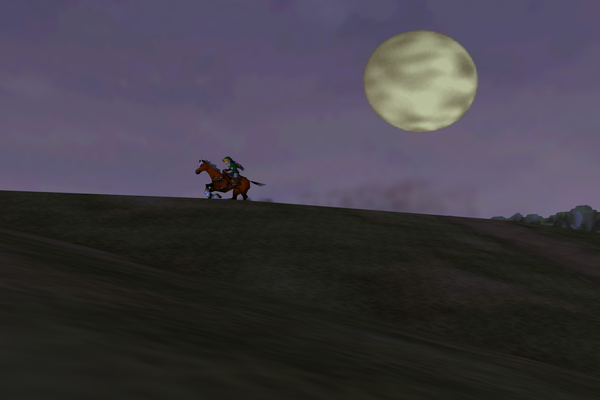
If we're just talking about revolutionizing 3D technology, Mario 64 would be on this list instead of Ocarina of Time. But Ocarina of Time is about more than that. The moment that everyone cites when talking about Ocarina is the first time that they rode through the fields of Hyrule with the sun setting behind them. It was not only an incredible moment in its own right, but it represents the way that Ocarina showed everyone how grand and epic 3D gaming could be. This didn't feel like a constrained course designed to showcase some new processing power, it felt like a sweeping world of infinite possibilities. One that didn't have to sacrifice artistic integrity in the name of jaw-dropping visuals. Games like Shenmue and Grand Theft Auto III would build off of what Ocarina showcased, but this was the game that showed everyone that video games were ready to create new kinds of worlds.

4. The 7th Guest

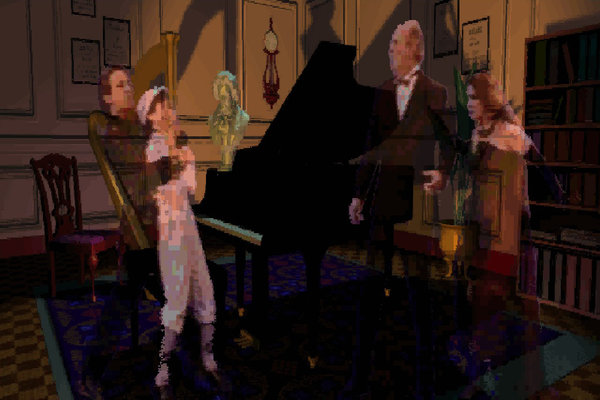
You can't understate how significant the introduction of CD-ROM technology was in the innovation of gaming graphics. Suddenly everything came before needed to be rethought. One of the earliest examples of this was The 7th Guest. Not only did this haunted mansion murder mystery feature pre-rendered environments that were shockingly close to the real thing, it also incorporated actual actors into its story sequences. The jarring effect this created proved to perfectly fit the game's environment and was impossible not to be impressed by at a time when there was nothing else out there quite like it. It all came together to form a game that was simple - and often corny - but proved to be the perfect vehicle to showcase the potential of CD-ROM. The very similar Myst would go on to sell more copies, but The 7th Guest was a true innovator.

3. Crysis

There have always been games that pushed PC gaming to its limits and forced fans everywhere to upgrade their hardware in order to keep up. Of them, none is perhaps more significant than Crysis. Released in 2007, Crysis was most certainly the graphical benchmark of its time. Its large open-world rarely needed time to load, despite the sheer amounts of lighting and particle effects on display feeling impossible. Never before had a game of such incredible visual innovation allowed players the same freedom of gameplay as Crysis did. What is most impressive about Crysis, though, is how the game holds up to this day. Crysis is still used to performance test modern graphic cards and with a couple of modifications is still in the running for the best looking game available. Crysis demanded that players have the very best gaming computer available if they wanted to run the game and the result of that ambition is a game that many others are still chasing to this day.

2. Doom

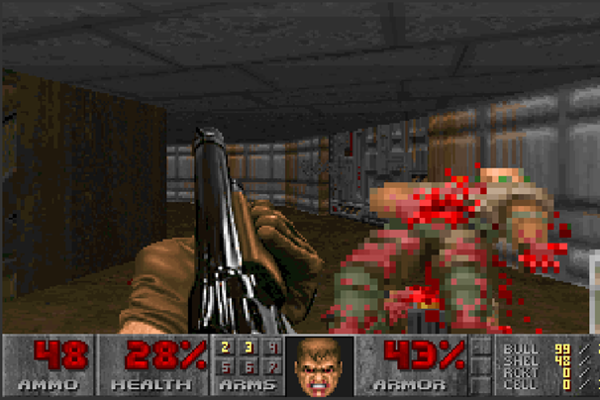
Have you ever agonized endlessly over the solution to a particular problem until finally in one glorious moment the answer came to you? If so, then you'll understand why Doom is so graphically significant. Other games laid the groundwork for the first-person shooter (Wolfenstein 3D being the most notable of them) but all the games that came before were forced to employ as many tricks as possible to maintain the illusion of the environment. By finding ways to get around those smoke and mirror tactics, Doom was able to employ actual level design complete with previously unheard of concepts such as scale and depth. The result was a game that created a genuine sense of atmosphere. Believe it or not, that was a concept and word that never really came up before when talking about video games. Doom showcased just how immersive and intense a video game could be. There was no going back.

1. Dragon's Lair

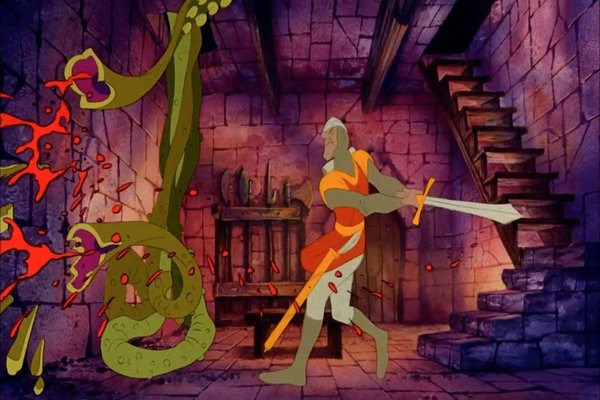
Innovation is often ignited by a sense of wonder. If it weren't for the wonder that came with staring up at the stars, it's doubtful that man's desire to go to the moon and beyond would have been so strong. Dragon's Lair created that same sense of wonder for video games. It was the first case of a game looking like an interactive movie and comparing the title's graphics to other arcade games at the time is like comparing apples to rocket engines. The trade off was that the gameplay was limited to inputting commands along with the actions on-screen, but that didn't matter. It immediately planted a seed in fans and developers minds that gaming technology could not stop until a fully playable game looked like Dragon's Lair. At the very least, Dragon's Lair is the forbearer to games like Until Dawn and Heavy Rain. In truth, it may just be the very first time that people ever really began to understand that gaming didn't have to be second to any form of entertainment in any way. Which monumental games need recognising as pushing the medium forward more than the rest? Let us know in the comments!

In this post: 
Crysis 2
 
Posted On: 
Contributor
Contributor

An entertainment enthusiast living in Brooklyn, trying to make his way by slinging words at blank pages.