10 Games You Didn't Realise Were Actually Sequels

You didn't notice Halo was probably a sequel?

You can't swig a dead cat (preferably Bubsy) without hitting a sequel in the world of modern video games. Franchises are the name of the game, and blockbusters series like Call Of Duty are some of the biggest earners in the market, frequently selling in excess of billions of copies. So you can see why, instead of working on a original IP, a developer is more likely to stick to a tried-and-true title that's going to bring in the megabucks if it's the sequel to something. It's another one of the ways that gaming is becoming similar to Hollywood, with the constant churn of remakes, reboots and new instalments in long-running series. Which can be a bit of a creativity killer, sure, but can also ensure that games which might not otherwise have earned follow ups live on in other ways. They've sort of been a thing previously in films, books and TV shows, but video games have really pioneered the idea of the "spiritual successor" - titles which aren't necessarily sequels in name, story or character, but which carry on the philosophy, gameplay mechanics or development approach as previous games. So not so much Call Of Duty: Modern Warfare and Call Of Duty: Modern Warfare 2 as, say, Super Mario RPG begetting Paper Mario. Not actual sequels, but there's enough shared DNA in there for them to be "spiritual successors". That got us to thinking of how many other stealth sequels are out there which we totally overlooked. How many of the triple-A titles we're spending hours engrossed in are, in fact, not blazingly original takes on the first-person shooter genre but the latest in a long line of such games? Is Dark Souls not as unique a cultural phenomenon as we thought? Has a new Fallout game come out right before our eyes, and we didn't even notice? You'll just have to read about the ten games you didn't realise were sequels and find out...

10. No More Heroes Is A Sequel To Killer7
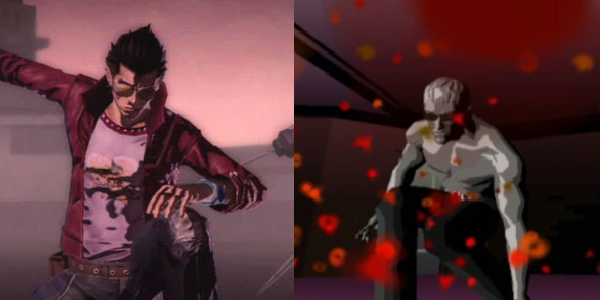
The sequel: A much-needed dose of violence, depravity and insanity on the family-friendly Nintendo Wii, this action game €“ name after The Stranglers song €“ saw you control the character Travis Touchdown around an open world environment, travelling on a souped-up sci-fi scooter and slicing up bad guys with what was essentially a lightsabre but for legal reasons had to be called a €œbeam katana€. It had a nigh-incomprehensible plot, totally bonkers cut scenes and took inspiration from a pick 'n' mix of popular culture, with the story, weapons and characters based on everything from Memento to Jackass to Ian Curtis, singer in post-punk band Joy Division. It was ridiculous. And incredible. The original: Which is pretty much par for the course with games developed by Grasshopper Manufacture, especially when they're directed by Goichi Suda (known by the nickname Suda51). Suda's breakthrough hit was the beguilingly bizarre Killer7 for the Playstation 2 and GameCube, where you controlled a group of characters that may or may not have been different aspects of an elderly assassin who worked on behalf of the US government. Also it a nigh-incomprehensible plot, totally bonkers cut scenes and took inspiration from a pick 'n' mix of popular culture, and pretty much the exact same cel-shaded look as No More Heroes. If it looks like Killer7, sounds like Killer7, and plays like Killer7? It's pretty much a sequel to Killer7.

9. Dragon Age Is A Sequel To Baldur's Gate
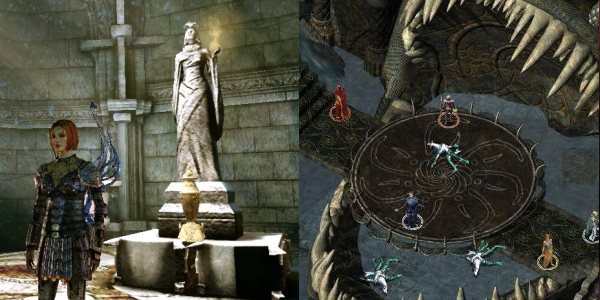
The sequel: Got time to kill between Elder Scrolls games? Then allow us to submit the Dragon Age series, developed by BioWare and set in a magical fantasy kingdom the player must unite in order to fight an impending invasion by demonic forces. You can be a warrior, mage or rogue coming from an elven, human, or dwarven background - and that's just the tip of the robust character creation system - and you traverse through the open world role playing environment doing various tasks for NPCs, fighting monsters for experience and loot, and eventually level yourself up to a point that you're in a position to fight the ultimate evil. Oh and you can get mad laid, too. Yeeeeah boi! The original: All of which (except maybe the bumping of uglies) was previously on offer in the Baldur's Gate series, a franchise of role playing games set in the Forgotten Realms Dungeons & Dragons campaign setting that were also developed by BioWare. The two series are so closely linked that you can find countless mods online which turn the Dragon Age titles into next-gen versions of the slightly old hat Baldur's Gate PC games; the developers say they want to move away from their earlier, licensed work but Baldur's Gate - and especially the game that bridged the two series, the D&D-derived Neverwinter Nights - is pretty much identical to Dragon Age in terms of setting and styles of play. The only real difference is in the graphics. And the getting mad laid.

8. Perfect Dark Is A Sequel To GoldenEye
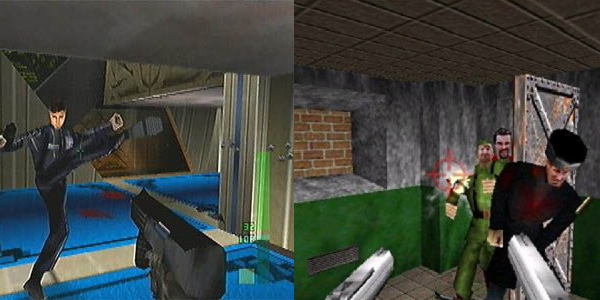
The sequel: Before we get started, just let it be known that we're talking about the Nintendo 64 Perfect Dark here. Don't come bothering us with any of that Xbox 360 nonsense - the sequel and remake never happened, okay? Rare had long since gone off the boil at that point. Plus all the people who worked on it had buggered off to make TimeSplitters, aka the second best first person shooter series on Earth. Now all that's out of the way: Perfect Dark was a flawless, perfectly constructed FPS that favoured a stealthy approach and conspiracy theory narrative to going in all guns a-blazing and some jingoistic military nonsense. It was crazy fun. Does the Call Of Duty series let you team up with an alien called Elvis? No it does not. The original: Wanna know why everything about Perfect Dark was so, well, perfect? Because it was the same team using the same engine they'd used for GoldenEye, which is the number one first person shooter on Earth. Again, don't darken our door with any of that remake or sequel piffle - the original GoldenEye on the Nintendo 64 was the most satisfying multiplayer gaming experience anybody has ever (and probably will ever) experience, and whilst the developers lost the James Bond licence after the game, they carried on regardless. They just swapped 007 out for special operative Joanna Dark, Russians for extraterrestrials, and kept the multiplayer mechanics pretty much the same. If you can play GoldenEye, you can play Perfect Dark; and you probably should, cos they're both mint.

7. Dark Souls Is A Sequel To King's Field
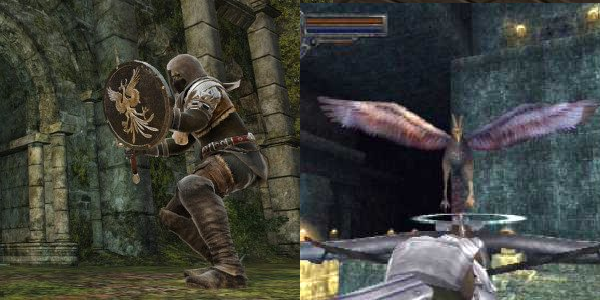
The sequel: How many controllers have been snapped in the pursuit of completing even a single dungeon in Dark Souls? It hardly bears thinking about. From Software's series of hack-and-slash role playing games have earned a reputation for their fiendish difficulty level, which harken back to the good old days of gaming where death actually meant something (usually it meant starting from scratch, after a period of punching the sofa and weeping). Checkpoints? We don't need no stinking checkpoints. Better get used to seeing that starkly simple YOU DIED game over screen, because it'll be popping up a lot as you navigate your brave warrior through the Undead Asylum. Those fancy weapons and armour you accumulated aren't going to last long. The original: Part of the reason Dark Souls has achieved such a cult following is because its mechanics and game playing philosophy seem decidedly old school (and the graphics, thankfully, don't). We already know that the game are spiritual successors to From's earlier Demon Souls - the title of which belongs to Sony, rather than new publishers Namco Bandai, hence the change - but did you know they've been making titles in this vein for years? The King's Field series began in 1994 on the Playstation and each instalment followed a similar template: first-person dungeon crawlers known for brooding atmospheres and cryptic, labyrinths. With demons. And you died a lot. You could've been snapping your controllers in half for so much longer!

6. Halo Is A Sequel To Marathon

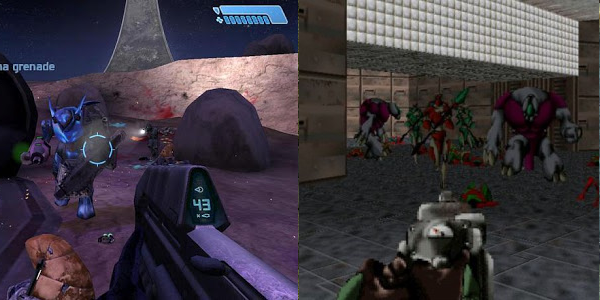
The sequel: Seriously? You want us to explain the Halo series to you? What have you, been living under a rock? How do you even get on the internet under there? Okay, whatever. Originally developed by Bungie (who have since moved onto the recently released Destiny) as an Xbox exclusive, the main line of Halo games see you controlling a space marine called Master Chief as he battles an intergalactic army of big, ugly aliens. And sometimes tiny, ugly aliens, whom you feel slightly more remorse for mercilessly gunning down/slicing in half with a laser sai, but still not that remorseful. There are inventive sci-fi weapons, a story which you could probably follow if you could be bothered, and shooting. Lots and lots of shooting. Mainly from a first-person perspective. The original: All of which sounds suspiciously similar to Marathon, a series of first-person shooters Bungie made for the PC and Macintosh in the early nineties which saw you playing as a security officer as he battles an intergalactic army of big, ugly aliens. And sometimes tiny, ugly aliens. The title even refers to a colony ship of the same name, just like how Halo referred to some big ring-shaped space station that was crawling with extraterrestrial enemies. Marathon also boasted a similarly complex plot (albeit told through much lower resolution cut scenes), one of the earliest online - well, LAN - multiplayer deathmatch modes, and had the main character interfacing with an AI to advance through the game. AIs which looked less nude than Cortana, but the point still stands. So to speak.

5. Fallout Is A Sequel To Wasteland

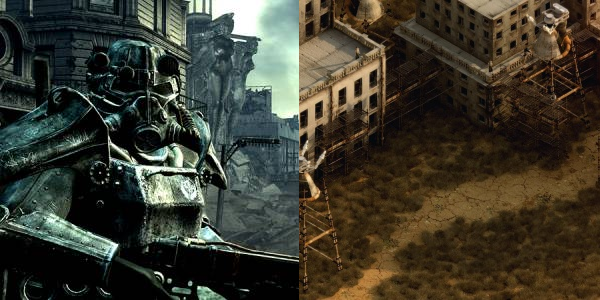
The sequel: Again, it seems a little insulting to you that we're going to explain it, but nonetheless. Best known now for the blockbuster titles developed by Bethesda, Fallout 3 and New Vegas, the series actually originated under the stewardship of Black Isle Studios. Whileas the more recent iterations are first person console affairs the original Fallout games were top-down PC games, but they shared the same setting and basically the same role playing mechanics. Every Fallout game sees you trawling through a nuclear irradiated wasteland following a war which pretty much destroyed the world; it's up to you to survive regardless, usually whilst scavenging for items and fighting mutant rats of unusual size. The character creation system is second to none, an the role playing aspects even let you get drunk or addicted to drugs. Fun! The original: Most people don't really even know about the first two games in the series, let alone that the whole thing started as an abortive follow-up to a totally different franchise. Which only became a franchise in the past couple of weeks, when the long-awaited Wasteland 2 was released, thanks to a successful crowdfunding campaign. The first Wasteland was set in a futuristic, post-apocalyptic America that was destroyed by nuclear holocaust, had mechanics based directly on tabletop role playing games, and was generally just Fallout with worse graphics and less popularity. It was even an open world, which was pretty impressive for a game that came out in 1988. Who knows? The sequel might even be worth checking out whilst we wait for news of Fallout 4.

4. BioShock Is A Sequel To System Shock
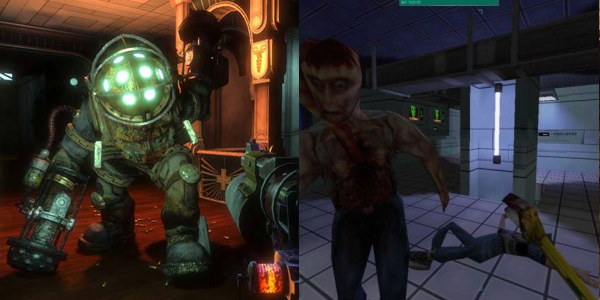
The sequel: The BioShock games are that rare think in contemporary, big budget game production. Critical darlings that are also commercial successes...although, not quite successful enough, since despite Infinite being one of the biggest games of last year, it failed to turn a profit for its developers and Irrational Games shuttered their doors not long after its release. Woops. Anyway, let's not dwell on that, and instead celebrate one of the most interesting, inventive and daring series of recent years (in terms of narrative, anyway). Not content with making another simple FPS, Irrational chose to bolster their games with interesting mechanics - the plasmids in the first two games and vigors in Infinite, which let you wield special powers along with shooting things - and stories which drew on more diverse sources than dumb action movies (Ayn Rand in the first game, the dark beginnings of American history in Infinite) and featured some pretty gnarly plot twists along the way. You might still have been running and gunning, but the BioShock games felt smarter than the average. The original: A trait they share along with a very similar name. System Shock (and its actual, legit sequel) were both developed by Irrational Games, too, and directed by Ken Levine to boot. Both were first-person shooters which favoured story and suspense over just letting you kill a bunch of people, as they let you explore a seemingly abandoned space ship and piece together what happened through journal entries on computer terminal. Which is pretty much the exact same as how the first BioShock works, as you wander around the ruined remains of underwater city Rapture and listen to audio recordings on reel-to-reel tape. The games even have an almost identical twist: the first BioShock has the reveal that the friendly Irish man who's been guiding you via the radio is actually the Big Bad, and System Shock's friendly AI turns out to be anything but. BASICALLY IDENTICAL.

3. Assassin's Creed Is A Sequel To Prince Of Persia
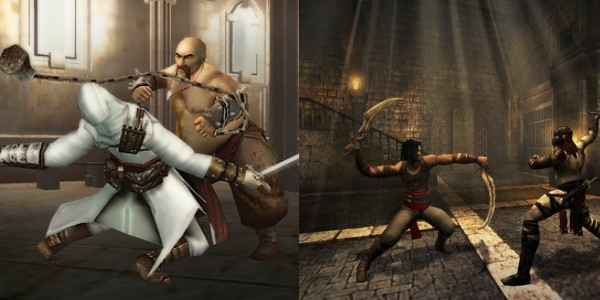
The sequel: You walk around wearing a hoodie, in heavily populated areas, stabbing rich people €“ the Assassin's Creed series is everything the Daily Mail fears the most. Plus it's a video game, which we all know are murder simulators. Where the labyrinthine quasi-sci-fi plot becomes more and more unnecessarily complex the basics of Assassin's Creed has remained pretty much the same across twelve games so far: you blend into crowds, you scale buildings and leap across rooftops like an old-timey parkour practitioner, and you kill people with knives. Then every so often you control a member of Ubisoft producing a game called Assassin's Creed and then your head starts to hurt at all the conceptual walls that are being broken and wish you could get back to the scaling of buildings and stabbing of bad guys, cos you know where you stand with that. The original: The Assassin's Creed titles started life not just as a spiritual successor to Ubisoft's uber popular Prince Of Persia revival, but an actual spin-off. During the development of The Two Thrones the team were also working on Prince Of Persia: Assassin, and saw you rescuing an AI-controlled, childlike prince from being killed. Which actually sounds like something of a departure for the series, whileas the actual end result - the Assassin's Creed series - has a bunch in common with the rest of the Prince Of Persia games. The fight mechanics and the way you scale buildings is pretty much identical, the swarthy protagonists have a lot in common, and the storytelling is almost identical. Except one of the stories is absolutely batsh*t insane.

2. Portal Is A Sequel To Narbacular Drop

The sequel: One of the most wildly inventive and original titles of our generation, the Portal games are based entirely around a central conceit and a series of puzzles which can only be solved by a deceptively simple central gimmick. The player character is equipped with only one weapon, a gun which can produce "portals" for you to travel through. Zap one on the wall next to you, one next to that far-off platform, and you can pop through to said platform. Although more often than not you'll be doing confusing physics puzzles involving jumping down long holes to catapult yourself even longer distances out the other side, or dropping boxes onto gun turrets. And then you don't even get the long-promised cake at the end as a reward for all that strenuous mental activity. What a rip. Still, at least the songs on the credits are good. The original: Except Portal isn't wildly inventive and original at all! Well, it is technically, but the people who made it had already come up with their unique idea years before. Prior to being folded into Valve the makers of Portal were a small indie studio called Nuclear Monkey Software, which they formed whilst studying at the DigiPen Institute of Technology. Their senior game project was a title called Narbacular Drop, where the player controls two interconnected portals that can be placed on any non-metallic surface. Sounds familiar, huh? Almost everything else was completely different - that trademark sense of humour wasn't quite in place, and instead of the sleek sci-fi setting you played as a fantasy princess captured by a demon breaking out of her prison with the portals - but the central mechanics, right down to the portals being blue and orange? Totally the same. So totally a sequel, right?

1. Resident Evil Is A Sequel To Sweet Home

The sequel: The Resi series has gone through many permutations during its long and storied history, but we're going to go back to the start. None of this two-player action gaming with slightly suspect racial undertones, nuh uh. Nor...whatever the sixth game was. We're talking about classic Resident Evil, with all the survival horror and tank controls and mixing together of herbs to restore your health somehow. Even today the first game in the series is kinda terrifying, with the jump scares and the dodgy controls adding to the tension whenever you enter a room that's being plagued by a member of the undead. You know, after you've waited five minutes for the room to load whilst that animation of a door opening plays. And between all the goofy cut scenes. But the gore! The gore is nasty! And brilliant! The original: And is all absolutely in line with a game Capcom made ten years prior! Sweet Home was a psychological horror role-playing video game made for the NES in 1989, which is not the type of game you often got on the NES. It was more Kid Icarus and Super Mario Bros. Based loosely off the Japanese film of the same name, the game saw you wandering a mansion (like Resident Evil!) full of horrible ghouls (like Resident Evil!) which you had to either defeat in random encounters or else leg it from (sort of like Resident Evil!). Besides that, a lot of the other Resi trademarks originate with Sweet Home. The infamously unforgiving inventory system first showed up in the NES game, as did the emphasis on survival, a lot of the puzzles - yes, they mostly involve combining things to make keys - and even the door opening loading screen. Playing Sweet Home is essentially like playing an 8-bit Resident Evil. And it's every bit as terrifying as you're imagining that to be. The Resi series has gone through many permutations during its long and storied history, but we're going to go back to the original. None of this two-player action gaming with slightly suspect racial undertones, nuh uh. Nor...whatever the sixth game was. We're talking about classic Resident Evil, with all the survival horror and tank controls and mixing together of herbs to restore your health somehow. Even today the first game in the series is kinda terrifying, with the jump scares and the dodgy controls adding to the tension whenever you enter a room that's being plagued by a member of the undead. You know, after you've waited five minutes for the room to load whilst that animation of a door opening plays. And between all the goofy cut scenes. But the gore! The gore is nasty! And brilliant! The original: And is all absolutely in line with a game Capcom made ten years prior! Sweet Home was a psychological horror role-playing video game made for the NES in 1989, which is not the type of game you often got on the NES. It was more Kid Icarus and Super Mario Bros. Based loosely off the Japanese film of the same name, the game saw you wandering a mansion (like Resident Evil!) full of horrible ghouls (like Resident Evil!) which you had to either defeat in random encounters or else leg it from (sort of like Resident Evil!). Besides that, a lot of the other Resi trademarks originate with Sweet Home. The infamously unforgiving inventory system first showed up in the NES game, as did the emphasis on survival, a lot of the puzzles €“ yes, they mostly involve combining things to make keys €“ and even the door opening loading screen. Playing Sweet Home is essentially like playing an 8-bit Resident Evil. And it's every bit as terrifying as you're imagining that to be.

In this post: 
Halo
 
Posted On: 
Contributor
Contributor

Tom Baker is the Comics Editor at WhatCulture! He's heard all the Doctor Who jokes, but not many about Randall and Hopkirk. He also blogs at http://communibearsilostate.wordpress.com/