10 Gaming Cliches You Couldn't Live Without
You love them really.

Though gaming is inherently an expression of creativity and technological innovation, it's safe to say that there are a number of core tenets that ably qualify as cliches of the medium.
You'll be hard-pressed to find players who don't roll their eyes at arbitrary fetch quests, pesky water levels, stealth missions, rubber-band AI and perhaps the king of the loathed cliche: the !*$% escort mission.
Not all cliches are bad, though: often it simply reflects the popularity of a gaming trend or mechanic, to the point that while it may be difficult to take seriously nowadays, it's still enormously fun to play, especially if the game executes it in a self-aware fashion.
From the dominant action aesthetic of today to classic staples that have been around for decades, these cliches might give you a perverse chuckle when they show up, but you'd definitely miss them if they weren't around.
Here are 10 gaming cliches you couldn't live without...
10. Regenerating Health

The Cliche: You're being fired upon and taking serious damage from the enemy, but all you have to do is lie low for a few seconds and your health will magically restore to normal.
Popularised by the Halo and Call of Duty franchises above all else, and it's now extremely prevalent in first-and-third-person shooters save for some games that still rely on health packs in order to intentionally hearken back to the "good old days".
Why It's Awesome: Health pack management may add another level of tension to your experience, but it can also become tiresome and irritating needing to find extra health, or alternatively save-scumming your way through a tricky section so you don't need to reload a checkpoint.
Regenerating health may make games easier and "casualise" the experience, but it also cuts down on busy-work and trite repetition. Plus, finding a place to restore your health isn't always easy, and it's clear that modern shooters have adapted by hurling more enemies at you to compensate for the regenerating health.
9. Saving The Princess

The Cliche: It's a trope as old as video games themselves (well, almost): you're primarily motivated to rescue a damsel-in-distress who has been kidnapped by the bad guy for...ambiguous reasons.
It all began with Princess Peach in the Mario series, of course, then there's the Zelda franchise (though Princess Zelda has a little more agency than Peach), and Resident Evil 4 memorably (and insufferably) paired players with the President's daughter for most of the game.
Why It's Awesome: Yes, it's extremely old-school and arguably more than a little bit sexist, but it's a cliche that's persisted for so long because it appeals to the most basic facets of masculine heroism: the awesome, determined hero sets off on a journey of enormous peril to rescue the long-suffering (normally beautiful) female.
There's a reason it continues to be a successful trope for Nintendo and others, because that power fantasy of saving the day and getting the girl is something every guy wants.
8. Bullet Time

The Cliche: Following the release of the movie The Matrix, it didn't take long for games to start incorporating its ground-breaking, iconic slow-motion wizardry, with the charge being led by arguably still the best game to make use of it, Max Payne.
Since then it's appeared in literally hundreds of shooters as a "power-up", such as Red Dead Redemption, the Fallout franchise (the V.A.T.S system), the Call of Duty series (any time you breach a door), Sniper Elite (where you can literally see the bullet annihilate a man's testicles) and even occasionally in racing games (namely Burnout).
Why It's Awesome: Because anything that distends wanton destruction and allows the player to savour it to maximum effect is always going to be popular. Yes, the novelty aspect of bullet time is long gone, but it's still extremely satisfying to take a breath, line up your shot and watch the bullet dismantle the mark's body in such detailed, drawn-out fashion.
Sure, it also makes games easier on the whole, but again, developers tend to increase a game's difficulty to compensate for this. Ever tried playing some of the Max Payne series' more challenging sections without bullet time? Not fun.
7. The Silent Protagonist

The Cliche: The protagonist who doesn't speak a single word throughout the game, largely because the developers lacked the time, money or sheer inclination to work it in.
Half-Life's Gordon Freeman is by far the most iconic silent protagonist, though there's also Grand Theft Auto III's Claude and Doom's Doom Guy among countless others.
Why It's Awesome: When it's done right, a silent protagonist can actually enhance a character's intrigue and mystique, case in point being that it makes the three aforementioned characters seem far more like no-nonsense bada**es who don't have time for idle chit-chat.
This can also force developers to cut down on expository dialogue between the player and NPCs, because a five-minute, one-way monologue from NPC to player would just come off as awkward.
And finally, so much video game voice acting is so terrible that this is often just a basic mercy. The famous adage goes, "It is better to keep your mouth closed and let people think you are a fool than to open it and remove all doubt."
6. An Implausibly Large Weapons Arsenal

The Cliche: No matter how many gigantic weapons you amass, some games won't limit you by nonsense like weight and the sheer impracticality of handling so many items, and you're free to collect enough guns and ammo to pacify a decent-sized army.
Though this cliche has been on the decline recently with more games tending to limit players to two or three weapons, it's still been widespread in Max Payne, Grand Theft Auto, Doom, Metal Gear Solid and so many more.
Why It's Awesome: Most people don't play video games, especially action-based ones, to hunker down with the rigour of inventory management. Rather, they want to blow off some steam by peppering the living s*** out of the bad guys with as large and diverse an array of weapons as possible.
Again, this appeals to the inherent power fantasy of the aforementioned games: it may make zero sense within the context of real life, but that's the point. The fact you can switch from a pistol to a shotgun to a rocket launcher with the click of a button is part of what makes them so ludicrously entertaining.
5. Every Game Is Now An RPG

The Cliche: The last decade has seen a major increase in the focus on stats and incremental rewards, largely due to the success of Call of Duty: Modern Warfare, which introduced leveling up and an RPG-like progression system to the FPS genre.
Since then it's been adopted by almost every genre going, including racing, platformers and even sports games. It's all about keeping the player engaged by encouraging them to keep playing: every action is working towards another medal, rank or item unlock.
Why It's Awesome: Yes, it may be carrot-and-stick gaming at its finest, but there's a reason why it's been so ludicrously successful even while proving highly unimaginative: people like to feel like they're making good use of their time, and incessant stat-tracking basically takes care of that.
4. Looting
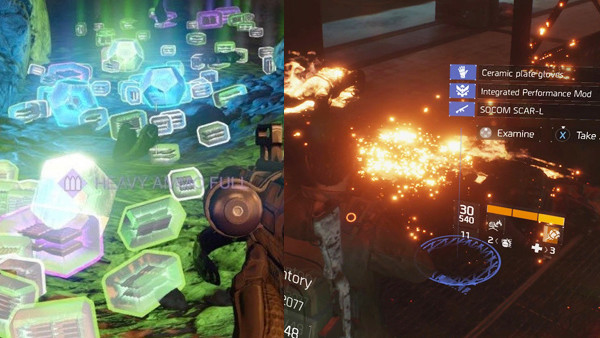
The Cliche: For the RPG genre above all else, looting makes the world go around. Finding items through exploration and stealing them from the corpses of your enemies is typically how you build up a solid inventory of weapons, armour and potions, and with the RPG-ification of shooters in recent years, loot has also become a major part of titles like Destiny, The Division, Overwatch and even the recent No Man's Sky.
Why It's Awesome: Again, this is a way to make the game more meaningful and exciting, this time by introducing a certain randomness and "what's in the box" appeal, such that you're incentivised to keep grinding away for that rare item regardless of the fact it's usually decided by a roll of the dice rather than skill.
It can be a time sink if you let it, but that surge of dopamine when you come across a rare pair of leggings makes the juice feel very much worth the squeeze. It may ultimately be a fairly rote way to distended gameplay, but there are certainly far more sinister ways for devs to keep people playing.
3. The Multi-Phase Boss Fight

The Cliche: The boss fight, often the final one in the game, which has numerous phases to it. Perhaps you deplete the boss' health only for it to restore, or maybe the game plays fair and lets you know you've got a certain number of "phases" to get through, but either way, you're not getting out of this one quickly or easily.
Common in the Castlevania, Zelda, Metroid, Mario and Final Fantasy franchises, among others.
Why It's Awesome: For one, it instantly makes a pivotal boss fight feel that much more epic, and can have a distinct "holy s***!" factor if the game doesn't inform you beforehand, which can also massively heighten the tension if you've already used up your best weaponry and goods in the first phase.
It can definitely be frustrating depending upon circumstance, but in the event that the differing phases sufficiently change things up (often by mutating the boss into new forms), it can result in dynamic and highly entertaining battles.
2. You're The Secret Bad Guy
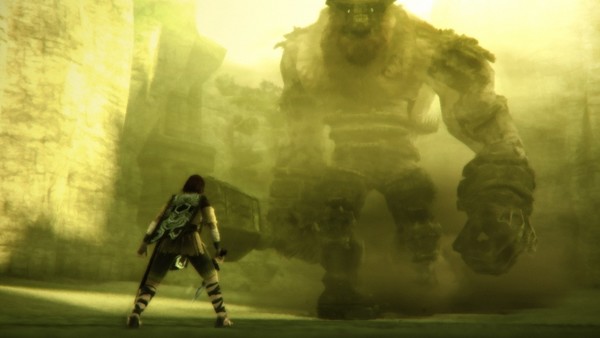
The Cliche: Surprise! You thought you were the hero of this story just because you're playing a game, right? Wrong! It turns out, usually revealed near the end of the game by way of a demented plot twist, that you're actually an a**hole and have been doing it wrong the whole time. Joke's on you!
Perhaps most memorably employed in Shadow of the Colossus, Spec Ops: The Line, Undertale (depending on how violently you play), Silent Hill 2 and somewhat ambiguously in The Last of Us.
Why It's Awesome: Though it's widespread enough these days that players can often see it coming and games generally do a pretty terrible job of hiding it (it was pretty obvious early on in our first two examples), at its best playing as the villain can be so much more rewarding than merely being the squeaky clean hero.
Don't we all want video game stories with more moral ambiguity and thought-provoking themes? Whether or not these characters did the bad thing for the right reason or were flat-out wrong in their actions, you probably felt like s*** when the credits rolled, which is a strangely refreshing riposte to the usually upbeat, congratulatory "you made it!" ending.
1. Explosive Barrels
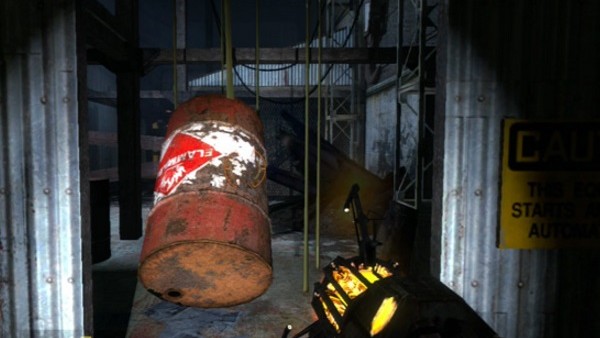
The Cliche: Bet your bottom dollar that almost any barrel that appears in a shooter of any kind will spectacularly explode when shot. This one's so widespread it'd be quicker to list what games it isn't in.
Why It's Awesome: Let's face it, most people probably go most days of their life without seeing a single barrel, let alone one that would explode if you so much as ate a chicken korma within 50 feet of it.
The beauty of video games, however, is that they can cherry-pick which real-world rules they want to adhere to. Sure, the abundance and flammability of barrels may be grossly exaggerated in most games, but the explosions themselves do seem at least a little more believable.
Still, the salient point here is that whether you're shooting barrels for the pretty fireworks display or to actually dismantle some pesky enemies, people love blowing sh*t up, and it never gets old. Like all the cliches on this list, gamers the world over gladly embrace it.
Which gaming cliches are you most fond of? Shout them out in the comments!