10 Gaming Norms We Wouldn’t Have Believed Possible 10 Years Ago
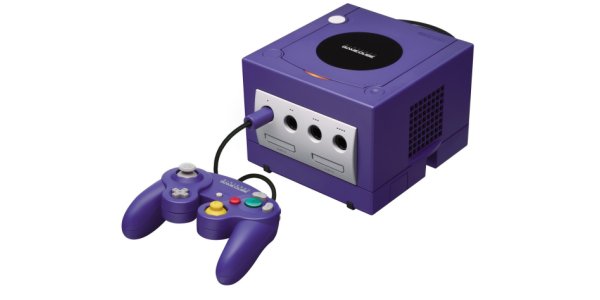
A year before the PlayStation 3 debuted and two years before the Xbox 360 and Nintendo Wii, the PlayStation 2 dominated at retail around the globe. It left in its wake the Xbox and Nintendo GameCube, the latter trailing behind so badly, the cries of "become a third-party" had started to sound out. All three consoles were graphically on par but the addition of DVD support on the PS2 was the coup de grâce that catapulted it into the ionosphere. 2004 was a year in which, looking back, we had a certain innocence as gamers, and the industry hadn't yet seen the shift that would come by late 2006. Who could have imagined that Blu-ray would have been the hot ticket or that much shinier-looking oceans were actually a thing that would garner insane sales? That graphics would not only continue to be pushed past what we thought possible on a single console, but that the next generation of them would last past the normal cycle of five years? There was much that we didn't, and couldn't see. There were a multitude of changes, innovations and tectonic shifts that would change the face of gaming and the gaming industry forever, from 2005 to now. Let's take a look into the past and see just how much things have changed in 10 years.

10. Media Apps

This has to be one of the biggest changes, but also a natural evolution, to the game console. While the PS2 and Xbox were DVD playing machines, meaning we could play movies to our hearts content, in 2004 we thought that was the pinnacle of media entertainment on home consoles. Yes, Blu-ray made a big come-up on the PS3 but just seemed more of an extension rather than a change or shift to what we already had been experiencing on these two consoles. But what could represent a change big enough to challenge, or even placate, disc-based media? Two words: broadband internet. After the launches of the PS3 and Xbox 360, we were still heavily in the physical disc-based media era of digital entertainment. That all changed with streaming video apps. Whether it was YouTube, Netflix or Hulu Plus, how we watched our favourite shows and movies changed almost overnight. No longer needing a separate computer with mouse and keyboard, we were free to watch what we wanted in High Definition on our flat-screen TVs , or on our handheld consoles, wherever we wanted. Thank you broadband!

9. Downloadable Content (DLC)

It used to be that games would come out in stores, a followup to it would yield extra content and, occasionally, we'd be treated to an "Ultra Mega Super" definitive version with additional characters and stages. Whether it was Street Fighter or another game, we had to wait for an even more awesome version of the same game we already possessed. But lurking in the shadows was something that would change this archaic model of console gaming and give us gamers something we didn't even know we wanted. Though it had been available on the PC already, downloadable content (DLC) on PS3 and Xbox 360 was our first real change to the retail nature of the console gaming industry at large. We could now get additional characters to that fighting game, additional missions to that FPS or extra stages to that driving game. DLC opened up the floodgates for gamers everywhere on PS3 and X360 to at once save money and unclog their catalog of games. No more double dipping for multiple versions of basically the same game.

8. Unrestricted Accounts

Online gaming was just starting to hit its stride with the PS2 and Xbox in 2004. Their successors were just starting to be mentioned at the E3 trade show in Los Angeles. Xbox Live and PSN were in their relative infancy but were already becoming selling features of the consoles. But still, the inevitable change of the guard had some of us worried that we'd have to create all new accounts once the new consoles arrived, and we'd have to either give up our current consoles or keep them just to enjoy our online gaming on both predecessor and successor. But in the years that followed, Microsoft led the charge in online gaming. Accounts were thankfully allowed to be brought over to the successor machine, and this solved the aforementioned dilemma many of us faced. However, there came a new benefit of accounts not being tied to a specific console; on the Sony side, you could now share your PSN account with your PSP or PS Vita. Whatever arcade games you had saved in the cloud, you could play them on either your PS3 or Sony handheld. On the Microsoft side, you could play your Xbox Live Arcade games on your Windows Phone 7 and even access other Live apps such as Netflix and Hulu Plus.

7. Wireless Control

Controllers had been wired up to this point (2004) since the very beginning. From the Atari 2600 on, wired controllers were thought to be the only way you could control a character or vehicle onscreen without lag. There had been some experiments in the past but were largely a novelty that didn't work as well as they could have. Then came Nintendo with the WaveBird controller for the GameCube and showed Sony and Microsoft that it was not only possible but practical to have a wireless controller. Though bulky, the WaveBird was more than accurate and fast enough that it rivaled wired controllers in speed and precision. Only a year or two later would we see widespread adoption of wireless controllers for the next generation consoles and it then becoming the standard. No longer tied to the console by wires, we could now sit comfortably on our beds, couches or lounge chairs gaming away until we comfortably fell asleep.

6. Second Screen Gaming

Videogames, leading up to 2004, saw a lot of changes to the gaming landscape. Whether it was button placement, the industry-wide inclusion of rumble in a controller or a physical handle on one of the finest consoles ever made (which was a tomfoolish moment), the face of gaming was changing at a rapid pace. Then came the Nintendo DS in late 2004 and showed us one of the futures of gaming. Becoming one of the top-selling video game systems of all time, the DS showed that an alternate control system with a viewable second screen was possible; even preferable to Sony's PSP. But nothing could have prepared us for the Wii U's GamePad, the PS Vita as PS3/PS4 controller nor Microsoft's smartglass controller app for tablets or other handheld devices. Viewing a map, options and the like on the second screen has been a a great addition to the console landscape, whether it's via dedicated controller, related handheld or tablet.

5. Motion Control

It has long been a dream of mine to have an actual Star Trek holodeck in which my motions affected the holographic characters I'd play against. But in the real world that just isn't possible yet. In 2004, we hadn't even pictured how this would translate into gaming as we knew it. Enter 2006 and the advent of motion control from all three console makers. While Move was a near-direct rip off of the Wiimote and nunchuck, it was not as widely adopted by PS3 gamers. By contrast, Microsoft's Kinect was a huge success for the Xbox 360 in almost the same way as the Wiimote was for the Nintendo Wii. Motion control immersed gamers in the game by allowing a 1:1 level of interactivity by moving your arms or body to control what was happening onscreen. While there are certainly detractors to the whole motion control movement, one can't deny that it's a step into the future of console gaming. Perhaps this is just one step towards a holodeck?

4. Home Console Experience on Handhelds

For years we had been indoctrinated into thinking of handheld gaming as little pixels on a tiny screen that could never compete with our beloved home consoles. From the GameBoy to the GameGear, we enjoyed the portable aspects of our handheld consoles being a different experience than the ones hooked up to our TVs. Sure, we knew graphics would continue to advance, but not to the point of coming into competition to their console brethren. In 2004, we knew this would be an impossibility. Enter the Sony PSP and Nintendo DS. While on the surface the graphics were not near as beautiful as those on their big-screen counterparts, the fact that Super Mario 64 and games such as God of War were being brought to the handhelds in almost faithful recreation turned our perceptions of handheld gaming on their heads. Super Mario 64 was the pinnacle of 3D based graphics in the late 1990s, and was the baseboard of the 3D graphics revolution that set the path for everything afterward. To play it on a dual screened handheld? This was thought to be impossible at that time, but recent games such as Resident Evil: Revelations put the final nail in that line of thinking.

3. Mobile Gaming

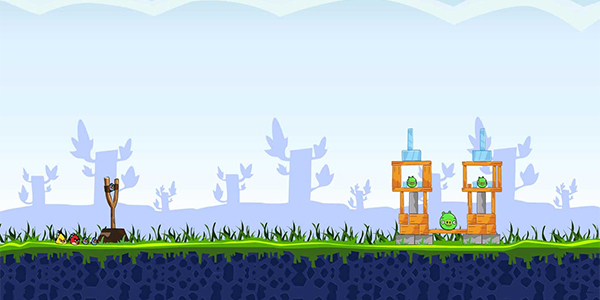
In 2004, iPhone and Android were just in the beginning stages of being made realities. We didn't have powerful enough mobile chips in our phones to produce the graphics of a home console or handheld game from any of the Big 3. Our flip-phones were basically only used for calling, text messaging and the occasional game of solitaire or picture taking for MMS. In just two short years, everything changed and destroyed what we thought we knew as possible. In the years since, mobile gaming has blossomed into its own line of gaming that has taken the entire world by storm. From emulated console ports to fully developed remakes of those same titles, to casual fare such as Angry Birds or Fruit Ninja, the mobile gaming sub-industry has challenged the established rivals to do something different. Indeed, the existence of mobile games has caused many to speculate that it will supplant traditional console and handheld gaming in a scant few short years. While this doesn't seem to be happening any time soon, the challenge is there and it's up to the established companies of Microsoft, Sony and Nintendo to answer with better and more compelling software for casuals and hardcore alike.

2. Gigabyte Storage

Since the beginning of the PS2, Xbox and GameCube generation, we would store our game saves on small memory cards, sometimes buying upwards of 10 if some of us were constantly buying every game we could get our hands on, especially if we were multi-console owners. Game saves usually took up only a few kilobytes of space, with the odd game save of a megabyte or more. Even the DreamCast's VMU wasn't enough for hardcore SEGA fans who bought up everything they could. Still it wasn't enough (and it hurt our pockets immensely). But when the PS3 and Xbox 360 were finally in stores, simple memory cards became a thing of the past. Now you can not just store your game saves, but also DLC alongside the entire game, so that it'll load faster, plus music and videos. This is the era of Gigabyte storage where what is achievable depends on how much storage space you have. Either you upgraded to expanded storage from Sony or Microsoft or you bought a dedicated external hard drive, such as those from Western Digital, making sure you could have the desired experience with the right hardware. All the DLC, music, videos and game saves you could want were now within your reach and grasp.

1. Casual Gaming

In 2004, our gaming was strictly hardcore.

We had our Zeldas, Sly Coopers, F-Zeros, Halos, Mortal Kombats and Tekkens. 'Core gaming' as a term had not yet been invented but plenty of my fellow gamers put labels on fare such as Mario and Rayman as 'kiddy', although many such titles had the same level of difficulty and depth. It all came down to preference in game styles which were largely predicated by graphical styles. The more realistic, the better. The more cartoony, the worse. Or so many gamers believed.

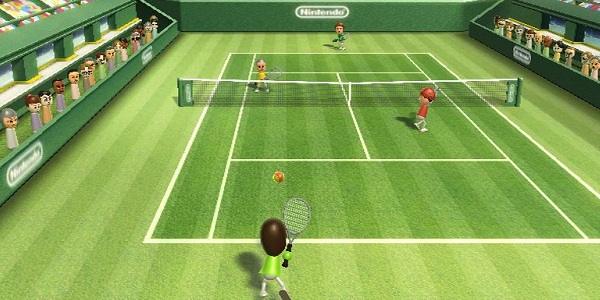
Then something funny happened when the Nintendo Wii dropped into our lives in 2006: a new genre of gaming came about for home consoles that we had never really considered nor seen much of. Casual gaming had, obviously, been around with such fare as Solitaire or Mine Sweeper on PC, but not like this. Wii Sports was just the beginning as Wii Fit also came out targeting those who were into fitness and trying to lose weight. Not one to rest on their laurels, Microsoft leveraged the Kinect motion controller with their own casual games and fitness games such as Zumba. If mobile gaming can have time-wasters like Fruit Ninja, then console gaming can have Zumba and Wii Sports Resort.

2004 was the last year of traditional console gaming and the beginning of a new era that saw so much change and innovation. Did I miss anything? Sound off in the comments below!


Posted On: 
Contributor
Contributor

Shawn “Loc Da’Borg” Jackson is a native of Mississippi, born in Vicksburg and raised in Philadelphia in Neshoba County. At the age of 15 he was diagnosed with Tourette Syndrome and, later into his early 20s, he became Profoundly Deaf. Writing has been one of the main staples of his life and he has dedicated a good portion of it to educate, entertain and enthrall with the written word.