10 Great Video Games That Should've Started Franchises
5. Singularity
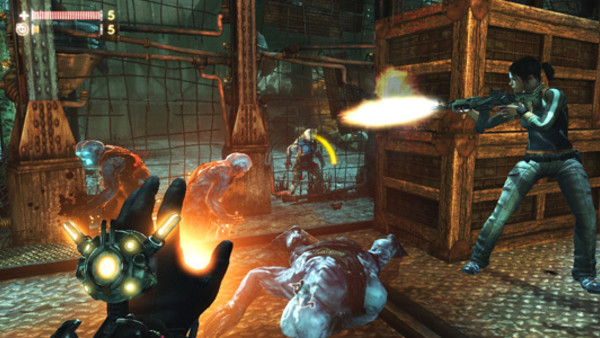
There are two key components that should be taken into account when turning a game into a brand - innovative mechanics and world-building.
Fortunately, Singularity had both aspects in spades. Raven Software's horror shooter centres around a secret Soviet device called the TMD that manipulates the flow of time.
Throughout the main campaign, players travel between the 1950s and modern times to wage war against mutated creatures. Using the chronological gizmo, you can move objects and enemies backwards or forwards in time, holding them indefinitely. The timey-wimey gadget could be used to solve puzzles and create paths by removing rubble or fixing collapsed bridges.
Despite having legs to grow as an ongoing saga, Singularity was overshadowed by other releases at the time, like Red Dead Redemption and Call of Duty: Black Ops (also developed by Raven).
The game's failure was frustrating since the time-travel aspect offers endless possibilities. Not only could the sequels take place in virtually any era, they could centre around alternative timelines, since the time manipulation can change any event in history. The TMD's abilities could be upgraded in later instalments, so it could create time-loops, heal wounds, age enemies to death, or fast-forward the action.
If Singularity didn't come out at the wrong time (no pun intended), it could've launched a thriving series.