10 Hotly-Anticipated Video Games That Were Abandoned After Launch
Remember how much of The Division you were going to play?
Hype is becoming about as disastrous to video games as hardware faults, bugs or glitches. Being a nebulous concept attached to general excitement and fuelled by amped-up advertising, buzzwords and over-promising trailers, there is a way to whip up a consumer base into a stupor and capitalise on it in the right way, but man if that isn't seen on the rarest of occasions.
Think back on the generation so far - which games were hyped up and actually managed to deliver on expectations?
Breath of the Wild perhaps? Horizon Zero Dawn? Chances are your favourite titles from the last few years either came out of nowhere or confidently surprised you, not needing to 'lay the groundwork' with platitudes and baseless statements.
Because come on, how many times have we heard that a game is "a new way to play"? That it's "going to change everything", or that its mechanics are "truly innovative"?
Clearly such things only set developers up for a fall, as the following examples prove that if hype equals ironclad expectations, most games will find it impossible to meet them.
10. No Man's Sky

Though it received a monumentally game-changing patch as part of a one year anniversary celebration, it's worth remembering just what a landmark tire fire No Man's Sky was at launch.
Thanks to a cocktail of over-promising and lies from Hello Games' Sean Murray mixed with Sony's marketing pushing the game as one of their triple-A marquee releases, the result was something that promised the universe, and delivered one planet, repeated 10 times.
Personally I always loved its exploration-heavy tendencies, but the game would see a drop of 90% on PC just two weeks after launch, with those numbers only marginally improving across the coming months.
If there was ever a game that exemplifies how hype can be a hand that pulls you up or punches you down into the muck, it's No Man's Sky.
9. Titanfall
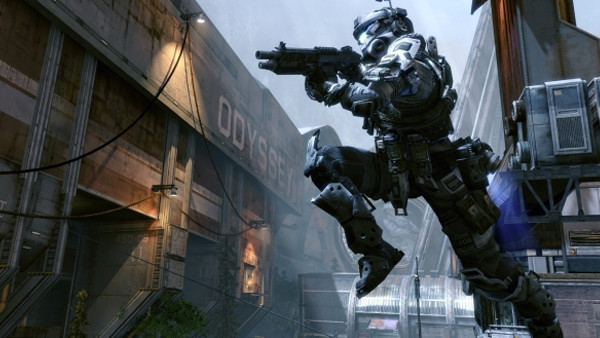
One of the many games to fall victim to the Xbox One's initially disastrous marketing, Titanfall remains a perfectly playable shooter, with its sequel genuinely being the finest FPS of the decade so far.
That said, the narrative behind the game's creation wasn't the prettiest, with Infinity Ward's Vince Zampella and Jason West (the pair who helped bring you Modern Warfare) being unceremoniously fired thanks to brokering a deal with EA. They would then set up Respawn Studios and continue doing great work, but it was enough damage done on the Call of Duty fan-front to treat Titanfall with caution - a mentality compounded by an exclusivity clause that ensured only a fraction of its demographic got to play.
Sadly, despite unique ideas like combining COD-style combat with mech power-ups only being realised in the sequel, Titanfall as a franchise is yet to get its due, despite being headed by some of the finest FPS minds on the planet.
8. Halo 4

Halo 4 still managed to have record sales and be one of the top three selling games in the franchise, but 343 Industries' adopting of the legendary IP quickly ended in ruin once fans got their hands on it.
Mostly down to being pipped at the post by Black Ops II releasing a week later and literally halving its playerbase, clearly many thousands of gamers wanted to play something by a more storied developer.
Naturally, it didn't help that Halo 4's post-launch maps and DLC were handled terribly, either, with Microsoft accidentally releasing a Season Pass-only map for free, only to pretend it was part of a limited offer, thereby insulting all those who'd invested cash up front.
On top of all this, you had the game's story that reframed the Master Chief as more of a trauma-addled lab experiment than a bred-for-combat badass, tons of multiplayer weapon balance issues that went unfixed, and an attitude from 343 that made the fans feel invisible.
You need only look at Halo 5 getting the lowest sales of any numbered franchise instalment, to see that the damage wasn't only for the short term, either.
7. Pokémon GO
How to Kill Your Greatest Achievement, by Niantic.
First, design a game that encapsulates an entire generation and fandom's lifelong dream. Say, "being a Pokémon trainer".
Second, release said game as an augmented reality, free-to-play experience that transforms the world around the user, letting them fish for Magikarp in their local river, or find Caterpies down the park.
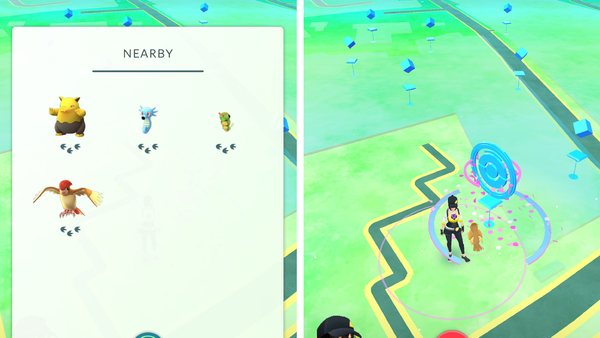
Third - and this is the most important - remove the Tracking functionality, as it's key to the entire game, and the very mechanic allowing the player to discover the Pokémon themselves.
Final step: Revel in the chaos you've caused, take months to offer anything close to a workable solution, and know that you've not only lost 23 million users and 80% of your overall playerbase, but all that cultural cache that you could've rode out for years.
Congratulations, if done well, this whole process can go from top to bottom in just a couple of months!
6. The Division

It was clear and plain for all to see: Ubisoft wanted some of that Destiny dollar - despite Destiny's threadbare structure being the result of a catastrophic executive order.
Still, Ubi's top brass only saw, "So wait a minute. You can design a game with nothing to it other than solid shooting mechanics and people will stick around? They'll even throw down cash for MICROTRANSACTIONS?! We've gotta do one of those!"
As such, despite The Division having a little more to offer than base third-person shooting (its dynamic multiplayer is still a great idea, and accurately modelling New York is fantastic), Ubisoft attempted to foster a fanbase devoted to grinding and unlocking loot.
Needless to say, they are not Bungie, and once the community realised there was no meaningful endgame content other than to repeatedly shooting the same sets of enemies over and over - not to mention the noticeable downgrade in graphics that peed everyone else off - that player count dropped a painful 94%.
Ninety four percent. In just a few months. Never to return.
Ouch.
5. Assassin's Creed Unity
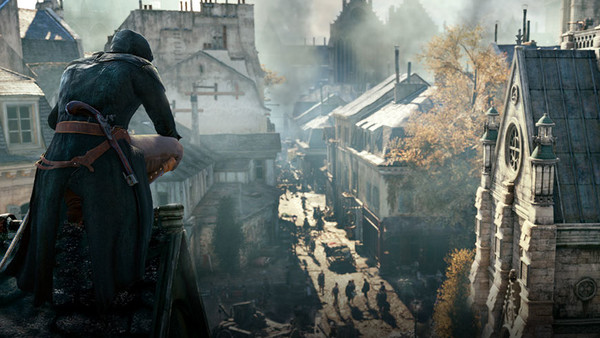
Many high-profile models can make a career off just one portrait getting noticed, but one gruesome visage was all it took to make Assassin's Creed a laughing stock.
Being seen by millions - and after AC was already feeling very long in the tooth after adopting an annual release schedule for years - Unity's launch period was an absolute disaster.
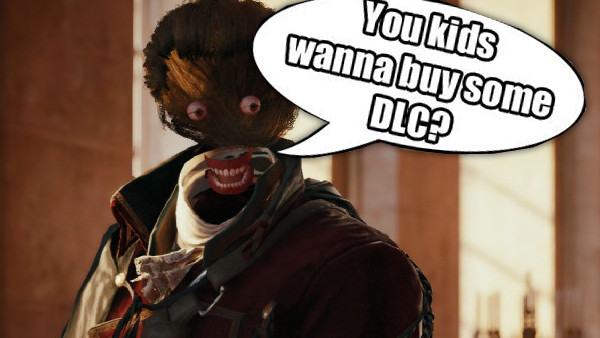
Ubisoft were first contending with a staggering array of bugs and glitches proving the game had launched early, they had a controversy surrounding the omission of a female character because it required "a lot of extra production work", and the Xbox One version was pretty much on fire.
Not to mention, news of the next Assassin's Creed, then codenamed Victory in a cruel twist of fate, leaked a year ahead of time in those first few weeks, showing the studio really was treating the franchise like a production line.
To right the ship on Xbox it would take a full 40GB 'patch' that was actually a re-download of the entire game, but by that point word had spread, consumers were disgusted and Assassin's Creed had been mortally wounded, doomed to stagger on to this day.
4. Battleborn

Like an out of shape newcomer going up against a natural future pro, Battleborn vs. Overwatch was a race that lasted about as long as it took Tracer to say, "Cheers, love!"
In honesty, Battleborn - rather like Motiga's Gigantic - is a far more MOBA-influenced game than the superhero FPS trappings of Overwatch, though that didn't help when they had so many aesthetic elements in common. On top of the obvious production quality difference, Battleborn was developed by Gearbox; last seen in any notable capacity churning out Aliens: Colonial Marines, aka one of the worst games of all time.
Blizzard's titles tend to be bonafide juggernauts regardless, and the sheer amount of ill-will towards Battleborn eventually resulted in its playerbase going below 100 players around the world, seeing Gearbox flick the 'free to play' switch and hope for the best.
3. For Honor

The first truly original triple-A game Ubisoft put their name to in years... ended in tatters, once the fans realised they were being taken for a ride.
You can read the full list of fan complaints over here, but sufficed to say, what started as a supremely cool one-on-one fighting game quickly devolved into an overly money-grubby mess.
As it became imminently aware that the only way to unlock everything would be to fork out the cash for microtransactions, the game's online matches were also the victim of laggy peer-to-peer connections - not to mention the balance issues between characters or the complete lack of response from Ubi themselves.
Ubisoft finally pulled their finger out in May, but with three months of complaints logged, it resulted in a 95% drop that the studio are still trying to recover from.
2. Watch Dogs

Man, the early years of this generation really were just a series of gut-punches, weren't they? We thought 2016 was a bad year for deaths, but 2014's gaming output had every major triple-A title bury itself alive as we looked on in horror.
The annoying thing is, Watch Dogs' base feel of gunplay, hacking and stealth was fine. Problems arose more from the amount of delays Ubisoft kept putting out, the fact that nothing about this "next generation" title looked remotely impressive, the realisation that the game had been significantly downgraded in comparison to E3 footage from yesteryear, and that main-man Aiden Pearce was about as fun as getting jabbed in the kidneys.
Ubi would try again with the actually-pretty-damn-solid Watch Dogs 2, but Watch Dogs as a 'brand' was more like a warning sign to turn the other way.
1. Evolve

For a game from the Left 4 Dead chaps over at Turtle Rock, Evolve was tapped to be the "next big thing".
Clearly the team were all too aware of the cultural weight this iconic zombie shooter still had, and set about designing something that would exploit a diehard fanbase every step of the way.
As such, developer Chris Ashton was quickly letting the cat out the bag, discussing how Evolve was built with DLC in mind, "more so than any game ever before". At launch this felt more true than ever, with a threadbare series of modes increasingly directing you to a storefront full of skins and weapon colour-swaps - even additional hunters and monsters came with a price tag.
It got so bad that a shockingly low 150(ish) people were playing, causing Turtle Rock to re-release the game with a completely different free-to-play structure - only for once again, the game to fizzle out, causing the team to cease support going forward.